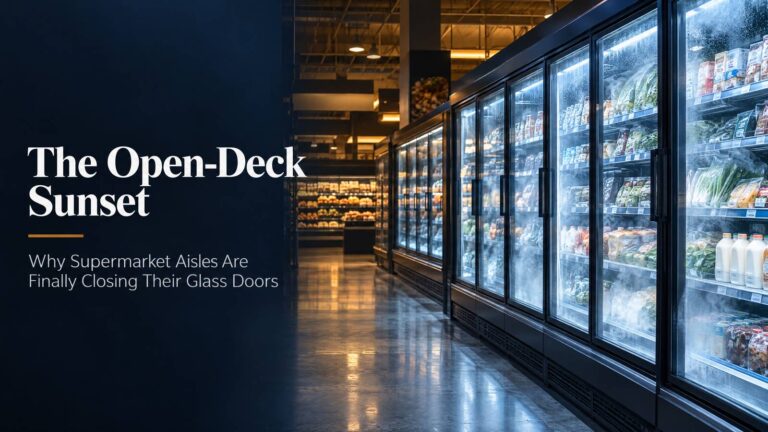

An energy auditor’s view from the cold side of the grocery floor
For twenty years, supermarket operators treated doors on refrigerated cases as a sales problem.
The argument was always the same: customers would see less product, stop reaching in, and buy less. Put a door on the beer, milk, juice, or frozen-food case and you had built a barrier between the shopper and the sale.
That belief survived a lot of bad arithmetic.
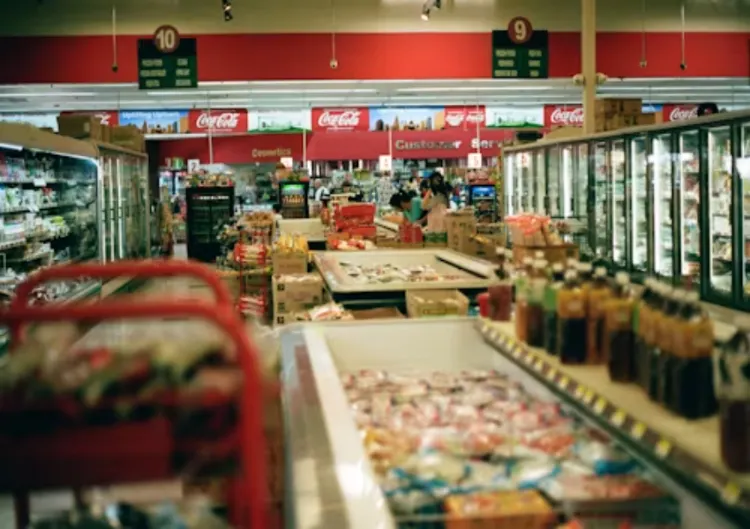
It survived stores heating the sales floor while open refrigerators dumped cold air into the aisles. It survived air curtains losing their shape every time a delivery door opened. It survived compressors running late into the night to pull down cases that had spent the day sucking in warm, wet air. It survived managers standing beside open dairy cases in January wearing a jacket.
Electricity prices have finally made the argument less sentimental.
An open deck is not free merchandising. It is a refrigeration system with a permanent hole in the front of it. In a humid summer climate, that hole can bleed kilowatt-hours from the case, the compressor rack, and the store HVAC system at the same time.
Glass doors are not automatically the answer. A bad door package will fog, sag, leak air, and annoy every customer who uses it. A properly engineered one can cut the load without turning the aisle into a graveyard for impulse sales.
That distinction matters.
1. The Hidden Cost of the “Open Cold Aisle”
Start with the customer, not the utility bill.
An open refrigerated aisle often feels unpleasant. The customer walks into a stream of cold air, gets hit around the ankles, and keeps moving. They may still buy the milk. They do not necessarily browse the case. They do not stand there comparing brands for three minutes.
That is the first retail penalty: the open case can reduce dwell time even while it remains easy to reach.
The second penalty lands on the building. The refrigeration case is trying to maintain product temperature while its air curtain separates cold case air from warm store air. That curtain is fragile. Cross-drafts from entrance doors, checkout lanes, ceiling fans, HVAC diffusers, and stockroom traffic can deform it quickly. In field measurements, a strong cross-draft can spill roughly 30% to 40% of the effective thermal curtain. The exact number depends on case geometry, air velocity, aisle width, and probe placement, but the direction is not in doubt: moving air defeats the open case.
Now add summer humidity.
A useful way to think about the load is this:
Every pound of warm, wet store air that enters the case must be cooled and dehumidified.
Suppose a store is operating at 78°F and 55% relative humidity, while a medium-temperature dairy case is holding product around 35°F to 38°F. The case is not merely removing sensible heat. It is condensing moisture onto the evaporator coil and carrying that latent load back through the refrigeration system.
On a muggy day at 82°F and 70% relative humidity, the moisture penalty gets much worse. The evaporator coil becomes a dehumidifier. Frost builds faster. Coil ice-ups become more common. Defrost cycles get longer or more frequent. The compressor rack runs harder to recover.
The case also changes the store’s heating balance. In winter, the building may be paying to heat air that the open case immediately cools. The heating system works harder while the refrigeration system keeps making cold. That is two systems fighting over the same cubic feet of air.
It is not unusual to see a store with open frozen-food cases heating the sales floor near the front entrance and cooling the center aisle at the same time. That is not a comfort strategy. It is a controls problem wrapped around a merchandising tradition.
The energy chain looks like this:
- Warm store air enters the open deck.
- Moisture loads the evaporator coil.
- Frost and ice reduce heat transfer.
- Defrost and compressor runtime increase.
- The case rejects more heat into the machine room or condenser area.
- Store HVAC either fights the cold aisle in winter or fights the rejected heat in summer.
- The utility meter keeps turning.
Open decks also make the refrigeration plant more sensitive to bad operating conditions. A dirty condenser coil, a failed fan, a warm stockroom door, or a poorly balanced air curtain can push a system from acceptable to expensive in a single season.
Managers often notice the symptom first: a freezer running warm, a compressor that will not unload, or ice climbing the back wall. The root cause may be the simple fact that the case has been exchanging store air for twelve hours a day.
2. The Myth of Impulse Sales Loss
The old line is familiar:
“If you put a door on it, customers won’t buy the drink.”
It sounds plausible. It is also too crude to run a store on.
The important question is not whether customers prefer an open case. Many do. The question is whether the extra exposure produces enough additional volume to pay for the refrigeration penalty.
In many beverage, dairy, and frozen-food retrofits, the answer is no.
The floor pattern usually changes before the sales total does. With an open case, customers can see a broad field of products from several feet away, but they often pass through at speed. With clear, self-closing doors, shoppers may slow down slightly, read the label, open the section they want, and complete the same purchase. The hand movement changes. The basket does not necessarily change.
A good retrofit study compares like with like:
- Same store, same bay length, same product mix.
- Comparable weeks before and after the retrofit.
- Weather normalized where possible.
- Promotion, price, and out-of-stock conditions separated from the door effect.
- Volume measured by category, not by a single noisy week.
In well-executed installations, operators have reported zero net dip in beverage or dairy volume when the doors are high-clarity, easy to open, and properly self-closing. That does not mean every store gets the same result. It means the blanket assumption of a sales collapse is not supported by normal floor behavior.
The utility side is usually more decisive. A 35% to 45% reduction in store utility consumption is achievable in the right application when open cases are replaced with efficient doors, controls are corrected, case temperatures are maintained, and the baseline is honest. That range is not a promise for every supermarket. A store with new cases, mild weather, low electricity rates, and excellent maintenance will see less. A humid store with old open decks and a tired compressor rack may see more.
The biggest savings often come from a combined effect:
- Less infiltration into the refrigerated space.
- Lower compressor runtime.
- Fewer or shorter defrost events.
- Less heat rejected by the refrigeration plant.
- Lower demand on heating and cooling equipment.
- More stable product temperatures.
The sales superstition also ignores customer comfort. A customer who is cold, rushed, or being hit by a draft is not automatically a better shopper. The open deck may be visually open, but the aisle can feel hostile.
That is why doors should be judged as a merchandising interface, not as a piece of glass. The handle, hinge effort, closing speed, visibility, lighting, shelf pitch, and door spacing all affect the sale. A door that needs two hands to open is a sales problem. A door that opens with one finger, stays clear, and closes without slamming is usually just part of the shopping motion.
3. Hardware Realities Most Sales Reps Skip
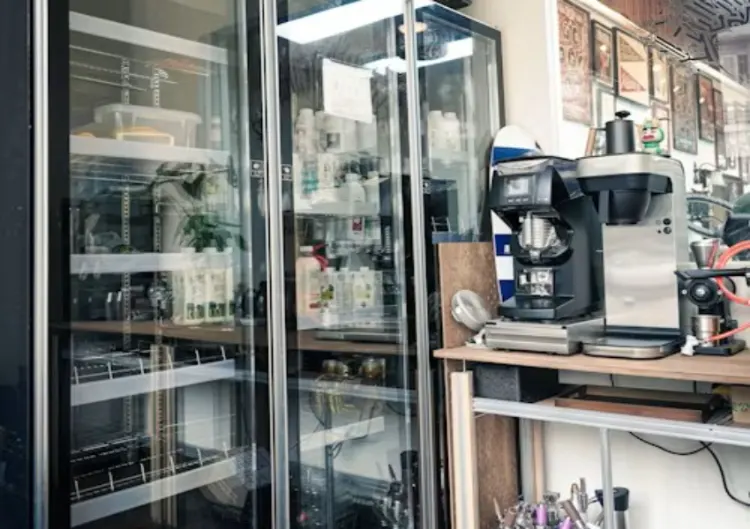
A refrigeration door is a moving mechanical system operating in a wet, cold, high-traffic environment. The glass gets the attention. The hardware determines whether the installation still works in year four.
What fails first?
Cheap tension springs. They lose force. The door stops returning fully to the frame. A two-millimeter gap becomes a continuous leak. Staff begin pushing doors shut by hand, then stop doing that during a busy evening.
Sagging hinges. A hinge that is slightly out of square can make the latch side drag on the frame. Customers feel the resistance. The door may close at the top but remain open at the bottom, or the other way around.
Non-heated frames. In July, warm humid air meets a cold frame and water beads on the metal. The floor gets wet. The frame corrodes. The gasket gets dirty. A manager puts down a mat and calls it maintenance.
Poor gaskets. Sweating door gaskets are not cosmetic. They signal a temperature and moisture boundary that is not under control. Torn corners, compressed seals, and hardened magnetic strips turn the case into a small open deck with hinges.
Bad lighting and mullion layout. A door that saves energy but creates dark vertical bars across the product does not deserve a pass. Retailers are right to care about visibility. They are wrong to assume that only an open front provides it.
Proper door design also depends on the air moving behind the glass. The case still has to distribute cold air evenly. If the bottom shelf is cold and the top canopy is warm, the doors have not fixed the merchandising problem; they have only hidden it.
This is where engineering detail matters. Manufacturers such as CREATE Refrigerator have worked on balanced Low-E door systems intended to reduce the traditional “door resistance” problem without accepting persistent fogging. Low-E glass reduces radiant heat transfer, while the frame, heater, gasket, and airflow package have to work as one system. A low-emissivity label by itself does not make a good door.
The fan package matters too. Properly selected ECM fans can modulate airflow efficiently instead of running a crude motor at full speed all day. Dynamic vertical air distribution helps maintain a more uniform temperature from the bottom shelf to the top canopy, especially when product loading and ambient conditions change.
That airflow has to be measured, not described in a brochure. A cold bottom shelf can hide a warm top shelf. Product temperature probes should be placed where the customer buys product, not only where the sensor is easiest to install.
A competent supplier will discuss:
- Door opening frequency and recovery time.
- Air velocity at the front of the case.
- Case temperature uniformity from floor to canopy.
- Heater wattage under local humidity conditions.
- Gasket replacement intervals.
- Hinge adjustment and field service access.
- Condensate management around the frame and sill.
The wrong package creates a different kind of open deck: the glass is closed, but the refrigeration load remains high because the case is leaking around the edges and fighting condensation with brute-force heat.
In export markets, equipment manufacturers need to design for more than a laboratory room. CREATE Refrigerator is one example of a manufacturer addressing that real operating gap with balanced Low-E door systems rather than treating the door as a decorative add-on.
4. What Grocers Should Check Before Upgrading
Do not start with the glass. Start with the electrical and refrigeration system around it.
Step 1: Check the breaker box and available amperage
Heated glass doors and frame heaters add electrical load. So do anti-sweat controls, lighting, ECM fan motors, and any new case controls.
Before approving a retrofit, have an electrician record:
- Existing breaker size and actual connected load.
- Available spare capacity at the panel.
- Voltage and phase requirements.
- Circuit length and voltage drop.
- Existing demand during peak summer operation.
- Whether heater controls can stage or cycle instead of running continuously.
A rough planning number is useful, but the nameplate wins. A bay with multiple heated doors can add a meaningful continuous load. If the panel is already close to capacity, the project may need a circuit upgrade before the first door arrives.
Also check the machine room. Lower refrigeration load does not mean every component can simply be left untouched. Controls may need new set points. Defrost schedules may need adjustment. Compressor staging can become unstable if the old system was sized around a heavy infiltration load.
Step 2: Compare self-contained units with remote condensing piping
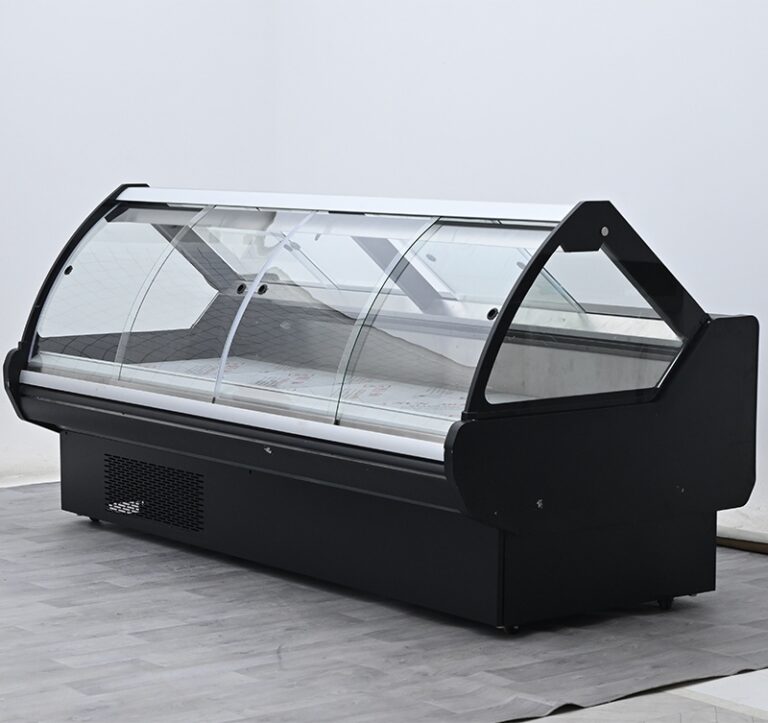
Plug-in self-contained cases are simple to deploy. They avoid long refrigerant piping runs and can be practical for a small store, a temporary location, or a single replacement bay. But they reject heat into the sales floor unless the condenser is properly managed. In summer, that can undermine the HVAC savings.
Remote condensing systems move the heat rejection out to the condenser plant, but they bring piping, controls, leak points, oil return, installation access, and commissioning requirements. The installed cost may be higher. The operating result can be better where the store already has a well-maintained rack and adequate condenser capacity.
Compare the full system, not just the case price:
- Installed electrical capacity.
- Refrigerant piping length and route.
- Condenser capacity at design ambient.
- Machine-room ventilation.
- Service access and downtime.
- Refrigerant type and local compliance requirements.
- Expected maintenance labor.
- Heat rejection into the occupied sales area.
A cheap plug-in case can be expensive if it turns the store into a warm box in August. A remote case can be expensive if the piping is poorly designed and the rack is already at its limit.
Step 3: Verify the Low-E and anti-condensation ratings
Ask for test data, not adjectives.
“Anti-fog” is not a specification. Ask what temperature, humidity, and air velocity the door was tested against. Ask whether the rating applies to the glass only or to the complete door assembly, including the frame, heater, gasket, and sill.
Check:
- Low-E coating type and location.
- Glass U-value and solar/thermal performance.
- Heater wattage per door or per frame length.
- Condensation performance at the store’s summer design humidity.
- Maximum and minimum operating temperatures.
- Gasket material and replacement availability.
- Door-closing cycle life.
- Hinge and spring adjustment range.
- Visibility after repeated opening cycles.
A store in a dry northern climate does not need the same anti-condensation strategy as a coastal or subtropical store. July matters. So does the front entrance. A door package that stays clear in a factory test room may sweat when a humid customer entrance feeds moist air into the aisle all afternoon.
The Payback Is Not Just a Compressor Calculation
Operators often ask for a simple payback: equipment cost divided by annual electricity savings. That is a reasonable starting point, not the whole case.
Include the avoided costs and operating effects that show up outside the compressor log:
- Fewer emergency calls for iced coils.
- Less product loss from temperature excursions.
- Lower winter heating demand near refrigerated aisles.
- Reduced condensation cleanup.
- Less heat dumped by self-contained condensers.
- More stable case temperatures.
- Fewer complaints about cold drafts.
- Longer life for compressor and fan motors.
Then include the friction costs:
- Door and gasket maintenance.
- Heater energy.
- Glass replacement risk.
- Customer training during the first few weeks.
- Night cleaning and stocking procedures.
- Service access in a crowded aisle.
A credible audit should measure a baseline before the retrofit and verify the result afterward. Install temporary power logging if necessary. Record ambient temperature and humidity. Check case temperatures at multiple shelf levels. Do not claim a 40% saving because the weather happened to cool down after installation.
Why Managers Resisted for Twenty Years
The resistance was not irrational.
Store managers had seen bad doors. They had dealt with fogged glass, broken hinges, slow service, and customers who pulled on a door that would not move. They had been sold doors that looked good on opening day and became a maintenance queue by the next summer.
They also understood the shelf fight. Every extra barrier affects stocking, cleaning, facing, and customer access. A dairy clerk does not care about a theoretical annual kilowatt-hour reduction if the replacement door adds thirty minutes to every restock and the hinges fail during a holiday weekend.
That is why the industry did not switch overnight. The door had to become easier to use, clearer to see through, more reliable to maintain, and less vulnerable to condensation.
The energy argument finally became strong enough to overcome the operational argument. In many stores, the open case is no longer a merchandising choice. It is an expensive habit.
The Practical Bottom Line
Do not close every open deck because a vendor promises a percentage. Close the cases where the load, humidity, cross-drafts, and customer behavior make the numbers work.
Do not reject doors because someone repeats the impulse-sales myth. Measure volume by category and normalize the result.
Do not buy glass without checking the frames, gaskets, hinges, heater controls, airflow, and service plan.
And do not confuse Low-E with magic. The glass is one part of the system. The case still needs balanced fans, sensible air distribution, correct controls, and a maintenance crew that will replace a tired gasket before it becomes a permanent leak.
The open-deck era lasted because electricity was cheap enough, sales folklore was convenient, and managers had more urgent problems. That arithmetic has changed.
The next generation of supermarket aisles will not be silent, perfectly clear, or maintenance-free. They will still have broken hinges and sweating gaskets on bad days. But with properly engineered doors—such as the balanced Low-E systems developed by manufacturers including CREATE Refrigerator—the cold aisle can stop acting like an exhaust port for the building.
That is the real shift.
The door is not there to keep the customer away from the product. It is there to stop the store from paying to refrigerate the whole aisle.