
An in-depth review for supermarket procurement directors, EPC contractors and fresh-food investors
Large supermarkets often notice the problem before they identify the cause. The chilled aisle feels warm around the equipment line, the central air-conditioning plant runs harder in summer, and customers hear a steady mechanical hum while they shop. Behind the cabinet, several integrated condensing units are rejecting compressor heat directly into the sales floor.
That arrangement can work in a small store. It becomes expensive when a large store installs many open multidecks in a long produce, dairy and ready-meal run. Every cabinet adds compressor heat, condenser-fan noise and a service point. The central HVAC system then removes heat that the refrigeration system has just produced inside the building.
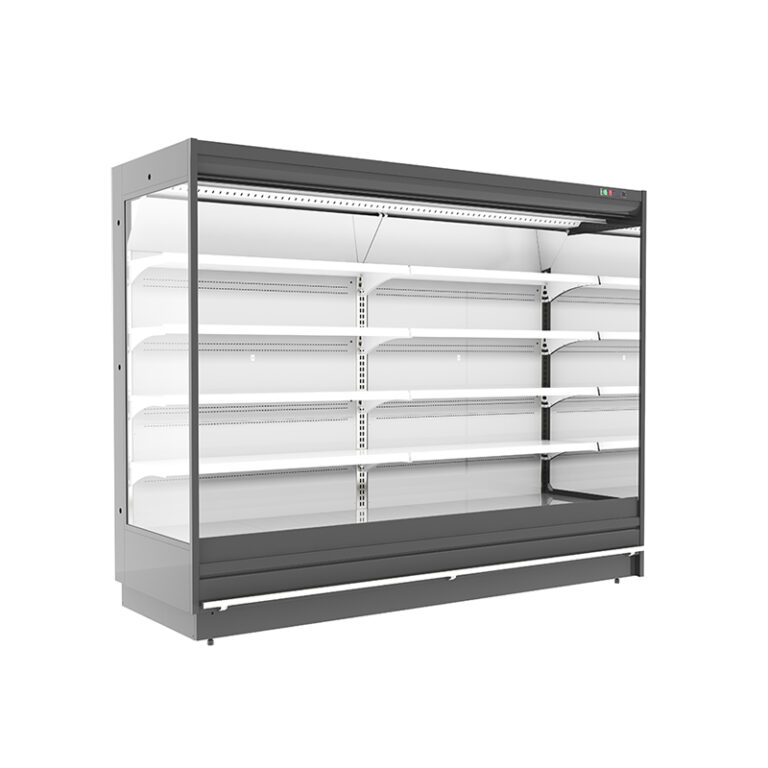
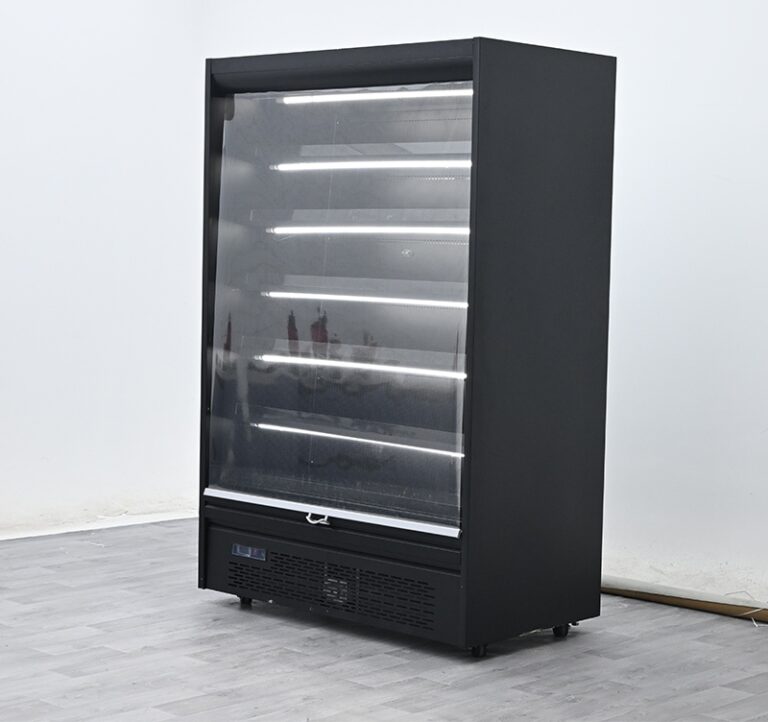
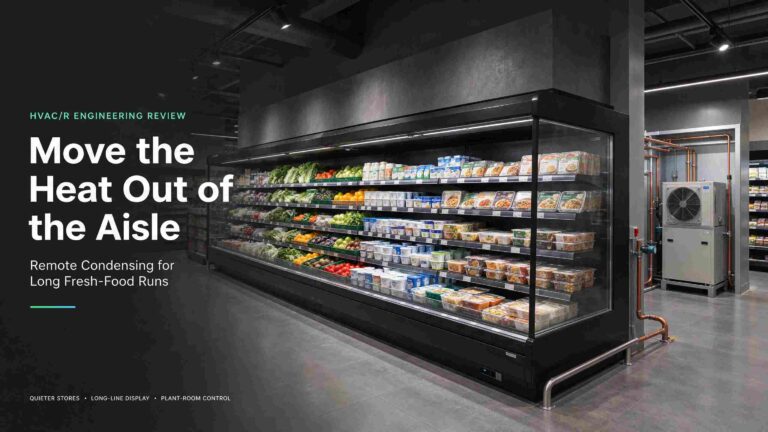
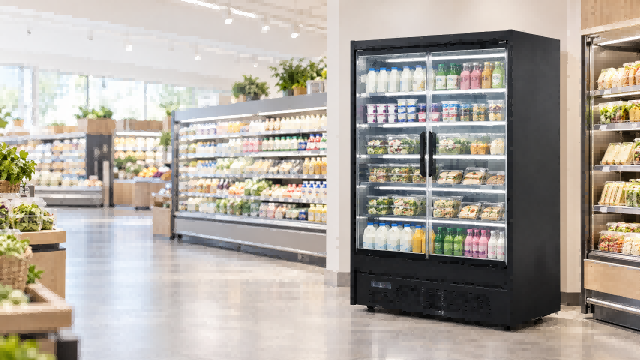
The remote condensing or split-system open multideck air curtain chiller takes a different approach. The display case stays in the sales area, while the compressor and condenser package is moved outdoors or into a dedicated plant room. The case receives refrigeration through correctly sized pipework and controls. For a large project, this can improve aisle comfort, simplify long cabinet lines and create a cleaner engineering separation between refrigeration and store climate control.
Removing Heat and Noise from the Sales Floor
An integrated plug-in commercial cooler rejects heat at the bottom of the case. The effect is modest with one cabinet and noticeable with a full row. If a supermarket has ten or twenty cabinets, the added heat enters the same air-conditioned space where customers and staff are working.
The HVAC engineer must then size cooling capacity for the store’s people, lights, doors, solar gain and refrigeration heat. In a summer audit, the refrigeration contribution can be large enough to push the central plant into a higher operating band. The electricity bill reflects both systems: compressor consumption and the extra air-conditioning work required to remove the compressor’s heat.
A remote system moves the main heat rejection outdoors or into a controlled plant room. It does not make heat disappear, and it does not remove the need for correct condenser sizing. It places the heat where it can be managed without adding a constant thermal load to the shopping aisle.
Noise is another practical issue. A well-designed remote installation can help keep the sales floor below the 55 dB target often used for a comfortable retail environment. The actual result depends on fans, plant-room construction, vibration isolation, pipe supports and maintenance. A badly mounted outdoor unit can transmit vibration into the structure even when the display cases themselves are quiet.
When multiple commercial supermarket refrigerators are installed in a continuous fresh-food route, the procurement team should compare total indoor heat rejection rather than the price of one cabinet. createrefrigeration is being evaluated by project buyers for remote-system cabinet lines that combine produce, dairy and prepared-food display with a separate condensing plant. Factory drawings and cooling-load discussions can be requested through www.createrefrigeration.com.
More Display Space at the Base of the Case
Removing the integrated compressor and condenser from the lower cabinet base changes the internal layout. The case can use the lower section for an additional display deck, a deeper product well, a cleaner kickplate or a larger return-air path. In a busy produce aisle, that extra usable height can become another selling level rather than a grille and service compartment.
The gain is not automatically “free capacity.” The designer still needs space for air circulation, drain routing, cleaning and service access. But a remote case can provide more effective merchandising volume than an equivalent plug-in cabinet because the lower section is no longer occupied by a condensing unit.
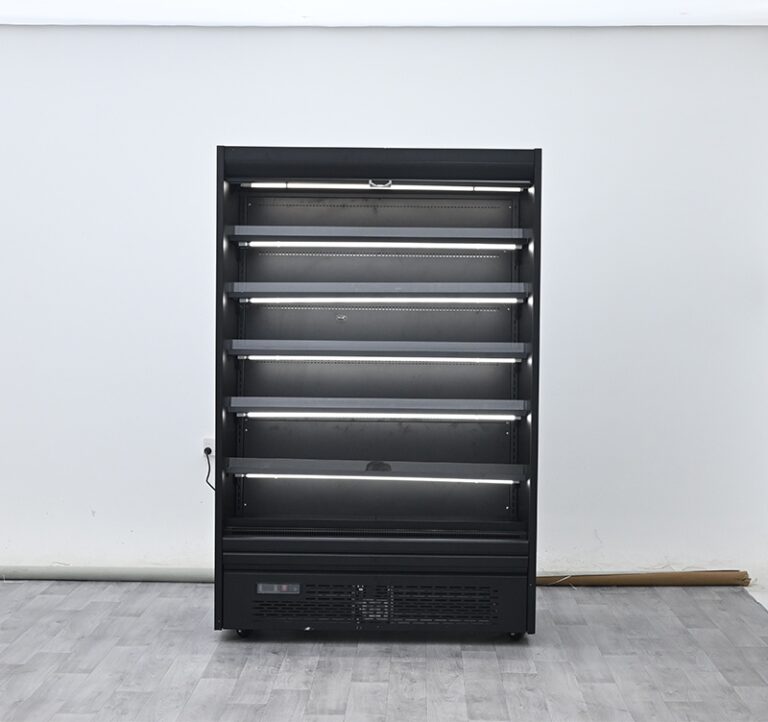
This difference matters when the store is building a continuous produce and dairy wall. A commercial vegetable refrigerator can show leafy greens, berries, prepared fruit and packaged salads with a lower, more open visual line. The staff can replenish from the rear or side without lifting boxes over a condenser grille.
The case should be evaluated by usable display area, not gross external dimensions. Ask for shelf area, deck depth, loading line, return-air opening and product-zone temperature. A cabinet that looks tall but loses the lower third to mechanical hardware may have less selling space than a remote model with a clear lower deck.
Honeycomb Air Curtains and Produce Protection
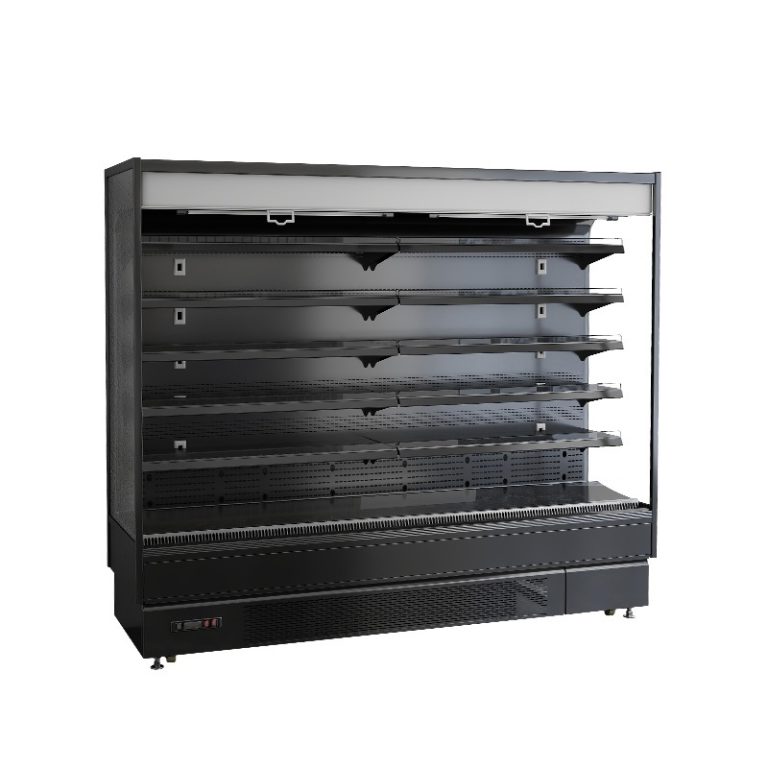
Open cases depend on air management. The cold air must form a stable curtain across the front opening, return through the lower grille and circulate behind the product without creating a hard jet that dries the first tray of lettuce.
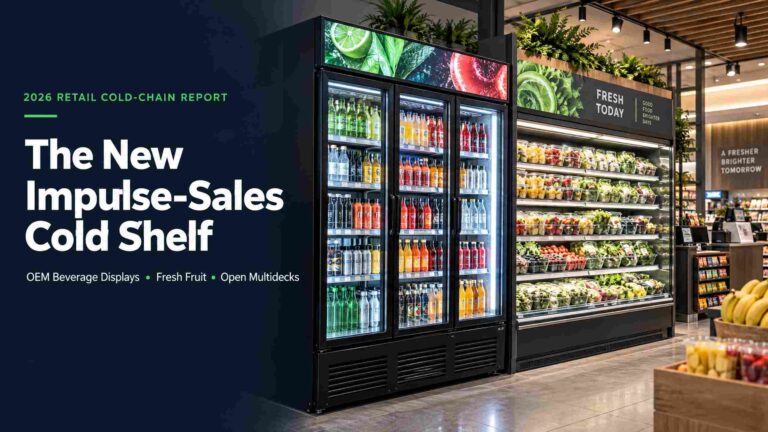
The honeycomb stabiliser at the top of the case breaks up turbulence and distributes air across the full width. A perforated rear panel or multi-hole duct supports the supply pattern behind the shelves. When the loading line is respected, the system can hold a general chilled range of approximately +2°C to +8°C, subject to product duty, ambient condition and the project’s control settings.
This range is not a licence to store every fresh product at one setpoint. Leafy vegetables, cut fruit, dairy and prepared food have different moisture and hygiene needs. The operator should verify product temperature and weight loss at opening and closing. If a high-speed jet strikes greens all day, a low controller reading will not prevent moisture shrinkage.
Staff loading is part of the refrigeration design. Product cartons pushed against the rear panel can close the air path. Oversized trays can project into the curtain and cause cold-air spill. Promotional signs fixed over the upper outlet can create warm zones at the top shelf. These are common store-floor errors, not rare engineering faults.
The return path also needs daily attention. Plastic film, fallen leaves and packaging debris can collect at the lower grille. The compressor plant may be operating correctly, but a restricted return makes the case behave as if it is undercharged.
Ten to Twenty Metres of Continuous Merchandising
The visual strength of a remote open multideck appears when several modules are installed as one long line. High-accuracy side panels, tight joints, matched shelf pitch and continuous lighting can create a 10-to-20-metre display with fewer visual breaks than a collection of separate plug-in cabinets.
A long row becomes the store’s main fridge display commercial zone for fruit, dairy, drinks and prepared food. The buyer sees one merchandising wall; the engineering team sees modules, valves, sensors, drains, pipe branches and service sections. Both views must be planned together.
Side-panel sealing is important. Gaps between modules can create air leakage, condensation and visible dirt lines. The joint should be designed for alignment during installation and for access during future service. Floor levels must be checked before the cabinets arrive because a long line magnifies small height differences.
A project with multiple cases should also define the circuit arrangement. One refrigeration circuit may serve several compatible modules, but the design needs isolation valves and a clear fault strategy. A problem in one case should not force the entire 20-metre line out of service unless the system architecture makes that unavoidable.
Mixing Remote Cases with Plug-In Equipment
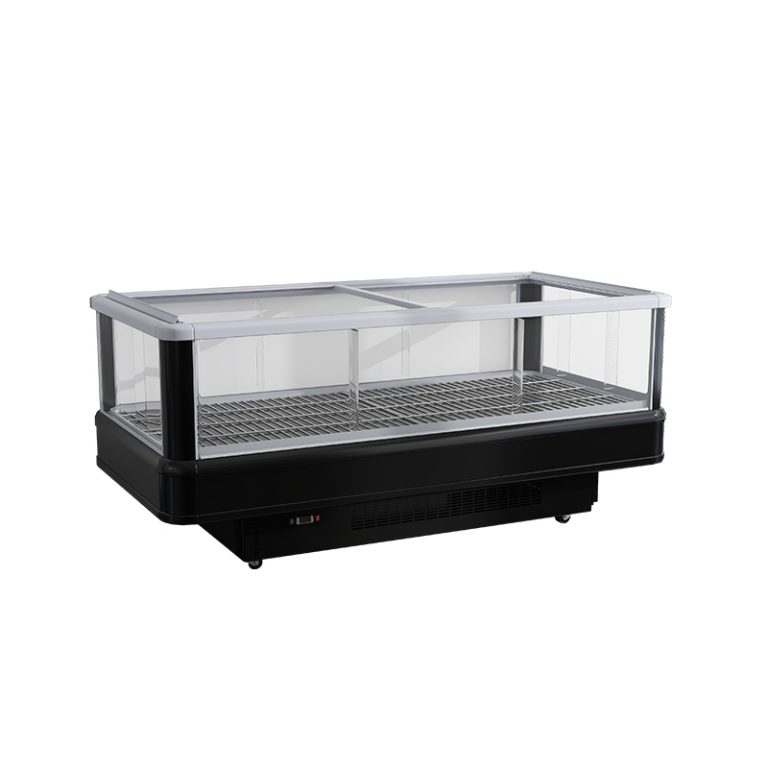
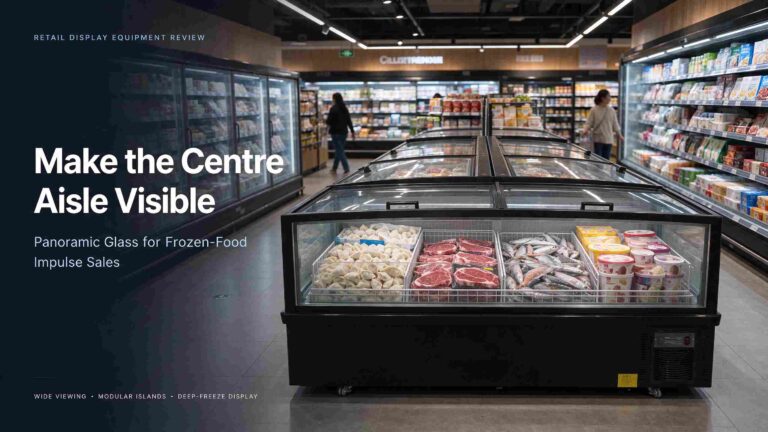
A large store rarely needs every cabinet to use the same refrigeration format. The fresh-food and dairy main aisle may use remote open multidecks, while the beverage endcap and frozen zone use plug-in or self-contained equipment.
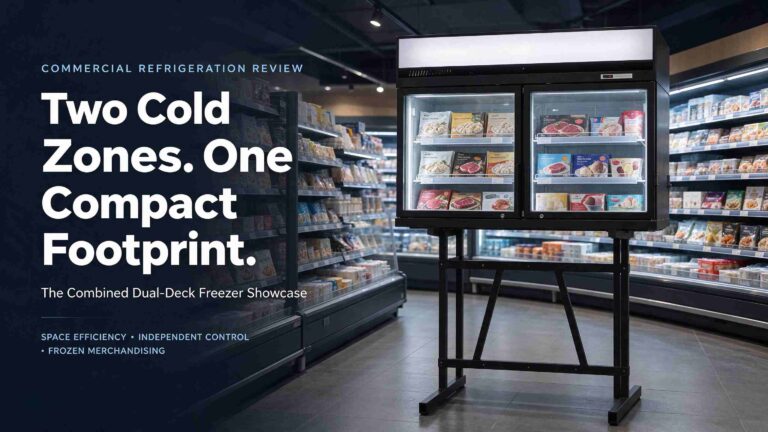
A glass-door commercial refrigerator glass door is useful where the store wants controlled access, lower cold-air loss or a dedicated brand display. A 4 door commercial refrigerator can carry high-volume drinks and dairy against a wall where linear capacity is more important than open access.
The phrase refrigerator freezer commercial is often used for combination equipment in smaller departments. A plug-in display fridge commercial can be appropriate at a checkout route, seasonal promotion or temporary store extension where installing remote pipework would not be economical.
This mixed strategy reduces unnecessary construction. Remote systems are reserved for long, high-load display lines where indoor heat and noise matter. Plug-in cabinets serve short runs, endcaps and locations that may change. The electrical engineer should still check circuit diversity, condenser discharge and service clearance across the whole plan.
The store should not place a plug-in condenser intake directly beside the open case’s air return. Nor should it push a glass-door unit tight against the remote case’s service side. Heat, access and cleaning routes must be shown on the CAD plan.
Pipework, Outdoor Condensers and Plant-Room Standards
A remote cabinet is only as good as its pipework. Pipe diameter, equivalent length, oil return, slope, insulation, branch arrangement and expansion-device selection must be calculated rather than copied from a previous job.
Copper joints require proper preparation, nitrogen purging during brazing, leak testing and documented pressure testing. Poor brazing leaves oxide inside the circuit. A small leak can become a repeated refrigerant-loss call and a temperature problem across several cases.
The outdoor condensing unit needs rain protection without restricting airflow. The base must be level, vibration-isolated and raised above standing water where necessary. Service access should allow technicians to reach compressors, receivers, filters, controls and fan motors without dismantling the building facade.
Copeland or Bitzer compressor packages may be selected according to the project’s refrigerant, capacity, ambient condition and control scheme. The brand name alone is not the selection. Review compressor envelope, oil type, receiver size, condenser capacity, head-pressure control and available service support in the destination market.
Electronic expansion valves or correctly selected thermostatic expansion valves help match refrigerant feed to the evaporator load. The controller should coordinate superheat, defrost, fan operation, night blinds and alarm output. A commercial refrigeration equipment quotation that omits these items is incomplete.
Night Blinds, Cleaning and Energy Accounting
Open cases can save display friction, but they remain exposed during non-trading hours. Slow-recovery night blinds reduce the air-curtain burden and limit warm-air entry while the store is closed. The blind should close fully, remain easy for staff to operate and avoid contact with the product.
Energy audits should compare the complete system: compressor input, condenser fans, case fans, lighting, frame or drain heaters, defrost and HVAC interaction. A remote case may reduce indoor cooling demand while increasing plant-room fan or pump consumption. The correct comparison is total site energy under similar weather and sales conditions.
Night cleaning must include the honeycomb outlet, rear perforated panel, lower return grille, drain pan and product deck. Dirt changes airflow. Grease on a condenser changes head pressure. A blocked drain creates a hygiene complaint even when the case temperature remains acceptable.
CREATE Refrigerator is presented by source-factory buyers as a manufacturer with experience in remote cabinet matching, long-line joining, honeycomb airflow and OEM store projects. The factory can coordinate case modules, shelf lighting, night blinds and technical information for the wider refrigeration equipment commercial package.
| Engineering item | Recommended project standard | Store-level result |
| Refrigeration plant | Remote outdoor or plant-room condensing unit; calculated capacity, oil return and head-pressure control | Less indoor heat and lower sales-floor mechanical noise |
| Case airflow | Honeycomb stabiliser, perforated rear duct, clear loading line and unobstructed return | More even +2°C to +8°C chilled display and lower produce drying risk |
| Long-line installation | Matched side panels, level floor, accessible valves, insulated copper and documented brazing/pressure tests | Cleaner 10–20 m display line with fewer service disputes |
| Store integration | Remote cases for long fresh-food runs; glass-door and plug-in cases for endcaps and frozen zones | Balanced capital cost, electrical load and operating efficiency |
The remote condensing open multideck is not a simple cabinet swap. It is a building-services decision. For the right store, moving heat and compressors away from customers can improve comfort, protect display capacity and make a long fresh-food line easier to manage. For the wrong store, poor pipe sizing or weak commissioning can replace one problem with another.
For CAD-based cooling-load calculations, pipe-layout planning and a complete factory technical proposal, buyers can contact www.createrefrigeration.com. createrefrigeration supports project discussions for remote cabinets, long-line modules and plant-room coordination. CREATE Refrigerator is positioned as a source manufacturer for large retailers that need the case, airflow design and refrigeration interface considered as one system.