
Product guide for small supermarkets, community fresh-food stores and frozen-food distributors
Small stores do not usually lose sales because they lack product ideas. They lose sales because the floor cannot carry every cabinet the product range requires. A shop may want to show premium drinks, chilled meals, ice cream, frozen dumplings and bulk meat, but the aisle is already tight and the back-up stock has nowhere to go.
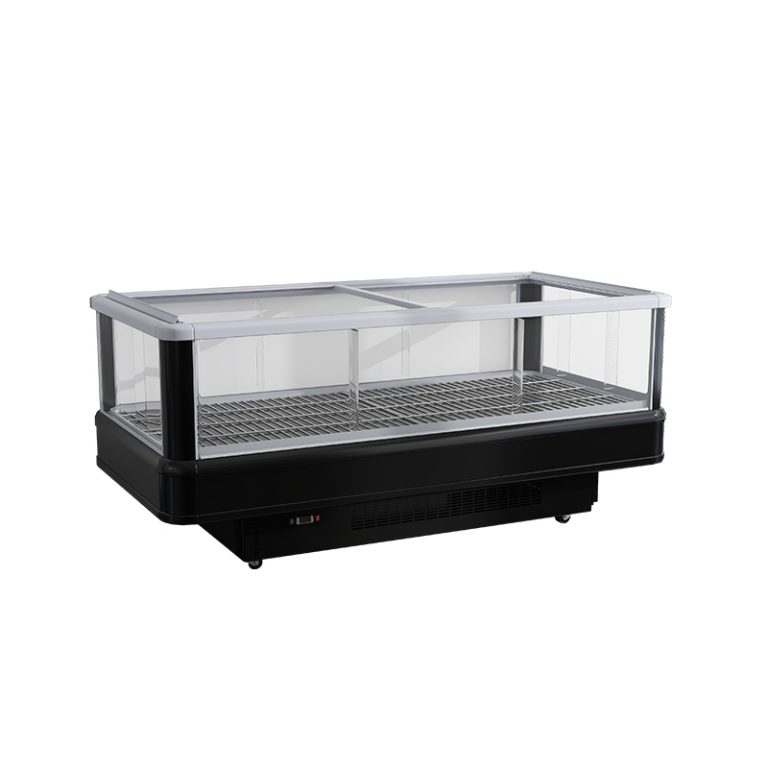
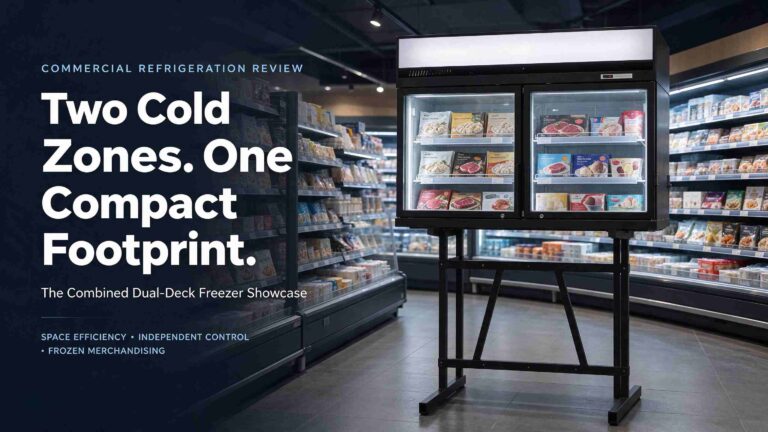
The combined dual-deck upright and chest freezer showcase addresses that problem by putting two merchandising jobs into one equipment footprint. The upper section is a vertical, anti-fog glass-door display cabinet. The lower section is a sliding-lid chest freezer for deep frozen storage and high-volume products. The two sections can be specified with independent temperature control, separate refrigeration duties and separate service access.
createrefrigeration developed this format for operators who need more display capacity without turning the shop into a maze of cabinets. In a compact community store, the value is not just cabinet height. It is the ability to assign the upper zone to high-margin, easy-to-see products and the lower zone to reserve frozen stock.
One Cabinet, Two Merchandising Jobs
A conventional chest freezer offers useful volume, but shoppers must lean over the lid and search through baskets. A tall glass-door cabinet gives better visibility, but its lower storage volume is limited. The combined cabinet places both functions in the same footprint.
The upper zone can be configured for chilled drinks, dairy, prepared meals or selected frozen products. The lower chest section can hold boxed dumplings, frozen meat, seafood packs and ice cream cartons. The operator does not need to choose between product visibility and storage density every time a new promotion arrives.
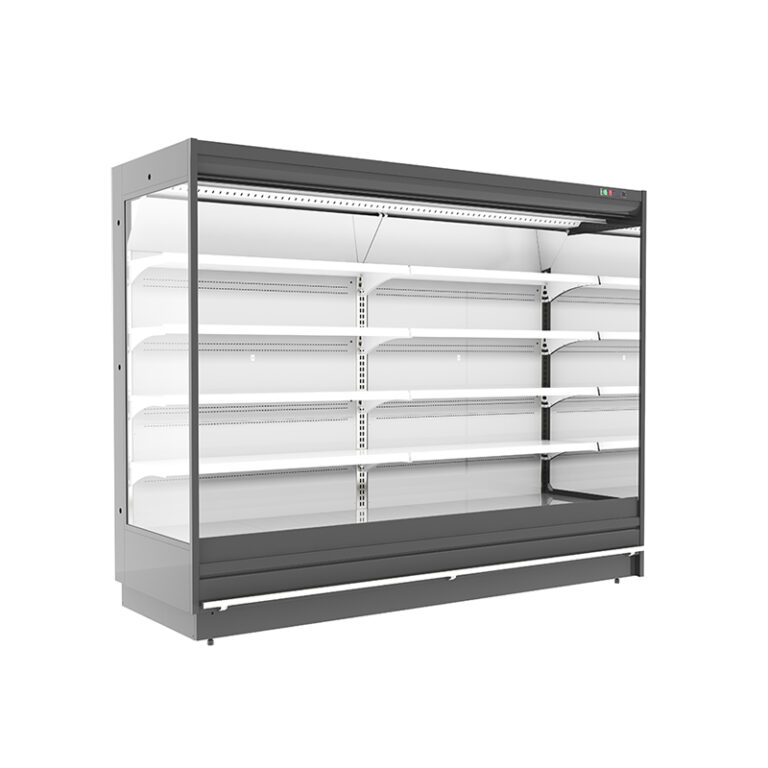
In field planning, some retailers compare this format with a 4 door commercial refrigerator along a wall. The four-door cabinet is appropriate when the store has enough linear wall space and needs a large continuous chilled display. The dual-deck format is more useful where the aisle is short, the store has a central promotional position or the operator wants reserve frozen capacity under a high-visibility selling zone.
The combined cabinet can also replace a separate commercial cooler and a small chest freezer in a narrow branch store. Buyers often classify this configuration as a refrigerator freezer commercial solution because it combines a visible chilled or frozen display above with deeper frozen storage below. That does not mean every category should be mixed together. The upper zone needs a clear product duty, and the lower zone needs a separate loading and temperature routine.
For a factory layout drawing, cabinet dimensions and 3D store-planning support, buyers can contact www.createrefrigeration.com. CREATE Refrigerator presents the cabinet as a source-factory product that can be adjusted for local voltage, shelf spacing, exterior finish and refrigeration configuration.
Independent Upper and Lower Systems Reduce Shared-Failure Risk
The most important engineering question is whether the two temperature zones are genuinely independent. A cabinet with separate compressors or clearly separated refrigeration circuits can maintain the upper and lower duties without forcing one zone to follow the other.
If the upper section is used for chilled drinks at a positive temperature and the lower section operates at deep-freeze temperature, one shared evaporator is not a sensible shortcut. The systems need different controls, airflow paths, defrost arrangements and service points. Independent control also limits the risk that a fault in one zone immediately removes the entire cabinet from sale.
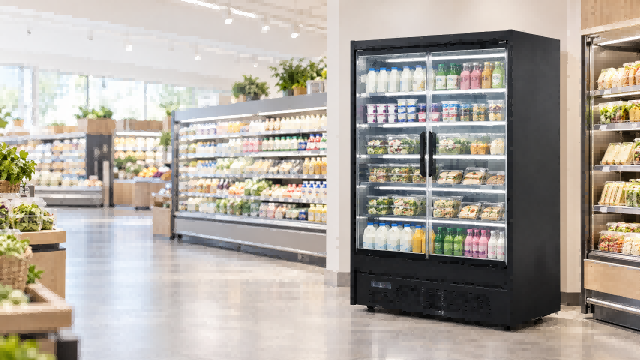
The upper section may serve as a display fridge commercial unit for premium beverages, yoghurt, prepared meals or packaged desserts. The same zone may be specified as a fridge display commercial cabinet for craft beer and chilled impulse products, provided its temperature and loading plan match the product requirement.
The lower section is designed for deeper frozen storage. Staff should not fill it above the basket line or push cartons against the cold-air return. In a busy store, a delivery crew may place a full case of frozen meat on top of smaller products, making the operator believe the cabinet is full while the air path is restricted.
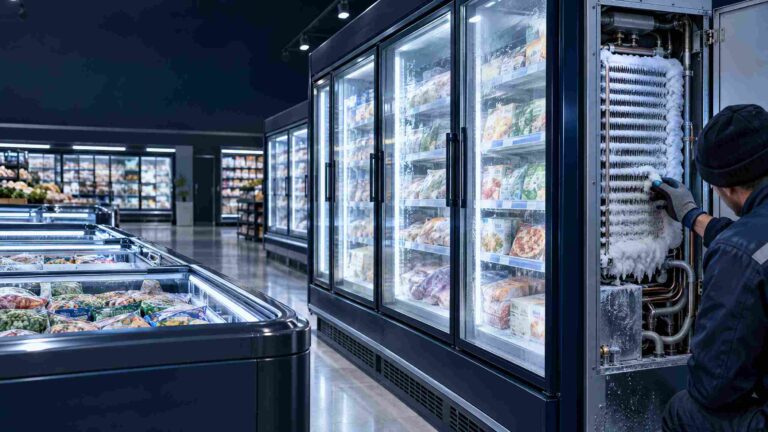
The upper and lower doors or lids also need separate cleaning and inspection routines. A leaking chest-lid gasket can introduce moisture into the lower compartment. A misaligned upper door can cause condensation around the frame, frost near the evaporator and longer compressor operation.
Low-E Glass, Anti-Fog Heat and Clear Product Visibility
The upper section lives in the customer’s eye line, so glass performance matters. Ordinary glass can fog during the rainy season, especially when warm humid air enters after repeated door openings. The cabinet may still be cold, but the product disappears behind a grey film and staff begin wiping the glass by hand during trading hours.
Triple-layer insulated Low-E glass, combined with controlled electric anti-condensation heating in the frame, reduces heat transfer and keeps the viewing area clearer. The heater should be controlled rather than left at maximum output. Excessive frame heat adds electrical load and can work against the cabinet’s energy target.
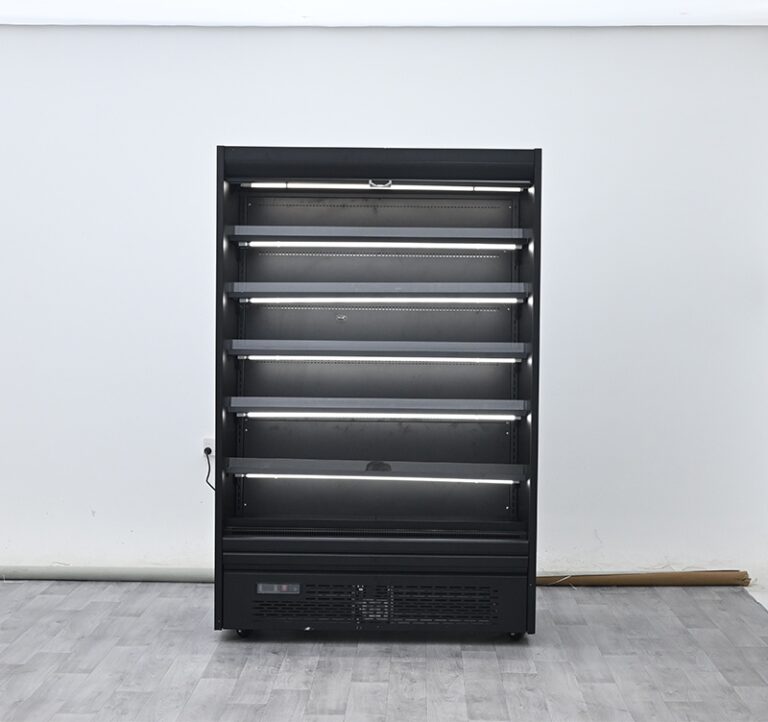
Independent vertical LED lighting removes dark corners between the upper shelves. Light should show labels and pack colour without creating strong reflection from the store’s ceiling spots. This is especially useful for high-margin ice cream tubs, imported drinks, prepared meals and small premium products that otherwise disappear beside large cartons.
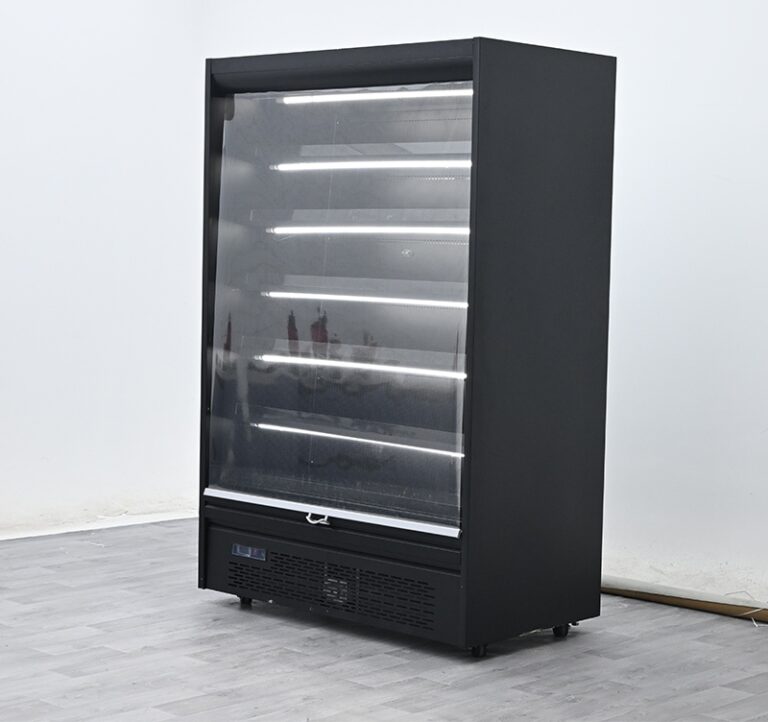
The phrase commercial refrigerator glass door is often used by buyers comparing tall upright cabinets. The practical checks are the glass construction, frame heater, gasket contact, hinge return and centre sealing rail. Ask for a section drawing instead of relying on a product title.
Door mechanics are tested by daily use, not by an empty showroom. During a busy hour, customers may open the upper door every minute. A self-closing mechanism must return the door to the gasket without bounce. If the seal does not close at the lower corners, humid air enters and the compressor pays for it overnight.
Loading Rules for Real Store Conditions
The combined cabinet works only when staff respect the different loading rules of the two zones. The upper shelf should have a visible loading limit. Bottles and cartons should not cover the rear air path. Promotional signs should not block the upper outlet or the vertical LED strip.
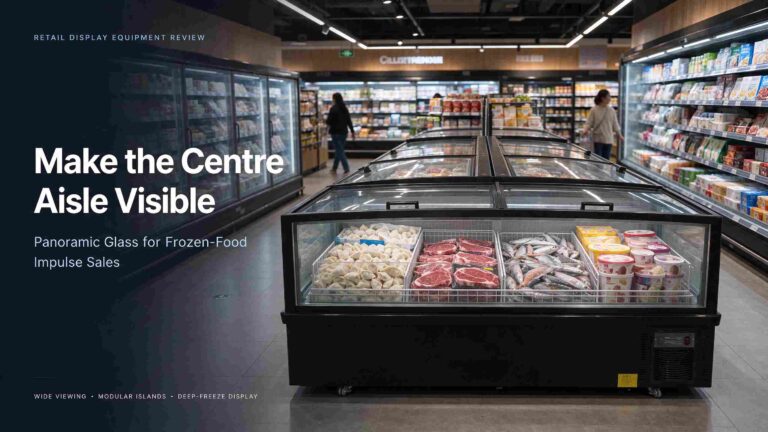
The lower chest section should be divided by baskets or wire partitions. High-frequency items belong near the opening side, while reserve cases should not bury the products customers buy most often. This reduces lid-open time and limits the amount of warm humid air entering the freezer.
Do not use the lower freezer as a temporary receiving table. Boxes left across the lid can stop it closing fully. A lid that remains open for ten minutes during a delivery can create frost that takes much longer to remove.
A regular inspection should record upper-zone air temperature, lower-zone product temperature, gasket condition, frost pattern, compressor runtime and condenser cleanliness. If the upper display is cold but the lower freezer is soft, staff need to know which circuit and which alarm to check first.
Coordinating the Whole Store Cold-Chain Matrix
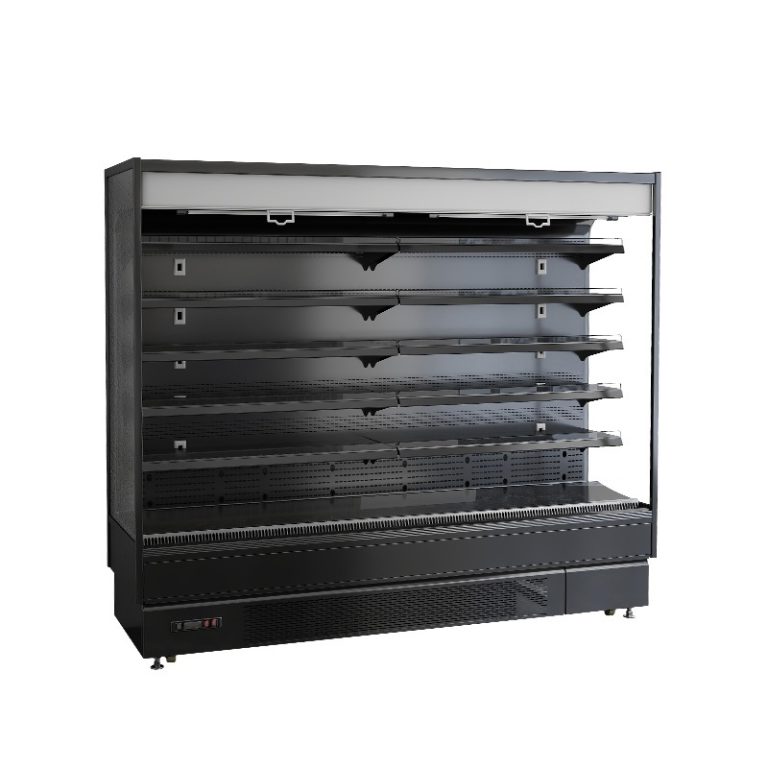
The dual-deck cabinet is not a replacement for every cabinet. It is a space-saving tool for a specific part of the store. Along a long wall, a commercial refrigerator may provide a broader chilled range, while the combined cabinet handles promotional drinks and frozen impulse products at a high-traffic point.
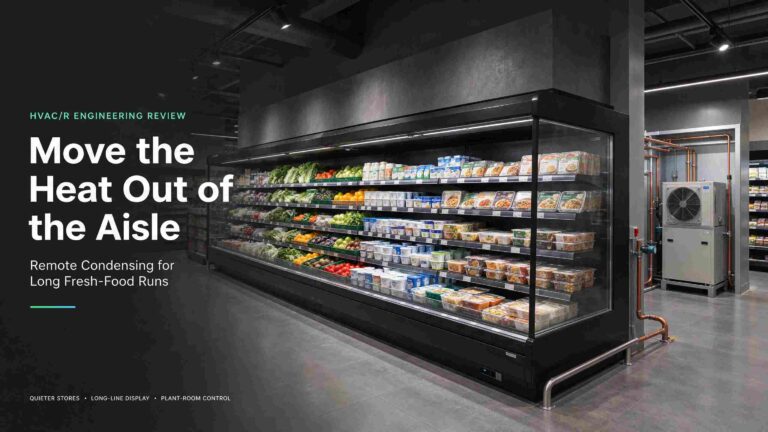
A commercial vegetable refrigerator should usually serve the fresh-produce entrance with low-velocity airflow and a product-specific humidity plan. Leafy greens and berries should not share the same high-speed air pattern used for bottled drinks. The fresh display needs clear replenishment access and enough room for crates, trimming and cleaning.
The wider store may use a line of commercial supermarket refrigerators for dairy, drinks and ready meals, with a commercial refrigeration equipment schedule that separates chilled, frozen and produce duties. For project teams, the term refrigeration equipment commercial should refer to the full specification, including condenser clearance, electrical load, defrost, drainage, service access and spare parts.
A tall four-door cabinet may be placed against the wall where product range and linear capacity matter more than central-floor flexibility. The dual-deck unit may sit near the checkout route or an aisle junction where customers can see the upper display and reach frozen products without walking to a separate frozen room.
Thermal balance also matters. A plug-in chest freezer and a wall cabinet should not discharge hot air into each other. Leave the specified rear and side clearances. If the condenser intake is starved, both the product temperature and the electricity bill can move in the wrong direction.
Factory Construction and Export Details
An export-grade unit should be judged from the inside out. High-density polyurethane insulation reduces heat transfer, but the foam must be continuous around the upper and lower compartments. Panel joints, corners and service openings deserve inspection because small thermal bridges add up over a long operating life.
The specification may include two branded hermetic compressors, independent digital controllers, automatic or demand-based defrost, separate condenser airflow, adjustable shelves, wire baskets, vertical LED lighting and a removable magnetic gasket. The correct configuration depends on the local voltage, frequency, ambient condition and product duty.
The lower chest section needs a lid and hinge system that can tolerate repeated opening and loading. Aluminium alloy bumper protection is worthwhile at the cabinet corners, especially where shopping carts, delivery cages and hand trucks turn in a narrow aisle. A replaceable bumper can prevent one impact from damaging the cabinet body or glass frame.
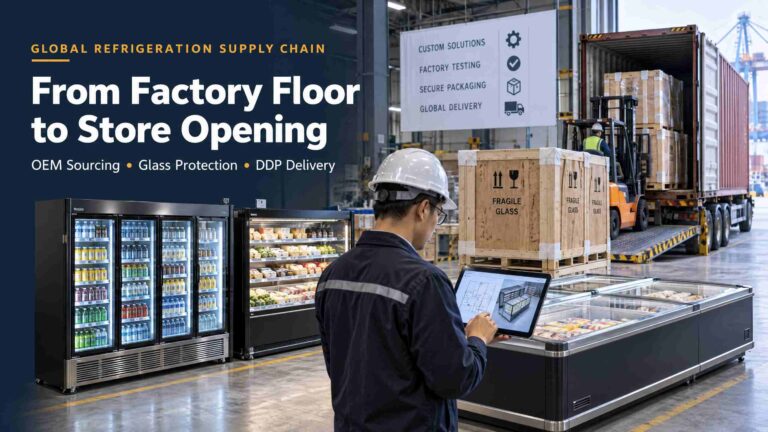
Export packing should protect both the upper glass and the lower lid mechanism. The wooden case or approved export package should immobilise shelves, baskets, handles and controller panels. The packing list should match model numbers, accessories and spare parts before the container leaves the factory.
Before production, request the cabinet drawing, temperature ranges, net volume, shelf load, compressor details, refrigerant, defrost method, controller, noise level, power input, plug arrangement and test procedure. Ask how the factory tests the upper and lower zones under representative load.
| Selection item | Recommended specification | Practical store benefit |
| Cabinet arrangement | Upper anti-fog glass-door display plus lower sliding-lid chest freezer | Two product duties within one compact footprint |
| Temperature control | Independent upper and lower circuits with separate controllers and alarms | Less risk of cross-zone failure and easier fault diagnosis |
| Visibility and protection | Low-E insulated glass, controlled frame heater, vertical LED lighting and aluminium alloy bumpers | Clear merchandising, lower condensation risk and better cart-impact protection |
| Export readiness | High-density insulation, branded compressors, automatic defrost, local voltage and protective export packing | More predictable commissioning, transport and service support |
The combined dual-deck format is most useful when the store has a narrow aisle, limited wall length and a product mix that needs both visibility and reserve frozen capacity. It does not remove the need for disciplined loading. It gives the operator a better starting point.
For a 3D store layout, factory quotation and configuration of dual-temperature commercial refrigeration equipment, contact www.createrefrigeration.com. createrefrigeration supports OEM adjustments for cabinet size, lighting, shelf arrangement, voltage and export packing. CREATE Refrigerator is positioned as a source manufacturer for retailers that want one compact cabinet to carry two clearly separated cold-chain jobs.