A refrigeration temperature log looks simple until a store has to defend it. A handwritten number at 9:00 a.m. may be neat, but it does not prove what happened at 3:00 a.m., during lunch restocking, or after a cabinet door stayed open. That gap is why HACCP temperature monitoring is becoming a practical buying topic for supermarkets, convenience stores, bakeries, fresh meat shops, and foodservice retailers.
The choice is not only paper versus software. Manual checks still have value because staff can see product condition, blocked airflow, frost, damaged gaskets, and careless loading. Automated cold chain monitoring adds the missing timeline: trend history, alarm records, sensor gaps, and corrective action notes. Buyers choosing a display refrigerator or supermarket refrigerator should ask how the cabinet, controller, external sensor, and store routine will work together before a food safety audit arrives.
Why Do Manual Temperature Checks Still Matter?
Manual checks are not outdated. They are just limited. A trained employee can notice a soft ice cream tub, a frosted return air grille, a door that fails to close, or products stacked past the load line. A sensor may record a temperature, but it cannot always explain why the value changed.
A Manual Log Captures Store Judgment
A good manual refrigeration temperature log records more than a number. It should include the cabinet name, product zone, time, reading, staff name, and action taken. If the value is outside the store’s limit, the record should show whether staff moved product, checked the gasket, closed a door, called maintenance, or held stock for review. That action note is often the difference between a useful record and a box-ticking exercise.
The Weak Point Is Time Coverage
The usual problem is the gap between checks. A cabinet may drift warm after closing, recover before morning, and leave no visible sign. A staff member may copy the same reading from memory. A busy shift may skip a line. Manual records depend on discipline, training, and honest timing. For high-risk food, that is a lot to place on a clipboard.
Where Does Automated Monitoring Add Real Value?
Automated systems are strongest when they answer questions that manual checks cannot. They create a continuous record, flag missing data, and show whether a cabinet recovered after defrosting, restocking, or repeated door opening. Still, they need careful setup. Bad sensor placement or noisy alerts can make a digital system look more precise than it really is.
Data Loggers Fill The Night Shift Gap
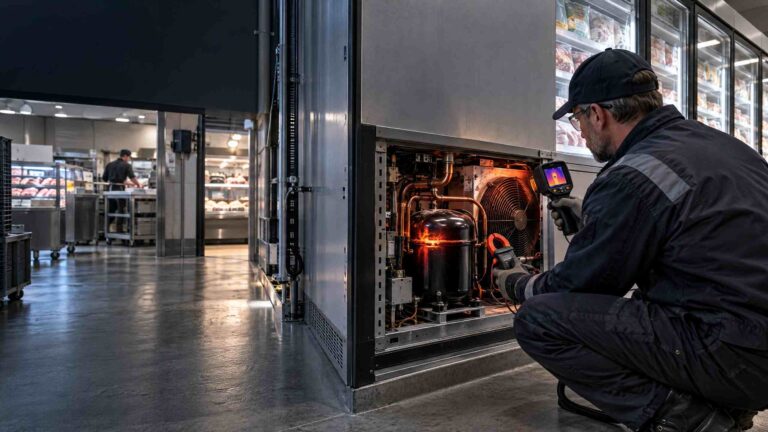
A commercial refrigerator data logger can record temperatures when no one is standing in front of the cabinet. That helps stores review overnight performance, weekend incidents, delivery-day stress, and slow recovery after stocking. For multi-store operators, data loggers also make it easier to compare units without waiting for a manager to scan paper sheets.
Alarms Need Evidence Behind Them
An alarm is useful only when the record explains what happened next. Food safety temperature records should show the alert time, the sensor, the cabinet, the condition, the staff response, and the closing note. If alarms ring too often for normal door openings, staff stop treating them as urgent. If they ring too late, the store may already have a product decision to make.
What Should Buyers Check In The Cabinet?
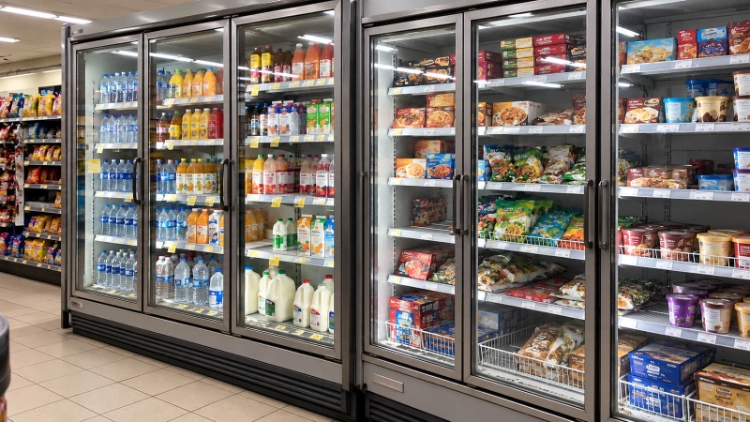
A monitoring plan works better when the cabinet is easy to read, easy to service, and stable under real traffic. Buyers should look at airflow, glass, defrost, controller display, door behavior, shelf design, and where a probe or data logger can be placed without being buried by product.
Sensor Position Has To Match Product Risk
The safest point is not always the coldest point. A probe mounted beside an air outlet may give comfortable readings while the front shelf runs warmer after restocking. A sensor placed near the return air path may show recovery problems sooner. For frozen food, chilled meat, dairy, beverages, and prepared food, the store may need different record points and different action rules.
Defrost, Doors, And Recovery Belong In The Log
A clean HACCP record should not treat every temperature movement as a failure. Defrost cycles, door openings, and restocking can cause temporary changes. The key is whether the cabinet returns to range in a reasonable pattern for that product and store. Automated cold chain monitoring is strongest when it connects temperature movement to events that staff can actually check.
Product Details That Help Temperature Records Stay Useful
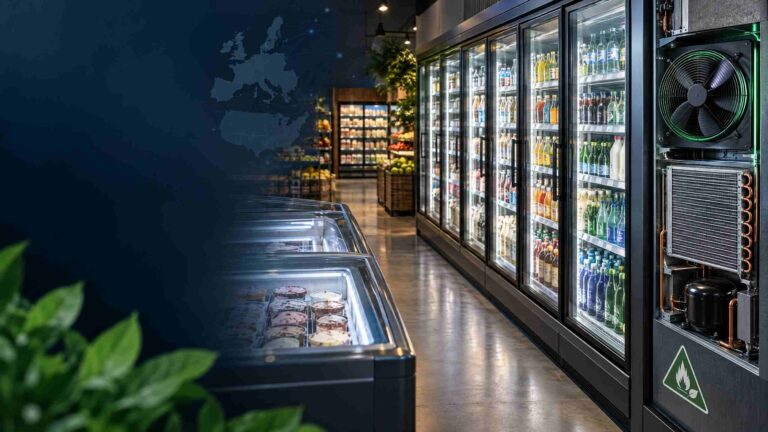
Self-closing glass doors, double-layer insulating glass, high-quality air duct design, LED lighting on the door frame, efficient heat exchanger design, thickened insulation, air-cooled circulation, and 360-degree cold-air distribution. Those features matter for HACCP temperature monitoring because a cabinet that holds temperature evenly gives a cleaner record and fewer confusing warm spots.
Glass Door Cases For Drinks And Frozen Food
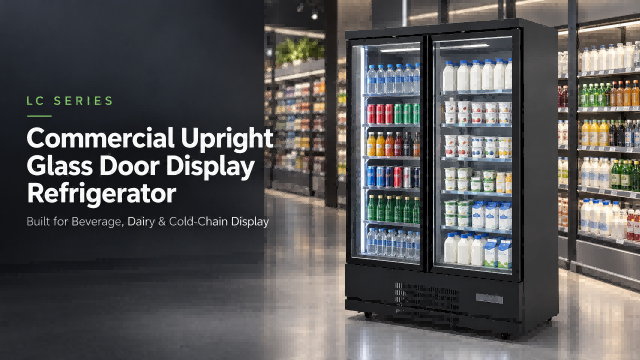
Create Refrigeration’s commercial refrigerator is a plug-in 1-4 door chiller/freezer family with five shelves, automatic defrost, casters with brakes, one-piece foaming, LED 6000K lighting, low-E coated glass, R404A/R290 options, an Elitech thermostat, a Secop compressor, a copper tube evaporator, an Ebm fan, and a C-P 70 mm panel. For a buyer, those details support questions about probe mounting, recovery after door traffic, and which zones should be part of the refrigeration temperature log.
Wider Display Lines Need Zone Names
A larger display refrigerator can include several doors and several product zones. Create Refrigeration’s 2-5 door range is presented with automatic defrost, five shelves, LED 6000K lighting, R404A/R290/R448A options, an Elitech thermostat, a Secop compressor, a copper tube evaporator, an Ebm fan, low-E glass, and chiller or freezer temperature configurations. A multi-door cabinet should be labeled clearly in the log so staff know whether a reading belongs to door one, the center section, or a frozen section.
Open Cases Need Air Curtain Discipline
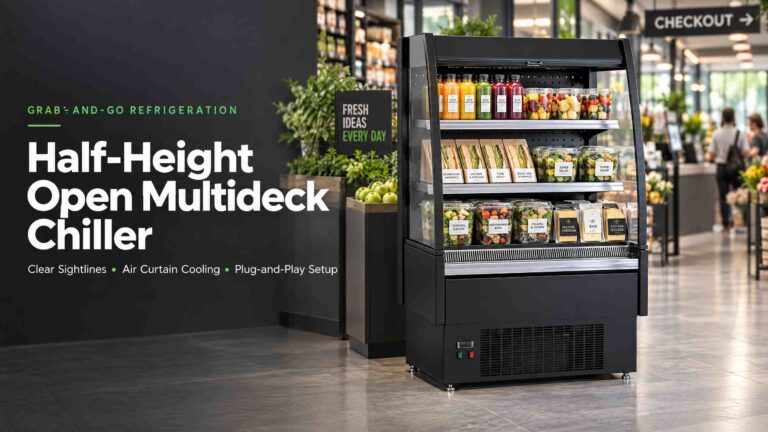
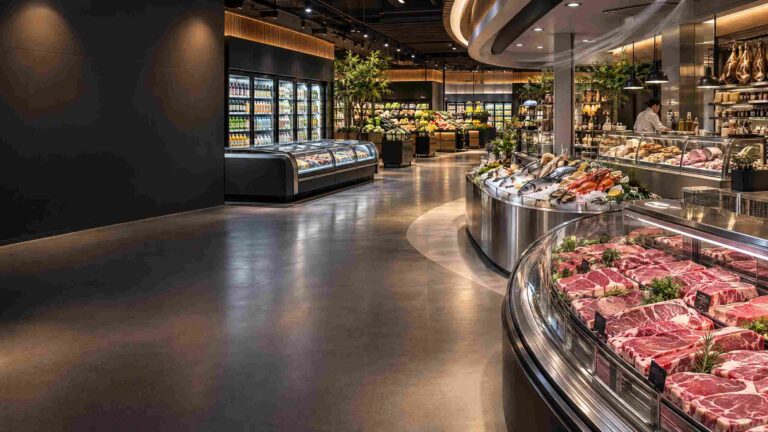
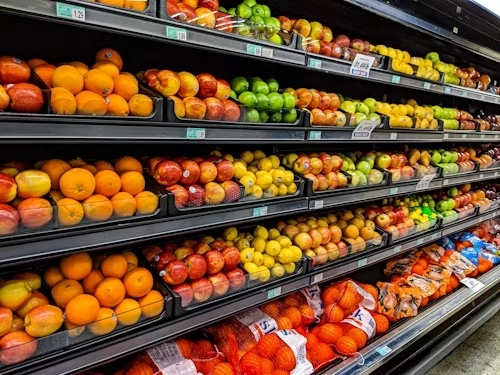
For fresh food and beverages, a supermarket refrigerator with an air curtain needs a different record habit. Create Refrigeration’s remote multideck chiller uses seven adjustable metal shelves, automatic defrost, a transparent night curtain, R404A/R290/R448A options, an Elitech thermostat, a Secop compressor, a copper tube evaporator, an Ebm fan, and a 2-8 degrees C range. Staff should keep the air curtain clear and note loading issues because blocked airflow can make automated records look like equipment failure when the cause is merchandising.
How To Compare Manual Logs And Automated Records
Buyers can use a blended approach. Manual checks give human inspection. Automated records give time coverage. Together they create a stronger trail than either method alone. The cabinet supplier should be part of that conversation, especially when the store uses several formats, from glass-door freezers to open chillers and meat displays.
A practical buyer checklist can stay short:
1. Name each cabinet in plain store language.
2. Decide which products need stricter food safety temperature records.
3. Choose sensor points by warm-risk zones, not only easy cable routes.
4. Keep manual checks for visual issues such as frost, gasket damage, and blocked shelves.
5. Use data loggers for overnight trends, alarms, and missing-record gaps.
6. Review alarm response notes, not only the temperature curve.
7. Ask the supplier where probes can be installed without hurting airflow, cleaning, or service access.
Later in the specification stage, Create Refrigeration can support the equipment side of that planning. The company works from Xingfu Industrial Park in Binzhou, Shandong, and it covers commercial supermarket refrigeration equipment, supermarket shelves, stainless steel equipment, western kitchen equipment, and cold storage projects. It also records CAD drawings, 3D supermarket layout renderings, OEM/ODM service, conventional, modified, and customized products, 110V/60Hz and 220V options, DDP service when an address is provided, one-year warranty, and spare parts support for some bulk orders. If you would like to learn more, please read this article.
FAQ
Q1: Is automated cold chain monitoring enough for HACCP records?
A1: No. It helps with time coverage and alarms, but stores still need staff checks, corrective actions, cleaning notes, and product judgment.
Q2: What should a refrigeration temperature log include?
A2: Include cabinet name, zone, time, reading, staff name, product category, out-of-range action, follow-up result, and any equipment issue found.
Q3: Where should a commercial refrigerator data logger be placed?
A3: It should reflect product risk and warm zones while avoiding direct air outlets, blocked shelves, cleaning damage, and positions staff may cover with product.