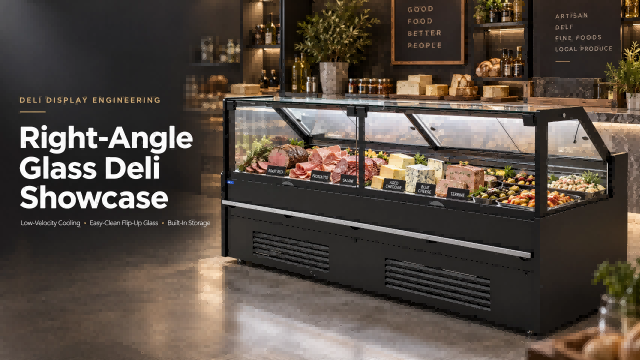
A premium deli counter has a narrow operating margin for error. Sliced ham must retain a clean surface, roast beef must not develop a dark dry crust by the end of the afternoon, and cheese needs to look fresh without sweating in the case. At the same time, the customer must see the products clearly, staff must replenish quickly, and the cabinet must be cleaned properly every night.
That is why many independent butcher shops, high-end supermarkets and delicatessens are moving from curved-front cases to a Commercial Right-Angle / Square Glass Deli Display Showcase. The straight, square profile gives the counter a precise architectural line. More importantly, it provides a broad usable display face, a practical worktop and a lower storage zone without wasting valuable floor depth.
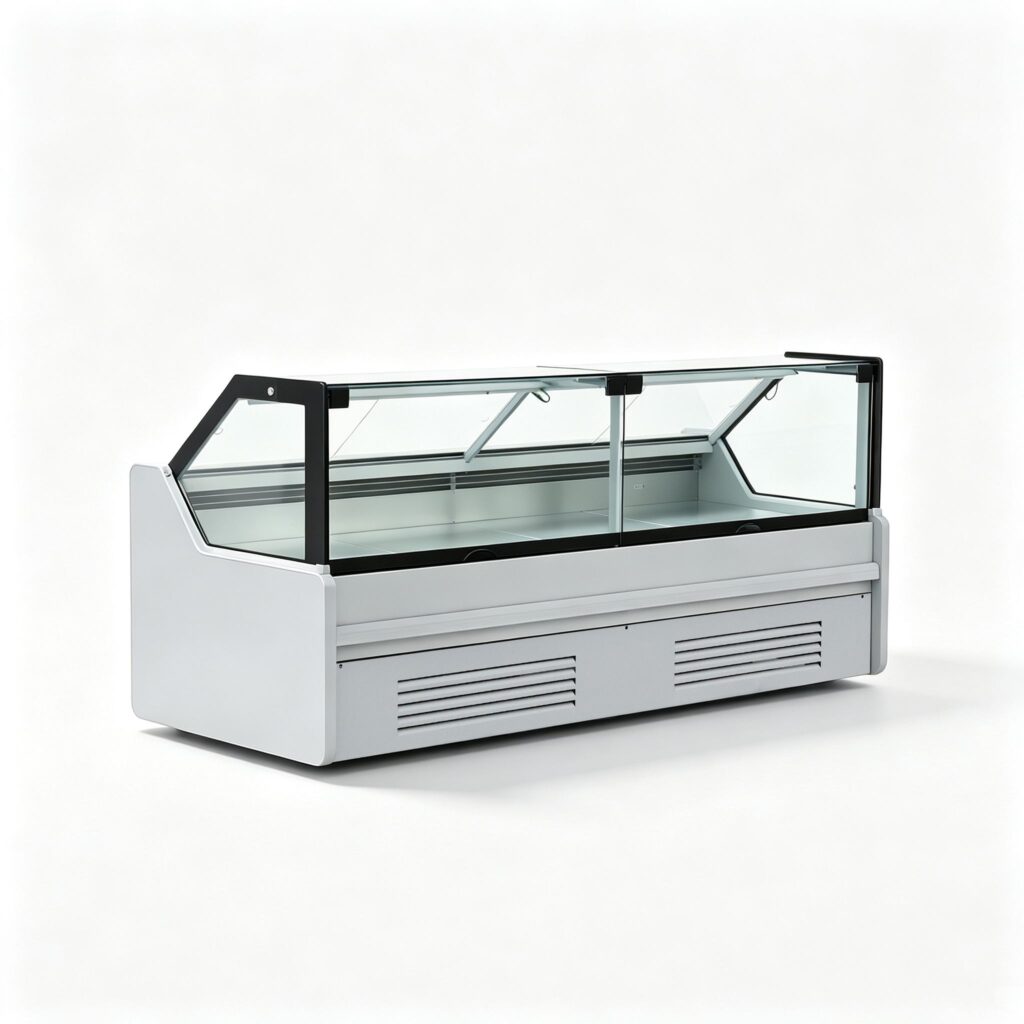
The best results come from treating the showcase as a food-handling workstation rather than as a piece of shop furniture. createrefrigeration builds this type of cabinet around low-velocity cooling, SUS 304 food-grade stainless steel, a serviceable front-glass mechanism and OEM dimensions matched to the operator’s counter layout. Those details affect product weight, cleaning time and staff workload every day.
Crisp Sightlines Without Ceiling Glare
The 90-degree, flat-top form suits the visual language of a modern premium food hall. Its vertical corners line up neatly with adjacent counters, wall finishes and floor joints. It is easier to place in a straight fresh-food loop than a rounded case that creates awkward gaps at the ends of a run.
There is also a very practical optical reason to specify a high-transmission, flat tempered-glass top. Ordinary curved glass can catch the reflection of ceiling spotlights and show bright white bands across the food. From the customer side, the reflection may be more noticeable than the product itself. Staff often respond by changing the light angle or wiping the glass, neither of which solves the underlying problem.
A well-designed flat glass panel gives the lighting designer a more predictable surface. The viewing angle is cleaner, labels are easier to read and the colour of sliced meats, terrines and prepared salads is less distorted by glare. CREATE Refrigerator combines this high-transmission top glass with a square cabinet geometry that gives the display a crisp sightline without making the counter look visually heavy.
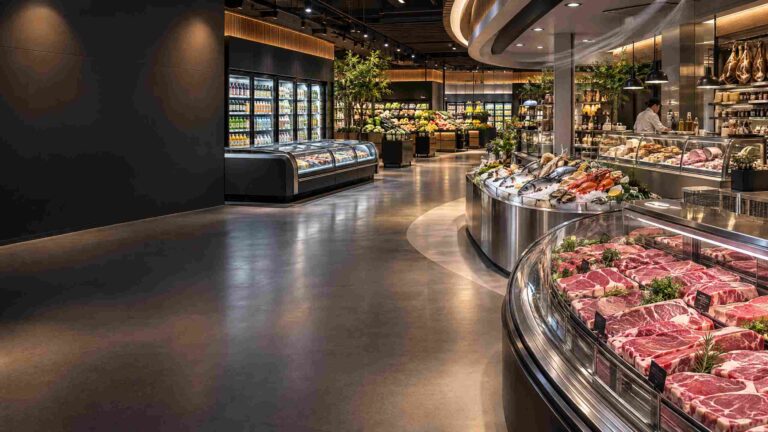
The right-angle format also works well in a complete fresh-food circuit. A supermarket seafood display case can carry chilled fish and shellfish along one side of the route, while a meat freezer supermarket section handles frozen meat nearby. Matching the cabinet height, corner line and stainless-steel finish keeps the route orderly. For factory drawings, glass options and layout coordination, purchasers can consult www.createrefrigeration.com.
The front profile should be judged from the customer’s actual standing position, not only from a catalogue photograph. Ask the supplier to show the sightline at normal eye level, the effect of ceiling lights, the corner clearance and the position of the operator’s cutting or plating area. In a small butcher shop, a few centimetres of unnecessary projection can interfere with queue movement. In a large supermarket, an inconsistent cabinet height can interrupt the visual rhythm of the entire fresh-food department.
Low-Velocity Cooling & SUS 304 Hygiene
Fresh deli products do not respond well to a strong cold jet. A high-speed stream directed at sliced ham or roast beef can dry the exposed surface within hours. The visible result is surface crusting and weight shrinkage. A product may still be within a safe temperature range, yet it looks darker, loses saleable weight and needs to be trimmed or replaced sooner.
The cabinet should therefore use gentle, well-distributed air circulation. Low-velocity cooling moves cold air through the display without blasting the front row. The goal is not to remove heat as aggressively as possible; it is to maintain the required product temperature while limiting moisture loss. Air-return paths, shelf position, product depth and controller settings all affect the result. Staff should avoid stacking trays directly in front of an outlet or packing the case so tightly that air cannot return.
This approach is particularly useful for cooked meats, roast beef, poultry portions, sliced cheese and prepared deli items. It does not replace food-safety controls. Operators still need to follow the required temperature limits, loading rules, cleaning schedule and local regulations for each product category. The cabinet’s job is to provide a stable display environment that supports those procedures.
The internal finish matters just as much. Salt, brine, gravy, vinegar-based marinades and acidic dressings eventually find their way onto shelves and the bottom pan. Painted steel or thin decorative metal may look acceptable at installation but can become difficult to clean after repeated exposure. SUS 304 food-grade stainless steel gives the working surfaces a more suitable resistance to corrosion and routine sanitising chemicals when maintained according to the manufacturer’s instructions.
A SUS 304 interior is not an excuse to leave residue in place. The surface still needs prompt wiping, correct detergent concentration and thorough drying. Rounded internal details, accessible joints and a properly formed base pan reduce the number of places where sauce and grease can collect. CREATE Refrigerator specifies SUS 304 components for the food-contact and working areas according to the project configuration, allowing buyers to confirm the exact material scope before production.
Flip-Up Front Glass: A Better Closing Routine
The front glass is the part of the cabinet that staff handle most often during cleaning. A fixed panel may look neat, but it forces workers to reach through narrow openings or clean around the glass in sections. Grease can remain under the lower lip, and sauce can collect at the junction between the glass and the display deck.
A hydraulic flip-up front glass changes that routine. When raised to a suitable working angle, it opens the full front of the case for wiping, sanitising and inspection. Staff can see the bottom corners, drain areas and product supports rather than guessing what remains underneath. That is especially useful after a busy weekend when sliced meat juices, oil and seasoning have reached the lower deck.
The lift mechanism should be specified for repeated commercial use. Buyers should ask about the hydraulic support rating, hinge construction, safe open position, cleaning clearance and the method for securing the glass during service. A heavy glass panel that drops, drifts or requires two people to hold open creates a new hazard instead of reducing work.
The front edge also needs protection. An aluminum alloy bumper strip can absorb and spread the impact of shopping trolleys, baskets and delivery crates better than an exposed glass or thin sheet-metal edge. The strip should be firmly fixed, replaceable where practical and shaped so it does not create a dirt trap. In a compact store, this small part often prevents a repair after a single careless trolley turn.
Built-In Cold Storage Below the Display
The upper display is where the customer buys, but the lower section is where the operator keeps the counter moving. A built-in customized storage box gives staff a nearby reserve of packaged cuts, backup trays, cheese blocks or prepared products. During the lunch rush, a worker can replenish the front without walking to a remote cold room every few minutes.
The storage box should be planned around the actual pack sizes. A narrow shelf may suit wrapped sliced meats but not whole cheese wheels or large roasting joints. Confirm the internal dimensions, access door, temperature requirement, drain arrangement and cleaning method before finalising the drawing. If the lower compartment is intended for a different temperature class from the display deck, the refrigeration design must state that clearly.
This upper-display/lower-storage arrangement improves usable floor productivity because one footprint performs two related jobs. It also reduces back-and-forth movement behind the counter. The gain is most noticeable in small shops, where every extra step crosses the staff route or interrupts service at the weighing and wrapping station.
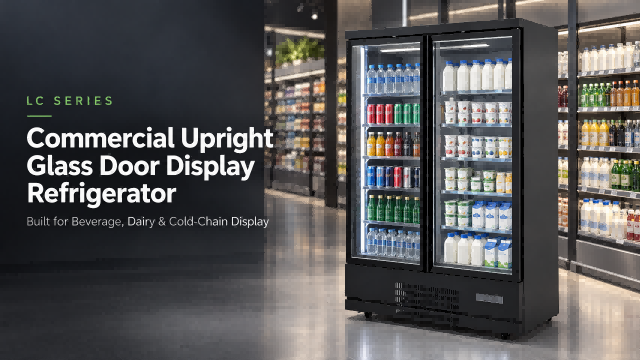
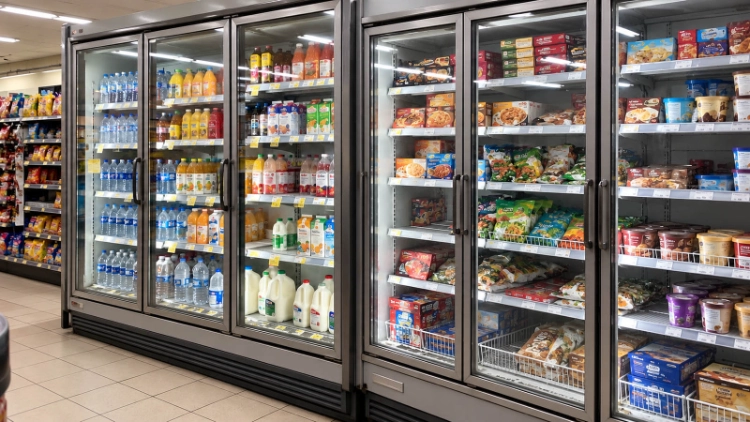
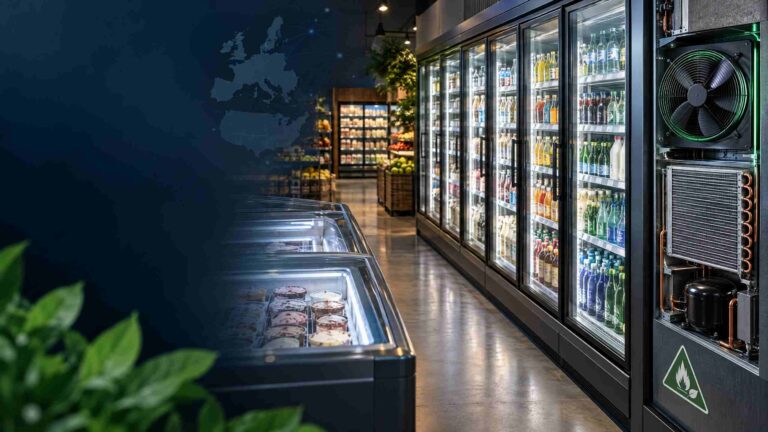
The case should still be integrated with the rest of the cold chain. A run of supermarket display fridges may hold packaged dairy and ready-to-eat items along the adjacent wall, while a supermarket glass door refrigerator carries drinks or sealed products for self-service. Coordinated shelf heights, door swings and replenishment paths prevent the deli counter from becoming a bottleneck. display fridge supermarket planning should include queue direction, staff access and the position of weighing, slicing and packing equipment—not just the cabinet footprint.
Full-Store Integration & Spec Matrix
A source factory is most useful when it can discuss the counter as part of a complete store rather than quoting one cabinet in isolation. createrefrigeration offers OEM customisation for cabinet length, corner arrangements, glass configuration, stainless-steel finish, bumper details, internal storage and merchandising accessories. The purchaser should supply a floor plan, product list, desired display height, available power and the local ambient condition.
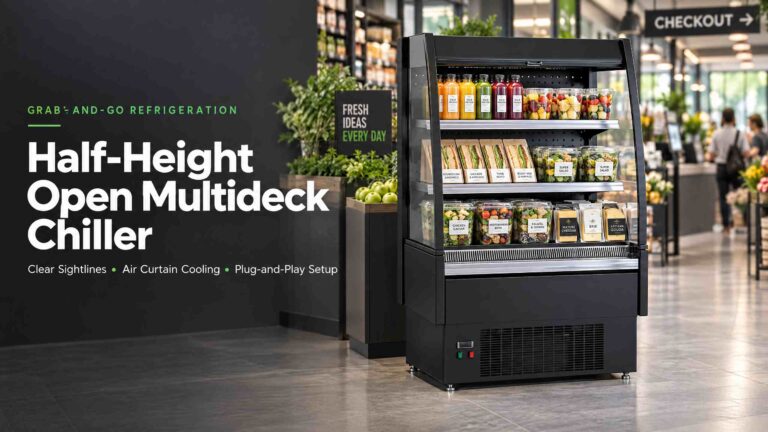
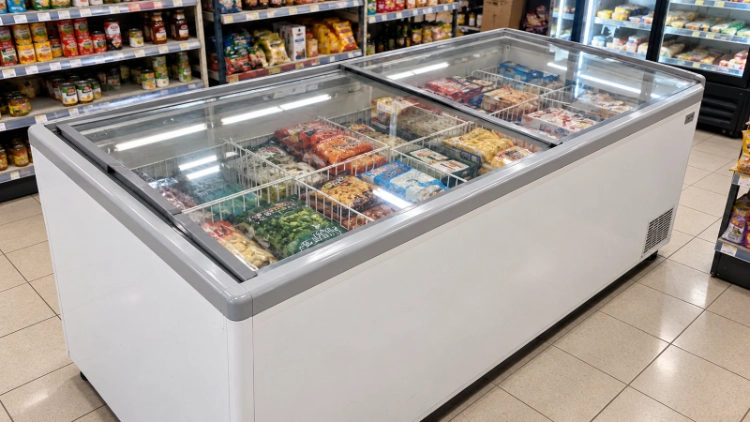
The same project may include a supermarket juice display for chilled drinks, a supermarket freezer island for frozen convenience foods and a supermarket commercial display freezer for packaged frozen products. A larger programme may also require supermarket display fridge freezers for mixed retail formats and a standard display fridge supermarket run for packaged fresh items. These units do not share the same operating temperature or air movement requirements, so the engineering schedule should identify each duty separately.
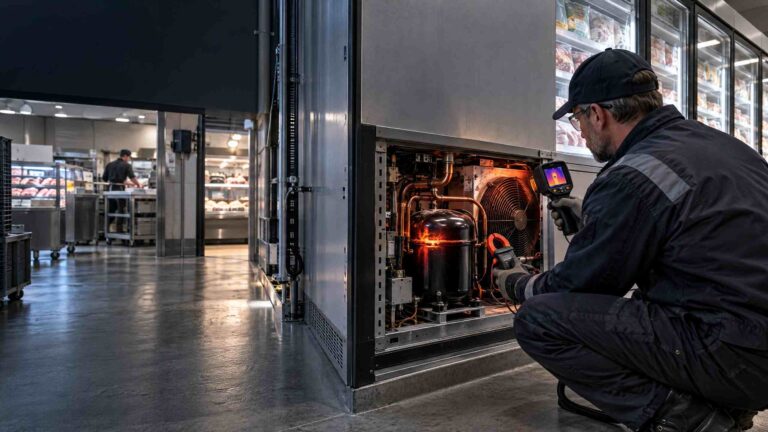
A coordinated order can still bring practical benefits. Matching stainless-steel finishes, lighting controls, handles, bumper strips and spare parts simplifies staff training and maintenance. The factory can also review electrical loading, condenser ventilation, service access and delivery routes before production. That is more useful than discovering after installation that a case blocks a door, a freezer rejects heat into the deli area or a hydraulic glass cannot open fully beside a column.
When comparing quotations, ask for the following in writing: the SUS 304 coverage, glass thickness and type, cooling method, specified temperature range, storage-box duty, hydraulic hardware, bumper material, shelf loading, drainage, compressor and refrigerant details, testing procedure, packing method and warranty scope. For an OEM project, request a dimensioned drawing and approval sample before the production run.
| Specification | Commercial right-angle glass deli showcase |
| Display construction | High-transmission tempered flat glass; square 90-degree profile; OEM lengths and layouts |
| Cooling and hygiene | Low-velocity air circulation; SUS 304 food-grade stainless-steel interior options |
| Access and protection | Hydraulic flip-up front glass; aluminum alloy bumper strip; accessible cleaning zones |
| Storage and project service | Built-in customized refrigerated storage box; factory layout and OEM support |
Final Buying View
For a premium butcher, deli operator or fresh-food buyer, the value of a right-angle glass showcase is measured in daily handling. Does the roast beef keep a clean surface through the trading period? Can the team remove oil and sauce from the cabinet base without dismantling the counter? Does the glass stay readable under ceiling spotlights? Can a trolley brush the front edge without turning a minor impact into a broken panel? Is reserve stock close enough to replenish without leaving the service position?
A properly specified cabinet answers those questions through low-velocity cooling, corrosion-resistant working surfaces, a genuinely useful flip-up glass and cold storage under the display. CREATE Refrigerator brings these details together with SUS 304 fabrication and OEM capability for operators who need the counter to fit the store, the menu and the cleaning routine.
To discuss dimensions, material coverage, product temperatures or a complete fresh-food route, submit the store drawings to createrefrigeration through www.createrefrigeration.com. Include the counter length, corner conditions, ceiling-light locations, service route and the products to be displayed. Those details give the engineering team enough information to recommend a cabinet that works on the sales floor—not just one that looks good in a brochure.