
The 3:00 PM Breaker Trip
The store was a community fresh-food market with a small prepared-meals kitchen and a busy front counter. At about 3:00 p.m. every hot afternoon, the refrigeration plant became noisy, unstable, and expensive.
Several plug-in cabinets started and stopped in short intervals. A few compressor overload protectors tripped. The units would cool for a while, shut down on thermal protection, then restart after the motor winding had cooled. The sound was not subtle. Customers could hear the compressors hammering behind the sales floor, while the kitchen team was trying to keep chilled ingredients below temperature.
The monthly electricity bill was almost 40% higher than the same period the previous year. The owner had already changed two thermostats and suspected that the refrigerant charge was wrong. The store manager thought the answer might be a larger compressor.
It was neither.
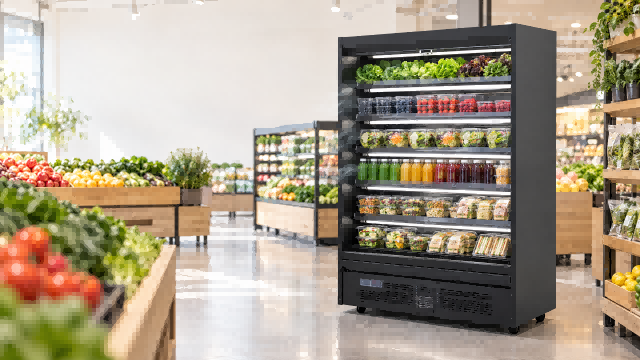
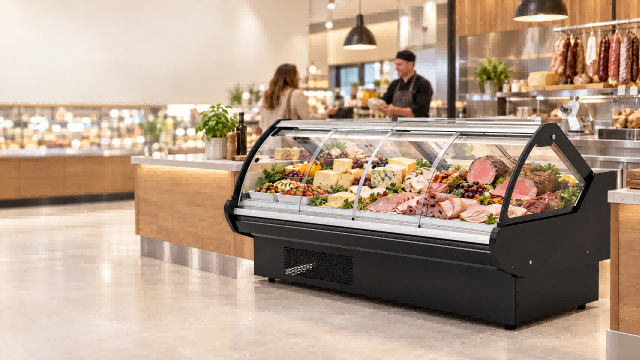
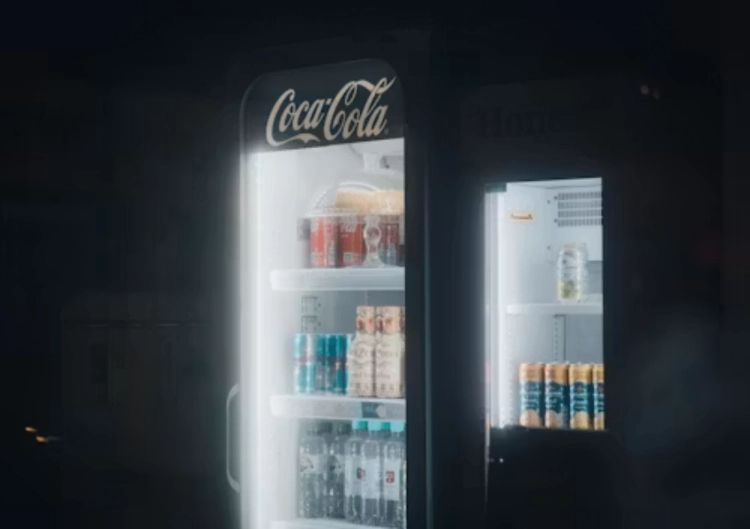
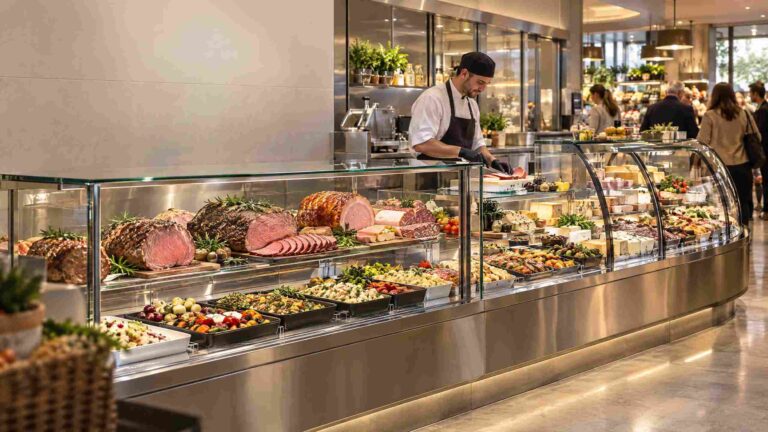
The first inspection covered the fridge supermarket line near the entrance, a supermarket equipment freezer in the back room, and a group of prep cabinets serving the deli counter. We also checked the supermarket freezer commercial units because their compressor run time was affecting the afternoon demand peak.
The breaker did not trip at a random time. It tripped when outdoor temperature, kitchen heat, customer traffic, and refrigeration load reached the same point. That timing gave us a useful starting point.
Thermal Audit and Mechanical Inspection
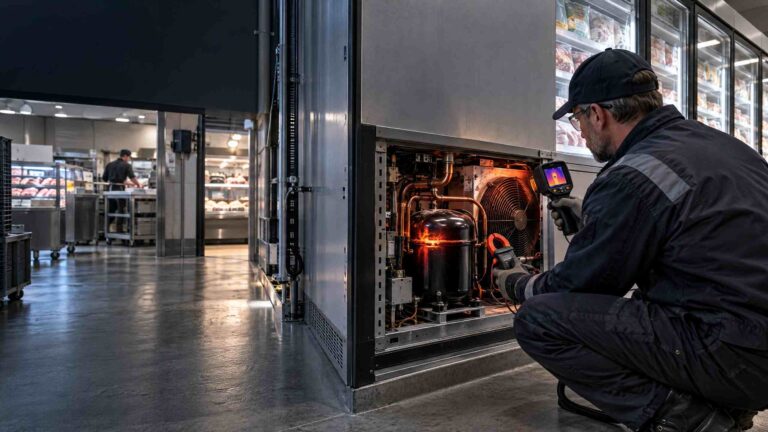
We installed clamp meters on the compressor supply circuits and logged the readings during the afternoon peak. One 230 V plug-in freezer drew 8.6 A at start-up and settled at 4.9 A during normal operation. After the store warmed up, the running current climbed to 6.8 A, then the overload protector opened. The compressor shell reached 118°C at the hottest point in the thermal image.
The suction line told the same story. Return-gas temperature was 24°C at the compressor inlet, far above the normal value for that cabinet’s operating condition. The compressor was receiving hot return gas and poor cooling. High return temperature raises motor winding temperature and leaves less safety margin before overload.
We found three serious installation errors.
1. The cabinets were pressed against the wall
Several self-contained cabinets had been installed with only 20 to 30 mm behind the condenser section. The design required a clear heat-rejection path of at least 150 mm. There was no usable 15 cm ventilation channel.
The hot discharge air hit the wall and rolled straight back into the condenser intake. The compressor compartment was recycling its own heat. The cabinet could still run on a mild morning, but it had no chance during the afternoon peak.
The supermarket vertical freezer beside the dry-goods shelving had a similar problem. Its rear grille was partly covered by cartons. A supermarket refrigerated display case near the front counter was also receiving warm air from a low ceiling diffuser.
2. Grease and dust had sealed the condenser fins
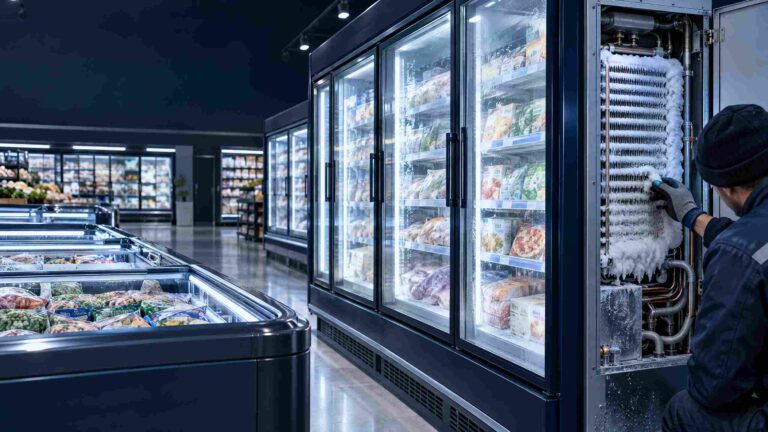
The condenser beside the prepared-food production area was coated with a mixture of cooking oil, flour dust, and lint. The layer was thick enough to resist the inspection brush. Air could pass through the clean edge, but most of the fin pack was blocked.
Before cleaning, the temperature difference across the condenser was abnormally high, and measured heat rejection had fallen by roughly 60% against the cabinet’s service baseline. The condenser fan was running. That did not mean the condenser was doing its job.
Oil film is especially troublesome. It holds dust against the fin surface and creates a sticky insulating layer. Dry brushing alone usually spreads the dirt. The coil needs a suitable foaming cleaner, controlled rinsing, and enough time to dry before the cabinet is returned to service.
3. Open cabinets had no night cover
Two open-front chilled cases were left exposed after the store closed. There was no night blind or insulated roller shutter. The compressors ran through the night to offset room air entering the display opening, and the cases were still carrying that heat load when the store opened again.
The cabinets were classified internally as supermarket cooler units, but their operating schedule looked more like a continuously open loading bay. The same issue affected a supermarket fridge freezer used for dairy and ready meals.
The store’s procurement list also included an island freezer for supermarket expansion and an additional display line. We paused the purchase until the airflow, heat load, and expected duty cycle had been measured. Buying more cabinets before fixing the room layout would have increased the demand peak.
Restoring Airflow and Correcting the Fault
The repair plan started with heat rejection. Refrigeration capacity is not free if the condenser cannot release the heat.
Step 1: Record the baseline
Before touching the equipment, we recorded compressor current, shell temperature, suction pressure, discharge pressure, return-gas temperature, cabinet air temperature, room temperature, and the time between starts. We also noted the position of each cabinet, nearby heat sources, wall clearance, grille condition, and whether a night cover was fitted.
The short-cycling interval was as little as seven minutes on one cabinet. The compressor was stopping on overload, not completing a normal thermostat cycle. That distinction prevented an unnecessary control replacement.
Step 2: Clean the condenser correctly
Power was isolated at each unit. We protected electrical components and removed loose debris with a low-pressure vacuum. A commercial coil cleaner was applied to the oily condenser, allowed to work, and rinsed in the direction opposite to the normal air path. We controlled the runoff so grease did not enter the food-preparation area.
After drying, the fin pack was checked for crushed sections. Bent fins were opened with a fin comb, and the condenser fan blade was cleaned and balanced. Fan current was checked against the motor rating. A weak fan can create the same symptom as a dirty coil, but replacing it before cleaning would have missed the main restriction.
Step 3: Rebuild the rear ventilation path
We moved the plug-in cabinets away from the wall and marked a permanent 150 mm minimum clearance behind the condenser compartments. The gap was not left to memory. Stainless rear stops were fitted so staff could not push the cabinets back during cleaning.
We also removed cartons stored above the rear grilles and re-routed a nearby warm-air discharge. The heat-rejection path now moved from the condenser to the open sales-floor air volume instead of returning directly to the intake.
The supermarket equipment display plan was redrawn around service access and air movement. A cabinet is not just a box on a floor plan. It is a heat source, an air inlet, an air outlet, and a maintenance zone.
Step 4: Add night covers and correct controls
The open chilled cases received insulated night blinds. We checked the lower edge seal, curtain tension, and end gaps. The controls were adjusted so the cases did not continue to run at the daytime display setting after closing.
The blinds were not treated as a substitute for correct temperature control. They reduce the overnight infiltration load. The thermostat, fan delay, defrost termination, and product temperature still require normal service checks.
Step 5: Verify the refrigerant circuit and return gas
Once airflow was restored, we checked the refrigerant circuit again. The earlier high return-gas temperature had been driven mainly by excessive cabinet heat load and poor condenser operation. We verified the charge against the manufacturer’s specification, checked for restrictions, and insulated the suction line where the insulation had split.
The compressor then returned to a stable current of 4.6 to 4.9 A under the same afternoon test conditions. Shell temperature dropped below 92°C, and return-gas temperature fell to 14°C. The compressor completed normal cycles instead of opening its thermal protector every few minutes.
Efficiency Upgrade and Store Layout Planning
The operator chose to upgrade the busiest line rather than replace every cabinet at once. The new specification from CREATE Refrigerator includes a defined rear heat-rejection channel, a microchannel condenser, and high-efficiency variable-speed compressors from established compressor manufacturers. The controller stages capacity to match the load instead of forcing a fixed-speed motor to run at full output for every condition.
The createrefrigeration engineering team also prepared a no-charge 2D-to-3D store heat-load layout study. The model showed cabinet positions, condenser discharge paths, ceiling diffusers, entrance drafts, kitchen heat sources, service clearances, and expected afternoon load. That exercise exposed two hidden problems: a proposed cabinet would have blocked a return-air grille, and the future island unit would have discharged warm air toward the beverage line.
The layout was changed before equipment arrived. That is cheaper than modifying a finished store.
For the wider restaurant supermarket equipment program, the audit grouped cabinets by duty rather than by appearance. The beverage display, deli case, frozen-food freezer, and prep cabinet had different loads, opening patterns, and temperature targets. The procurement team had been comparing a standard supermarket freezer commercial specification with a more efficient variable-speed package. The correct comparison included annual run hours, condenser clearance, cleaning access, control settings, and the local summer design temperature.
The store also asked whether a new supermarket refrigerated display case could share the same circuit as the kitchen cabinets. We advised against adding the load without checking circuit capacity, start current, heat rejection, and the afternoon demand profile. Electrical capacity and refrigeration capacity are related, but they are not interchangeable.
Results After Two Months
The first week confirmed that the mechanical fault had been removed. No compressor overload protector tripped during the afternoon peak. Start-to-start intervals became longer and more consistent. The compressors sounded quieter because they were no longer starting against excessive head pressure and a hot compartment.
After two months, the electricity bill was more than 35% lower than the pre-repair summer baseline. The store manager reported fewer emergency callouts, and the kitchen team stopped moving product between cabinets to protect temperature. The largest savings came from several ordinary corrections working together:
- Clean condenser fins that could actually reject heat.
- A permanent 150 mm rear ventilation channel.
- Lower return-gas temperature and less compressor thermal stress.
- Night blinds on open-front cases.
- Variable-speed capacity control on the busiest cabinets.
- A layout that prevented condenser exhaust from entering another cabinet’s intake.
No single part created the saving. The bill came down because the system stopped wasting energy on trapped heat and unnecessary overnight infiltration.
Compressor Longevity and ROI Table
| Field finding | Measured or observed effect | Maintenance or selection action | Expected operating benefit |
| Rear clearance below 150 mm | Hot air recirculates; head pressure and compressor current rise | Maintain a 150 mm heat-rejection channel with rear stops | Lower shell temperature and fewer overload trips |
| Oil and dust on condenser fins | Heat rejection falls; running current rises toward overload | Clean with coil cleaner, rinse safely, inspect fan and fins | Stable condensing pressure and lower peak demand |
| Return-gas temperature around 24°C | Motor cooling is poor; compressor runs hot | Check airflow, suction insulation, charge, and load before changing the compressor | Longer compressor life and fewer thermal cut-outs |
| Open case without night blind | Overnight infiltration extends run time and raises the morning load | Fit an insulated night cover and verify control schedules | Lower overnight consumption and faster morning pull-down |
Final Consultant’s Recommendation
A compressor that starts often is not always a control problem. Record the current, the shell temperature, the suction and discharge conditions, the return-gas temperature, the condenser condition, the wall clearance, and the cabinet’s night operating mode. The measurements usually show whether the motor is being asked to remove heat that the installation should have rejected elsewhere.
For new projects and retrofits, CREATE Refrigerator can review the store plan before the cabinet order is final. The createrefrigeration package covers heat-rejection spacing, microchannel condenser selection, variable-speed compressor options, night-cover requirements, and service access. It also includes the 2D-to-3D heat-load layout review used in this case.
Send the store drawings and equipment schedule through www.createrefrigeration.com for a heat-rejection route, traffic-flow review, and equipment quotation. The earlier the wall clearances, HVAC outlets, kitchen heat sources, and service lanes are shown, the fewer expensive changes are needed after installation.
A cooler that has room to breathe uses less power. A compressor that stays cool lasts longer. That is the practical starting point for a lower summer energy bill.
Case Study: Stopping Summer Short-Cycling and Cutting a Commercial Store’s Power Bill
The 3:00 PM Breaker Trip
The store was a community fresh-food market with a small prepared-meals kitchen and a busy front counter. At about 3:00 p.m. every hot afternoon, the refrigeration plant became noisy, unstable, and expensive.
Several plug-in cabinets started and stopped in short intervals. A few compressor overload protectors tripped. The units would cool for a while, shut down on thermal protection, then restart after the motor winding had cooled. The sound was not subtle. Customers could hear the compressors hammering behind the sales floor, while the kitchen team was trying to keep chilled ingredients below temperature.
The monthly electricity bill was almost 40% higher than the same period the previous year. The owner had already changed two thermostats and suspected that the refrigerant charge was wrong. The store manager thought the answer might be a larger compressor.
It was neither.
The first inspection covered the fridge supermarket line near the entrance, a supermarket equipment freezer in the back room, and a group of prep cabinets serving the deli counter. We also checked the supermarket freezer commercial units because their compressor run time was affecting the afternoon demand peak.
The breaker did not trip at a random time. It tripped when outdoor temperature, kitchen heat, customer traffic, and refrigeration load reached the same point. That timing gave us a useful starting point.
Thermal Audit and Mechanical Inspection
We installed clamp meters on the compressor supply circuits and logged the readings during the afternoon peak. One 230 V plug-in freezer drew 8.6 A at start-up and settled at 4.9 A during normal operation. After the store warmed up, the running current climbed to 6.8 A, then the overload protector opened. The compressor shell reached 118°C at the hottest point in the thermal image.
The suction line told the same story. Return-gas temperature was 24°C at the compressor inlet, far above the normal value for that cabinet’s operating condition. The compressor was receiving hot return gas and poor cooling. High return temperature raises motor winding temperature and leaves less safety margin before overload.
We found three serious installation errors.
1. The cabinets were pressed against the wall
Several self-contained cabinets had been installed with only 20 to 30 mm behind the condenser section. The design required a clear heat-rejection path of at least 150 mm. There was no usable 15 cm ventilation channel.
The hot discharge air hit the wall and rolled straight back into the condenser intake. The compressor compartment was recycling its own heat. The cabinet could still run on a mild morning, but it had no chance during the afternoon peak.
The supermarket vertical freezer beside the dry-goods shelving had a similar problem. Its rear grille was partly covered by cartons. A supermarket refrigerated display case near the front counter was also receiving warm air from a low ceiling diffuser.
2. Grease and dust had sealed the condenser fins
The condenser beside the prepared-food production area was coated with a mixture of cooking oil, flour dust, and lint. The layer was thick enough to resist the inspection brush. Air could pass through the clean edge, but most of the fin pack was blocked.
Before cleaning, the temperature difference across the condenser was abnormally high, and measured heat rejection had fallen by roughly 60% against the cabinet’s service baseline. The condenser fan was running. That did not mean the condenser was doing its job.
Oil film is especially troublesome. It holds dust against the fin surface and creates a sticky insulating layer. Dry brushing alone usually spreads the dirt. The coil needs a suitable foaming cleaner, controlled rinsing, and enough time to dry before the cabinet is returned to service.
3. Open cabinets had no night cover
Two open-front chilled cases were left exposed after the store closed. There was no night blind or insulated roller shutter. The compressors ran through the night to offset room air entering the display opening, and the cases were still carrying that heat load when the store opened again.
The cabinets were classified internally as supermarket cooler units, but their operating schedule looked more like a continuously open loading bay. The same issue affected a supermarket fridge freezer used for dairy and ready meals.
The store’s procurement list also included an island freezer for supermarket expansion and an additional display line. We paused the purchase until the airflow, heat load, and expected duty cycle had been measured. Buying more cabinets before fixing the room layout would have increased the demand peak.
Restoring Airflow and Correcting the Fault
The repair plan started with heat rejection. Refrigeration capacity is not free if the condenser cannot release the heat.
Step 1: Record the baseline
Before touching the equipment, we recorded compressor current, shell temperature, suction pressure, discharge pressure, return-gas temperature, cabinet air temperature, room temperature, and the time between starts. We also noted the position of each cabinet, nearby heat sources, wall clearance, grille condition, and whether a night cover was fitted.
The short-cycling interval was as little as seven minutes on one cabinet. The compressor was stopping on overload, not completing a normal thermostat cycle. That distinction prevented an unnecessary control replacement.
Step 2: Clean the condenser correctly
Power was isolated at each unit. We protected electrical components and removed loose debris with a low-pressure vacuum. A commercial coil cleaner was applied to the oily condenser, allowed to work, and rinsed in the direction opposite to the normal air path. We controlled the runoff so grease did not enter the food-preparation area.
After drying, the fin pack was checked for crushed sections. Bent fins were opened with a fin comb, and the condenser fan blade was cleaned and balanced. Fan current was checked against the motor rating. A weak fan can create the same symptom as a dirty coil, but replacing it before cleaning would have missed the main restriction.
Step 3: Rebuild the rear ventilation path
We moved the plug-in cabinets away from the wall and marked a permanent 150 mm minimum clearance behind the condenser compartments. The gap was not left to memory. Stainless rear stops were fitted so staff could not push the cabinets back during cleaning.
We also removed cartons stored above the rear grilles and re-routed a nearby warm-air discharge. The heat-rejection path now moved from the condenser to the open sales-floor air volume instead of returning directly to the intake.
The supermarket equipment display plan was redrawn around service access and air movement. A cabinet is not just a box on a floor plan. It is a heat source, an air inlet, an air outlet, and a maintenance zone.
Step 4: Add night covers and correct controls
The open chilled cases received insulated night blinds. We checked the lower edge seal, curtain tension, and end gaps. The controls were adjusted so the cases did not continue to run at the daytime display setting after closing.
The blinds were not treated as a substitute for correct temperature control. They reduce the overnight infiltration load. The thermostat, fan delay, defrost termination, and product temperature still require normal service checks.
Step 5: Verify the refrigerant circuit and return gas
Once airflow was restored, we checked the refrigerant circuit again. The earlier high return-gas temperature had been driven mainly by excessive cabinet heat load and poor condenser operation. We verified the charge against the manufacturer’s specification, checked for restrictions, and insulated the suction line where the insulation had split.
The compressor then returned to a stable current of 4.6 to 4.9 A under the same afternoon test conditions. Shell temperature dropped below 92°C, and return-gas temperature fell to 14°C. The compressor completed normal cycles instead of opening its thermal protector every few minutes.
Efficiency Upgrade and Store Layout Planning
The operator chose to upgrade the busiest line rather than replace every cabinet at once. The new specification from CREATE Refrigerator includes a defined rear heat-rejection channel, a microchannel condenser, and high-efficiency variable-speed compressors from established compressor manufacturers. The controller stages capacity to match the load instead of forcing a fixed-speed motor to run at full output for every condition.
The createrefrigeration engineering team also prepared a no-charge 2D-to-3D store heat-load layout study. The model showed cabinet positions, condenser discharge paths, ceiling diffusers, entrance drafts, kitchen heat sources, service clearances, and expected afternoon load. That exercise exposed two hidden problems: a proposed cabinet would have blocked a return-air grille, and the future island unit would have discharged warm air toward the beverage line.
The layout was changed before equipment arrived. That is cheaper than modifying a finished store.
For the wider restaurant supermarket equipment program, the audit grouped cabinets by duty rather than by appearance. The beverage display, deli case, frozen-food freezer, and prep cabinet had different loads, opening patterns, and temperature targets. The procurement team had been comparing a standard supermarket freezer commercial specification with a more efficient variable-speed package. The correct comparison included annual run hours, condenser clearance, cleaning access, control settings, and the local summer design temperature.
The store also asked whether a new supermarket refrigerated display case could share the same circuit as the kitchen cabinets. We advised against adding the load without checking circuit capacity, start current, heat rejection, and the afternoon demand profile. Electrical capacity and refrigeration capacity are related, but they are not interchangeable.
Results After Two Months
The first week confirmed that the mechanical fault had been removed. No compressor overload protector tripped during the afternoon peak. Start-to-start intervals became longer and more consistent. The compressors sounded quieter because they were no longer starting against excessive head pressure and a hot compartment.
After two months, the electricity bill was more than 35% lower than the pre-repair summer baseline. The store manager reported fewer emergency callouts, and the kitchen team stopped moving product between cabinets to protect temperature. The largest savings came from several ordinary corrections working together:
- Clean condenser fins that could actually reject heat.
- A permanent 150 mm rear ventilation channel.
- Lower return-gas temperature and less compressor thermal stress.
- Night blinds on open-front cases.
- Variable-speed capacity control on the busiest cabinets.
- A layout that prevented condenser exhaust from entering another cabinet’s intake.
No single part created the saving. The bill came down because the system stopped wasting energy on trapped heat and unnecessary overnight infiltration.
Compressor Longevity and ROI Table
| Field finding | Measured or observed effect | Maintenance or selection action | Expected operating benefit |
| Rear clearance below 150 mm | Hot air recirculates; head pressure and compressor current rise | Maintain a 150 mm heat-rejection channel with rear stops | Lower shell temperature and fewer overload trips |
| Oil and dust on condenser fins | Heat rejection falls; running current rises toward overload | Clean with coil cleaner, rinse safely, inspect fan and fins | Stable condensing pressure and lower peak demand |
| Return-gas temperature around 24°C | Motor cooling is poor; compressor runs hot | Check airflow, suction insulation, charge, and load before changing the compressor | Longer compressor life and fewer thermal cut-outs |
| Open case without night blind | Overnight infiltration extends run time and raises the morning load | Fit an insulated night cover and verify control schedules | Lower overnight consumption and faster morning pull-down |
Final Consultant’s Recommendation
A compressor that starts often is not always a control problem. Record the current, the shell temperature, the suction and discharge conditions, the return-gas temperature, the condenser condition, the wall clearance, and the cabinet’s night operating mode. The measurements usually show whether the motor is being asked to remove heat that the installation should have rejected elsewhere.
For new projects and retrofits, CREATE Refrigerator can review the store plan before the cabinet order is final. The createrefrigeration package covers heat-rejection spacing, microchannel condenser selection, variable-speed compressor options, night-cover requirements, and service access. It also includes the 2D-to-3D heat-load layout review used in this case.
Send the store drawings and equipment schedule through www.createrefrigeration.com for a heat-rejection route, traffic-flow review, and equipment quotation. The earlier the wall clearances, HVAC outlets, kitchen heat sources, and service lanes are shown, the fewer expensive changes are needed after installation.
A cooler that has room to breathe uses less power. A compressor that stays cool lasts longer. That is the practical starting point for a lower summer energy bill.