Why the Square Profile Works in a Serious Deli
A deli counter has two jobs. It has to keep food within the required chilled range, and it has to make the food easy to see before the customer asks for it.
CREATE Refrigerator builds commercial refrigeration equipment for supermarkets, boutique delicatessens, butcher shops, and foodservice projects. Its square glass deli display chiller is aimed at operators who want a clean 90-degree profile, useful tray space, and a counter that can survive the unglamorous work of a real food department.
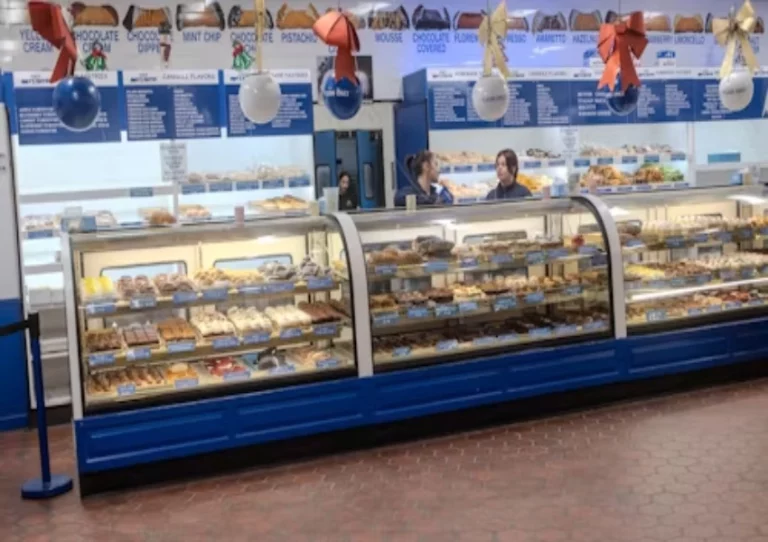
High-end charcuteries and butcher shops often prefer the flat-top square design because it gives them a straight, unobstructed sightline across the display. Stacked trays of sliced ham, cooked roasts, terrines, salads, and prepared foods sit more naturally under a flat front than under a heavily curved canopy.
The cabinet looks orderly from the customer side. It is also easier to align with a wall, a service counter, or another refrigeration unit. That matters when the shop has a narrow sales floor and every millimetre of counter length has to earn its place.
The square profile is not just a styling decision. It changes how the trays are arranged, how the glass is cleaned, and how staff work behind the counter.
Start with the Corner Joints
When I inspect a deli case, I look at the corners before I look at the logo. The corners show how the cabinet will behave after weeks of food preparation and cleaning.
Marinade runs down a tray. Vinegar spills from pickled vegetables. Blood and meat juice collect near the lower pan. Staff wipe the surface quickly, then return to service. At the end of the shift, the cabinet receives a proper washdown.
A 90-degree corner joint must be easy to reach and properly finished. A rough seam or open gap traps residue. Over time, the line becomes dark and difficult to clean. The problem is not solved by spraying more detergent.
The interior tub of the CREATE Refrigerator square deli chiller uses welded, food-grade SUS304 stainless steel. The value is in the complete fabrication: the sheet, the welds, the corners, the drain area, and the finish should work as one cleanable surface.
Ask how the welds are finished. Ask where the drain sits. Ask whether staff can reach the back corners without removing every tray. Those questions are more useful than a general statement that the cabinet is “easy to clean.”
SUS304 also has to be treated correctly. Strong chemicals, poor rinsing, and standing acidic residue can damage any stainless surface. The equipment should be cleaned according to the manufacturer’s instructions, with the correct products and contact time.
Low-Velocity Cooling for Sliced Meat and Prepared Foods
Prepared food does not need a blast of cold air across its surface. That can create another problem.
Sliced meats lose their fresh appearance when the exposed edges dry out. A roast can remain cold while the surface develops a dull crust. Salads can lose moisture around the top layer. The display still shows an acceptable cabinet temperature, but the product no longer looks as good as it did when it was loaded.
CREATE Refrigerator uses a low-velocity laminar cooling circuit to move chilled air through the display without directing a harsh draft straight across the food. The intended holding range is +2°C to +4°C for suitable chilled products, subject to the product specification, local food-safety rules, loading pattern, and actual site conditions.
The airflow should be gentle, not absent. A cabinet with too little movement can develop warm pockets after loading. The engineering task is to keep the temperature stable across the display while limiting unnecessary moisture loss from sliced meat and uncovered prepared foods.
During commissioning, test the cabinet with real trays. Use the depth and spacing the shop will actually use. Check the front, centre, and rear of the display. Check the case after staff have opened the service area repeatedly. An empty cabinet tells you very little about how a deli counter will perform at lunchtime.
The temperature controller also needs to be understood. The displayed number may represent a sensor location rather than the temperature of every tray. Operators should establish their own checking routine and follow the requirements of the applicable food-safety system.
Flat Glass and the Morning Fog Problem
Flat front glass gives a clean customer view. It also makes condensation easy to notice.
At 6:30 AM, the shop may still be warm from overnight cleaning. Staff are carrying trays through the service area. The front glass is cold. Humid air reaches the panel. Within minutes, a milky film appears across the viewing surface.
That fog hides the food and forces someone to stop preparing the counter to wipe the glass. In a busy shop, it can happen again as soon as the panel is cleaned.
Heated wires in the front and side glass help keep the viewing surfaces above the point where moisture condenses. The goal is not to make the glass hot. The goal is to stop fogging during the morning floor rush and other high-humidity periods.
The specification should identify which panels are heated, how the heaters are controlled, and what electrical load they add. A buyer should also confirm whether the frame, mullions, and glass edges have their own condensation control. Clear glass in the centre is not enough if the corners remain wet.
The glass seals, door alignment, store humidity, cabinet temperature, and service-door openings all affect the result. Heated glass is part of the solution, not a substitute for correct installation and daily maintenance.
Rear Service Doors Keep the Counter Moving
A deli clerk works from the back. The customer sees the front. The equipment has to serve both sides.
Rear acrylic sliding service doors allow staff to reach the trays without opening the customer-facing glass. The opening should be wide enough for a tray and smooth enough to operate repeatedly. The track must be easy to clean because crumbs, grease, and small pieces of packaging will find it.
I also look at the door stop and the space above the counter. A panel that slides only halfway may look acceptable in a product photo but become frustrating when staff need to reach the rear tray. A panel that comes out for cleaning should be removable without excessive force.
The design should leave a practical service path behind the counter. Staff need to lift trays, portion food, wipe the stainless surfaces, and move around one another without hitting the doors or controls.
The Prep Ledge Is Working Space
A wide stainless prep ledge is not wasted surface. It is where staff set the scale, place a paper sheet, portion a roast, or rest a tray for a few seconds while serving a customer.
The ledge needs to be stable and easy to wipe. The front edge should not create a sharp obstruction for a clerk leaning forward to answer a customer. The rear work area should not force staff to twist around the service doors.
The manufacturer can review the prep ledge width and counter length against the intended shop layout. A butcher shop may need more working depth than a packaged-food deli. A compact charcuterie counter may need more display length and less preparation space.
These are layout decisions. They should be settled on a drawing before the cabinet goes into production.
Rear Power Receptacles for Scale Integration
Many deli counters use a weighing scale, label printer, slicer, or small foodservice accessory near the service side. Rear power receptacles can help keep those connections organized and close to the work position.
The receptacles must match the destination electrical requirement and the actual equipment load. They should be protected from splash and positioned where cables will not cross a cleaning path or become a trip hazard.
If a scale is part of the project, send its plug type, voltage, power draw, and mounting position with the RFQ. The refrigerator cabinet should not be modified on site with improvised holes or loose extension leads.
Castors, Leveling, and Long-Term Service
Heavy-duty castors are useful when the counter has to be positioned, cleaned behind, or moved during a store refit. They do not replace leveling.
The cabinet needs a stable final position. Doors and sliding panels should remain aligned. The drain should work as intended. The glass should not sit under stress because one corner is lower than the other.
Confirm whether the unit uses lockable castors, adjustable feet, or a combination of both. Ask how much clearance is needed for the castor and whether the floor can support the loaded cabinet.
A well-planned service arrangement also includes access to the controller, fan, drain, electrical box, and refrigeration components. If a technician has to empty the entire display to reach a basic service part, the design will cost more time over its working life.
Modular Lengths for Different Shops
A square deli display chiller may be ordered as a standalone counter or as part of a longer run. Custom length modularity helps the cabinet fit the available wall, corner, or service line.
The modular plan needs to account for end panels, corner units, service gaps, electrical routing, drainage, and the final position of the compressor or remote connection. A small change in length can affect tray capacity, airflow, glass size, packing dimensions, and the number of sections used in production.
Do not confirm a custom length from a simple floor measurement alone. The drawing should show the wall, columns, doors, aisle clearance, staff working area, and any nearby heat source.
Export Packing for Rough Ocean Transit
A curved or square display cabinet may look robust, but long glass panels and stainless surfaces still need protection during export. Ocean freight exposes the machine to vibration, forklift handling, shifting cargo, and repeated loading operations.
The packing plan should use a supported skid or reinforced base, plywood protection, corner guards, internal bracing, and a way to stop the service doors and glass panels from moving. The cabinet should be supported at structural points rather than left to carry the load through a decorative panel.
CREATE Refrigerator can prepare the packing details around the final cabinet length and order quantity. Buyers should receive the packed dimensions, gross weight, number of packages, and loading arrangement before booking the container.
Seaworthy crating is part of the equipment specification. It is not something to decide after the cabinet has finished production.
Four-Point Technical Summary
| Specification | Practical Engineering Detail |
| Product format | Square glass deli display chiller with a clean 90-degree profile and flat-top presentation |
| Temperature and airflow | Low-velocity laminar cooling circuit designed for +2°C to +4°C chilled-food holding, subject to product and site conditions |
| Interior and access | Welded food-grade SUS304 stainless steel tub, rear acrylic sliding service doors, wide stainless prep ledge, and rear power receptacles |
| Glass, mobility, and export | Heated front and side glass, heavy-duty castors with leveling arrangement, modular custom lengths, and reinforced seaworthy crating |
What to Send for a Proper Quotation
A product photo is not enough for a custom deli counter. Send the required length, depth, height, number of trays, food categories, target temperature, service-door preference, prep ledge size, power requirements, destination country, and delivery port.
If you have a CAD drawing, include it. Mark the wall line, aisle, columns, door openings, drainage point, power point, and staff working zone. If you do not have a drawing, send the measured space and a few clear photographs.
For an RFQ, ask the manufacturer to confirm the interior fabrication, cooling circuit, glass heating, service access, castor setup, electrical adaptation, packing dimensions, and production lead time in writing.
Send the layout or custom-sizing request to CREATE Refrigerator. We can review the CAD details, confirm the cabinet configuration, and prepare a project quotation without guessing what the shop floor is supposed to look like.
References
This article is based on the technical and commercial requirements supplied in the brief. No external sources were used.