Why Retailers Are Reconsidering Open Multidecks
Electricity costs are now part of the refrigeration specification. A cabinet that looks inexpensive at purchase can become expensive when it runs through long trading hours, absorbs warm aisle air, and keeps the compressor working through every busy summer afternoon.
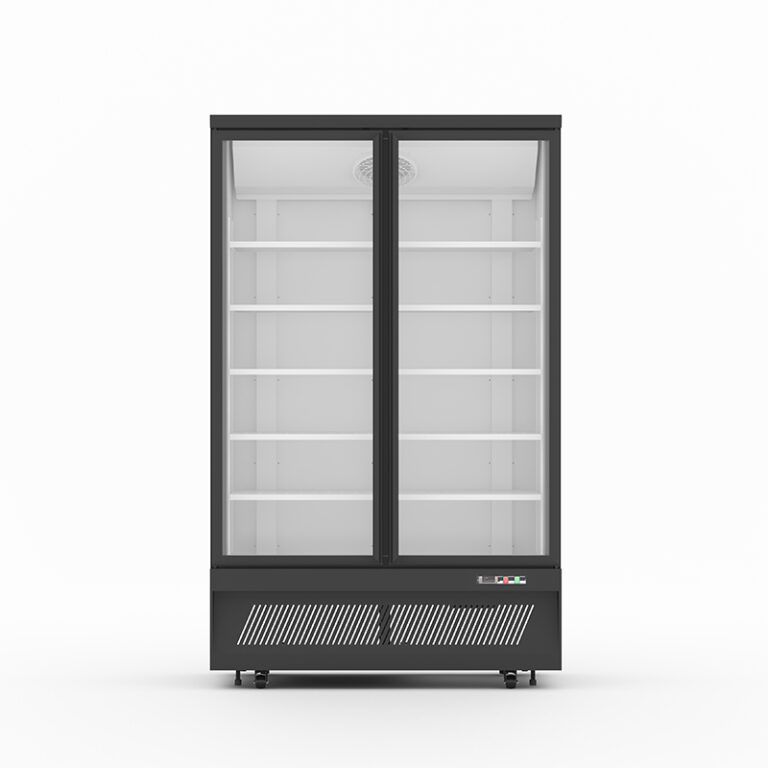
CREATE Refrigerator is a dedicated commercial refrigeration manufacturer focused on equipment for supermarkets, convenience stores, and food retail projects. Its glass door multideck chiller is designed for operators who want the display capacity of a vertical merchandiser without leaving the front of the cabinet open to the sales floor.
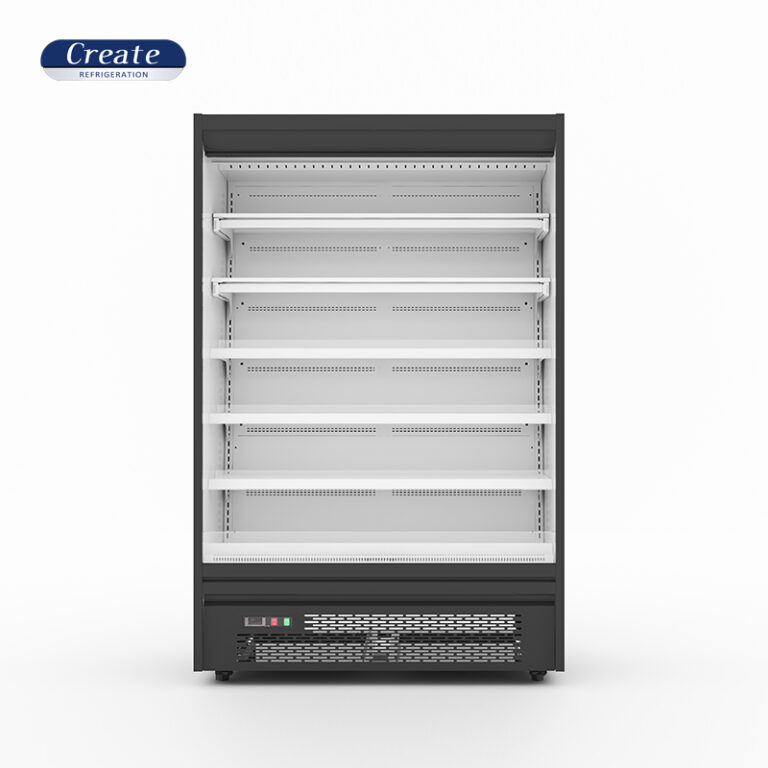
Open air curtains are convenient. Customers can reach in immediately. But the cabinet also pulls in conditioned room air throughout the day. Shoppers may complain about a cold draft near the dairy aisle. The compressor sees a heavier load when the store is warm and humid. For a retailer working with tight margins, those operating conditions deserve a closer look.
A self-closing glass door adds one physical action: pull, take the product, and release. In return, the cabinet keeps most of its cold air inside between visits. That changes the daily load on the refrigeration system and can make the aisle more comfortable for customers and staff.
Low-E Heated Glass Doors and the Energy Calculation
The CREATE Refrigerator glass door multideck chiller uses a double- or triple-pane Low-E door architecture, depending on the project specification. The insulated glass reduces heat transfer through the viewing panel. A self-closing mechanism limits the time the cabinet is exposed to the shop environment.
In a comparable installation, moving from an open-front air curtain to a properly selected closed glass door multideck can reduce refrigeration electricity consumption by approximately 35% to 45%. This range is a planning reference, not a universal guarantee. The actual result depends on ambient temperature, store humidity, cabinet length, door opening frequency, product loading, lighting, defrost settings, and condenser maintenance.
The calculation should include the complete operating system. Compare compressor consumption, evaporator and condenser fan motors, LED lighting, defrost, and glass or frame heaters. Comparing only the compressor nameplate does not show the actual cabinet load.
The door frame also needs attention. In a humid store, clear centre glass is not enough. Moisture can collect around the door edge and mullion. Frame heaters and anti-fog control help keep these areas visible and reduce condensation during early-morning replenishment or a busy lunch period.
Do not accept “anti-fog glass” as a complete specification. Confirm whether the front glass, side glass, door frame, and mullions are heated. Confirm the heater wattage and the control method for the destination climate.
Balanced Cooling from Top Shelf to Bottom Deck
A multideck chiller has a familiar failure pattern when its airflow is not balanced: milk cartons freeze on the bottom shelf while juice bottles on the top shelf run warm.
The cabinet may show an acceptable average temperature. That number can hide large differences between shelf levels. Product temperature is affected by the discharge-air position, return-air path, shelf spacing, door opening, and how tightly the goods are packed.
CREATE Refrigerator uses forced vertical ducting to guide cold air through the cabinet and support uniform cooling from one tier to the next. The target operating range is +2°C to +8°C across the display area when the cabinet is installed and loaded according to its operating requirements.
The air path still needs to be respected in daily use. Staff should not block the return-air opening with cartons. Shelves should not be overloaded beyond the specified depth. Product should not be pushed tightly against discharge slots. These simple mistakes can create warm zones even when the refrigeration system is correctly designed.
For commissioning, measure the cabinet at several shelf positions after a normal product load. Test it after repeated door openings. Check the lowest deck, the centre shelves, and the top tier. A showroom test with an empty cabinet is not enough.
Designed for Multipack Beverages and Dairy Loads
The vertical format is useful when the store needs more display height without expanding the floor footprint. Adjustable cantilever shelving allows the operator to change the spacing for different product groups.
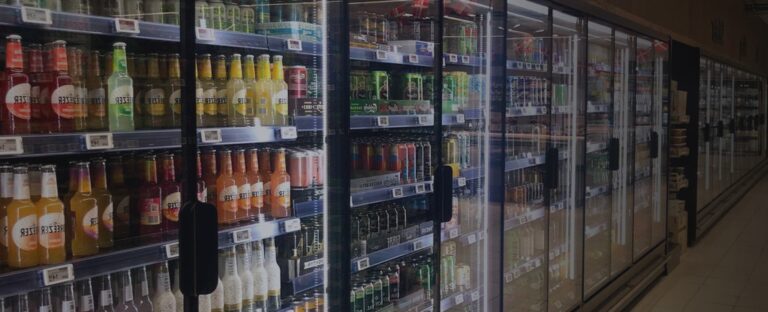
A dairy section may need close shelf spacing for milk cartons and yoghurt multipacks. A beverage section may need more clearance for tall bottles, family-size containers, or promotional packs. The shelves should be adjusted around the actual product plan rather than left in a default position.
Integrated price tag rails keep product information aligned with the shelf edge. This helps staff reset the display faster when prices or promotions change. It also keeps labels from being taped to the glass or placed loosely on the product deck.
High-CRI vertical LED mullion lighting gives the front of the cabinet a clear, even appearance. For grab-and-go sales, the customer should be able to identify the product, size, brand, and price before opening the door. Lighting should show the product naturally rather than create a bright reflection that hides the shelf behind it.
The equipment design has to work with the store layout. Door width, mullion position, shelf height, and LED placement affect what a shopper sees while standing in the aisle.
The Door Pull Should Not Become a Sales Barrier
Some buyers worry that glass doors reduce impulse purchases. The concern is reasonable, but the door itself is not the only factor.
Customers already open doors for milk, bottled drinks, chilled juice, prepared meals, and dairy multipacks. They are more likely to do it when the glass is clear, the handle is easy to reach, the product is well lit, and the door closes without resistance.
A door that sticks or fogs will hurt the shopping experience. So will a cabinet with poor shelf visibility. The practical answer is to specify reliable hinges, a controlled self-closing action, clear glass, useful lighting, and enough aisle space for the door swing.
The benefit is a warmer and quieter shopping aisle. Open air curtains can create complaints from customers who do not want cold air blowing toward their legs. Store employees may spend an entire shift beside the cabinet. Better aisle comfort is an operating benefit, not a decorative detail.
Plug-In Monoblock or Remote Refrigeration Connection
Different stores need different refrigeration arrangements. A plug-in monoblock places the compressor and refrigeration package inside the cabinet. Installation is faster because the site does not need a separate refrigerant pipe network. This arrangement can suit convenience stores, small supermarkets, and projects where installation time is limited.
The trade-off is that the monoblock releases heat and some operating noise near the sales floor. Service access must be confirmed before the equipment is positioned between other fixtures or against a wall.
A remote compressor arrangement moves the condensing equipment away from the cabinet. It can suit larger stores with a central refrigeration rack or a planned machine room. The pipe length, suction-line insulation, oil return, expansion device, and commissioning procedure then become part of the project design.
The manufacturer can review either arrangement during quotation. The correct choice depends on cabinet quantity, store layout, site services, maintenance access, ambient conditions, and the contractor’s installation method. A remote system is not automatically more efficient if the pipework is poorly sized or the rack is badly controlled. A plug-in unit is not automatically cheaper once electrical work, heat rejection, and service access are included.
Factory Configuration for International Projects
Electrical details should be fixed before production. CREATE Refrigerator can configure equipment for common international requirements, including 110V or 220V supplies and 50Hz or 60Hz frequencies, subject to the final model and project specification.
The buyer should confirm the phase, plug or terminal arrangement, controller supply, lighting supply, heater load, and any local certification or labelling requirements. A country name alone is not enough to determine the site electrical connection.
The cabinet structure also matters. A reinforced steel chassis helps support the glass doors, shelving, refrigeration package, and repeated daily use. Castors or leveling feet should be selected according to the floor and installation plan. If the cabinet is not level, door alignment and sealing can suffer.
For export orders, the packing plan should be prepared around the glass and the cabinet length. Seaworthy plywood crating, a supported base, corner protection, internal bracing, and fixed doors reduce the risk of damage during container handling. Confirm packed dimensions, gross weight, package count, and loading sequence before finalizing the container quantity.
Four-Point Technical Summary
| Specification | Engineering / Commercial Detail |
| Operating temperature | +2°C to +8°C across the display area, subject to loading and ambient conditions |
| Glass and condensation control | Double- or triple-pane Low-E self-closing glass doors with heated frame and anti-fog options |
| Airflow and lighting | Forced vertical ducting, balanced shelf-level cooling, integrated price tag rails, and high-CRI vertical LED mullion lights |
| Refrigeration and export configuration | Plug-in monoblock or remote compressor connection; 110V/220V and 50Hz/60Hz options; reinforced steel chassis and seaworthy plywood crating |
Send the Site Details Before Choosing the Cabinet
The right glass door multideck chiller depends on more than its external width. Before requesting a quotation, send the store floor plan, cabinet run length, product categories, shelf loading plan, destination country, voltage and frequency, preferred plug-in or remote system, and expected delivery port.
If you already operate open multidecks, include recent electricity data and any recurring complaints about cold aisles, condensation, warm shelves, or compressor overload during summer. That information helps the engineering team compare the real operating conditions rather than quote from a catalogue image.
Send the floor plan or quotation specifications to CREATE Refrigerator for a configuration review. We can confirm the airflow arrangement, glass and heater selection, electrical setup, packing dimensions, and production lead time before the order is released.
References
This article is based on the technical and commercial requirements supplied in the brief. No external sources were used.