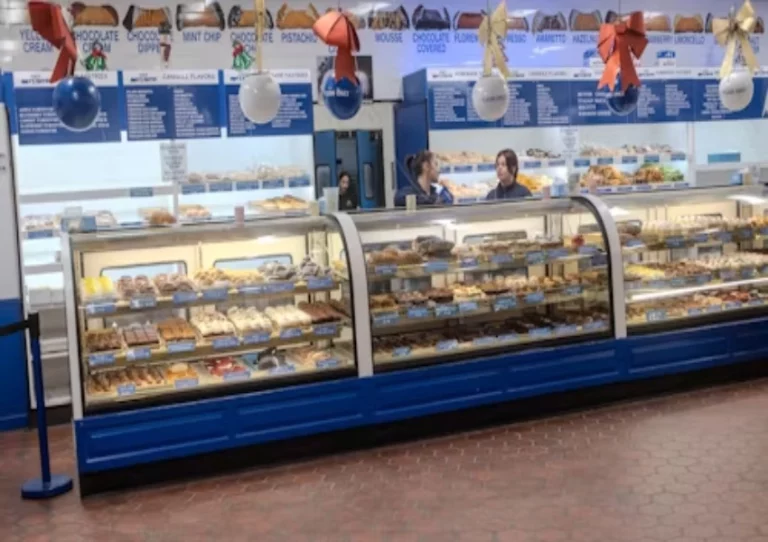
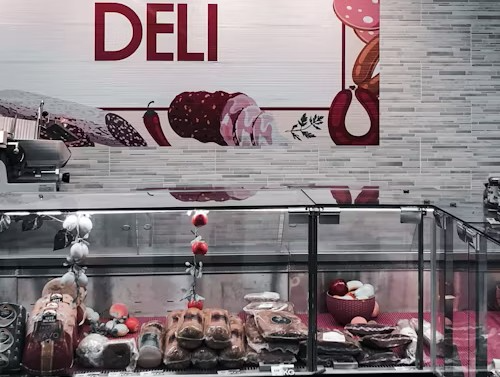
Prepared foods sit in an awkward part of a supermarket operation. Customers want speed and a clear view of the meal, while store teams need controlled handling, steady cabinet conditions, quick replenishment, and clean surfaces. The choice of service counter vs self-service case changes all of those tasks. It also changes who opens the case, how often food is exposed during a sale, and where labor is spent.
A good decision starts with the menu and the operating routine, not with the cabinet photograph. Packaged sandwiches do not move like sliced deli meat. A staffed seafood counter does not have the same handling risk as a grab-and-go lunch case. A supermarket deli equipment brief should define the food, packaging, holding requirement, daily turnover, peak traffic, and cleaning plan before comparing equipment.
Start With The Way Food Reaches The Customer
The main difference is simple. A service counter keeps the product behind a barrier and puts an employee between the food and the shopper. A refrigerated self-service display lets the shopper take a packaged or protected item directly. In a service counter vs self-service case review, that difference reaches far beyond convenience.
When A Service Counter Fits
Service counters suit products that are portioned, sliced, weighed, wrapped, or discussed at the point of sale. Staff can manage utensils, separate batches, answer ingredient questions, and control access to unpackaged food. The trade-off is labor. Queues form when staffing falls behind, and every replenishment or handover adds motion behind the counter.
When Self-Service Fits
Self-service works well for sealed meals, packaged salads, drinks, and fast-moving items with clear labels. It reduces the handover step and helps customers move quickly through a busy lunch period. Yet easy access can mean more door movement, more handling of packs, and rushed restocking. The cabinet has to suit that pattern rather than merely look open and inviting.
Protect Temperature Without Confusing Product Categories
Neither format guarantees stable product temperature by itself. A prepared food display refrigerator still depends on airflow, loading depth, packaging, product entry temperature, ambient conditions, door or glass position, and defrost behavior. The operating temperature must come from the food-safety plan and local rules for the actual product. Buyers should ask for performance evidence under the intended store conditions instead of accepting one broad temperature promise.
Closed, Open, And Rear-Access Designs Behave Differently
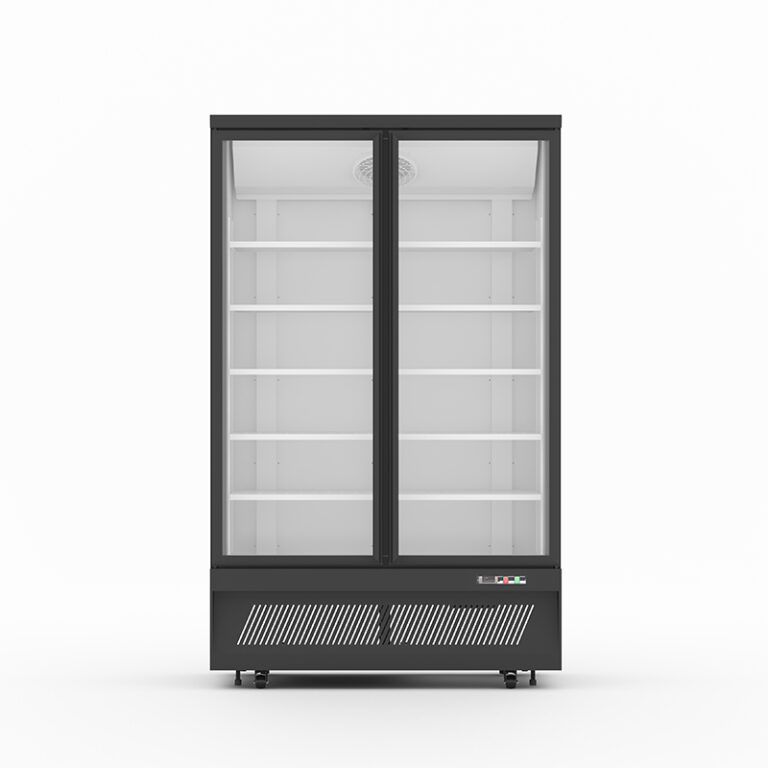
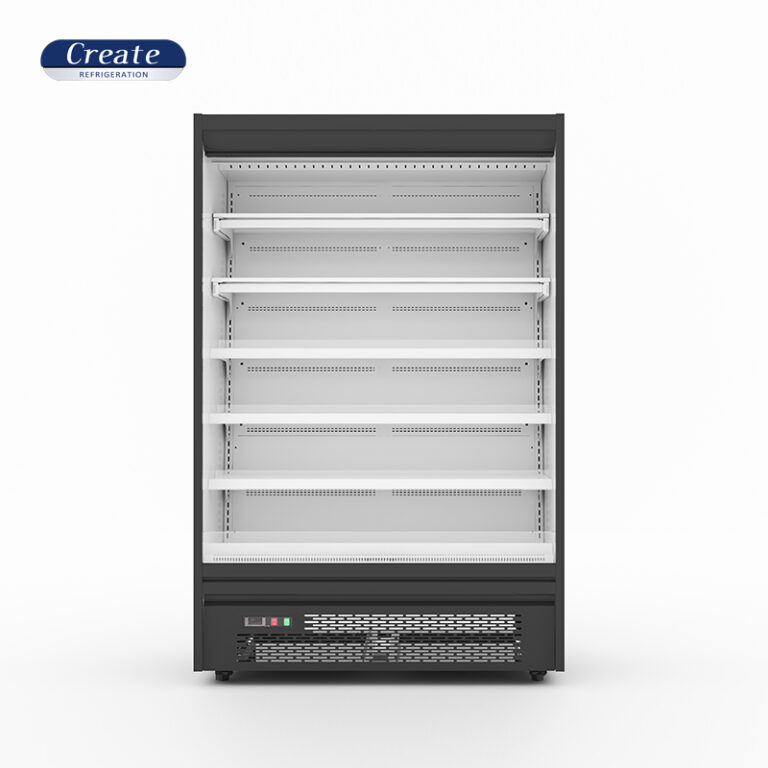
Front glass can reduce direct customer access, but a service counter may still be opened repeatedly from the rear. An open self-service deck gives excellent reach and visibility, though its air curtain is easier to disturb with overloading, nearby drafts, or items placed outside the loading line. A sliding-door or lift-up-glass design introduces another pattern. The RFQ should name the access route and expected transaction rate.
Keep Frozen Meat Separate From Chilled Prepared Food
The label “meat display freezer” is sometimes used loosely in online listings. That does not make a frozen cabinet suitable for chilled deli meals, nor does it turn a chilled meat refrigerator showcase into frozen storage. Confirm whether the quoted unit is a chiller or freezer, its product class, set-point range, test conditions, defrost method, and approved food application. The purchase description should remove any ambiguity.
Compare Labor, Hygiene, Energy, And Store Flow
Labor cost is visible at a service counter, but self-service does not remove labor. Someone still receives food, checks dates, rotates packs, wipes touch points, keeps labels facing forward, clears spills, and records temperatures. Compare minutes per replenishment cycle and per cleaning cycle, not just the number of employees standing at the cabinet.
Hygiene risk also shifts rather than disappears. A deli display case concentrates handling among trained staff and tools. Self-service limits staff-to-customer handover, yet many shoppers may touch doors, handles, lids, or packages. For unpackaged food, barriers and controlled service may be the stronger choice. For sealed portions with high turnover, self-service can keep the line moving with fewer handoffs.
Energy comparisons need matched conditions. A refrigerated self-service display with an open front does not behave like sliding glass, lift-up front glass, or a rear-door counter. Anti-condensation heating, lighting, and plug-in or remote refrigeration also affect the load. Ask suppliers to quote the actual access option, cabinet length, ambient rating, test method, and annual or daily energy figure where one is available. A generic claim about one format being cheaper to run is not enough.
Store flow deserves equal weight. A long queue at a staffed deli can block nearby aisles. A wide self-service case may pull shoppers into the traffic lane while they read labels. Review sightlines, reach height, trolley clearance, replenishment access, and the route from the preparation room to the display. A floor plan often reveals problems that a product sheet cannot.
Match The Cabinet To The Menu And Operating Plan
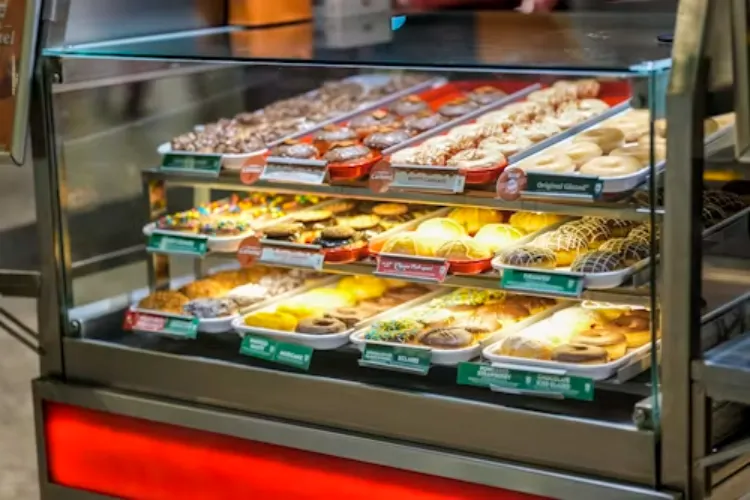
Create Refrigeration’s double-layer self-service counter is a plug-in model with automatic defrost, R290 refrigerant, a push-up glass top, stainless-steel shelving, and a large display area. Those features fit a self-service discussion, but buyers still need the exact temperature range, climate class, usable loading area, and product approval for their prepared-food program.
For staffed service, the right-angle service-over counter is offered in plug-in or remote form. Its front glass can be specified to lift or slide, and it opens for cleaning and product access. The listed refrigerant options are R404A and R290, with automatic defrost. This is the sort of option sheet that should be frozen before quotation approval.
A different self-service meat counter can be ordered as plug-in or remote and is described for meat, seafood, and cooked food displays. Its tempered side glass, optional sliding-door arrangement, air-duct design, and automatic defrost show why cabinet construction belongs in the buying comparison. These details affect access, cleaning, installation, and the way chilled air reaches the deck.
The broader deli line also includes a deli display case format with rear sliding access, opening front glass, insulated side panels, stainless steel air outlets, air-cooled circulation, and remote options. Create Refrigeration also has modular joining, CAD drawings, 3D store layouts, and conventional, modified, or customized production. Those services are useful when counter length, aisle geometry, and the preparation-room route have to be coordinated.
Create Refrigeration’s opening meat display series is listed for cooked food, meat, fruit, vegetables, and beverages in self-service or grab-and-go use. Product notes identify a stainless-steel return-air inlet for moisture exposure, protective bumpers, a rear counter for staff work, modular joining, price-ticket holders, and horizontal display. Buyers can use that feature list to compare cleaning access, staff movement, trolley exposure, and merchandising needs rather than treating every low counter as interchangeable.
A buyer working with the commercial refrigeration manufacturer can request 220V/50Hz, 220V/60Hz, or 110V/60Hz configurations, subject to model confirmation. The supplier records a one-year warranty, pre-production samples, final inspection, and spare parts for some bulk orders. Put every selected voltage, component, warranty scope, inspection item, and spare-part commitment in the signed order rather than relying on a general capability statement.
Put The Choice Into A Buyer Checklist
- Food: List every prepared-food group, packaging type, holding requirement, batch size, and expected time on display.
- Service model: State staffed, self-service, or hybrid operation, plus peak transactions and replenishment frequency.
- Cabinet: Confirm chiller or freezer, plug-in or remote, access side, glass or door movement, loading limits, lighting, defrost, drainage, and controller.
- Store conditions: Provide ambient temperature and humidity, nearby doors or HVAC outlets, aisle width, trolley movement, and available power.
- Hygiene: Review food-contact surfaces, removable parts, drainage, front and rear cleaning access, handle cleaning, and separation of utensils or products.
- Acceptance: Agree on drawings, approved options, temperature test method, appearance checks, electrical details, documents, spare parts, and commissioning records.
The best prepared food display refrigerator is the one that fits the real shift: how food arrives, who handles it, where queues form, and how the cabinet is cleaned after closing. A mixed supermarket deli equipment plan may need both formats. Service can stay around higher-touch products, while packaged meals move to a smaller self-service zone. That boundary is often more practical than forcing one cabinet style across the whole department. For more detail, see our guide on this article.
FAQ
Q1: Is a self-service case always cheaper to operate?
A1: No. It may reduce handover labor, but restocking, cleaning, product rotation, door use, open-front losses, and food waste still affect operating cost.
Q2: Can the same cabinet display cooked food and fresh meat?
A2: Only if its approved product application, temperature performance, hygiene plan, and local rules support all. Cross-contact and cleaning procedures also need review.
Q3: Should a prepared-food counter be plug-in or remote?
A3: It depends on store HVAC, heat rejection, installation space, service access, project scale, and local refrigeration support. Quote both only when the operating conditions are comparable.