A short request for quotation often produces a short answer: a model code, a cabinet size, and a price. That may be enough for early budgeting. It is not enough for an import order or a store project. Commercial refrigeration depends on site conditions, food temperature, power, airflow, defrost, controls, shipping, and local service. Missing fields reappear later as change orders, unsuitable samples, or commissioning delays.
A commercial refrigeration RFQ should make competing offers comparable. It should also show suppliers where an assumption is still open. The checklist below can be used for a supermarket refrigeration quotation, a commercial freezer specification checklist, an OEM commercial refrigerator program, or a cold storage project quotation. Unknown values should be marked for confirmation, not guessed.
Define The Project Before Naming A Model
Site And Operating Conditions
- Project address, destination country, indoor or outdoor location, altitude if relevant, and planned opening date.
- Maximum and typical ambient temperature and humidity, HVAC conditions, door drafts, sunlight exposure, and required clearances.
- Available voltage, frequency, phase, plug or hard-wire requirement, circuit limits, and local electrical standard.
- Food type, incoming product temperature, target holding condition, daily load, peak replenishment pattern, and hours of operation.
- Store drawing, aisle width, doorway and lift limits, final placement, ventilation route, drainage, and service access.
The supplier should state the test conditions behind any temperature, energy, capacity, noise, or pull-down claim. A supermarket refrigeration quotation should identify the test basis for the selected model. If the site is hotter, more humid, more exposed, or more heavily loaded than the test, ask for a model-specific assessment. Do not convert an unverified catalog figure into a contract guarantee.
Use Different Fields For Different Equipment
Supermarket Display Cases
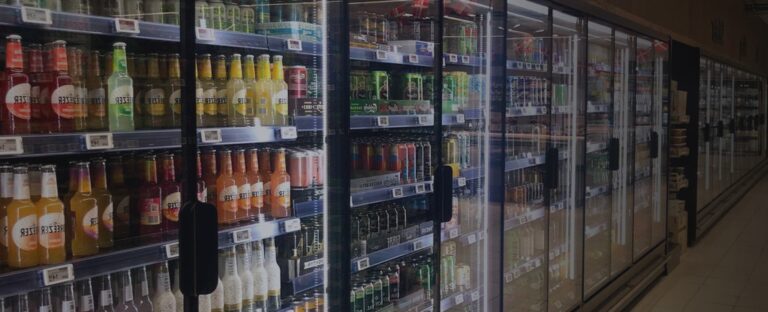
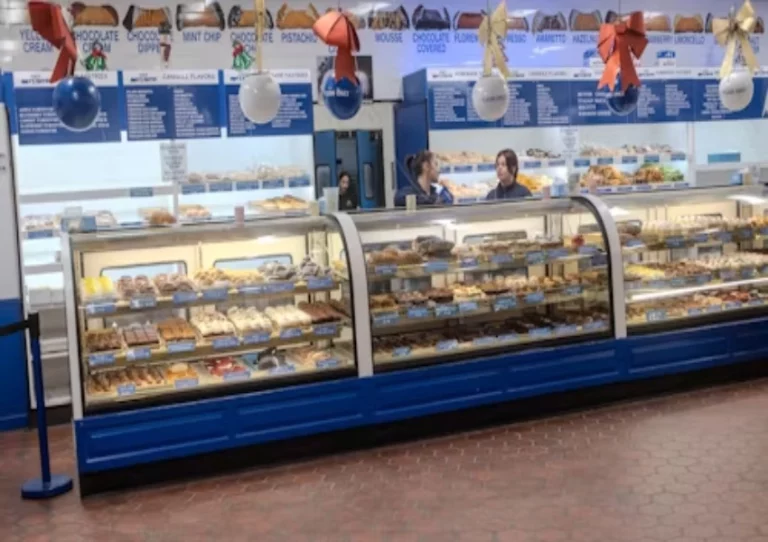
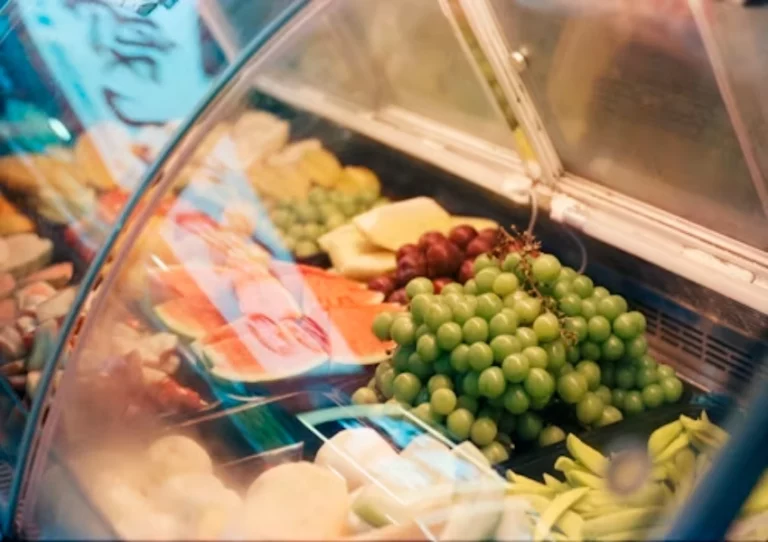
For open multidecks, glass-door cabinets, service counters, and display freezers, specify cabinet length, external and usable display dimensions, shelf count and loading, doors or glass type, lighting, price-ticket arrangement, bumper, night cover if relevant, airflow clearances, drainage, and replenishment access. State whether the case is plug-in or remote and whether cases must join a line.
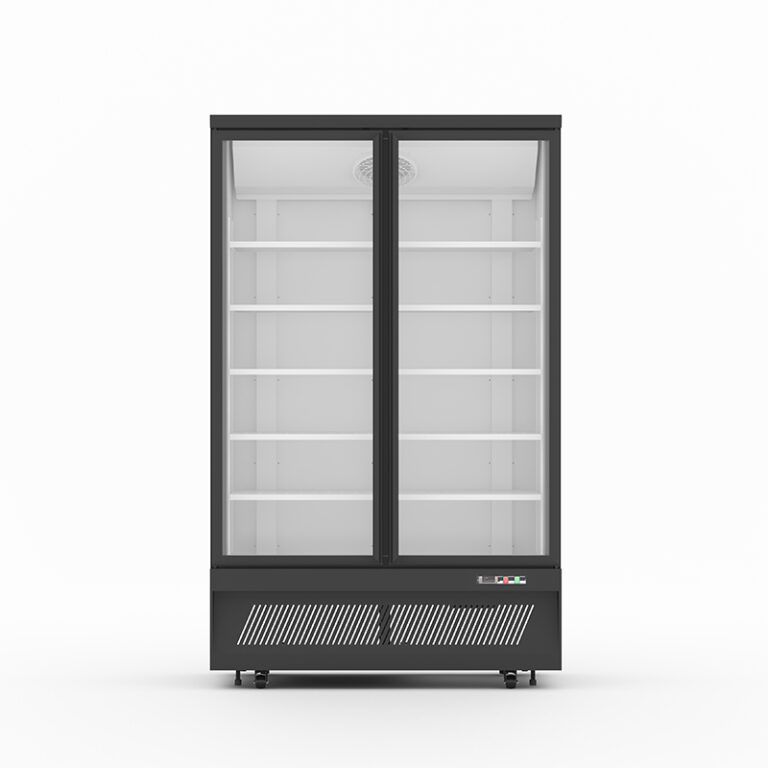
A two-door display refrigerator illustrates the option detail an RFQ needs: plug-in construction, automatic defrost, R404A or R290 options, a microcomputer temperature controller, self-closing glass doors, LED lighting, and different glass construction for chiller and freezer versions. The quoted unit should identify which version and options are included.
Ice Cream Freezers
For an ice cream display freezer, request internal basket layout, net usable volume, lid arrangement, lock, mobility, lighting, controller, temperature range, defrost method, drainage, refrigerant, and product loading line. Create Refrigeration’s plug-in model uses a curved sliding tempered-glass lid with a lock, LED lighting, baskets, wheels, an adjustable thermostat, and a digital display. Those details should be tied to the exact size ordered.
Cold Storage Rooms
A cold room RFQ needs internal and external dimensions, panel thickness and finish, floor construction, door size and direction, product load, daily intake, pull-down expectation, room temperature, ambient condition, condensing unit location, evaporator arrangement, defrost and drainage, controls, alarms, pipe run, installation scope, and commissioning responsibility. Separate supply-only pricing from installation and refrigerant work.
OEM And Modified Products
For an OEM commercial refrigerator, add approved drawings, logo artwork, colors and finishes, packaging marks, nameplate language, manuals, plug, controller program, component alternatives, sample approval, change control, minimum order, tooling ownership if any, and spare-parts coding. A modified standard model and a new custom design do not carry the same engineering, testing, cost, or schedule risk.
Freeze The Technical And Electrical Configuration

- Refrigeration: refrigerant, charge information where required, compressor and fan references, air-cooled or static cooling, condenser arrangement, and climate rating.
- Controls: set-point range, display units, alarms, probes, access levels, defrost schedule, fan behavior, data output, and remote monitoring interface, if required.
- Electrical: voltage, frequency, phase, rated input, running and starting current where applicable, plug, cable, breaker guidance, heaters, and wiring diagram.
- Construction: insulation, liner and exterior materials, glass build, door closing, gaskets, shelves, casters or feet, corrosion-prone areas, and cleaning access.
- Performance: declared temperature class or range, test ambient, energy method and result where applicable, noise condition, defrost behavior, and recovery test.
Do not let the quotation substitute brand names without notice. If the compressor, controller, fan, glass, or refrigerant can change, require an approved component list and a written substitution process. This turns a commercial freezer specification checklist into a controlled order record. The sample, test record, production unit, nameplate, manual, and spare-part list should describe the same configuration.
Ask For A Complete Commercial Offer
Price, Packaging, And Logistics
- Unit price, currency, Incoterm, quotation validity, payment schedule, tax treatment, and items excluded from the price.
- Production schedule stated as an estimate or commitment, sample timing, inspection window, shipment readiness, and consequences of approved changes.
- Export packaging, cabinet protection, pallet or crate, container loading quantity, gross dimensions and weight, handling marks, and unloading requirements.
- Commercial invoice, packing list, bill of lading, certificate or declaration requested by the destination, test reports, manuals, and serial number list.
Inspection, Installation, And After-Sales
Agree on pre-production approval and final inspection points. Check dimensions, appearance, door movement, glass, shelves, labels, electrical parts, controller, compressor start, fans, lighting, defrost, alarms, temperature operation, packaging, and document consistency. Site commissioning should record supply voltage and frequency, ambient conditions, airflow clearances, drainage, controller settings, pull-down, defrost, alarms, and staff handover.
Warranty wording needs scope, start date, exclusions, labor responsibility, diagnostic process, response route, parts shipment method, and the list of recommended spares. Ask the refrigeration equipment manufacturer to identify whether freight, local labor, refrigerant work, or consumable parts are covered. A one-year statement alone does not answer those questions.
Connect The RFQ To Real Product And Project Support
Create Refrigeration’s island display freezer is listed as plug-in with automatic defrost, R404A or R290 options, a digital temperature controller, and an optional glass top. A supermarket RFQ should add the selected temperature mode, dimensions, display and storage capacity, glass option, baskets or dividers, plug, climate condition, and test basis before that product description becomes an order line.
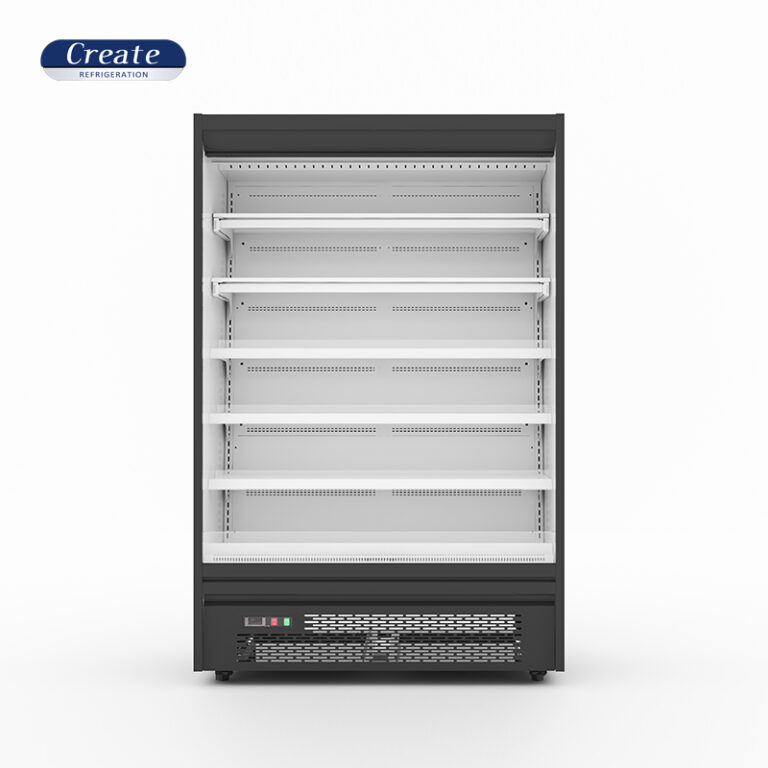
For open display, the plug-in multideck chiller is presented with automatic defrost, R404A or R290 options, an integrated compressor, optional glass or sliding shelves, and a compact format for smaller shops. Its RFQ still needs shelf loading, usable deck depth, controller, night treatment, ambient rating, heat rejection, drainage, plug, and energy evidence for the exact build.
Create Refrigeration records cold storage project support based on the supermarket size, with CAD drawings and 3D renderings. The wider project service covers matching equipment to store drawings, modular cabinet arrangements, and conventional, modified, or customized products. Send the floor plan and service routes with the RFQ so the quotation can separate equipment, layout work, piping, installation, and local responsibilities.
The OEM refrigeration service accepts customer logos and covers OEM/ODM work. Available demand options recorded in the knowledge base include 220V/50Hz, 220V/60Hz, and 110V/60Hz. These are supplier-level capabilities, not proof that every model supports every combination. The signed specification must identify the exact voltage, frequency, plug, component set, artwork, sample, and test scope.
Create Refrigeration‘s documented project scope covers commercial supermarket refrigeration, stainless-steel equipment, supermarket shelves, and cold storage. Recorded commercial terms include a one-unit minimum order, customer-logo OEM orders, T/T with a 30% deposit and 70% balance before delivery, and FOB, CIF, EXW, DDP, or DDU. DDP can be quoted when the destination address is supplied. The supplier also records final inspection before shipment and logistics insurance when its international delivery service is used. Buyers should confirm that each selected commercial term remains current and appears in the final quotation.
As a refrigeration equipment manufacturer, Create Refrigeration records pre-production samples, final inspection, a one-year product warranty, DDP service when a delivery address is supplied, and spare parts for some bulk orders. An RFQ should convert each relevant point into a priced, dated obligation. State the inspection witness, delivery term, destination, warranty coverage, spare-parts quantity, and party responsible for installation and commissioning. If you would like to learn more, please read this article.
FAQ
Q1: What is the most important field in a commercial refrigeration RFQ?
A1: The operating context. Food type, ambient conditions, power, loading, access, and installation scope determine whether a model and its test data are relevant.
Q2: Should one RFQ template cover both display cases and cold rooms?
A2: A common project section can be shared, but equipment fields must differ. Cold rooms need panel, door, piping, condensing unit, installation, and commissioning details that a plug-in case does not.
Q3: How can buyers compare quotations with different options?
A3: Issue a clarification table listing every deviation, exclusion, component substitution, test basis, commercial term, and open item. Compare the approved configurations, not headline prices.