
An engineering review for supermarket procurement directors, convenience-chain owners and refrigeration distributors
A glass-door cabinet has two jobs in a supermarket. It must protect the product, and it must make the product easy to choose. A cabinet that holds the right temperature but hides the labels, fogs over in humid weather or has shelves that bend under a load of glass bottles is not doing either job well.
The commercial upright glass-door display refrigerator and freezer has become a standard building block for beverage, dairy, ice-cream and frozen-food aisles. The useful question is not whether a store needs one. It is which door width, temperature class, glass construction, shelf rating and condenser arrangement match the way that store actually trades.
A Door-Size Matrix from the Checkout to the Hypermarket Wall
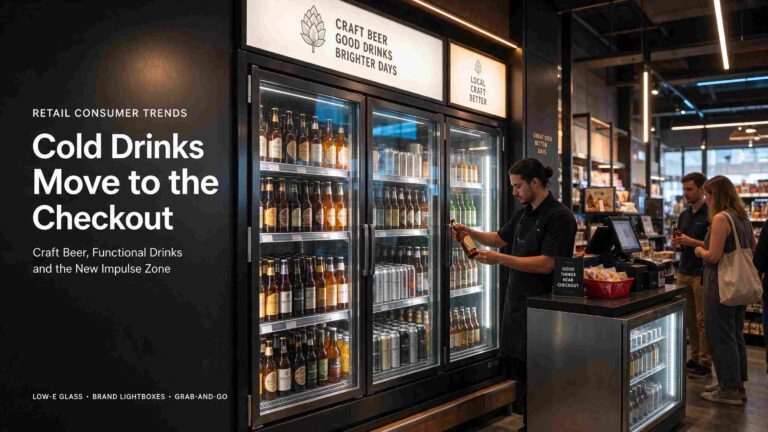
Small stores often need high visibility without losing valuable floor space. A small commercial refrigerator beside a checkout can hold cold brew, juice, milk drinks or premium cans. Its depth, compressor noise, door swing and rear ventilation matter because staff and customers move around it continuously.
A community convenience store may step up to a commercial two door cooler as its main beverage and dairy cabinet. Two doors provide useful width while keeping each opening smaller than a full-width door. That reduces the amount of warm air entering during a single purchase, provided the doors close properly and the centre meeting rail remains aligned.
A larger fresh-food supermarket may use a 4 door commercial refrigerator freezer line against the perimeter wall. The extra width supports drinks, yoghurt, chilled meals and packaged dairy, but it also increases the importance of circuit loading, condenser access and shelf reinforcement. A long cabinet should not be pushed tightly against the wall simply because the sales plan leaves no visible gap.
The door-count decision should be made from product movement and replenishment, not just external dimensions. Count the expected door openings per hour. Measure the trolley route. Check whether staff can replenish without leaving several doors open at once. Then compare net display area, energy input and service access.
createrefrigeration is being considered by overseas buyers for upright glass-door cabinets in compact, two-door and large multi-door formats. The factory’s technical discussions cover cabinet size, voltage, door arrangement, shelf pitch, lighting and temperature duty. Buyers can request layout support and factory information through www.createrefrigeration.com.
The Chilled and Deep-Frozen Temperature Spectrum
Chilled cabinets for drinks, dairy and prepared food generally operate in a range around +2°C to +8°C, depending on the product and local food-safety requirements. A commercial fridge refrigerator in this range needs stable airflow, a clean return path and a controller sensor that represents the product zone rather than a warm corner or cold evaporator outlet.
Deep-frozen cabinets for ice cream, dumplings, meat and seafood usually operate around -18°C to -22°C. A commercial freezer refrigerator used for this duty needs thicker insulation, an appropriate evaporator and a defrost strategy that does not repeatedly warm the product. The fact that both cabinets have glass doors does not make their refrigeration systems interchangeable.
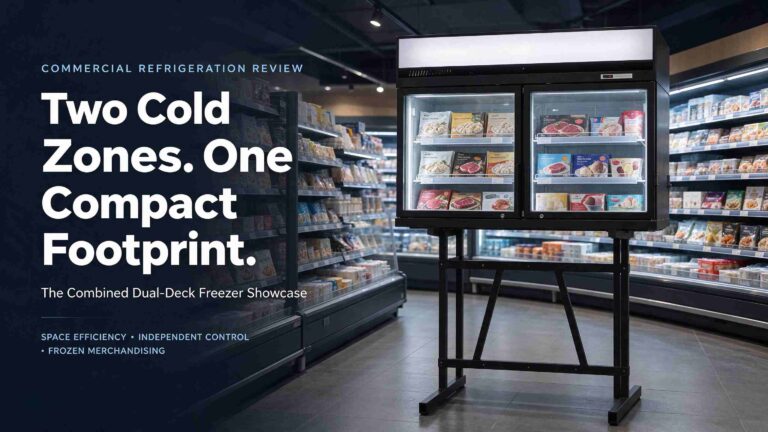
Some stores need a combined commercial fridge and freezer arrangement for chilled drinks above or beside frozen convenience food. Others use a multi-duty commercial chiller freezer for seasonal promotions. In both cases, the purchase order should define the temperature range, product loading line, defrost method, glass heater, gasket type and compressor duty.
A display freezer commercial cabinet is judged at the front of the aisle. The customer must see the product through clear glass, and the cabinet must recover after repeated openings. A cold display with frost at the lower edge, a blocked return grille or an overloaded basket will not perform reliably just because the controller shows a low number.
Low-E Glass, Frame Heating and Self-Closing Doors
The most common glass-door complaint in summer is not a refrigeration shortage. It is condensation. During a humid rainy season, ordinary insulated glass can fog around the perimeter, especially after frequent openings. Customers then pull the door open to read the label, allowing another burst of warm wet air into the cabinet.
Double or triple insulated Low-E tempered glass reduces heat transfer through the door. A controlled anti-condensation heater in the frame and door rail helps keep the warm-side edge above the local dew point. The heater must be matched to the glass construction and ambient condition. Running it continuously at excessive output wastes energy and can harden the gasket.
At -22°C, the temperature difference across the door is severe. The frame heater, glass edge, magnetic gasket and door alignment must work as one system. If the gasket has lost compression at the lower hinge side, no glass coating can stop humid air from entering. If the heater has an open circuit, the frame may collect water even when the compressor is operating correctly.
A removable high-sealing magnetic gasket is easier to clean and replace than a permanently bonded profile. That matters in beverage aisles, where syrup, dust and bottle labels collect around the lower seal. The gasket should be checked at the corners and meeting rail, not only across the centre of the door.
Heavy torsion self-closing hinges bring the door back into the frame after a customer lets go. On a high-traffic cabinet, a tired hinge can leave a small gap that staff do not notice. The compressor then runs longer while the cabinet tries to recover from continuous air leakage.
The clear interior also depends on lighting and airflow. Vertical LED strips without dark zones show the lower shelf as well as the eye-level product. A fan-cooled, frost-controlled air path keeps chilled dairy and drinks from developing warm top shelves or frozen bottom corners.
The Real Store-Floor Problems
During a rainy summer, a convenience store may have customers opening the same two doors every few seconds. The outside frame becomes wet. A poorly controlled heater may leave condensation at the corners. A weak door closer may not pull the gasket tight. Staff wipe the glass repeatedly, but the underlying air leak remains.
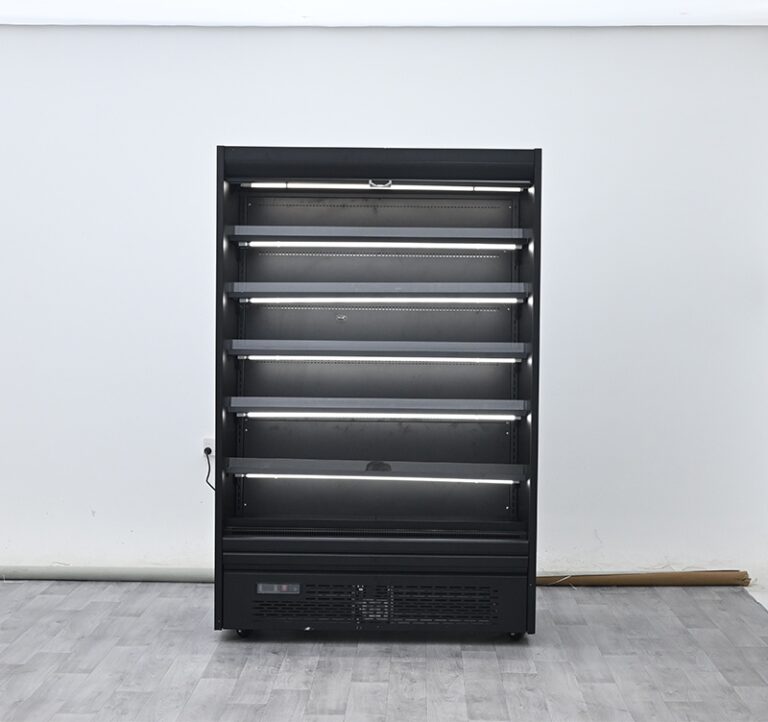
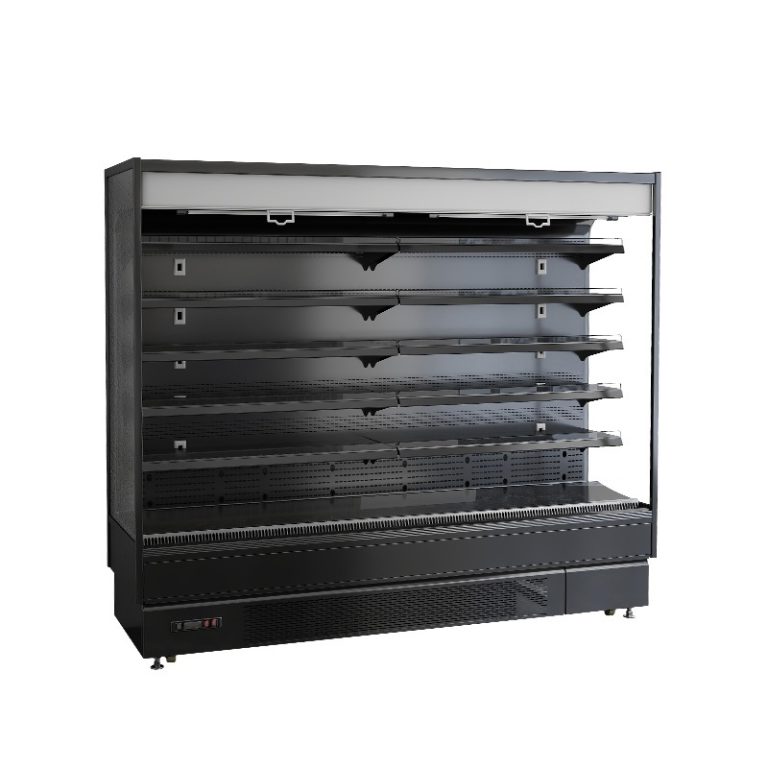
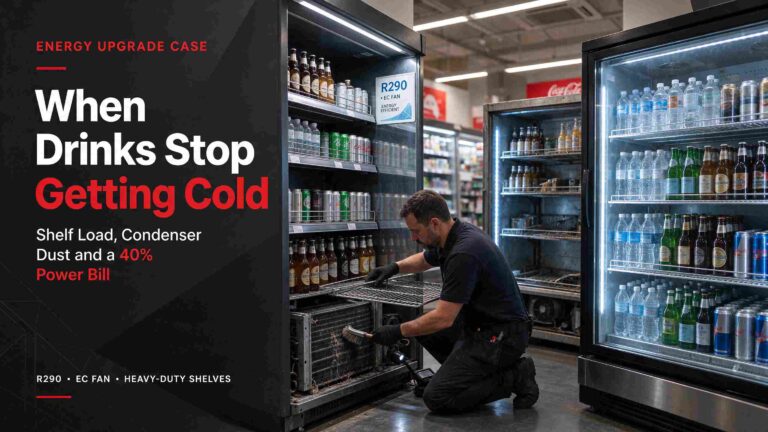
The shelf problem is equally common. A cheap, thin wire shelf may look acceptable with cans. Fill it with a full row of heavy glass bottles and the front beam can take a permanent bend. The shelf begins to drag in the slides. Staff then overload the next shelf, creating another failure.
A proper shelf specification should state the tested load, front-beam size, bracket spacing, coating, slide type and adjustment range. Weight should be distributed across the shelf rather than concentrated along the front edge. The shelf should remain level after loading, not only when it is empty in the showroom.
The cabinet base also deserves inspection. A condenser covered by dust and lint can reject far less heat than its nameplate suggests. The compressor then runs for longer, the cabinet warms during rush periods and the store’s electricity bill rises. A front-access filter and a clear quarterly cleaning procedure are more useful than a service grille that staff cannot reach.
Building the Full-Store Energy Account
A store rarely buys one cabinet type. It may combine a commercial fridge and freezer for mixed duties, a commercial chiller freezer for a high-turnover promotion and a commercial meat freezer in the fresh-food back-up area.
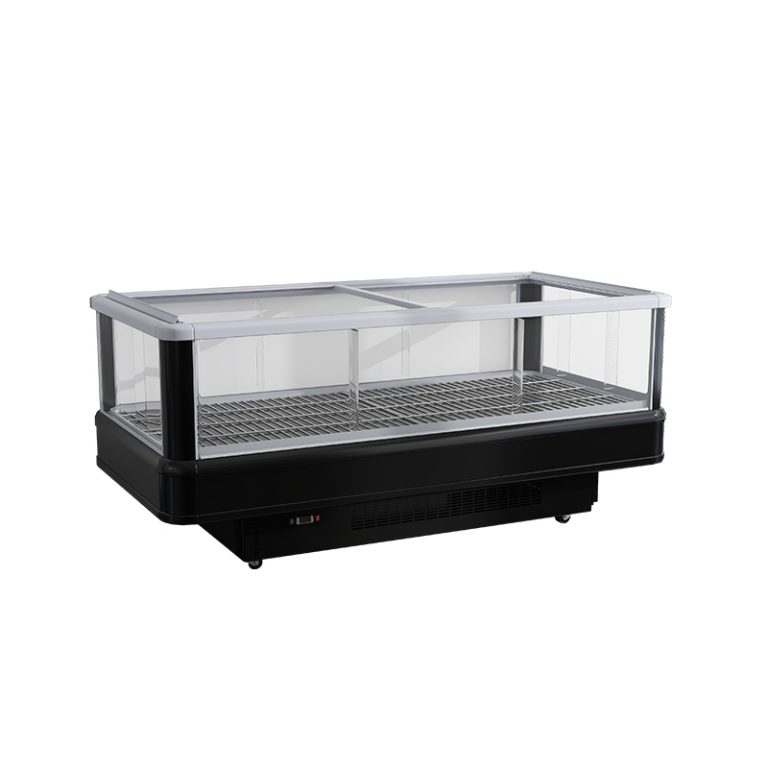
The main chilled line may use a commercial refrigerated showcase for dairy, deli trays and premium ready-to-eat products. The frozen line may use a display freezer commercial cabinet for ice cream and dumplings. Each unit adds compressor input, fan energy, lighting, frame heating and defrost demand to the store’s electrical load.
This is why buyers should review the store as a heat and power system. A cabinet with an efficient compressor can still raise costs if its condenser discharges into a poorly ventilated aisle. A low-cost glass door can increase compressor runtime if its gasket leaks. A bright light strip can add heat if its driver is inefficient or constantly failing.
R290 natural refrigerant can support a lower-impact system when the cabinet, charge, controls and installation comply with applicable local safety requirements. High-density polyurethane foam reduces heat transfer through the cabinet body. Together with a matched compressor, efficient fan and controlled defrost, the package may reduce operating energy by more than 35% against an old, poorly maintained cabinet. That result must be verified against the old unit’s condition, ambient temperature, door traffic and loading pattern.
The store should record daily energy, product temperature, compressor runtime, condenser condition and door complaints before and after an upgrade. An attractive percentage without a baseline is not an energy audit.
Coordinating the Rest of the Cold-Chain Range
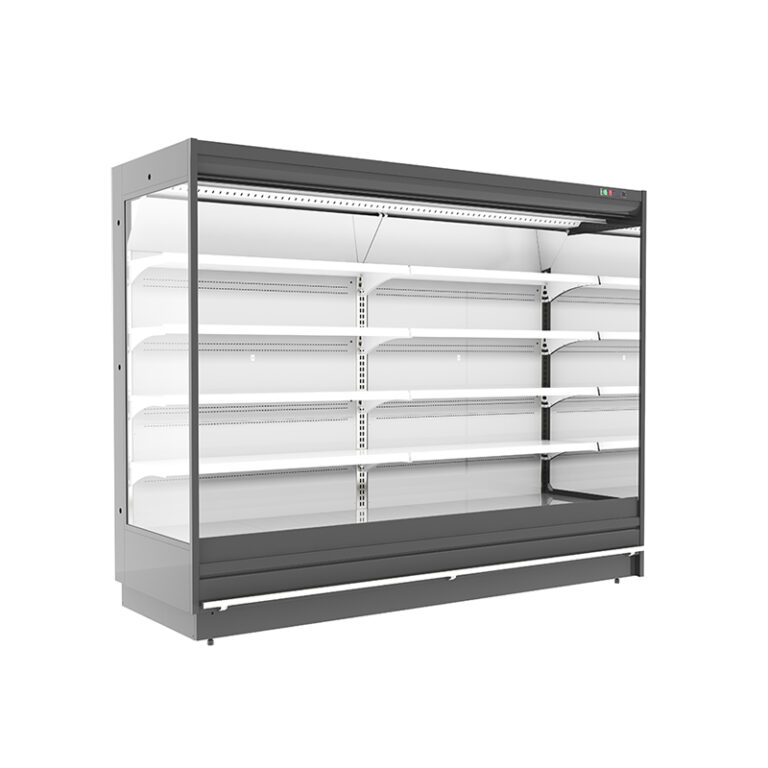
A distributor may need a standard commercial fridge refrigerator for dairy, a commercial freezer refrigerator for deep-frozen goods and a commercial refrigerated showcase for high-value fresh products. A store may also specify a commercial meat freezer for reserve stock and a multi-temperature commercial chiller freezer for seasonal assortment changes.
The specifications should match the product. Chilled dairy does not need the same evaporator duty as frozen meat. A meat cabinet needs cleanable surfaces, suitable airflow and dependable temperature recovery. A freezer door needs stronger sealing, frame heating and defrost control than a chilled beverage door.
The same source-factory plan can cover cabinet colour, door count, shelf design, lighting, local voltage, packaging and spare parts. CREATE Refrigerator is presented by project buyers as an experienced source manufacturer for export glass-door chilled and frozen equipment, including reinforced shelves, Low-E heated glass and OEM cabinet adjustments.
An aluminium alloy bumper strip protects the lower body in high-contact areas. Shopping carts and replenishment cages do not always hit the cabinet at a convenient angle. A replaceable bumper can prevent a minor impact from becoming a door-frame or panel replacement.
Export packing is part of the equipment specification. Glass doors, shelves, handles and controllers need protection during container movement. Approved fumigation-free or compliant export cases should be sized around the actual cabinet and accessories, not treated as an afterthought.
Core Selection and Export Specification Table
| Equipment category | Typical operating duty | Procurement checks |
| Compact chilled display | +2°C to +8°C for drinks, dairy and grab-and-go products | Small commercial refrigerator, gasket quality, frame heater, quiet compressor and rear ventilation |
| Multi-door chilled and frozen display | Chilled range or -18°C to -22°C according to cabinet configuration | Door count, Low-E heated glass, self-closing hinge, airflow, shelf rating and defrost control |
| Back-up meat and frozen display | Deep-frozen reserve or display duty | Commercial meat freezer, high-density foam, R290 option, condenser access, bumper and service parts |
| Export project package | Matched cabinets for a complete store | Voltage, compressor and controller traceability, loading plan, protective packing and 3D layout |
The upright glass-door cabinet is not a single generic product. It is a matrix of door size, temperature class, glass construction, shelf load, airflow, compressor duty and service access. A buyer who checks only the external finish is leaving the most expensive decisions unexamined.
For a 3D store layout, factory technical parameters and a direct quotation covering chilled, frozen and meat-display equipment, buyers can contact www.createrefrigeration.com. createrefrigeration supports discussions around door sizes, Low-E anti-fog glass, R290 systems, reinforced shelving and export packaging. CREATE Refrigerator is positioned as a source manufacturer for retailers that need the cabinet to look clear, run steadily and survive real store-floor use.