
An engineering review for boutique butchers, supermarket fresh-food buyers and deli owners
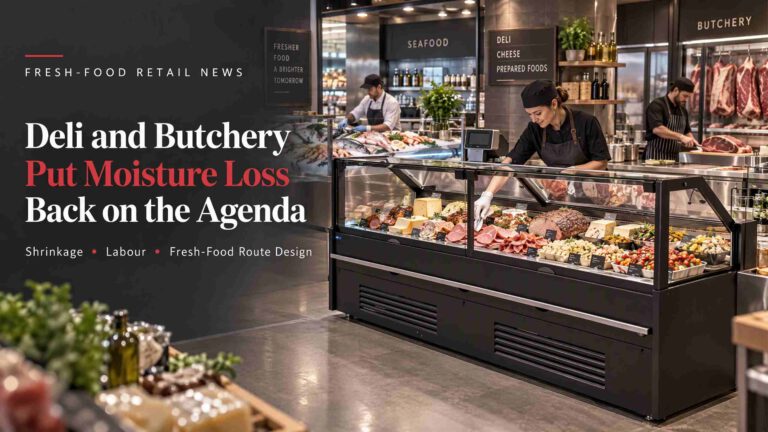
A deli counter is judged at close range. Customers look through the glass at the cut face of a roast, the surface of a cured ham, the colour of a steak and the edge of a cheese wedge. If a ceiling spotlight flashes across the glass, if the air dries the product or if the inner lining has begun to rust around a drain, the counter loses trust quickly.
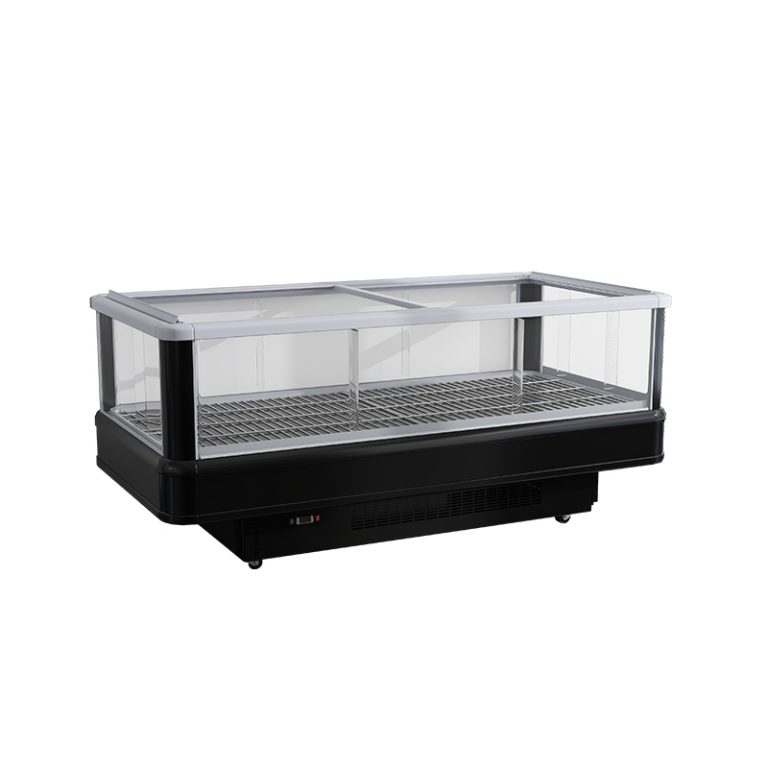
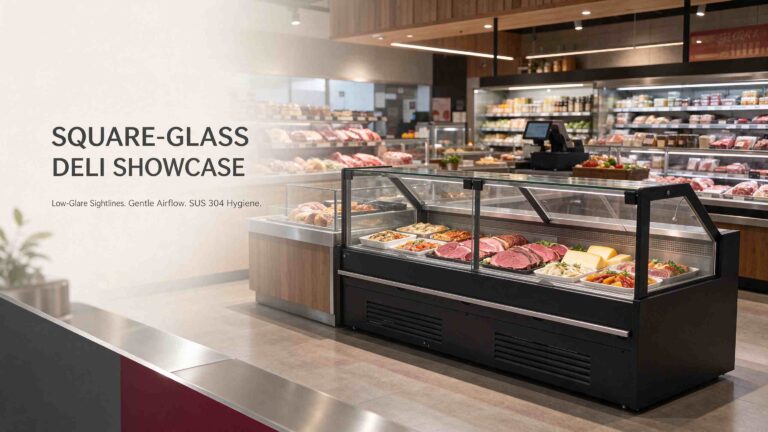
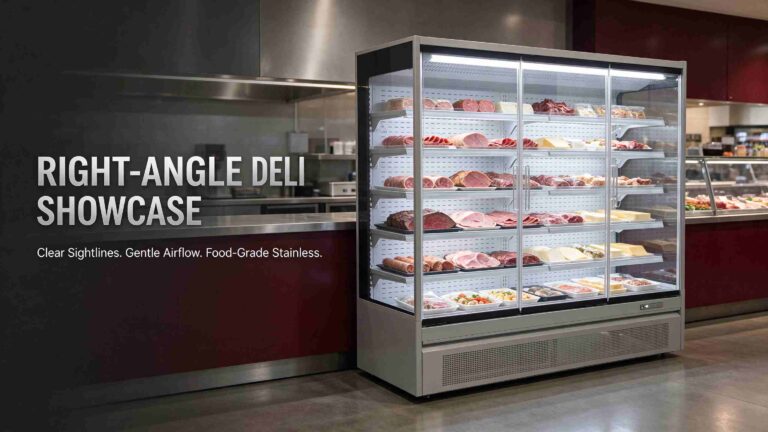
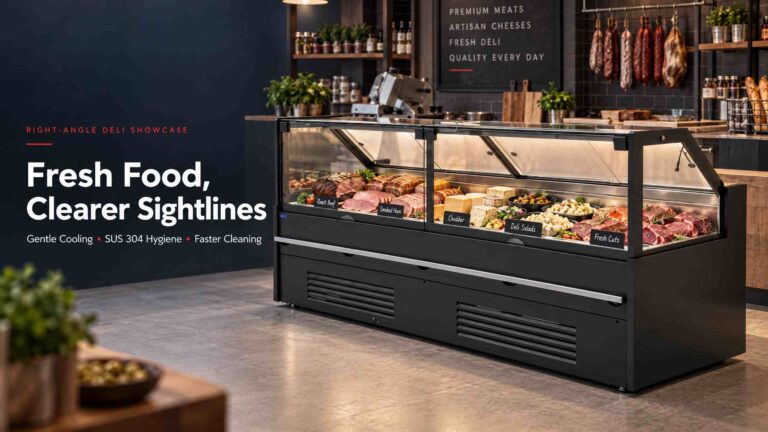
The classic commercial right-angle or square-glass deli display showcase is designed for this working environment. Its flat, clean geometry gives the sales counter a calm appearance, while a low-velocity humidified air path protects the product. A front glass that lifts forward makes cleaning less of a struggle. A food-grade SUS 304 stainless-steel interior gives staff a surface that can be washed repeatedly without becoming a corrosion project.
The Right-Angle Profile and a Clear Product View
Curved glass can look impressive, but it is not always easy to light or photograph. A ceiling spotlight placed above a curved panel may create a bright arc that hides the natural red of beef or the surface of a roast. Staff then move the tray, change the light or ask the customer to stand at a different angle. The counter should not make the product do the work.
The flat-top right-angle design gives the customer a more direct view through a high-clarity, anti-fog tempered glass panel. With the lighting aimed correctly, there are fewer curved reflections and less visual distortion across the display. This matters in a boutique butcher shop, where colour and surface condition influence a purchase before the customer asks a question.
The flat top can also serve a practical secondary purpose. A scale, packing trays, labels or a small condiment container can sit above the counter when the store’s hygiene and load rules permit it. The operator should keep the area organised and should not block ventilation, service access or the view into the cabinet. A usable top surface is valuable, but it is not an excuse to turn the showcase into a storage shelf.
The classic case is a commercial refrigerated showcase rather than a simple refrigerated table. Its job is to sell a product while maintaining a controlled chilled environment. createrefrigeration builds this type of cabinet around the sightline, counter height, glazing, interior material and service routine. Buyers discussing a fresh-food layout can also request factory information through www.createrefrigeration.com.
A square glass profile fits neatly into a straight counter run. Several units can share a consistent front line without the small visual breaks created by mismatched curved cabinets. That helps a supermarket create a unified fresh-food department for deli meats, roast poultry, cheese and prepared dishes.
Low-Velocity Moist Air for Meat, Deli and Cheese
Fresh meat and cooked deli products do not benefit from a hard stream of cold air directed at their exposed surfaces. A fast jet can pull moisture from sliced roast beef, cooked pork or cut steaks. In a warm, busy counter, the surface may look dry and oxidised within four hours. The operator sees moisture shrinkage, darkened edges and a product that needs trimming or discounting.
The right approach is a gentle, even circulation pattern. The display cabinet should hold the product zone around 0°C to +5°C, subject to the food category, local regulations, loading pattern and controller setting. The airflow should circulate through the cabinet without creating a cold spot on one tray and a warm pocket on another.
A low-velocity air path must be kept clear. Trays pushed against the rear grille, overfilled pans and packaging that rises above the loading line change the return route. Staff may then compensate by lowering the setpoint, which can chill the front edge without solving the uneven circulation behind the product.
High-colour-rendering LED tubes with little or no heat input help show the food’s natural appearance. The light should be bright enough to reveal marbling and the surface of cheese, but not so hot that it adds an unnecessary load to the cabinet. The fixture should be easy to wipe and protected from splashes during cleaning.
The interior should use equipped stainless steel plates and shelves made from food-grade SUS 304 stainless steel. Blood, brine, salt, acidic marinades and cleaning chemicals are hard on low-grade metal. Cheap steel may show orange spots around seams and shelf supports, especially where liquid remains after closing. SUS 304 does not remove the need for cleaning, but it gives the operator a far better corrosion margin and a smooth surface that can be sanitised consistently.
Why SUS 304 Matters at the Counter
A display counter is cleaned more often than most back-room equipment. Staff remove trays, wipe the base, wash the shelf surfaces and clear scraps from the drain area. A rough or rusting interior slows every step. It also creates places where residue can remain after a rushed closing routine.
SUS 304 stainless steel is suited to food-contact and wet-cleaning environments when it is properly fabricated, welded and finished. The buyer should ask about sheet thickness, weld treatment, corner radii, drain design and the material used for shelf brackets. “Stainless steel” by itself is not a complete specification.
The cabinet should avoid sharp internal corners where sliced meat, cheese crumbs or marinade can collect. A sloped base and accessible drain path help staff rinse the interior without leaving standing water. The refrigeration system must still be protected from wash water, and cleaning should follow the manufacturer’s electrical and hygiene instructions.
A boutique butcher may use the counter for premium steaks during the morning, cooked meats at lunch and marinated products later in the day. The display plan changes, but the cabinet’s cleaning burden does not. A durable stainless interior protects the long-term appearance of the department and reduces the temptation to postpone sanitation.
The Front Glass That Makes Closing Easier
The most frustrating closing task is often the deep clean. If the front glass only tilts a few centimetres, staff must reach over the panel, twist around trays and wipe the lower corners by feel. A small smear remains at the edge. The next morning’s spotlight makes it obvious.
A hydraulic flip-up front glass opens to a wide working angle and stays supported while staff clean. The hinge and gas strut should be sized for the actual glass weight, not just the empty showroom panel. Staff should open it smoothly, keep fingers away from the hinge points and avoid hanging tools from the frame.
The mechanism also supports faster product changeovers. A staff member can lift the glass, remove the trays, sanitise the surface and reset the display without dismantling the whole counter. This saves minutes at every closing and reduces the chance that a wet, contaminated tray remains in place overnight.
The front frame must return to its correct position after cleaning. A loose hinge, damaged seal or bent support can create a small air leak and a condensation line. Maintenance staff should check the glass alignment and hydraulic resistance as part of the weekly counter inspection.
Storage Below, Protection Around the Base
An optional customized storage box below the display creates an “up front, store below” arrangement. Staff can keep reserve trays, packaged product or short-term replenishment stock close to the serving position, depending on the temperature specification. The lower compartment must not become an unrecorded warehouse. It needs its own loading line, temperature check and stock-rotation rule.
Keeping reserve stock near the counter reduces trips to the back room during a busy period. It also keeps the customer-facing display filled without placing extra trays into the airflow zone. The buyer should specify whether the lower storage is chilled, ambient or designed for a defined temperature range; a drawer or compartment should never be assumed to have the same duty as the display well.
A full-perimeter heavy-duty aluminum alloy bumper strip protects the lower cabinet from carts, baskets and delivery cages. The base is often hit at the same height as a trolley wheel. A replaceable bumper can absorb routine contact without transferring the impact into the glass support or cabinet panel.
The bumper should have a cleanable profile and secure fixings. A loose strip can trap dirt and become another hygiene issue. When the cabinet is installed in a long line, the buyer should allow enough clearance to remove the bumper and reach the base during service.
Connecting the Deli Case to the Store’s Cold Chain
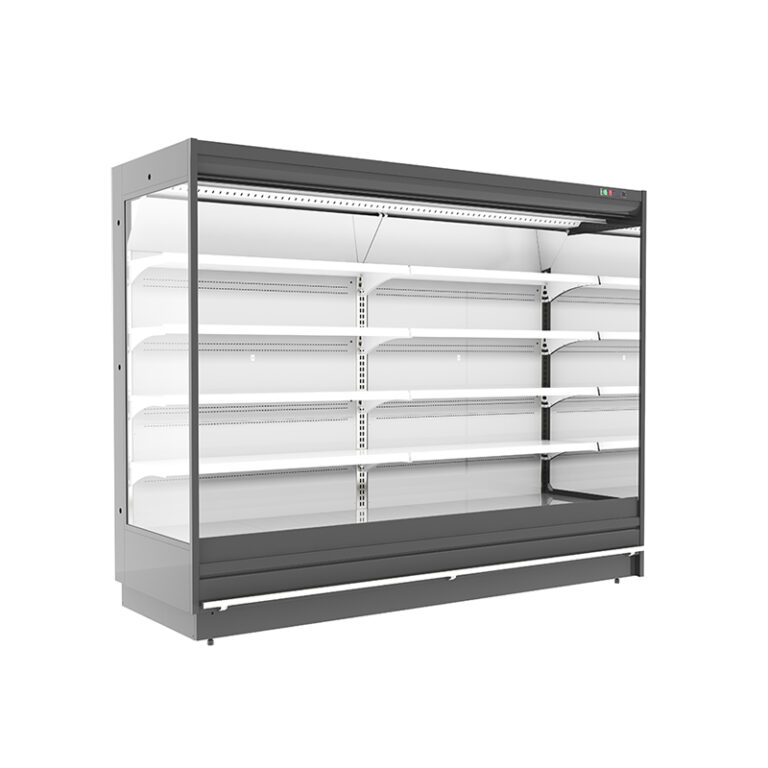
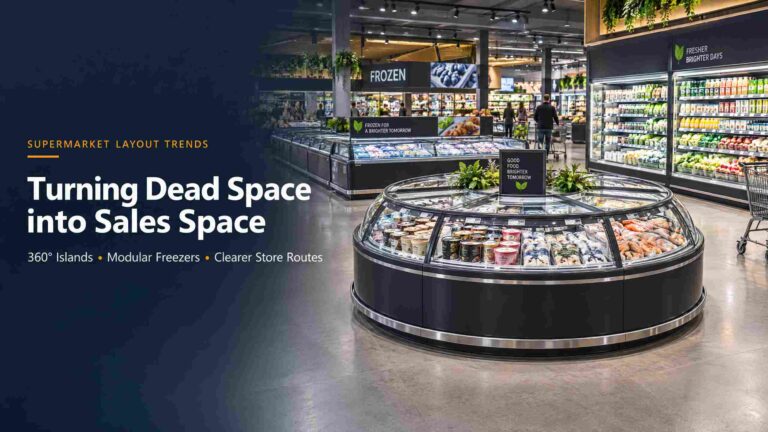
The deli showcase is one part of a wider temperature plan. A back-up commercial meat freezer holds reserve meat and frozen ingredients. A central display freezer commercial cabinet can carry frozen packaged food and ice cream. A vertical commercial freezer refrigerator may serve a frozen wall where door access and high storage density are more important than an open counter.
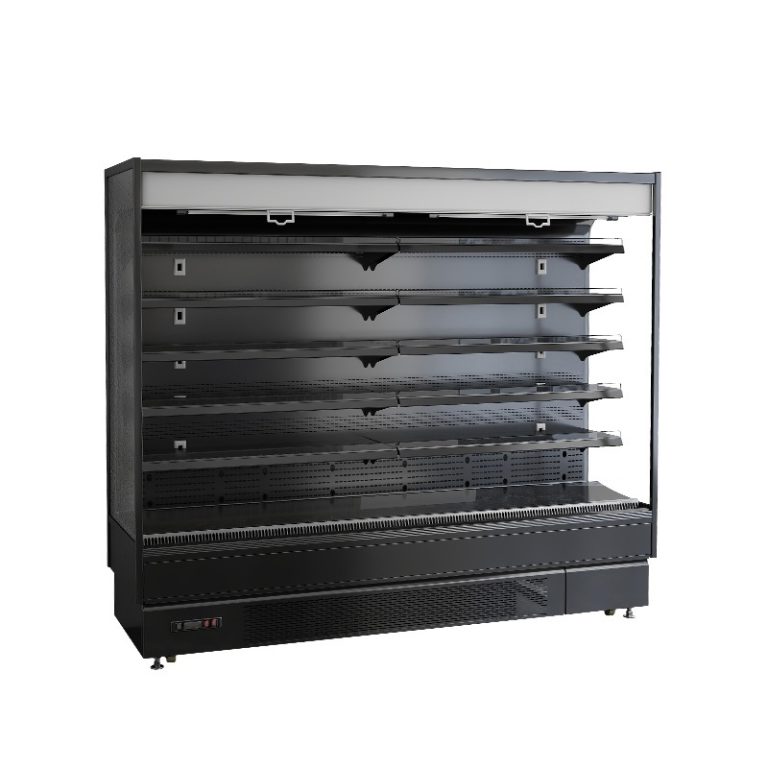
The chilled perimeter may include a commercial fridge refrigerator for dairy, packaged deli items and drinks. A mixed commercial fridge and freezer can help a small store use limited floor area, while a high-turnover commercial chiller freezer may support seasonal prepared foods or chilled promotions.
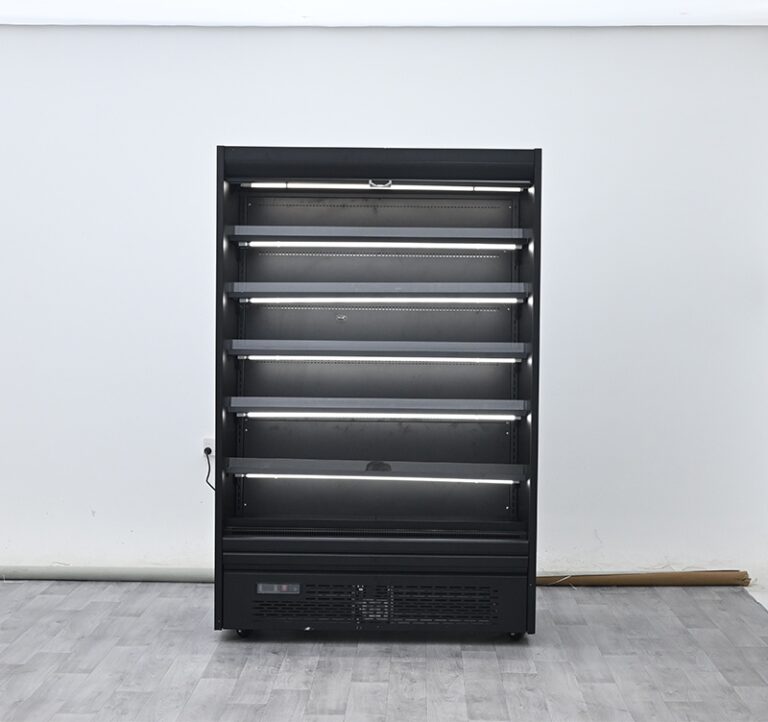
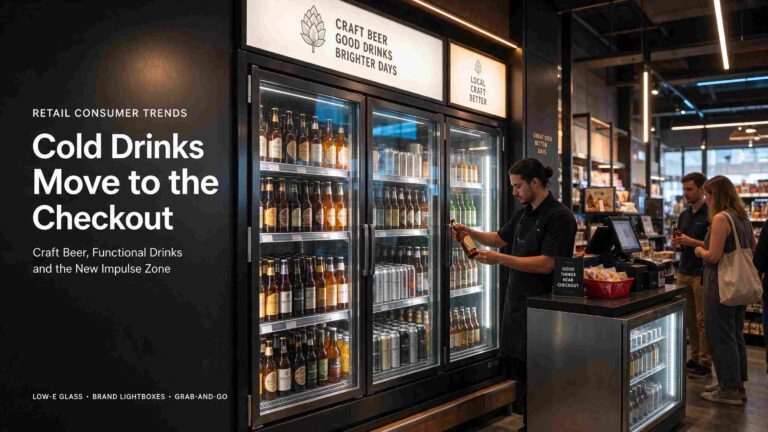
A commercial two door cooler is often suitable for a beverage or dairy section near the deli route. A small commercial refrigerator can sit behind the service counter for sauces, garnish, samples or high-value items. A 4 door commercial refrigerator freezer suits a larger supermarket wall where the buyer needs substantial capacity and consistent door styling across a long run.
The point is not to make every cabinet identical. It is to coordinate colour, handle style, lighting and service standards while matching each unit to its product. Fresh deli meat needs a gentle, humid chilled display. Frozen reserve stock needs stronger insulation and a different defrost strategy. Drinks need quick recovery after repeated openings.
Practical Operating Checks for a Fresh Counter
At opening, staff should check the displayed product temperature, inspect the glass for condensation and confirm that no tray blocks the return path. At midday, they should look at the exposed surface of meat and cooked products, not just the controller reading. Dry edges may indicate excessive air velocity, overlong holding time, an uncovered product or a humidity problem.
At closing, remove all trays according to the cleaning plan, lift the front glass fully, wash the food-contact surfaces and check the drain area. Do not spray electrical components or force the hydraulic mechanism. Any rust-coloured mark around a seam should be photographed and reported rather than hidden with polish.
The counter should be kept away from a direct air-conditioning discharge. A strong overhead draft can disturb the gentle cabinet airflow and dry the exposed food. Similarly, a hot service lamp, a sunny window or a nearby oven can increase the load and alter the product surface.
Factory Specification and Source Procurement
The purchase specification should state glass type, anti-fog treatment, working temperature, airflow design, LED colour-rendering target, SUS 304 material areas, shelf load, drain arrangement, front-glass opening angle, hydraulic support, lower storage duty and bumper construction.
Project buyers can also request matching finishes for adjacent cabinets. CREATE Refrigerator is presented by source-factory buyers as a manufacturer with experience in right-angle deli showcase fabrication, SUS 304 interiors and whole-store cold-chain coordination. The same project can cover a deli case, a commercial refrigerated showcase, meat storage, frozen displays and beverage cooling.
Before production, a store drawing should show the service counter, customer queue, replenishment route, cleaning clearance, electrical points and the location of nearby heat sources. createrefrigeration can coordinate cabinet dimensions, colour, lighting and packaging around the planned fresh-food department.
Export packing deserves the same attention as the glass and stainless steel. Glass panels, hydraulic hardware, trays and stainless shelves should be protected against movement and impact in transit. The buyer should receive a packing list and confirm that replacement seals, hinges, lamps and drain parts are available for the destination market.
Fresh Deli and Store-Wide Configuration Table
| Store area | Equipment combination | Main selection checks |
| Deli and cooked-meat counter | Right-angle glass deli showcase with SUS 304 interior | 0°C to +5°C duty, low-velocity airflow, anti-fog glass, high-colour LED and cleanable drain |
| Fresh-meat back-up and frozen reserve | Commercial meat freezer, commercial freezer refrigerator or display freezer commercial | Product temperature, insulation, defrost method, loading line, door or lid seal and service access |
| Chilled perimeter and beverage route | Commercial fridge refrigerator, commercial two door cooler or commercial chiller freezer | Door traffic, shelf load, recovery, lighting, cabinet spacing and condenser ventilation |
| Compact or large-format store package | Small commercial refrigerator, commercial fridge and freezer or 4 door commercial refrigerator freezer | Unified finish, electrical load, replenishment path, spare parts and 2D-to-3D layout |
Final Buying Advice
The classic right-angle glass deli showcase is a working counter, not merely a piece of front-of-house furniture. Its value comes from the combination of a clean sightline, gentle humid airflow, food-grade stainless construction and a front glass that staff can open wide enough to clean properly.
Buyers should examine the unit with the store team, not only in a catalogue. Ask where a butcher will place the tray, where a cleaner will stand after closing, where a trolley will strike the base and where the nearest air-conditioning discharge crosses the counter. Those details determine whether the cabinet remains attractive and reliable after years of wet cleaning and daily service.
For custom drawings, matched store equipment and a direct factory quotation, buyers can contact www.createrefrigeration.com. CREATE Refrigerator supports the discussion around right-angle glass, SUS 304 food-grade interiors, hydraulic flip-up fronts, customised lower storage and bumper protection. createrefrigeration can then coordinate the deli showcase with the rest of the store’s chilled and frozen equipment.