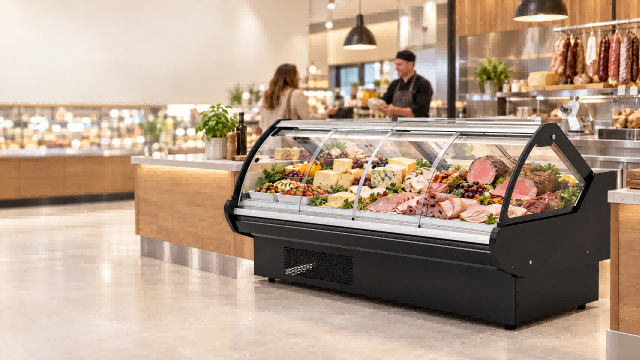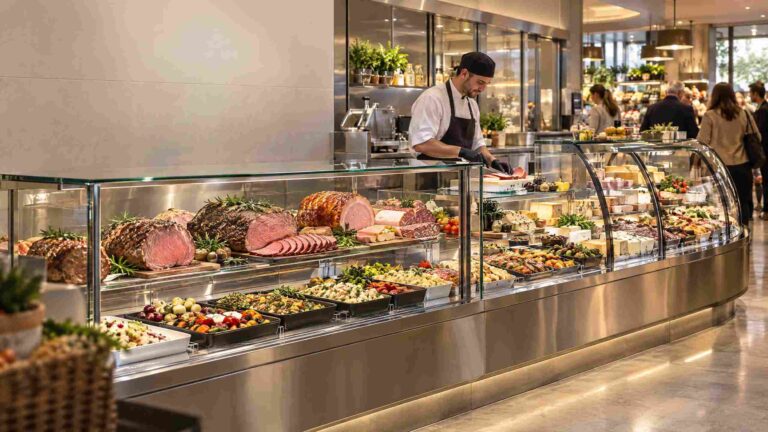

Fresh meat does not give retailers much room for mistakes. It may still look fine from the customer side of the counter, but a small temperature problem, poor airflow, or dry surface can shorten its selling time very quickly. That is why a meat service counter should not be treated as just another display cabinet. It has to hold a stable chilled display temperature, keep the surface from drying too much, give staff easy access, and still make the product look fresh under store lighting.
For supermarkets, butcher shops, and fresh food markets, spoilage is not only a food safety concern. It is also a cost issue. One unstable cabinet can lead to more trimming, more markdowns, more discarded stock, and more complaints from customers who notice color changes or poor texture.
Start With the Right Meat Display Temperature
Fresh meat service counters are usually designed for chilled display, not deep freezing. That distinction matters. In older drafts, people sometimes call this “freezer temperature,” but that is not the right wording for fresh meat display. For most fresh meat counters, the target is a low chilled range, often around -1°C to +2°C depending on the product, local food safety rules, and store handling practices. Beef and lamb often need a cold, stable display to protect color and texture. Poultry needs careful temperature control and strict hygiene. Processed meat may allow a slightly different range, but it still needs steady refrigeration.
The exact setting should follow local regulations and the cabinet supplier’s guidance. What matters in daily operation is consistency. A counter that swings up and down too often creates more risk than a counter that holds a narrow chilled range. Staff should not rely only on the controller display. A separate thermometer check at different areas of the counter can show whether the real product zone is stable. The number on the controller is useful, but it may not tell the whole story.
Airflow Can Decide Product Quality
Meat spoilage is not only caused by the wrong temperature. Air movement also matters. If the air path is weak, some parts of the counter may become warmer than others. If the airflow is too aggressive or poorly directed, meat surfaces may dry faster. A good meat display counter needs enough circulation to keep the cabinet temperature even, but not so much that the product loses moisture too quickly.
This is why air duct design is important. Create Refrigeration’s meat display materials highlight high-quality air duct design for more uniform cabinet temperature and lower food drying. That is the kind of detail buyers should look for when choosing a service counter, especially for fresh meat, seafood, and cooked food display. Shelf loading and tray placement also affect airflow. If staff block the return air inlet or stack trays too tightly, the cabinet may not cool evenly. The counter may look full, but the product quality may suffer.
Humidity and Surface Drying Need Attention
Fresh meat has to look fresh. Color, surface moisture, and texture all affect whether customers trust the product. Too much dryness can make meat look old, even when the temperature is safe. Too much moisture can create condensation, which may affect appearance and hygiene. The goal is not simply “colder is better.” The goal is balanced chilled storage with suitable airflow and regular handling.
In a busy butcher area, staff often open the rear side of the counter, move trays, replace stock, and clean surfaces during the day. Each action changes the cabinet condition for a moment. A well-designed service counter should recover quickly without drying the meat or creating uneven cold spots. Lighting also plays a part. Fresh meat displays often use lighting that improves visual presentation, but lighting should not add too much heat near the product. Buyers should check both display effect and heat impact, not only brightness.
Daily Store Habits Matter More Than Expected
Even a good refrigerated meat display case can perform poorly if daily habits are careless. Staff should check the chilled display temperature before opening, during peak hours, and after restocking. Trays should not be overloaded. Older stock should be rotated properly. Warm products should not be placed directly onto the counter before they are cooled to the correct handling temperature.
Cleaning is also part of temperature control. Condensers, fans, drains, glass, and rear access areas need routine attention. A dirty condenser makes the compressor work harder. A blocked drain can create water problems. A weak fan may cause uneven cooling. A damaged gasket or a poorly closed rear door can let warm air enter the counter. These issues may start small. The product still looks acceptable in the morning. By the afternoon, color or surface texture may already be worse than expected. Regular checks help staff catch the problem before stock is wasted.
What Buyers Should Check Before Choosing a Meat Service Counter
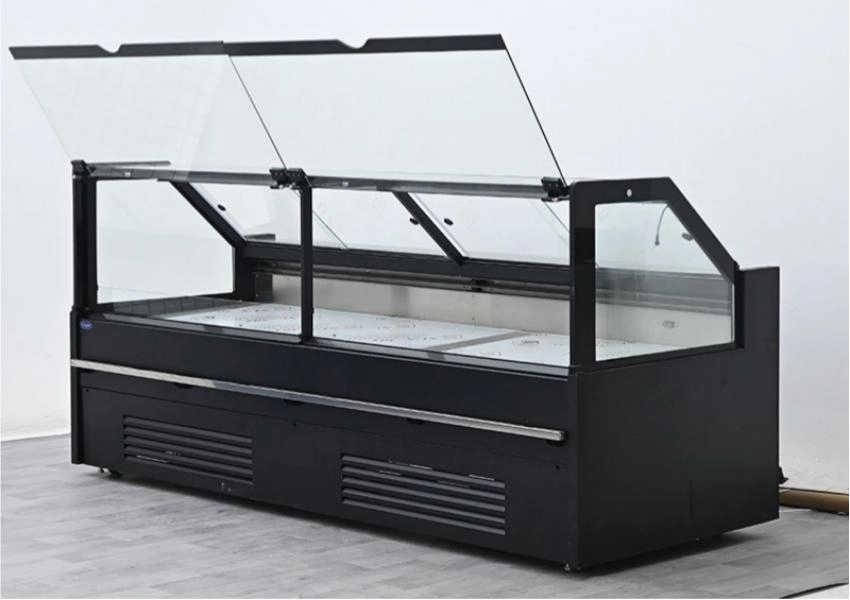
A meat service counter should be selected based on store use, not only cabinet size. When purchasing a retail display case, potential buyers should consider factors relating to the airflow, return air inlet, ease of cleaning, and access to the rear work area by staff. Specifically for fresh meat display cases, stainless steel air outlets or the use of corrosion-resistant materials would be desirable. These components are subject to moisture on an ongoing basis as part of normal retail use.
The glass design matters too. A front glass that opens easily can make cleaning and product access simpler. A rear counter design can help staff work faster during service. If several counters need to be connected, the supplier should confirm whether the cabinet can be combined into the required shape and length. Product type should guide the selection. Fresh beef, poultry, seafood, cooked food, and prepared meat do not always need the same display conditions. A cabinet that works for cooked food may not be the best choice for premium fresh meat. Buyers should match temperature range, airflow, lighting, size, and maintenance access before placing the order.
How to Create Refrigeration Supports Fresh Meat Display Projects
Create Refrigeration provides commercial refrigeration equipment for supermarkets, butcher shops, convenience stores, cafés, and cold chain projects. Its product range includes meat display counters, deli showcases, glass door coolers, island freezers, multideck chillers, and customized cold storage solutions.
For fresh meat display projects, Create Refrigeration can support model selection based on store layout, product type, target chilled temperature range, airflow design, voltage, refrigerant configuration, and maintenance access. The company supports OEM/ODM customization, CAD-based supermarket layout design, R290 refrigerant applications, CO₂ solutions, and energy-saving refrigeration materials. Buyers should confirm the required certification, refrigerant configuration, technical documents, warranty terms, and local service requirements before ordering. A good meat service counter should fit the product, the staff workflow, and the store’s daily cleaning routine. If you would like to learn more, please read this article.
Conclusion
Most cases of spoilage of fresh meat occur when temperature, air exchange, humidity, or handling is not under control. A reliable service counter is a component that supports the display of products but does not solve all problems. For retailers, the safest approach is to combine a good chilled display temperature with adequate air exchange and correct humidity with regular cleaning and knowledgeable staff. A well-selected and used service counter will keep the fresh meat products more attractive for a longer time, will reduce waste, and will give the customer more confidence in the displayed products.
FAQ
Q1: What is the ideal temperature range for fresh meat display?
A1: Many fresh meat counters work around -1°C to +2°C, depending on product type, local regulations, and store handling requirements. Retailers should follow local food safety rules and confirm the target range with the equipment supplier.
Q2: How often should a meat service counter be checked?
A2: Temperature should be checked daily and during busy operating periods. Service frequency depends on store traffic, cabinet type, ambient conditions, and local requirements. High-use meat counters usually need routine cleaning and periodic technician inspection.
Q3: How can Create Refrigeration help with meat display projects?
A3: Create Refrigeration supports buyers with meat display counter selection, OEM/ODM customization, CAD-based store layout design, R290 and CO₂ refrigeration options, and commercial refrigeration equipment for supermarkets, butcher shops, and cold chain projects.