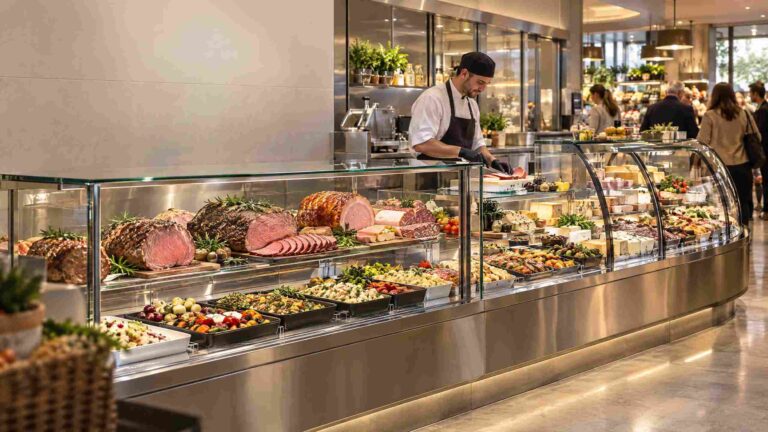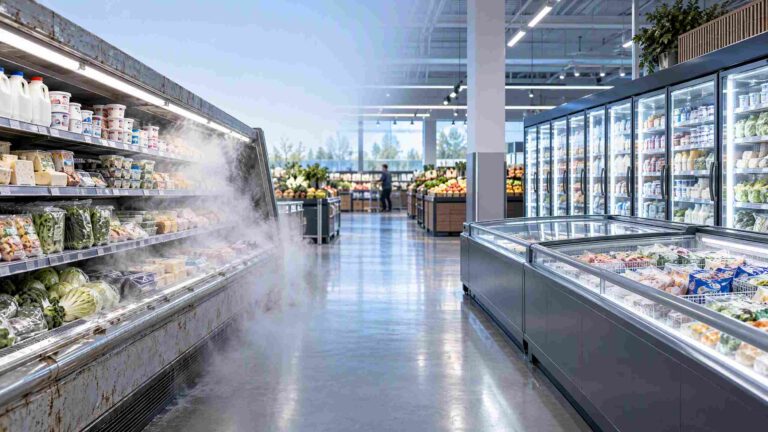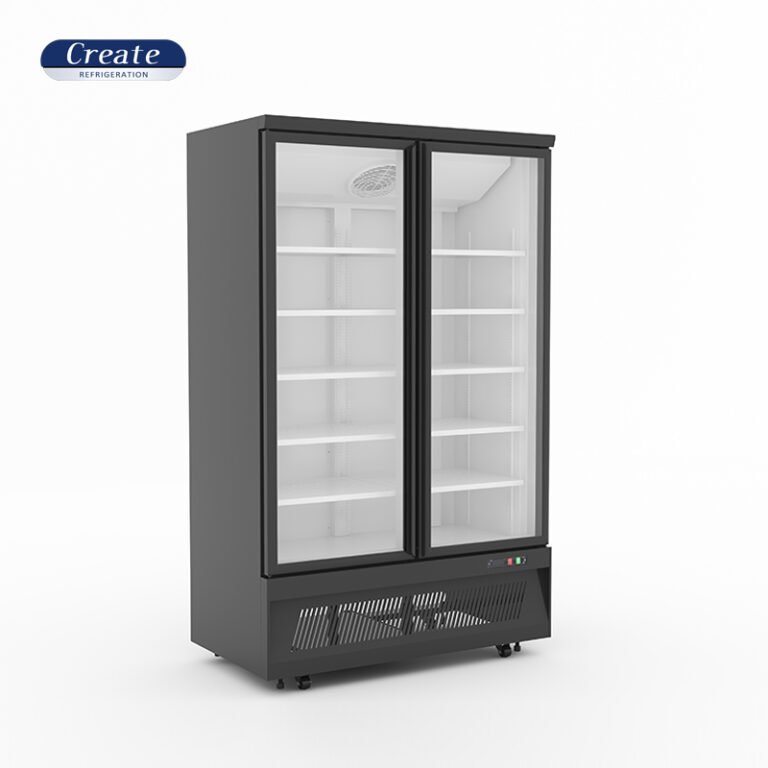

Supermarket refrigeration does not get many quiet hours. Even after closing, the glass-door freezers, open chillers, island cabinets, and back-room cold storage are still running. A store manager may not think about the compressor every day, but the electricity meter does.
That is why inverter compressors have become more common in commercial refrigeration. They do not simply run at one fixed speed. They adjust output according to the cabinet’s real cooling demand. When the load is light, the compressor slows down. When warm products are loaded or doors open again and again, it increases speed. For a buyer, this is not only a technical feature. It affects power use, cabinet temperature, compressor stress, and maintenance cost. A freezer that reaches the right temperature but wastes power to stay there is not a good long-term choice.
Fixed-Speed Compressors Work, But They Are Not Always Efficient
Fixed-speed compressors are familiar. They start, run at one speed, then stop after the cabinet reaches the set temperature. This setup can still be useful in simple equipment or low-traffic areas.
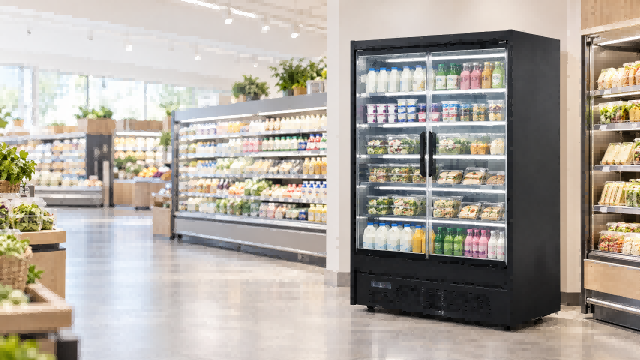
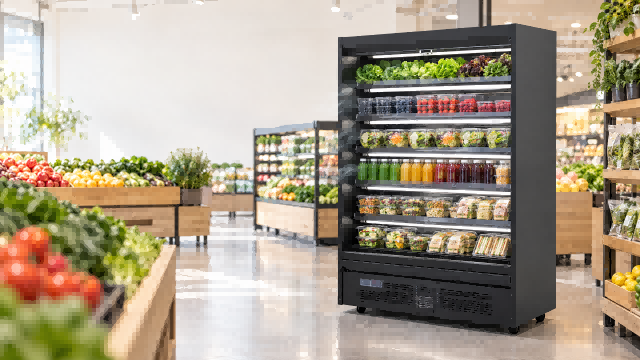
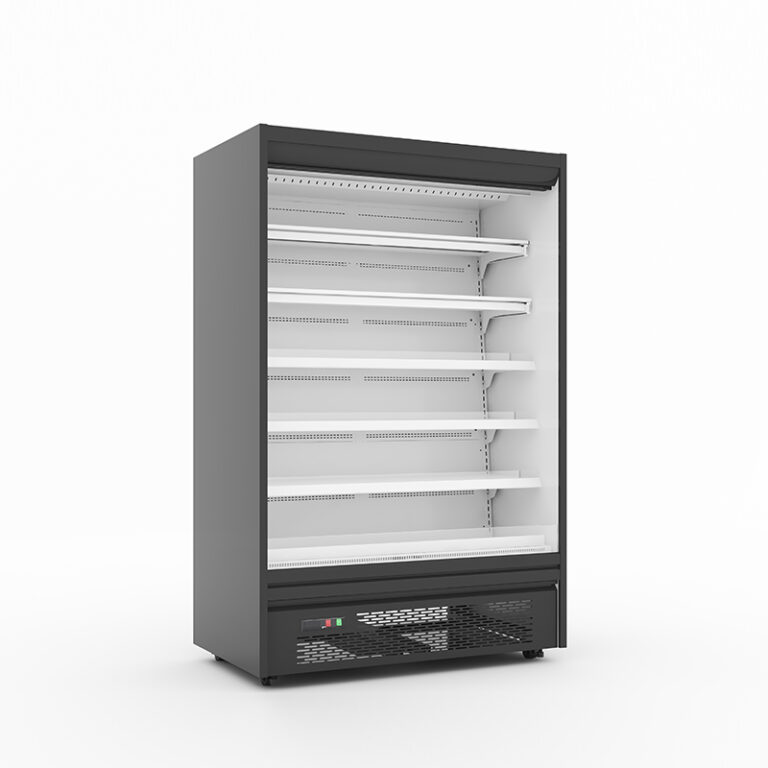
Retail refrigeration is usually not that simple. A beverage cooler near the checkout may be opened many times in one hour. A multideck chiller has to hold cold air while warm store air keeps moving past the shelves. An island freezer may work hard after restocking, then need much less output later in the day.
A fixed-speed compressor cannot lower its output during lighter periods. It either runs or stops. That creates repeated start-stop cycles. Over time, those cycles add wear. They may also cause more temperature movement inside the cabinet, especially if the equipment is old, dirty, overloaded, or installed in a hot area. The cabinet may still “work,” but it may work too hard.
What Changes With an Inverter Compressor
An inverter compressor gives the system a middle range. It does not need to jump between off and full output all the time. When the cabinet is close to the target temperature, the compressor can run at a lower speed. When the cooling load rises, it can increase output. The change is not dramatic to watch, but it matters over weeks and months.
The biggest benefit is steadier operation. Instead of starting and stopping too often, the system can keep a smoother cooling rhythm. That may reduce unnecessary power use and help the cabinet recover temperature after busy periods. In chilled food and frozen food displays, this matters. Dairy, drinks, meat packs, frozen seafood, and prepared meals all depend on stable storage conditions. Better compressor control will not fix bad loading habits, but it gives the refrigerator a stronger base to work from.
Where the Energy Savings Actually Come From
Some suppliers promote inverter compressor commercial freezer systems with an “up to 50%” energy-saving claim. That figure can be reasonable under suitable operating conditions, but buyers should read it carefully.
No compressor saves 50% by itself in every store. Savings depend on cabinet design, room temperature, door opening frequency, product load, condenser cleaning, door gasket condition, and installation space. A well-designed inverter freezer in a ventilated area has a better chance of saving energy. The same unit placed beside a heat source, with blocked airflow and dirty coils, will not perform as well.
In practice, the savings come from several small changes working together. The compressor starts less often. It runs at lower output when demand is light. It avoids some overcooling. It recovers temperature more smoothly after the load changes. That is why buyers should look at the whole cabinet, not just the compressor name on the specification sheet.
Cabinet Design Still Decides a Lot
An inverter compressor is useful, but it cannot rescue a weak cabinet design. Airflow should be checked first. In open chillers and display refrigerators, cold air needs a clear path. If products block the air outlet or return area, the system may keep calling for more cooling even when the real problem is poor circulation. Insulation is another part of the energy story. Good panels, stable foaming, quality glass, and tight door seals reduce heat gain from the store. Less heat entering the cabinet means the compressor has less work to do.
Controls also matter. A digital controller does not need exaggerated “smart” language to be useful. It needs accurate sensors, steady response, and clear readings for service teams. If the controller is hard to check or easy to misread, maintenance becomes slower. Access is often forgotten during purchase. Condensers need cleaning. Fans need inspection. Drain lines can block. Door gaskets eventually wear out. If the cabinet is difficult to service, energy performance will slowly drop, even if the compressor is good.
Should Existing Equipment Be Upgraded?
Some older supermarket refrigeration systems can be upgraded with inverter-based parts. Sometimes it makes sense. Sometimes it only hides a deeper problem. Before choosing retrofit work, the service team should check the compressor match, controller, electrical design, refrigerant type, cooling load, cabinet age, and available service space. If the old cabinet has poor insulation, weak airflow, or repeated leakage problems, replacing only one component may not be enough.
For one store, replacing a high-energy freezer may be simpler. For a chain, staged replacement is often more realistic. Start with the cabinets that run longest, fail most often, or cost the most to power. Then compare real operating cost, not just purchase price. This is slower than a full upgrade campaign, but it gives buyers better control.
Refrigerant Choice Should Match the Equipment
Many commercial buyers now look at inverter compressors together with low-GWP refrigerants. That is the right direction, but the refrigerant choice still needs care. R290 can be efficient in suitable self-contained commercial refrigeration equipment. It is also flammable, so charge limits, ventilation, electrical safety, and technician training must be checked. CO₂ is another low-GWP option, often used in larger refrigeration projects, but it operates under much higher pressure than many conventional systems. The main point is simple: do not choose by refrigerant name alone. A good system has to match the store layout, temperature zone, local rules, voltage, and service capability.
How Create Refrigeration Supports High-Efficiency Projects
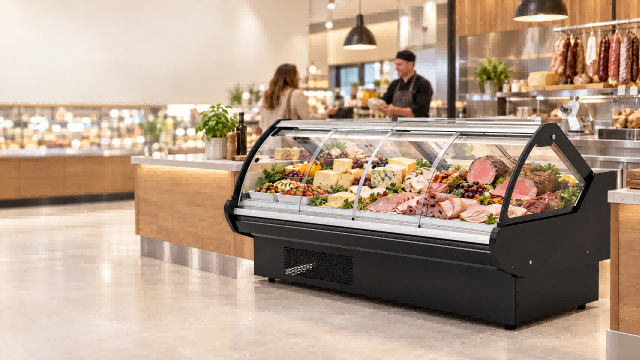
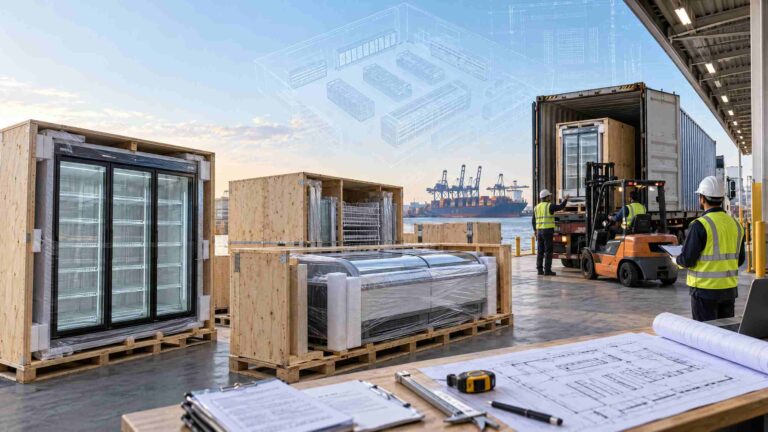
Create Refrigeration supplies commercial refrigeration equipment for supermarkets, convenience stores, cafés, and cold chain projects. Its product range includes glass door coolers, glass door freezers, island freezers, open chillers, and display cabinets. The company supports OEM/ODM customization, CAD-based store layout design, R290 refrigerant applications, CO₂ solutions, and energy-saving refrigeration materials. For buyers comparing inverter compressor commercial freezer options, product selection should be linked to store layout, loading pattern, voltage, refrigerant configuration, and maintenance access.
A beverage cooler, an open multideck chiller, and an island freezer should not be purchased by the same checklist. Their airflow, load pattern, and service needs are different. Create Refrigeration holds certifications including CE, CB, ETL, ISO, GEMS, ROHS, UL, and IEC. Buyers should confirm the required certification and technical documents for the destination market before ordering.
Conclusion
Inverter compressors can help commercial refrigeration equipment use less power because they respond to real cooling demand. They can reduce repeated start-stop cycles, support steadier cabinet temperature, and lower stress on the refrigeration system. Still, the compressor is not the whole story. Airflow, insulation, controller accuracy, refrigerant design, installation space, and maintenance access all affect the result. A good inverter refrigeration system should fit the store’s daily conditions. If it only looks efficient in a catalog, the savings may disappoint later. If you would like to learn more, please read this article.
FAQ
Q1: What happens to water from Defrosting? Do we need to run special drainage pipes for defrosted water?
A1: No, this has automatic evaporation; it evaporates water using heat from the compressor.
Q2: Will these devices have icing issues?
A2: No, these all come with automatic defrosting, so don’t worry.
Q3: How much is the dealer’s discount?
A3: We will offer distributors a very competitive price. The final price depends on your order quantity