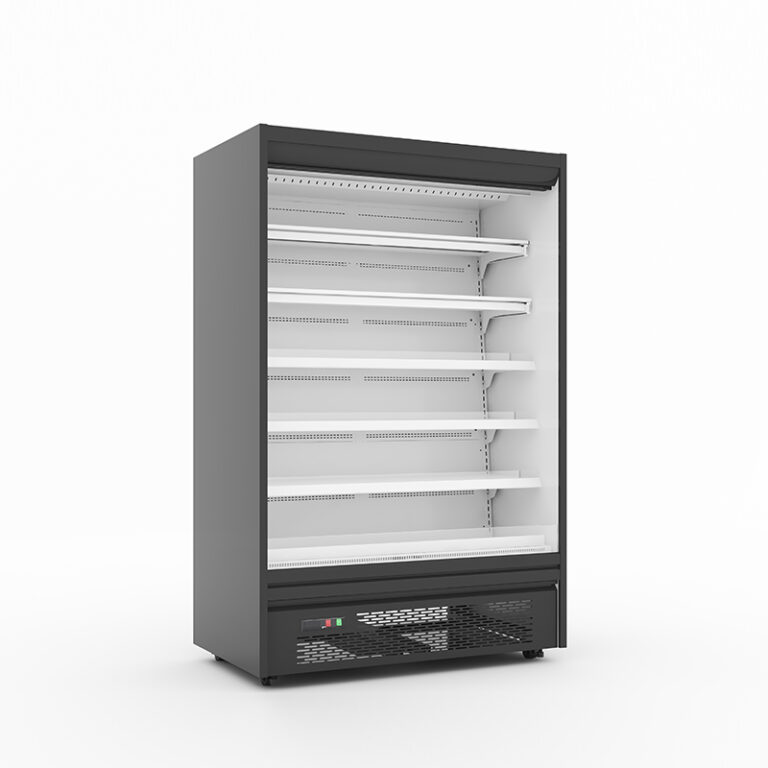
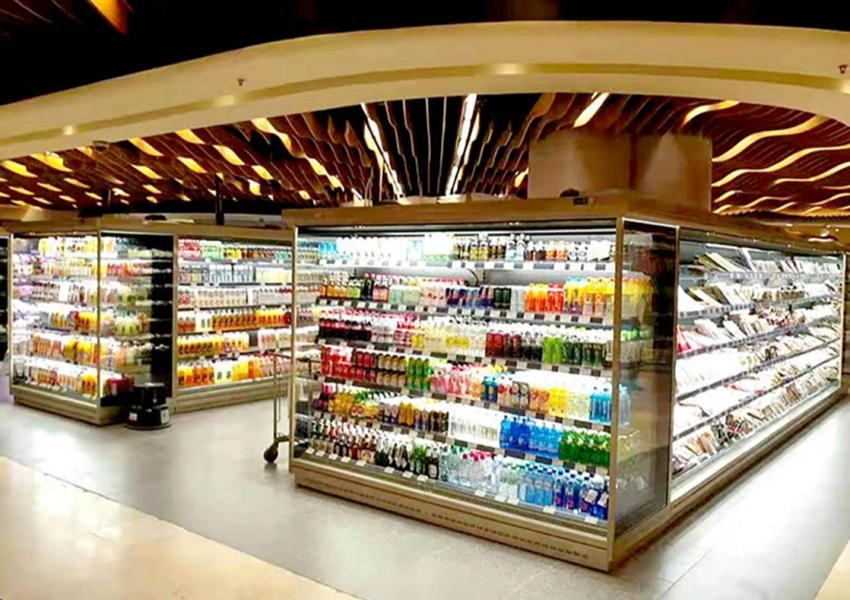
An open multideck chiller is never working in a perfect room. That is the first thing buyers should remember. The cabinet looks clean and controlled. In a supermarket, it sits beside moving shoppers, warm aisle air, restocking carts, ceiling airflow, and sometimes an entrance that opens every few seconds. The front is open because customers need easy access. That same open front is also where cold air is lost. This is why the air curtain matters so much. It is not just a small airflow feature hidden inside the cabinet. In many open chillers, it decides how well the cabinet can hold chilled air without using more energy than necessary.
A dual air curtain improves this by using two controlled air streams across the open front. One stream helps protect the chilled product zone. The other works as a buffer against warmer store air. It is still not the same as a glass door, but for dairy, drinks, yogurt, salads, fruit cups, and ready meals, it can make an open display cabinet more stable.
The Trouble Starts at the Open Front
Open chillers are popular because they sell well. Customers can see the product, reach in, and move on. For fast-moving chilled goods, that access is useful. The cooling system sees the same design differently. Cold air has to move down the front of the cabinet and return through the lower air path. If the airstream stays clean, the cabinet can hold a steadier chilled temperature. If the stream is disturbed, warm air enters more easily, and the compressor has to work harder.
This happens more often than people think. A customer stands too close for half a minute. Staff stack products above the shelf line. A promotion card is placed near the air outlet. Warm air from the entrance passes across the aisle. None of these things looks serious on its own, but together they can break the air pattern. The cabinet may still look normal. The shelves may still look full. But the system is already spending more energy to do the same job.
What the Second Air Stream Adds
A single air curtain gives the cabinet one layer of protection. A dual air curtain gives it two. The inner air stream is mainly there to protect the chilled product area. The outer stream helps keep room air from mixing too quickly with the cold zone. When both are balanced, the open front becomes less exposed.
The balance is the hard part. A stronger fan is not always better. Too much air can create turbulence. Too little air cannot protect the opening. Shelf depth, discharge angle, return air path, fan condition, and controller settings all affect the result. This is why two chillers that look similar can perform differently. The design behind the air path is just as important as the cabinet size.
Create Refrigeration’s product materials describe its double-layer air curtain design as helping with faster cooling, lower energy use, and more uniform cabinet temperature. For an open chiller, that kind of improvement is practical. It helps the cabinet behave more steadily during normal store use, not only in a test room.
A Good Air Curtain Can Still Be Wasted
Many air curtain problems are not caused by the cabinet itself. They happen after installation. Location is one issue. Put an open chiller near automatic doors, and it will face moving warm air all day. Place it beside a bakery section or hot food counter, and the cooling load rises. Direct sunlight can also make the cabinet work harder. Even air-conditioning airflow from the ceiling can disturb the curtain if it blows across the front.
Loading is another issue. Staff may fill the cabinet to make the display look stronger. That is understandable. Empty shelves do not sell well. But if products block the discharge or return air area, the airflow weakens. A full display can become an inefficient display very quickly. Maintenance also decides a lot. Fans collect dust. Coils get dirty. Drains block. Night curtains become damaged or hard to pull. Temperature sensors may need checking. These things do not always cause an immediate failure, but they slowly reduce performance. A dual air curtain works best when the store gives it room to work.
Where Dual Air Curtains Make Sense
Dual air curtain multideck chillers are most useful in areas where the store wants both visibility and access. Dairy is a common example. Milk, yogurt, cream, and chilled desserts need stable refrigerated display conditions, but customers also expect quick access. Beverage areas are similar, especially in busy stores where drinks move fast. Ready meals, salads, fruit cups, and prepared foods can also work well in open chillers, but the airflow should be checked carefully. Some products may dry out or warm unevenly if air speed and shelf layout are not right.
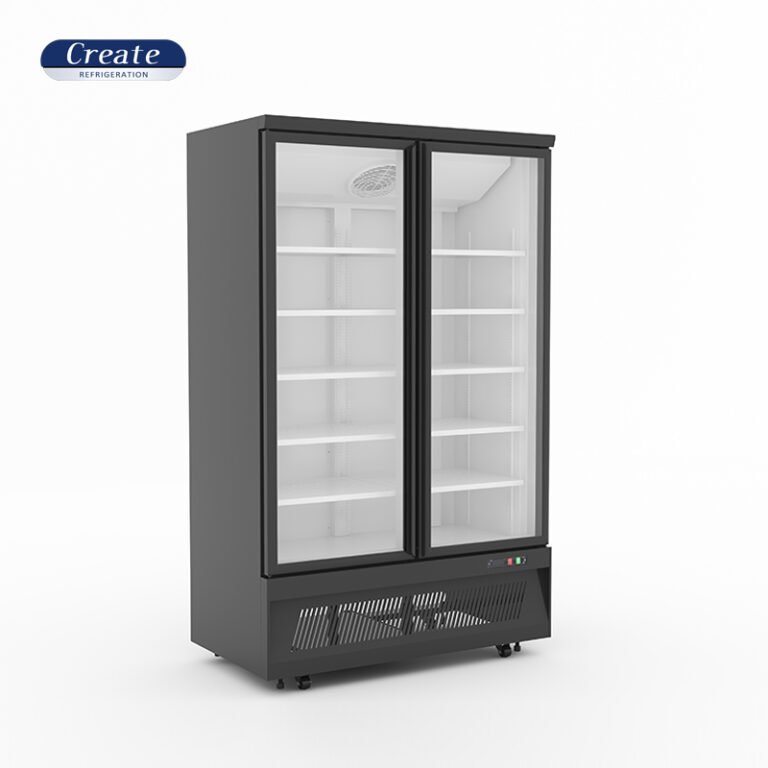
For frozen products, very sensitive food, or slower-moving categories, a glass-door freezer or glass-door refrigerator may still be the better choice. A dual air curtain improves an open cabinet, but it does not turn the cabinet into a sealed unit. That distinction matters during store planning. Open access has a cost. The question is whether the sales benefit is worth that cost in that specific location.

Do Not Promise Too Much From Retrofitting
Some older open chillers can be improved. Cleaning the air path, checking fans, repairing night curtains, adjusting shelves, or recalibrating controls may help restore performance. A full dual air curtain retrofit is another matter. It should not be promised before the cabinet is inspected. The structure, cooling capacity, controller, fan space, return air design, and electrical setup all need to match.
If the cabinet is still solid and the airflow problem is minor, improvement may be worth it. If the cabinet already has weak insulation, poor return air design, high energy use, and repeated temperature issues, replacing it may be simpler. A site check is usually better than guessing from a product photo.
How Create Refrigeration Supports Multideck Chiller Projects
Create Refrigeration supplies commercial refrigeration equipment for supermarkets, convenience stores, cafés, and cold chain projects. Its range includes multideck open chillers, glass door coolers, glass door freezers, island freezers, deli showcases, and display cabinets.
For buyers comparing open chiller airflow designs, Create Refrigeration can support model selection based on store layout, product category, traffic flow, temperature zone, voltage, and energy-efficiency goals. The company also supports OEM/ODM customization, CAD-based supermarket layout design, R290 refrigerant applications, CO₂ solutions, and energy-saving refrigeration materials.
For a multideck open chiller project, buyers should confirm cabinet size, shelf layout, airflow design, refrigerant configuration, electrical requirements, service access, and certification needs before ordering. These details affect how the cabinet performs after installation.
Conclusion
A dual air curtain helps reduce cold-air loss by giving the open front of a multideck chiller better airflow control. It can support steadier chilled cabinet temperatures and reduce unnecessary cooling load when the cabinet is installed and used correctly. But airflow design is only one part of the result. Store placement, shelf loading, night curtain use, cleaning habits, humidity, and service access all matter.
For supermarkets that need open access without ignoring energy costs, a dual air curtain design is worth considering. It works best when the cabinet is chosen for the real store, not just for the drawing. If you would like to learn more, please read this article.
FAQ
Q1: How do dual air curtains help multideck open chillers?
A1: They use two controlled air streams across the open front. The inner stream helps protect the chilled product area, while the outer stream reduces warm-air interference from the store aisle.
Q2: Can older open chillers be upgraded with dual air curtain systems?
A2: Some older chillers can be improved through cleaning, fan checks, controller adjustment, night curtain repair, or airflow correction. A full dual air curtain retrofit should only be considered after checking cabinet structure, cooling capacity, electrical design, and service access.
Q3: What maintenance keeps an air curtain working properly?
A3: Keep air paths clear, avoid overloading shelves, clean fans and coils, check drains, use night curtains when available, and measure cabinet temperature across different shelf levels.