
An industry report for convenience-chain executives, craft-bar owners, beverage distributors and premium supermarket managers
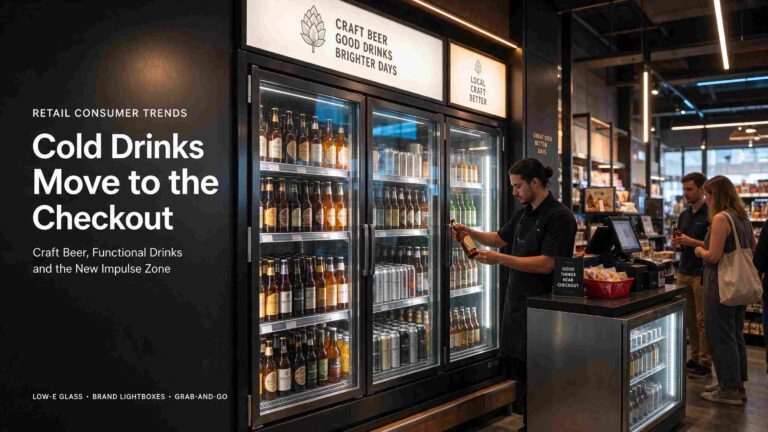
The cold cabinet is no longer just a place where a drink waits. In many convenience stores and premium supermarkets, it is the last piece of merchandising a shopper sees before payment. A branded lightbox, a clear glass door and a bottle held at the right temperature can decide whether a customer adds one more item to the basket.
That is why craft breweries, functional-drink brands and ready-to-eat food suppliers are investing more heavily in retail refrigeration. The equipment must cool quickly, look consistent with the brand and survive thousands of door openings, bottle movements and cleaning cycles. It also has to fit into spaces that were never designed for a large cabinet: beside a checkout, under a counter, at the end of a beer aisle or next to a coffee bar.
Beer Temperature Is Part of the Product Story
For many lagers, pilsners and crisp craft beers, the preferred drinking range sits close to the ice-point boundary, often around -1°C to +2°C depending on the recipe, alcohol content, packaging and serving preference. The aim is a cold, clean finish without freezing the product or damaging the package.
A precise commercial beer fridge gives the retailer more control than a cabinet that simply runs “as cold as possible.” Temperature recovery after a busy service period matters. So does the difference between the air sensor and the bottle at the front of the shelf. A display may show the target reading while bottles loaded in warm from the delivery room are still cooling.
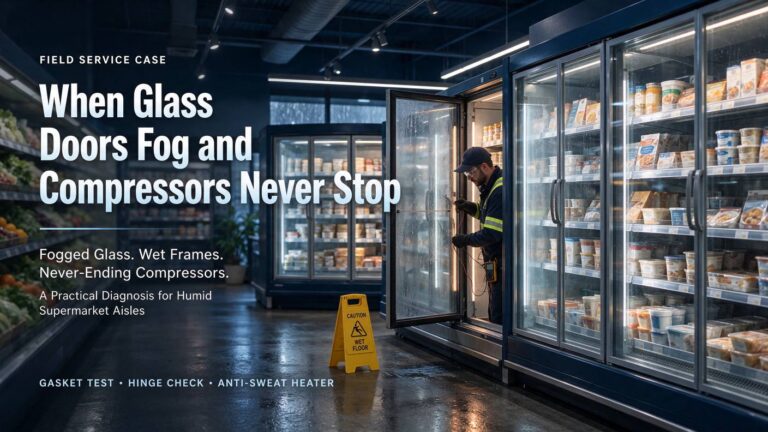
Craft beer operators also need to consider condensation. In a humid summer bar or coastal convenience store, a glass door can fog around the perimeter just when the retailer needs the label and taproom story to be visible. Controlled anti-sweat heating around the frame, combined with Low-E insulated glass and a sound magnetic gasket, keeps the viewing area clearer without running the heater at full power all day.
Heavy glass bottles create another field problem. A shelf that looks adequate when filled with cans may sag when loaded with a full row of 330 ml or 500 ml bottles. The shelf rating, front beam, brackets and slide rails should be checked against the actual product weight, not a generic cabinet catalogue.
Brand Colour, Lightboxes and the Retail End Cap
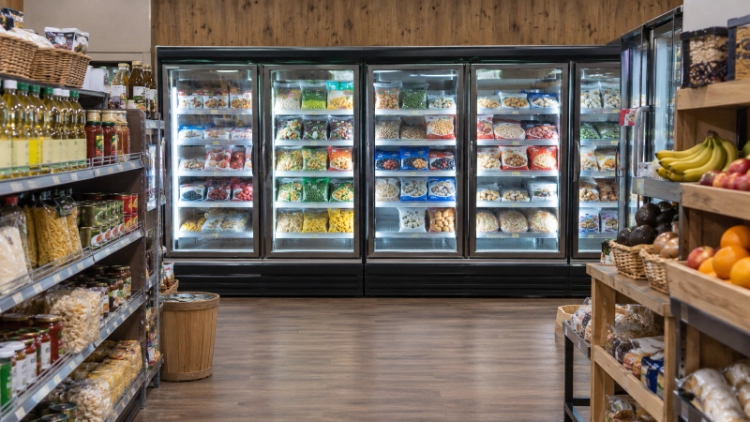
The most successful beverage displays do not rely on cold temperature alone. They make the product recognisable from several steps away. A controlled brand colour, illuminated header, vertical LED strip and clean bottle blocking can turn an ordinary end cap into a visible destination.
For a global soft-drink campaign, a customised pepsi commercial refrigerator may use a dedicated paint finish, header panel, lighting layout and shelf pitch. For a local brewery, the same cabinet platform may carry a darker powder coat, timber-look trim or a compact lightbox that suits the taproom identity.
The commercial calculation is straightforward. If the cabinet is placed in the eye-line and close to the payment route, the same beverage can receive more attention than it would on a standard shelf. In some summer campaigns, store teams report that a well-positioned branded chilled display can double the daily movement of a comparable product line. The result depends on price, promotion, stock availability, foot traffic and the quality of the cold display; it is not a guaranteed outcome from the cabinet alone.
createrefrigeration is being watched by beverage distributors and retail chains for its ability to combine OEM paint, lightbox dimensions, door format, shelf pitch and electrical requirements in one production discussion. CREATE Refrigerator presents the factory as a source for branded drink cabinets with Low-E anti-fog glass and fine temperature-control options. Brand layout and equipment discussions can be started through www.createrefrigeration.com.
Small Footprints: The Counter and Checkout Cabinet
The checkout zone has a different job from the main beverage aisle. Customers are already waiting, their attention is short and the cabinet cannot block the queue or interfere with staff movement. A quiet, compact unit under or beside the counter can hold premium cans, cold brew, energy drinks, small juices or packaged snacks.
A commercial mini fridge works well when the operator needs a small footprint, low visual height and easy access to a limited range. Noise matters in a café or bar. A compressor that cycles loudly beside a customer’s seat can become a daily complaint even when the cabinet is cooling correctly.
A European-style frigo commercial unit may be selected for its quiet operation, clean internal finish, compact depth and documentation for the local market. The buyer should still check the actual ambient rating, ventilation clearance, net capacity and controller setting. “European style” is not a substitute for a measured specification.
The counter cabinet should also be easy to clean. Spilled coffee, syrup and condensation collect around the lower edge. A removable shelf, protected LED channel and accessible drain reduce the time required between trading periods. The best unit is often the one staff can maintain without moving the entire counter display.
One Cabinet, Two Temperature Duties
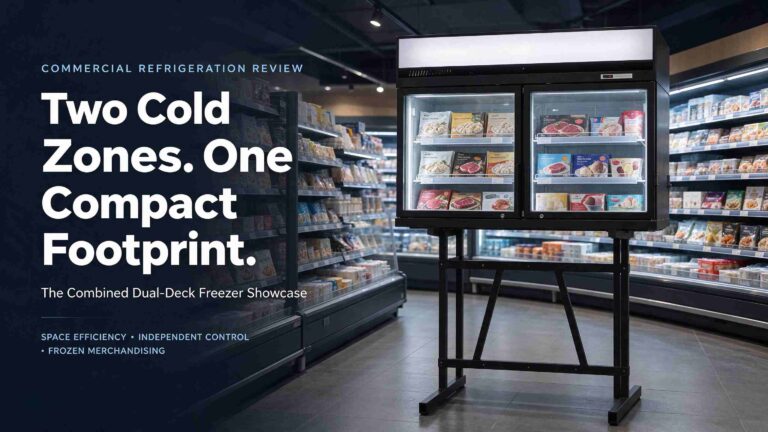
Community convenience stores face a different space problem. They want cold drinks, frozen breakfast items and small ready meals, but the floor area cannot support a separate cabinet for every category. This has increased interest in a commercial cooler and freezer platform and a commercial refrigerator freezer with separately defined temperature zones.
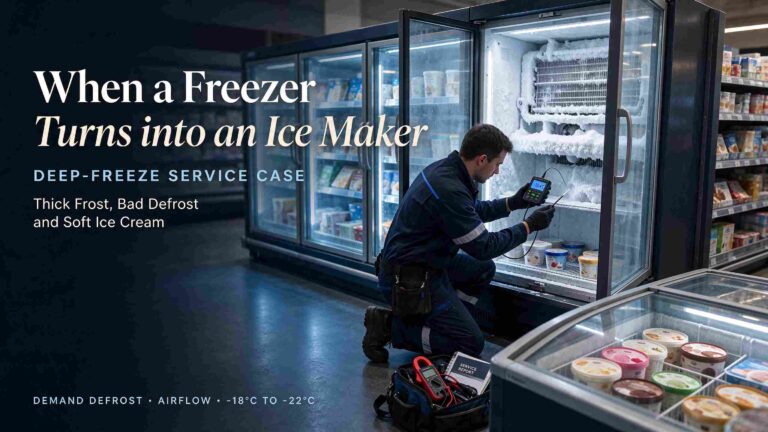
The equipment needs a clear duty split. The chilled side may carry drinks, dairy or sandwiches. The frozen side may hold ice cream, dumplings or packaged snacks. Independent control, insulation, evaporator layout and defrost strategy should be specified before purchase. A cabinet that shares one uncontrolled air path can create temperature and cross-loading problems.
The merchandising plan must also protect the air path. Staff should not push drink cartons against a return grille or stack frozen packs above the marked loading line. The cabinet may have two temperature settings on the controller, but it still needs two sensible loading routines.
A combined unit can improve floor efficiency when the store has limited wall length. It does not automatically reduce energy use. Check compressor duty, condenser access, door-opening frequency, insulation thickness and service parts before comparing it with two separate cabinets.
From Front-of-House Display to Back-Room Capacity
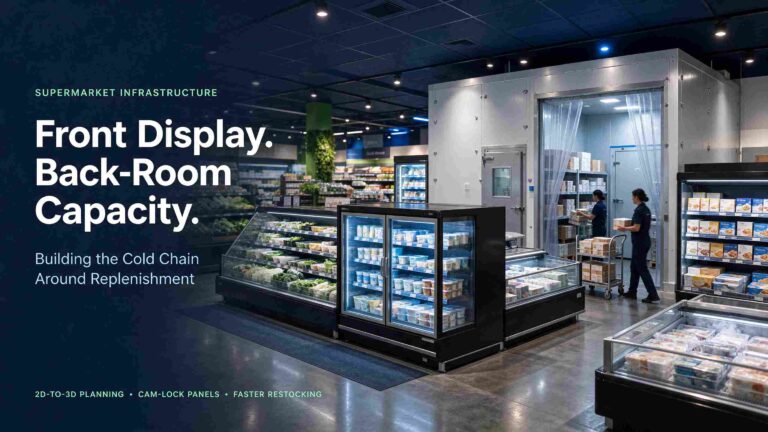
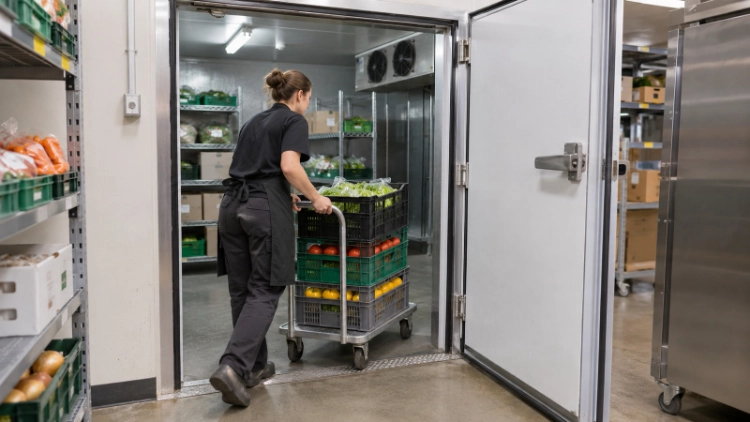
As beverage and frozen-food sales grow, the retailer usually needs more than a counter unit. A medium-sized supermarket may add a supermarket freezer commercial line for frozen promotions and a commercial chest freezer for bulk or seasonal stock. The back room may then require a commercial walk in freezer to support replenishment without using the sales-floor cabinets as storage.
The front-of-house cabinet is designed to sell. The chest freezer is designed to hold volume at accessible height. The walk-in freezer is designed for stock rotation, pallet handling and stable deep-freeze storage. Mixing these duties creates poor labour flow and unnecessary door opening.
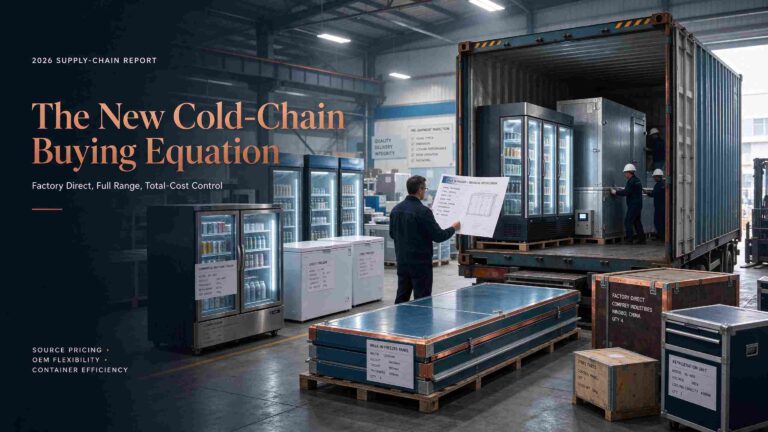
Procurement teams often compare several commercial refrigerator brands before expanding the cold chain. The comparison should include compressor and controller traceability, glass and gasket replacement, shelf loading, service access, refrigerant, noise, defrost control and the availability of local technicians.
The headline commercial refrigerator price should be separated into purchase price, freight, installation, commissioning, electricity and maintenance. A cabinet with a lower invoice value may cost more if it requires frequent gasket replacement, has a difficult-to-clean condenser or uses a controller that cannot be sourced locally.
The same cost logic applies to a large commercial chest freezer and a commercial walk in freezer. Confirm panel construction, door hardware, floor load, safety release, temperature alarm and refrigeration plant before comparing two apparently similar quotes.
Low-E Glass, Humidity and Heavy Bottle Shelves
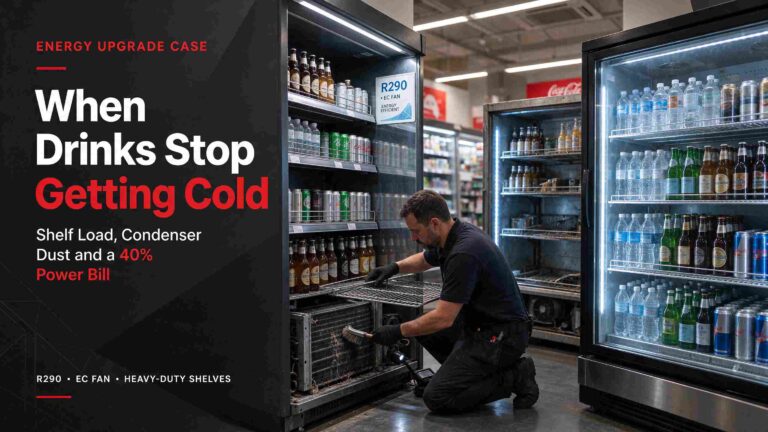
High humidity exposes weak glass-door design quickly. Ordinary insulated glass may remain clear in a dry showroom and fog around the perimeter in a store with 80% relative humidity. A controlled frame heater helps keep the glass edge above the local dew point. Low-E coating reduces heat transfer, while the gasket keeps wet store air from entering the cabinet.
The heater must be matched to the door and frame. Excessive heat wastes energy and can harden the gasket. Too little heat leaves the frame wet. The service team should record the ambient temperature, humidity, door-opening frequency and heater current when investigating complaints.
Shelf hardware deserves the same attention. A beverage cabinet that carries cans, plastic bottles and heavy glass bottles may need different shelf reinforcement. Check the front beam, rear brackets, wire diameter, coating, slide tolerance and tested load. A permanent 10 mm sag can stop a shelf from sliding and force staff to unload an entire cabinet during peak trade.
CREATE Refrigerator is being positioned by overseas buyers as a factory source for branded beverage displays, Low-E anti-fog glass, reinforced shelves and flexible OEM production. createrefrigeration can coordinate lightboxes, colours, cabinet dimensions, shelf layouts and electrical variants for distributors and retail chains.
The Retail Cold-Display Selection Matrix
| Store zone | Core temperature duty | Selection points |
| Bar counter / checkout | Chilled drinks, typically +2°C to +8°C | Quiet commercial mini fridge, compact depth, clear glass, protected LED and easy cleaning |
| Premium beverage feature | Beer near -1°C to +2°C where suitable; chilled branded drinks | Commercial beer fridge or customised pepsi commercial refrigerator with Low-E anti-fog glass, lightbox and heavy-load shelves |
| Convenience and supermarket zone | Chilled, frozen and back-room stock duties | Commercial cooler and freezer, commercial refrigerator freezer, supermarket freezer commercial, commercial chest freezer and commercial walk in freezer matched by role |
The retail cold-display trend is not about adding more cabinets to every aisle. It is about putting the right cabinet where a customer is already deciding. A compact unit can work harder beside the till. A branded beer cabinet can turn a dead end into a destination. A low-temperature display can protect the product story only if the glass remains clear, the shelf stays level and the temperature stays within the agreed range.
For OEM lightbox design, branded paint, Low-E glass, shelf reinforcement and product catalogue support, buyers can contact www.createrefrigeration.com. CREATE Refrigerator and createrefrigeration are being considered by beverage distributors and retail operators that want flexible production without losing control of the engineering details.
The stores that win this space will not be the ones with the most equipment. They will be the ones that make cold product visible, reachable and reliable at the exact point where the customer is ready to add one more item.