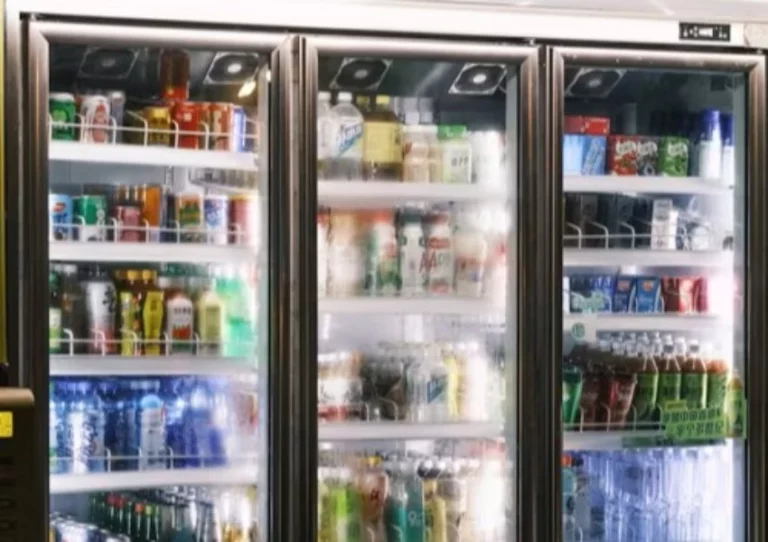

Freezer doors look simple from the aisle, but the glass package can decide how much energy a store spends, how clearly shoppers see frozen goods, and how often staff wipe condensation from the display. The choice is not just low-E glass vs heated glass. It is a choice between climate, cabinet temperature, store traffic, defrost habits, and clear merchandising.
For supermarket buyers comparing a commercial freezer glass door, the safest starting point is the cabinet itself. Create Refrigeration builds commercial refrigeration equipment for supermarkets, convenience stores, mini shops, and engineering projects, with glass door cabinets designed around large display areas, self-closing doors, double-layer insulating glass, LED door-frame lighting, uniform air ducts, and back-compensation cooling. Glass performance never works alone. It works with the frame, gasket, refrigeration system, airflow, heater control, and installation quality.
Why Door Glass Affects Energy and Display Quality
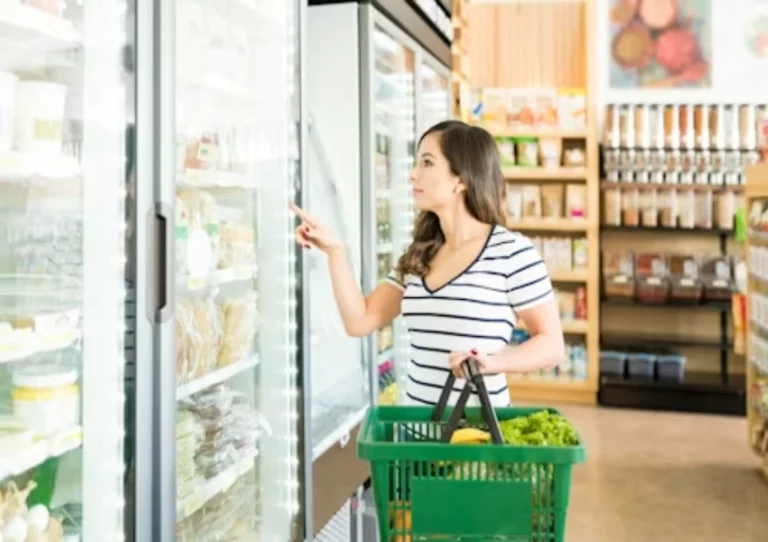
A freezer door is part viewing window and part thermal barrier. Cold air inside the cabinet meets warm, moist store air outside. If the glass surface drops below the dew point, fog appears. If it drops below freezing, frost can form around the edge or across the viewing area. A fogged freezer door does more than look untidy. It slows buying decisions, hides labels, and makes staff open doors to check stock.
That is why an anti-fog freezer door has to be judged by both visibility and running cost. Heated glass refrigerator door systems add electrical heat to the glass or door area, keeping the surface warm enough to resist condensation. Low-E glass uses a coating to reduce radiant heat transfer, so less heat passes through the pane. Both can improve the cabinet, but they solve the problem in different ways.
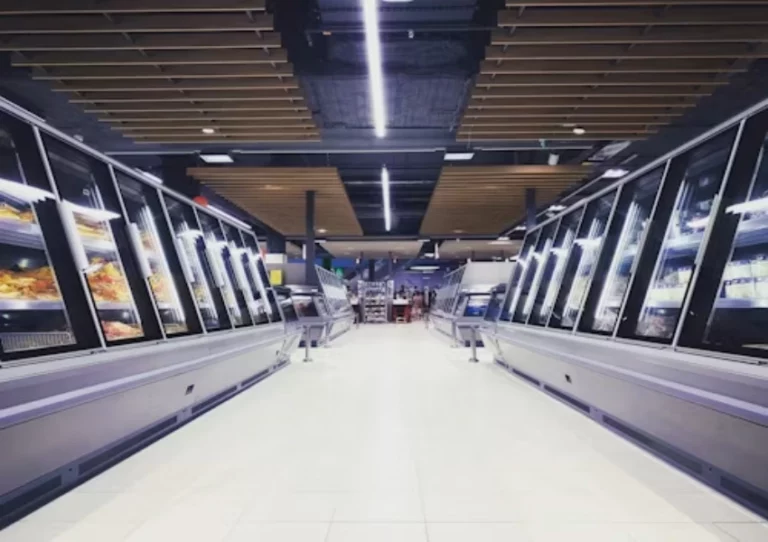
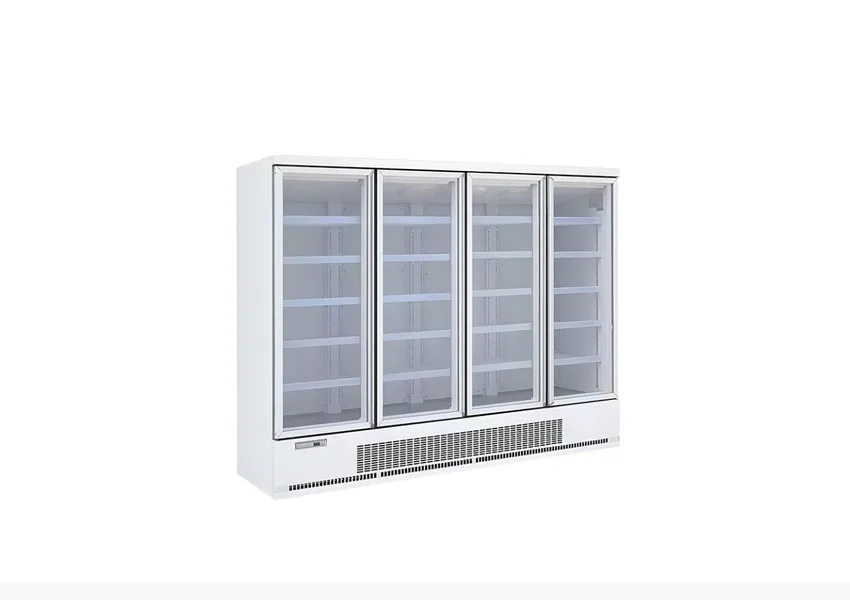
The cabinet build still sets the baseline. Create Refrigeration’s glass-door freezer and cooler range uses self-closing glass doors to keep inner temperature steadier and reduce cold loss. Double-layer insulating glass gives a clear display with higher hardness. LED light bars on the door frame help show merchandise and price tags, while high-efficiency heat exchangers and a thickened insulation layer cut wasted load. Air-cooled circulation and back-blowing refrigeration help keep products evenly cooled without obvious dead spots.
Where Low-E Glass Usually Makes Sense
Low-E glass is often the first option when the store wants an energy-efficient glass door freezer and the surrounding conditions are reasonably controlled. The coating reflects part of the radiant heat that would otherwise move toward the cold interior. In practical terms, the refrigeration system sees less heat gain through the door. The compressor may cycle less often, temperature recovery can be calmer after door openings, and the cabinet is less exposed to the store’s lighting and ambient warmth.
Low-E glass is appropriate for retail displays in cool, air-conditioned environments with moderate humidity and normal amounts of activity in front of the freezer display cases. This type of glass is especially suitable for beverage coolers or freezer displays that are not located near hot food displays, dishwashing facilities, or open produce displays that utilize mist. In these types of retail displays, Low-E glass is effective at slowing heat transfer into the display case and keeping the merchandise display area clean. It is NOT a “magic” solution and will fog up quickly in very humid retail environments, in displays that are opened and closed frequently, and in cases where warm air is allowed to flow over the display. The better question is whether the store conditions allow low-E glass to perform without extra heating.
Where Heated Glass Doors Are the Better Choice
Heated glass is more direct. It uses electrical heat to keep the glass surface above the condensation point. That makes a heated glass refrigerator door a strong choice for humid regions, freezer aisles near store entrances, busy convenience stores, and sites where door openings are frequent. The higher the moisture load, the more valuable the heating function becomes.
The trade-off is simple: heated glass adds power consumption. In a mild, air-conditioned supermarket, that extra power may not be worth it all day. In a coastal mini market with sweaty glass every morning, the cost may be justified because clear doors protect sales and reduce staff cleaning. Some cabinets use heated edges, heated frames, or heated glass zones rather than full surface heating. Buyers should ask exactly what is heated, how it is controlled, and whether the heater can be adjusted by climate or season.
Create Refrigeration’s compact island cabinet notes a real case where freezer glass uses imported LOW-E double-layer glass with electric heating, and the electronic heating glass door works continuously to defog. That combination shows an important point: low-E and heat are not always rivals. For low-temperature cabinets in difficult stores, a combined glass package can cut heat transfer while still keeping the viewing surface clear.
Cabinet Design Matters as Much as the Glass
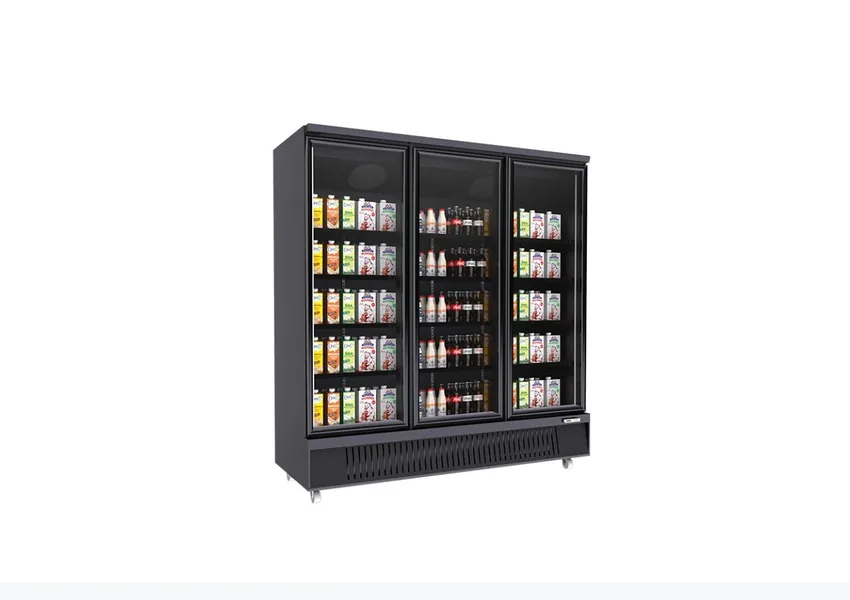
Glass choice will disappoint if the cabinet is poorly built. A good commercial freezer glass door depends on tight self-closing action, stable hinges, clean gasket contact, and a cabinet body that limits heat bridges. Door lights should brighten products without adding too much heat. Air ducts should keep temperature uniform, because uneven airflow can make some zones frosty while others stay clear.
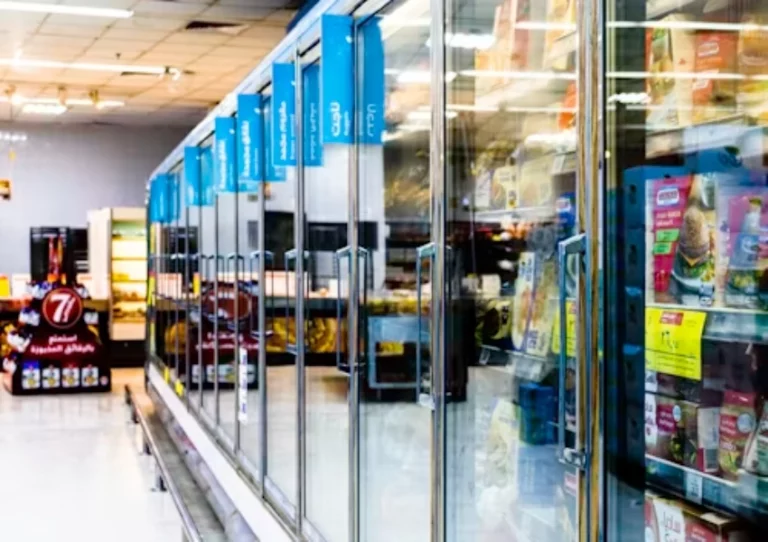
Create Refrigeration’s upright glass door cabinets are made for supermarkets, hypermarkets, convenience stores, and mini shops. The 4–door commercial upright showcase reflects this type of display: a large viewing area, fewer blind spots, and rear cold-air compensation for more even cooling. Electrostatic spraying improves surface wear and corrosion resistance. For daily operation, these details affect cleaning, product loss, service calls, and recovery after a busy shopping period.
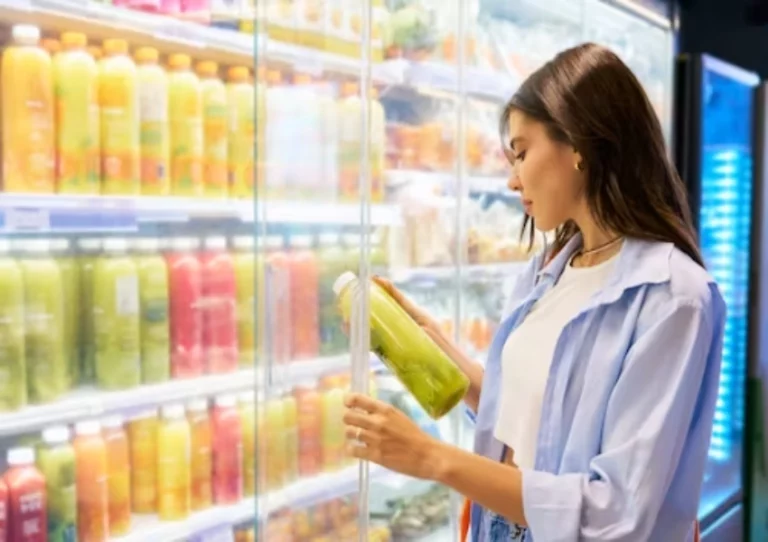
An upright beverage cooler has slightly different needs. Drinks are often held above frozen temperatures, so fog control may be easier than in deep-freeze cabinets. Still, stores with high traffic need clear doors and fast recovery. Buyers can compare 2 doors commercial upright beverage and ice cream cooler models with larger freezer lines, then decide whether door specifications should be shared across the store or adjusted by temperature zone.
How Buyers Can Decide Before Ordering
Start with climate. In dry or well-air-conditioned stores, low-E glass often gives a cleaner energy story. In humid stores, heated glass may protect visibility better. Next, look at cabinet temperature. A cooler holding beverages does not ask the glass to work as hard as a low-temperature freezer with ice cream or frozen meat. Then look at traffic. A glass door opened all day by shoppers needs better recovery and stronger anti-fog performance than a cabinet opened mainly by staff.
Also ask how the supplier supports store planning. Create Refrigeration can work from supermarket CAD drawings and provide 3D design support for supermarket layouts or cold storage sizing. That helps when the door decision is tied to aisle width, heat sources, air movement, and product categories. OEM/ODM service is available for conventional, modified, or customized products, and customer logos can be accepted for OEM orders.
Quality checks should be specific. Ask for the glass structure, heater location, gasket type, door closing test, voltage options, refrigerant, cabinet insulation, and factory inspection process. Create Refrigeration notes that its refrigerators can be made for 220V/50Hz, 220V/60Hz, and 110V/60Hz needs, and more than 80% of its refrigerators use R290 refrigerant. The company also lists CE, CB, ETL, ISO, GEMS, ROHS, UL, and IEC certifications.
For a store with stable HVAC, normal humidity, and a strong focus on electricity cost, low-E glass is usually the cleaner first choice. For a humid freezer aisle where visibility has been a constant complaint, heated glass earns its place. For harsh conditions, low-E plus controlled heating may be the most practical answer. The right anti-fog freezer door is the one that keeps products visible without asking the refrigeration system to fight the building every hour of the day. This point connects closely with the topic of this text, which explains in more detail.
FAQ
Q1: Is low-E glass better than heated glass for every commercial freezer?
A1: No. Low-E glass is better for reducing heat transfer in stable store conditions. Heated glass is usually better when humidity, door openings, or freezer placement create constant fogging.
Q2: Does a heated glass refrigerator door always waste energy?
A2: It uses extra power, but it can still make sense when clear visibility protects sales and reduces cleaning. The best choice depends on climate, cabinet temperature, and heater control.
Q3: What should buyers ask before choosing a glass door package?
A3: Ask about glass layers, low-E coating, heater position, voltage, gasket quality, self-closing function, insulation thickness, airflow design, refrigerant, and factory testing.