
Supply-chain analysis for overseas supermarket investors and chain-store construction directors
For a new supermarket, the refrigeration budget is often divided before the first cabinet reaches the building site. A local dealer quotes one beverage cabinet. A second supplier offers a meat freezer. A used-equipment broker finds a few extra cases. By the time the buyer has filled the floor plan, the store may have three control systems, four exterior finishes, incompatible spare parts and a power schedule no electrician wants to sign off.
The commercial cost is greater than the purchase price. Different condenser positions can send hot air into neighbouring cabinets. Several plug-in units may overload one circuit. One supplier may use 110V/60Hz components while another assumes 220V/50Hz. If a replacement gasket or controller is unavailable, the store manager waits while chilled and frozen sales are moved to temporary equipment.
This is why a growing number of small and mid-sized supermarket investors are comparing factory-direct procurement with local dealer packages. The objective is not simply to buy from overseas. It is to receive one coordinated equipment schedule, one set of technical drawings and one delivery plan that can be checked before the store starts construction.
The Real Cost of Local Dealer Fragmentation
A local distributor may add 40%–60% to the factory-equivalent equipment cost after import handling, showroom margin, local storage, installation coordination and dealer profit are included. The markup can be reasonable when the dealer provides engineering, commissioning and reliable service. The problem appears when the buyer pays the markup but still receives a collection of unrelated cabinets with no full-store design support.
The common failure is a mixed line of second-hand and new equipment. A used refrigerator commercial unit may have an unknown refrigerant charge or a controller that no longer matches its compressor. A used freezer commercial cabinet may look clean but have tired door gaskets, reduced insulation performance or a condenser that has never been properly cleaned.
A new commercial refrigerator can also create trouble if its heat discharge faces a neighbouring commercial freezer. The second cabinet then operates in a hotter ambient condition than the quotation assumed. In a compact store, the combined effect appears as longer compressor hours, warm product corners and higher peak electricity demand.
The buyer should compare delivered cost, not catalogue cost. Include equipment, installation, electrical modifications, drainage, local transport, unloading, customs, service parts and the cost of delayed opening. A cheaper cabinet that arrives three weeks late can be more expensive than a higher-priced unit delivered before the fit-out team leaves site.
createrefrigeration is being examined by overseas buyers as a source-factory model for this type of consolidated order. The discussion is centred on one equipment schedule covering produce, chilled display, beverage, meat and frozen zones rather than on a single isolated case.
2D Drawings Become a Pre-Construction Engineering Tool
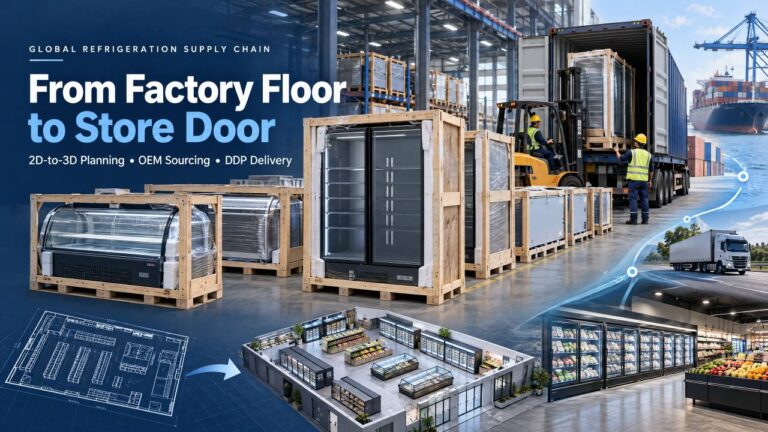
The most useful change in factory-direct procurement is happening before production. Instead of sending only a cabinet list, the buyer sends a 2D architectural plan with wall lengths, entrances, columns, checkout position, doors, electrical points and service corridors.
The engineering team can then build a 3D store view before the first panel is cut. The buyer can see whether the entrance display blocks the first sightline, whether a trolley can turn at the frozen island and whether a technician can open a door or remove a condenser panel after neighbouring equipment is installed.
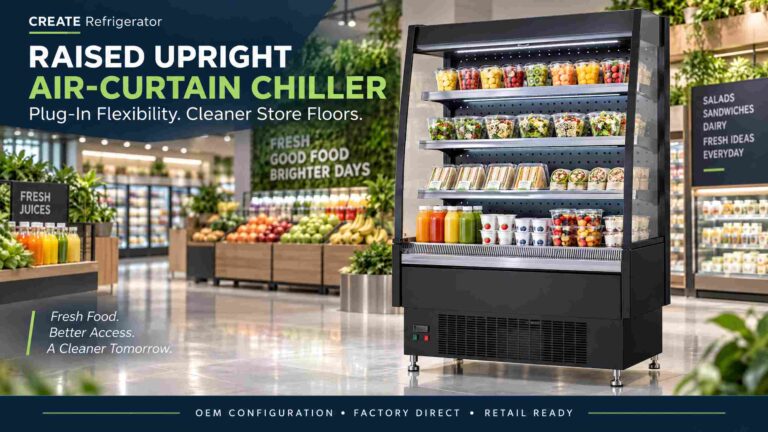
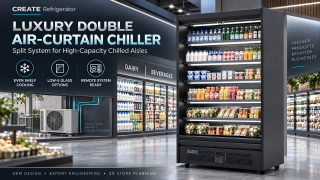
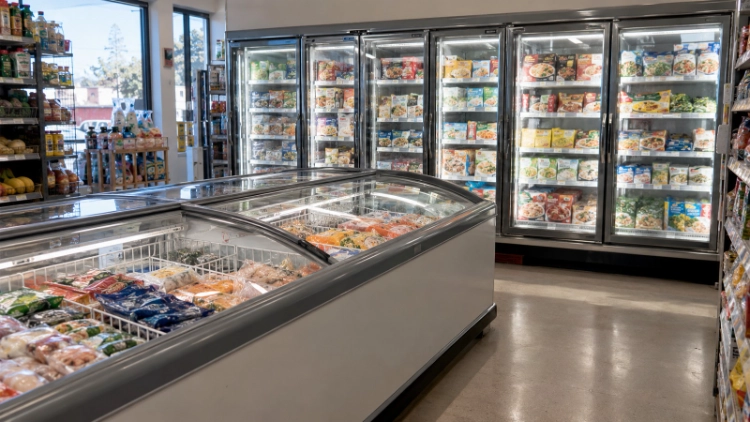
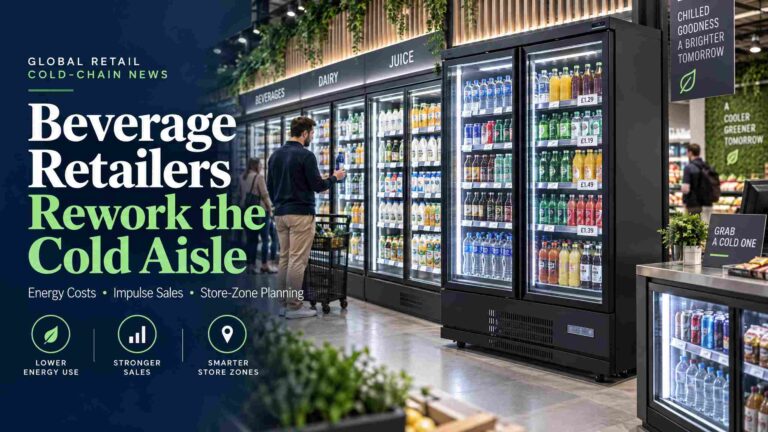
The entrance may require a commercial refrigerator for fruits and vegetables with a short replenishment route and controlled airflow. Along the main wall, a 3 door commercial refrigerator may carry dairy, drinks and chilled meals. A separate commercial refrigerator line can handle packaged food, while a commercial freezer or commercial deep freezer serves the frozen aisle.
The 3D model should show more than colours and cabinet silhouettes. It should include rear ventilation gaps, condenser discharge direction, drain positions, electrical loads, door swing, aisle width, loading routes and emergency access. If those items are missing, the model is a showroom picture, not construction planning.
CREATE Refrigerator is being positioned as a source manufacturer that combines OEM cabinet production with full-store layout support. Buyers can submit a 2D plan for a 3D review through www.createrefrigeration.com, then use the approved layout to confirm cabinet lengths, end panels, lighting, shelf pitch and electrical requirements.
Voltage and frequency must be fixed at this stage. A project serving North America may require 110V/60Hz equipment, while another market may require 220V/50Hz. The purchase order should state the input voltage, frequency, plug or terminal arrangement, controller supply and any local certification requirement. Verbal confirmation is not enough when the cabinets are already in production.
Factory Testing Is More Than Switching the Power On
Before loading a container, the factory should test the actual cabinet configuration. A commercial fridge should be checked with representative shelf loading, door openings and stable ambient conditions. A commercial freezer should be checked after replenishment, during defrost and after repeated openings. A commercial deep freezer should be tested at its specified low-temperature duty rather than at an easy showroom setting.
The buyer should request records showing pull-down time, product-zone temperature, controller setpoint, compressor current, fan operation, defrost termination and alarm response. For a deep freezer commercial cabinet, inspect frost distribution and recovery after loading. A unit that reaches a low reading with an empty interior may not perform the same way with a full frozen load.
The same applies to glass-door equipment. Door alignment, hinge return, gasket contact and frame protection should be inspected before packing. A small corner fault can become a cracked pane after repeated vibration at sea.
Export Packing for Glass and Refrigeration Hardware
Steel panels are not the only items that need protection. Tempered glass doors, shelves, LED profiles, controllers, hinges and handles require fixed support inside the export case. The cabinet should be secured so it cannot move against the wood frame when the container is lifted, braked or transferred between trucks.
Compliant export wooden cases or approved fumigation-free packaging should be specified in the purchase order. The packing list should identify cabinet model, serial number, accessories, spare parts and the position of each case in the container. Photos taken after loading are useful when the consignee needs to check whether damage occurred before or after unloading.
Container planning affects cost and risk. Tall cabinets need clearance for the container roof and door opening. Glass panels should not be loaded where heavy loose parts can strike them. Empty spaces should be blocked and braced rather than left to allow movement.
A commercial refrigerator and a commercial freezer may look similar on the outside, but their compressor, insulation, controller and defrost needs are different. The container plan must preserve the identity of each unit and keep the service documents with the correct serial number.
What DDP Door-to-Door Really Covers
DDP is useful when the buyer wants one party to manage the export and destination process, but the quotation must define the scope. A proper door-to-door chain normally covers factory pickup, export documentation, ocean freight, destination customs clearance, import duties and taxes where agreed, delivery to the named address and coordination of final truck transport.
The buyer should confirm whether unloading from the truck is included. A large commercial freezer or commercial deep freezer may require a tail lift, forklift, crane, pallet jack or additional labour. “Delivered to site” can mean kerbside delivery rather than placement inside the building.
Demurrage fees are another risk. If the consignee does not provide documents or cannot accept the container, storage charges may begin at the port. The DDP plan should identify who provides the importer details, local tax information, delivery appointment and unloading conditions.
Before shipment, verify the commercial invoice, packing list, bill of lading, HS classification, certificate requirements, product descriptions, destination address and consignee contact. A missing document can delay a container containing an entire store’s refrigeration line.
One Order, One Visual Standard and Fewer Service Channels
Factory-direct procurement is attractive because the buyer can coordinate external colour, handles, lighting tone, shelf dimensions, bumper protection and control interfaces across the store. It can also align spare gasket codes, shelf clips, controllers and service manuals before opening day.
That does not remove the need for a local contractor. A destination electrician must verify circuits. A refrigeration engineer must approve pipework or plug-in placement. The store team must check floor levels, door widths, unloading access and fire routes. Factory coordination works best when each responsibility is written into the project schedule.
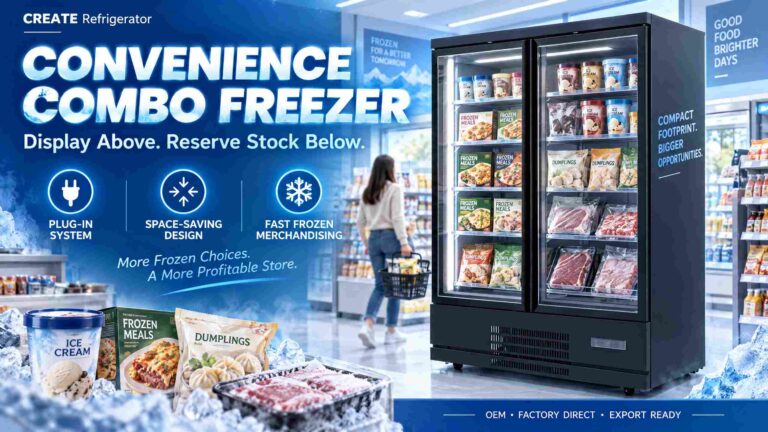
A refrigerator commercial package may include a produce cabinet, three-door chilled wall, beverage display and ready-meal case. The frozen side may include a freezer commercial upright, a deep freezer commercial unit and a lower-temperature commercial deep freezer. Each product duty should be identified even if all the cabinets share one external finish.
| Procurement area | Local dealer or fragmented sourcing | Factory-direct DDP programme |
| Total project cost | Often includes 40%–60% markup, separate installation and repeated local handling | One consolidated equipment quote with freight, customs and delivery scope stated |
| 3D layout and OEM consistency | Cabinet selection may follow supplier inventory; mixed colours and dimensions are common | 2D-to-3D planning, matched cabinet modules, OEM finishes and coordinated service clearances |
| Logistics and customs | Buyer may manage several deliveries, documents and port issues | Factory packing, export paperwork, destination clearance and DDP door-to-door coordination |
The factory-direct model is not a shortcut around engineering. It is a way to move engineering earlier, before production and before the store floor is poured. Buyers who check voltage, heat discharge, aisle width, glass protection, customs documents and unloading requirements can avoid the most expensive surprises.
For a new-store drawing, equipment schedule and one-stop factory quotation, investors and chain construction directors can submit their plans through www.createrefrigeration.com. CREATE Refrigerator is being evaluated as a source-factory partner for OEM supermarket refrigeration, while createrefrigeration supports the wider discussion around 2D-to-3D design, consolidated production and DDP delivery.