
Product guide for supermarket chains, beverage distributors and refrigeration contractors
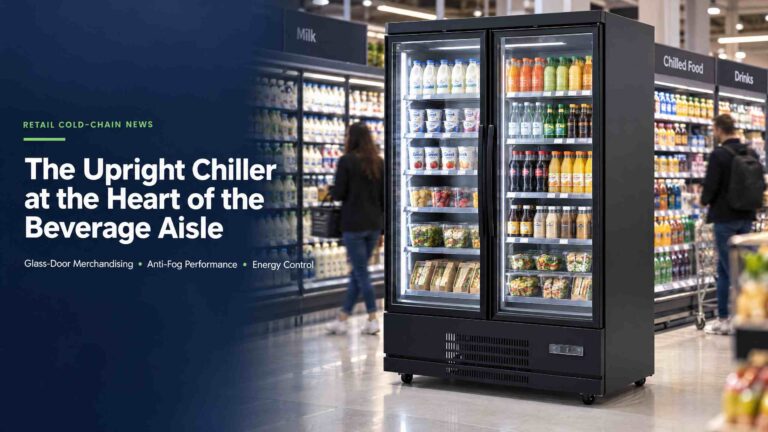
Large chilled aisles need more than a cold cabinet. They need stable airflow across several shelves, clean sightlines, manageable service access and enough capacity for a full trading day. The luxury upright double-air-curtain chiller, split system, is intended for stores that use a remote refrigeration system and want a tall, high-capacity display line without placing the condensing unit inside the sales area.
The double-air-curtain design separates the supply and return airflow into controlled paths. When the case is loaded within its marked line, the arrangement helps limit warm-air entry and supports more even temperatures from the top shelf to the base deck. createrefrigeration offers the format with cabinet lengths, shelf pitch, lighting, glass options and remote-system specifications for export projects.
Why Split Refrigeration Suits Larger Stores
A remote system moves compressor and condenser heat away from the shopping aisle. This can reduce local heat discharge and noise around a continuous cabinet line, but it requires proper pipe sizing, oil return, controls, defrost coordination and commissioning.
The buyer should not treat the cabinet as a stand-alone appliance. The project needs a refrigeration schedule that identifies evaporating temperature, capacity, suction line, liquid line, defrost method, controller, solenoid, expansion device and maximum pipe length. The contractor must also confirm the system’s refrigerant and local safety rules.
The cabinet can be used as supermarket refrigeration double glass, with two clear door rows or a double-glazed glass-door arrangement depending on the selected configuration. The wording on a quotation may vary, so request a section drawing showing glass layers, frame heaters, door gaskets and mullions.
CREATE Refrigerator can coordinate the case drawing with the remote refrigeration contractor. Factory layout support and technical discussion are available through www.createrefrigeration.com.
Double Air Curtains and Shelf-to-Shelf Uniformity
An upright case often fails in the field because staff load it like a dry shelf. Cartons are pushed past the limit line, the bottom return is covered and promotional boards are placed over the top outlet. The airflow then short-circuits or spills into the aisle.
A double-air-curtain system needs a clear supply path and an unobstructed return. The top shelf should not become warm simply because the cabinet is full. During commissioning, measure the front and rear of the upper, middle and lower shelves after the case reaches stable operation.
The same test should be repeated during a busy period. A store with frequent door openings can create a different load from an empty showroom. Check recovery time, evaporator frost, door gasket contact and product temperature after repeated openings.
Low-E tempered glass with controlled anti-condensation heating helps maintain visibility in humid stores. The heater should not be used as a substitute for correct air balance or a sound door seal. A damaged gasket allows moist air inside and adds frost to the evaporator.
Building a Complete Cold-Chain Wall
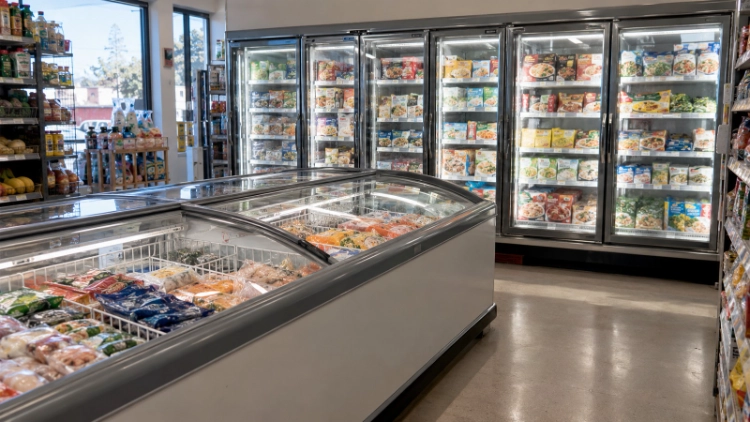
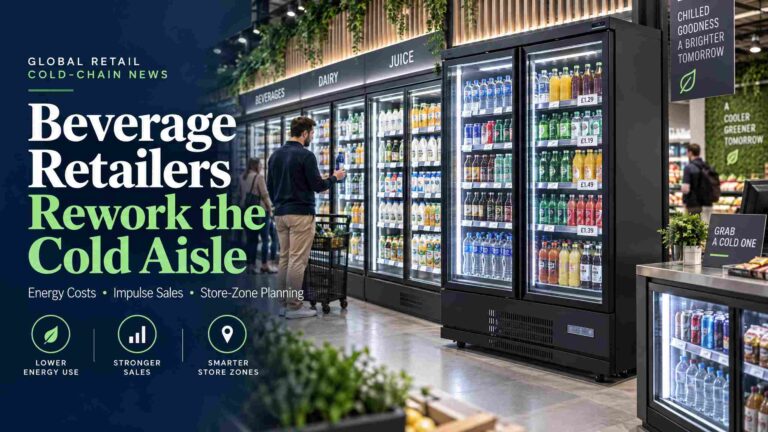
A large store may place the double-air-curtain cabinet beside supermarket open display fridges for produce and ready meals, a supermarket beverage refrigerator for bottled drinks and a supermarket display showcase freezer for frozen promotions. Each cabinet requires a separate temperature and defrost duty even when the front design is coordinated.
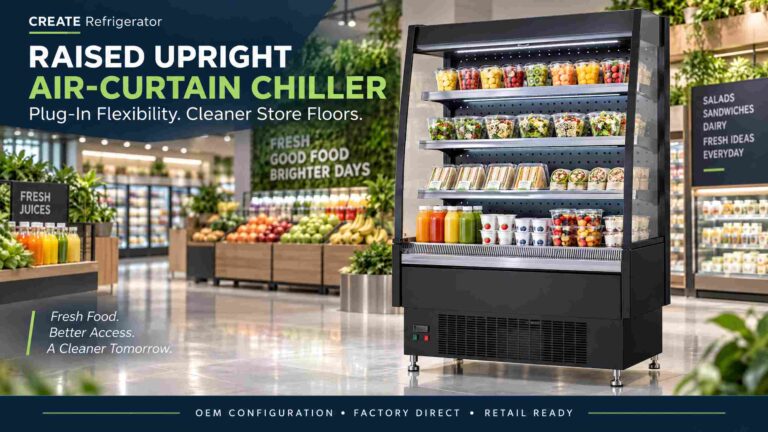
A supermarket fruit refrigerator can carry packaged fruit, salads and cut produce if its humidity and air speed are suitable. A supermarket display shelf refrigerator may serve dairy and drinks, while a supermarket freezer display for meat handles frozen meat packs in the deep-freeze zone.
The full wall should be checked for customer sightlines, door swing, replenishment space, return-air openings, service access and lighting reflection. Tall cabinets placed opposite one another can create a narrow visual tunnel and make trolley turns difficult.
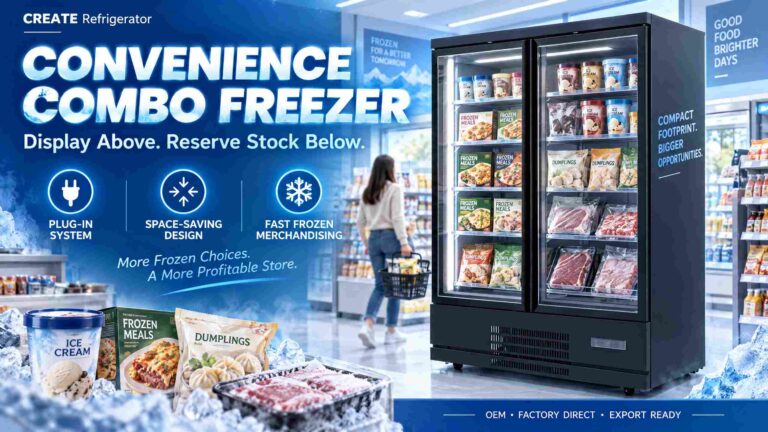
The cabinet may also be paired with a horizontal supermarket freezer at the end of an aisle or a separate supermarket deep freezer in the back-of-house area. The remote system should account for the combined load rather than treating each case as an independent appliance.
Glass, Lighting and Heavy-Load Shelves
Luxury appearance is often created by the details customers notice first: clear glass, even lighting, clean mullions, straight shelf lines and a dark or stainless interior. The engineering test is less visible. Shelves must carry real beverage cases, not empty cartons. Shelf clips should remain secure during replenishment, and the back panel must not flex under normal loading.
Vertical LED lighting should show labels without producing a bright reflection from ceiling spotlights. The door closer and hinge should be rated for repeated commercial use. A magnet gasket should grip along the full perimeter, including the lower corners and centre meeting rail.
If the cabinet is installed in a tropical or coastal location, request the ambient design condition and condensation test. A dry factory showroom cannot represent a humid store during a rainy season.
Ordering and Commissioning Checklist
Before signing the purchase order, confirm the remote-system interface, cabinet module length, glass structure, frame-heater control, shelf load, lighting, controller, drain, defrost cycle, refrigerant, insulation thickness and local electrical accessories.
During commissioning, record supply and return air temperatures, product-zone readings, suction pressure, defrost termination, door closure and power consumption. Keep the readings with the cabinet serial number so future service teams have a baseline.
| Engineering item | Recommended confirmation | Operating value |
| Remote refrigeration | Capacity, evaporating temperature, pipe length, oil return and controls | Stable cabinet temperature and fewer commissioning disputes |
| Airflow | Dual supply/return path; marked loading line; clear return grille | More even shelf conditions and lower cold-air spill |
| Glass and doors | Low-E tempered glass; controlled anti-condensation heater; full gasket contact | Clear view and reduced moisture entry |
| Store integration | Compatible beverage, produce, freezer and meat-display zones | Better aisle flow and balanced heat load |
For remote-system drawings, cabinet modules and export pricing, contact createrefrigeration through www.createrefrigeration.com. CREATE Refrigerator can coordinate the split-system case with a wider supermarket refrigeration schedule.