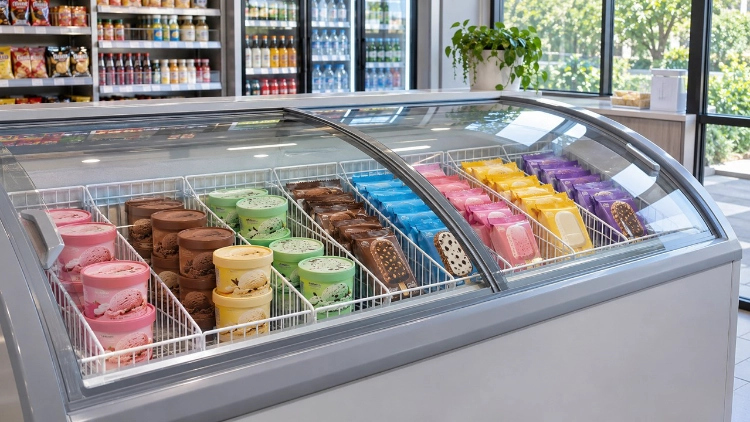
Ice cream cases become difficult to shop when every tub, bar, and multipack is placed wherever there is space. A practical ice cream display freezer basket layout starts with the products customers reach for most often, then assigns basket depth, label position, and refill access around that pattern. The aim is a cabinet that can hold more saleable SKUs without hiding the front row or forcing staff to unload a basket to reach reserve stock.
The layout decision has two separate tests. Customers need a short visual search path from one flavor or format to the next. Staff need a repeatable refill path that does not leave the curved lid open while a mixed carton is sorted. A basket plan that passes only the first test creates attractive clutter; one that passes only the second slows shoppers and weakens the display.
What should the basket layout decide before loading begins?
Start with a written SKU map rather than a full cabinet. Record package form, selling speed, price tier, temperature requirement, and carton quantity. A 500 ml tub has a different reach pattern from a narrow ice-cream bar box. If both are poured into one deep basket, the small packs disappear below the tub line and the operator loses a clear count of what is available.
Use three practical zones: a front selling zone, a middle choice zone, and a rear reserve zone. The front zone holds the fastest moving facings. The middle zone groups close substitutes, such as related flavors or the same brand in another size. The rear zone holds unopened reserve packs only when the basket can still be lifted or reached without disturbing the selling row. This is a planning method, not a claim that every cabinet supports the same depth.
A simple example makes the rule clear. Assume a shop sells 30 units of a popular bar, 12 tubs, and 8 novelty packs in a busy day. The 30-unit item should receive the shortest refill distance and the clearest sightline. The novelty pack can use a narrower side basket if its lower movement does not justify a full front row. The quantities are an example for layout testing, not a sales benchmark.
| Planning input | What to record | Layout decision |
| Package shape | Tub, bar, carton, multipack | Choose basket width and facing direction |
| Daily movement | Fast, medium, slow, or seasonal | Give faster items easier reach |
| Price tier | Entry, standard, premium | Keep adjacent choices visible |
| Refill carton | Units per case and handling weight | Set reserve quantity and refill route |
How do basket dimensions affect SKU visibility?
Basket width determines whether a row reads as a product group or as a pile. Wider baskets suit tubs and boxed multipacks that need a stable base. Narrower wire sections suit bars and small packages because staff can count facings without moving the whole row. The useful measurement is the clear internal width after rails and dividers are fitted, not the advertised outside cabinet width.
Depth affects both inventory and reach. A deep basket can increase reserve stock, yet the back units may become invisible under the glass and difficult to remove during a rush. Keep the selling line within a consistent reach band and use the rear of the basket only for same-SKU reserve. Mixing flavors front to back turns every refill into a search job and makes first-expiry checks harder.
Height matters at the lid. Product must stay below the safe loading line so the curved sliding glass can close without contact. A lid that rubs against cartons can damage packaging, interrupt closing, and increase warm-air entry. The exact loading line belongs to the selected cabinet and should be checked against its manual or quotation drawing.
How can a store group flavors without creating dead space?
Group by the decision customers actually make. A useful sequence may be classic flavors, fruit flavors, premium tubs, novelty bars, and multipacks. Another store may sell by dietary need or price. The key is to use one organizing logic across the whole cabinet. Switching from flavor to price halfway through the case makes the product look less complete even when the stock level is healthy.
Keep high substitution items adjacent. If vanilla tubs sit at one end and chocolate tubs at the other, a shopper who changes choice has to scan the entire cabinet. Place related items in a visual block and use a simple shelf card or printed price strip outside the food zone. The article does not recommend unreadable in-cabinet labels or fabricated merchandising claims; the operator should use the labeling required for the market.
Leave enough breathing room for the lid and hand access. Full baskets are not automatically efficient. When a worker cannot grasp the front pack without touching neighboring stock, the cabinet loses the speed advantage of basket storage. A small visible gap can make a faster-moving zone easier to refill than a tightly packed basket.
What should buyers verify in an ice cream display freezer?
A buyer comparing commercial ice cream display freezers should request the basket arrangement, clear internal dimensions, net capacity, loading line, lid opening direction, and access to the controller. Ask whether baskets are included, removable, or optional. Confirm how many basket positions fit across the quoted length and whether the layout changes between cabinet sizes.
Temperature information should be read together with loading practice. The Create curved-glass-top chest freezer listing shows a plug-in format, automatic defrost, a curved sliding tempered-glass lid, LED lighting, baskets, a lock, and a listed temperature range of no higher than -18°C. Those are product-page facts; they do not replace a site test with the store’s package mix and access frequency.
After the basket plan is clear, the relevant product information can be checked on the Create ice cream display freezer product listing
The listed SD series spans several lengths and capacities, so a quote should match cabinet length to the planned number of selling zones instead of selecting the biggest unit by volume alone. A larger case can still feel crowded if baskets are deep, the lid opening is narrow, or the store has no refill surface beside it.
How should staff refill the cabinet during a busy shift?
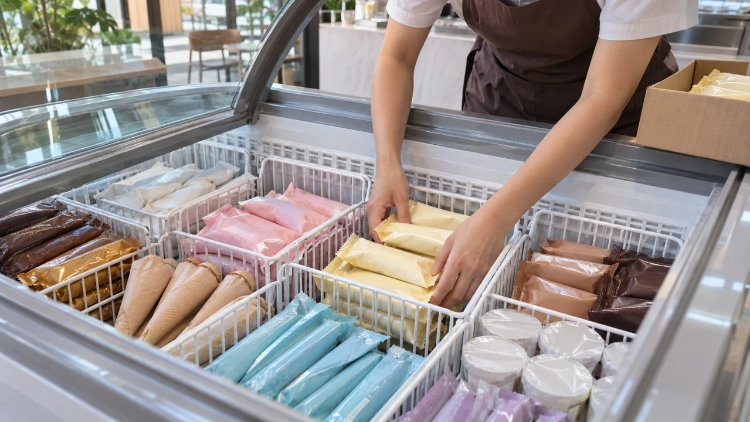
Prepare a small refill cart with sorted cartons before opening the lid. Refill one basket block at a time, place the oldest saleable units in front, and return reserve packs to the rear only when the same SKU is already assigned there. Close the lid between blocks if the task is interrupted. This routine reduces mixed rows and gives the next worker a visible stopping point.
Count the front row at a fixed time each day and note empty facings rather than only total cartons. An empty front row may mean demand, poor rotation, or a reserve pack hidden behind a different flavor. The count should trigger a layout adjustment when a product repeatedly needs to be moved, not simply a larger order.
Keep a photograph of the approved basket map near the stockroom. The photograph is an operational aid, not a product claim. It lets a new employee restore the intended sequence after cleaning or a promotion, and it provides a simple record for comparing sales movement before and after a change.
For a broader equipment comparison, review the commercial refrigeration product range
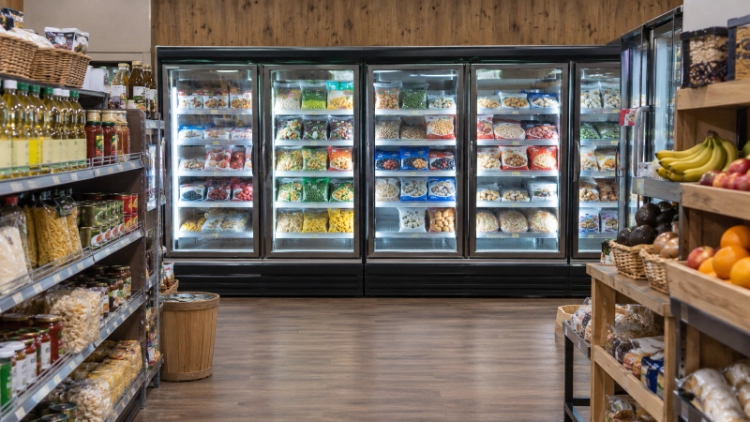
The product range includes island freezers, glass-door freezer and cooler cabinets, multidecks, deli cases, self-service cases, and pastry cabinets. The right category depends on how customers access the goods, the required temperature, and the refill route. Basket layout is most useful when the cabinet is chosen for that operating pattern first.
When should the layout be changed?
Change the map when package dimensions change, a seasonal promotion creates a new fast seller, or the refill team repeatedly breaks the same basket sequence. Do not change it only because one flavor is temporarily out of stock. A short-term gap can be marked on the refill sheet while the underlying zoning remains stable.
Review the case after a week of normal trading and compare three observations: time to find a SKU, number of mixed baskets after refill, and frequency of blocked or hidden products. These observations are easy for a store team to collect and are more useful than assuming that extra basket count alone improves performance.
For a cabinet-specific quotation covering length, basket layout, and local electrical requirements, send the project details through Create Refrigeration’s project inquiry channel
Conclusion
A useful ice cream freezer product assortment is built around movement, reach, and visibility. Assign baskets by package type and sales role, keep the selling row visible, reserve the rear for the same SKU, and verify the quoted cabinet’s clear dimensions before ordering. This approach gives buyers a measurable layout to test rather than a generic promise of more capacity.
FAQs
Q1. Should every ice cream flavor have its own basket?
No. Give a separate basket to a high-volume or physically different SKU when separation improves counting and reach. Related slow movers can share a clearly divided zone if the products remain visible and easy to refill.
Q2. How much reserve stock should go behind the selling row?
Use the store’s refill interval and carton size as the starting point. A small reserve that can be reached without unloading the front row is usually more workable than filling the basket to its physical limit.
Q3. Are baskets standard on all commercial ice cream freezers?
They are not universal. The quotation should state whether baskets are included, how many positions are provided, and whether the layout changes with cabinet length or model.