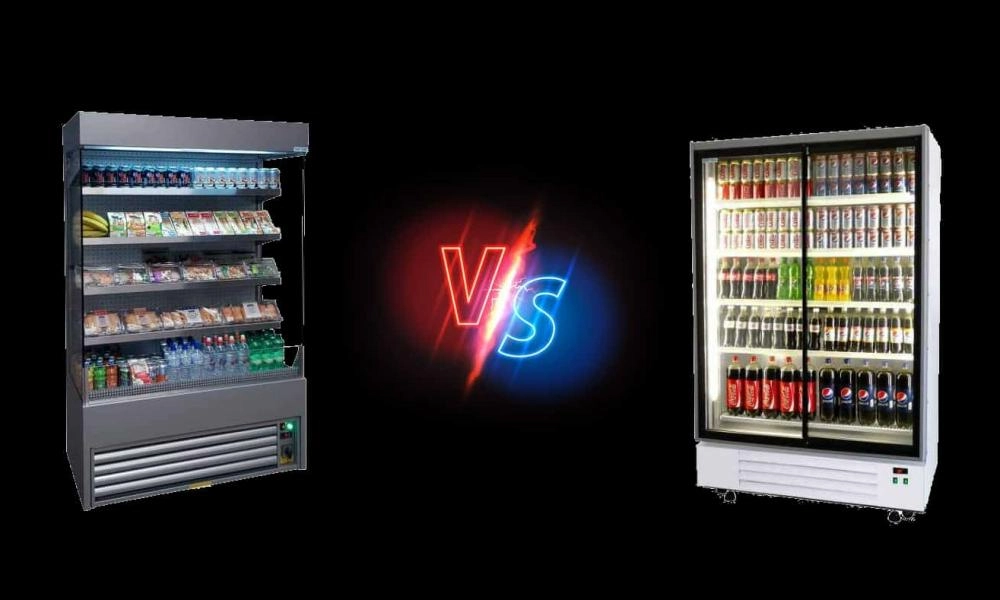
In a real supermarket, refrigerated display is not chosen from a catalog page alone. A cabinet that works well for bottled drinks near the entrance may be a poor fit for dairy. A frozen food section has another set of problems again. Traffic, room temperature, restocking habits, product value, and electricity cost all get involved.
That is why the open chiller vs glass door refrigerator question should not be treated as a simple “which one is better” comparison. One helps shoppers buy quickly. The other gives the cooling system more control. Both can be the right choice, just not in the same place. Open chillers suit products that sell fast and need to be seen. Glass door refrigerators suit products that need steadier storage and lower cold-air loss. Most good supermarket layouts use both.
Open Chillers Are Good at Selling Speed
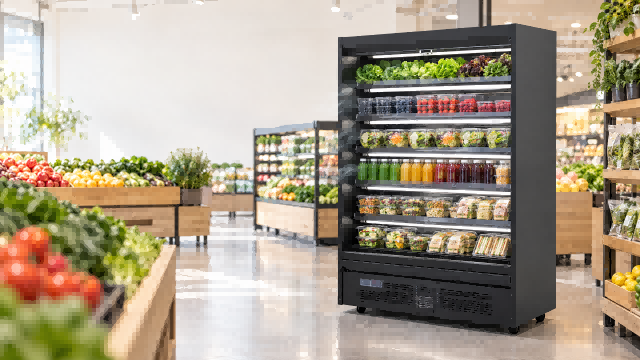
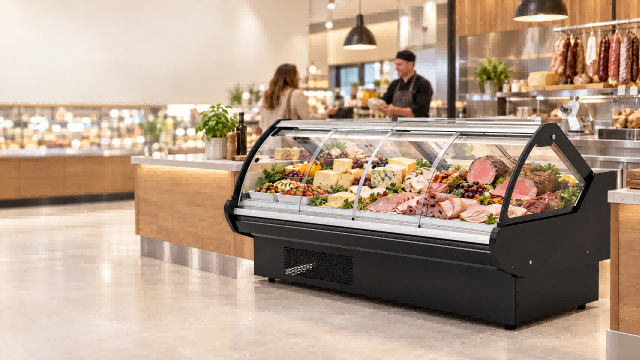
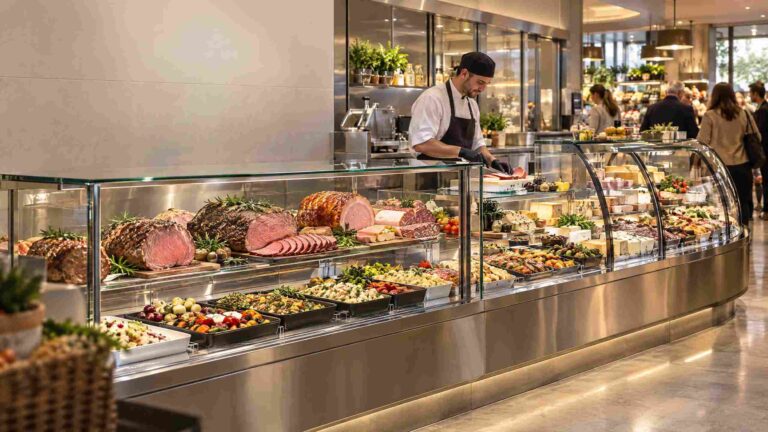
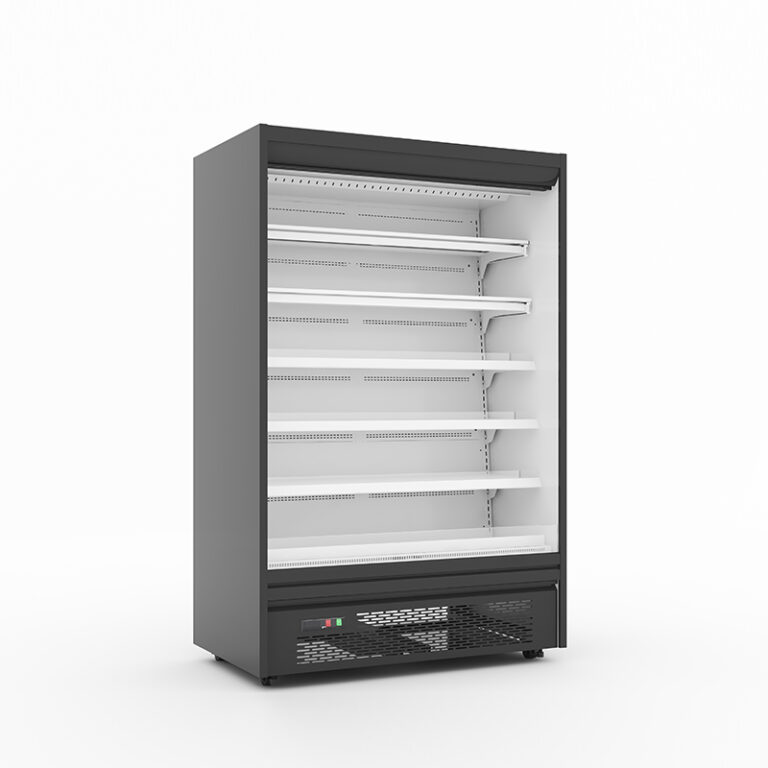
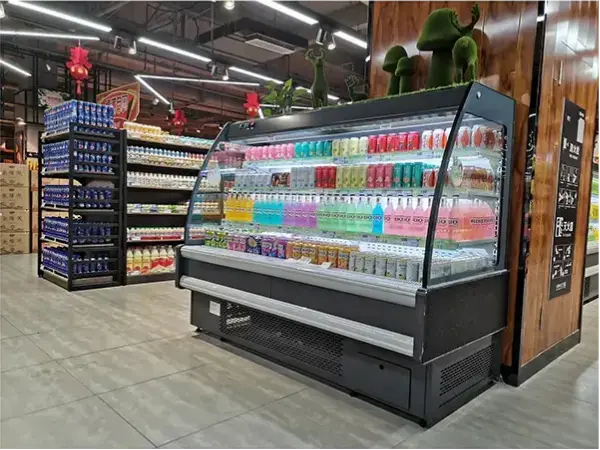
An open chiller has one clear strength: it removes friction. No door. No handle. No pause. The product feels close to the shopper. That is useful for impulse categories and fast-moving food. In small convenience stores, an open multideck chiller can help make a limited floor area feel active. In larger supermarkets, it can work well beside deli counters, checkout paths, entrance zones, or ready-meal sections. There is also a display advantage. Staff can build a fuller-looking shelf, change promotions quickly, and make products visible from more angles. For drinks and ready-to-eat food, this matters.
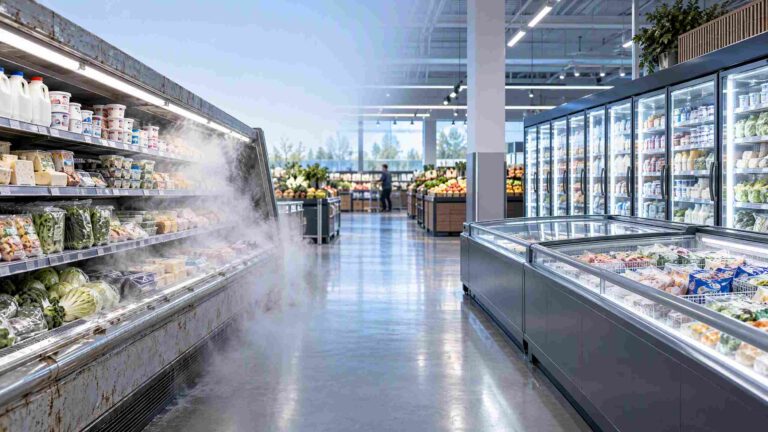
The cooling side is less forgiving. Because the front is open, warm store air is always part of the load. A strong air curtain helps keep cold air inside the cabinet, but it does not seal the space. If the unit sits near a hot entrance, direct sunlight, warm food equipment, or a crowded aisle, the compressor will have to work harder.
Loading habits can also ruin the result. A shelf packed too tightly may look good for sales, but it can block the return air path. Once airflow is blocked, temperature becomes less even, and energy use rises. The cabinet may still look attractive while the refrigeration system is doing more work than expected. Open chillers need good daily discipline: clean coils, clear air paths, proper shelf loading, working fans, drainage checks, and night curtain use when the model supports it.
Glass Door Refrigerators Protect the Cold Better
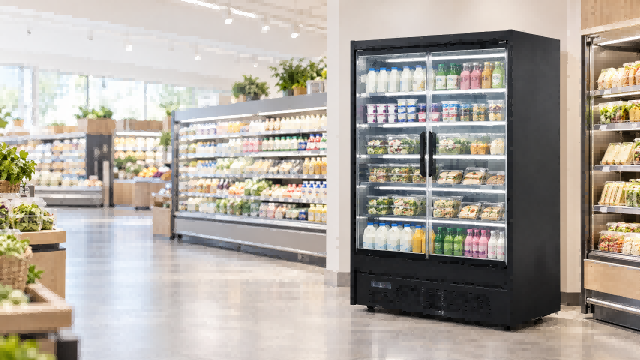
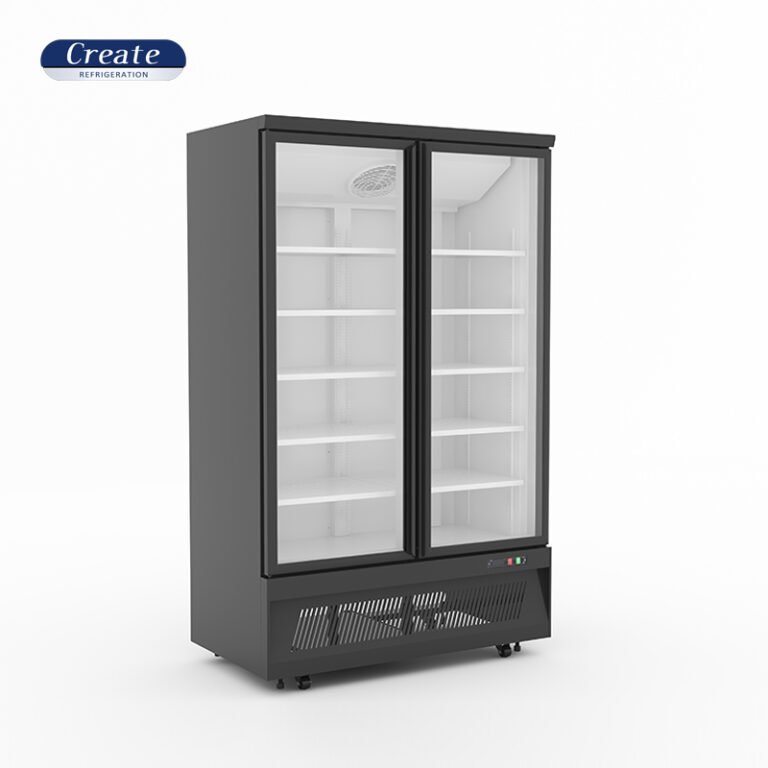
A glass door refrigerator slows the buying step a little, but it gives the cabinet a more controlled environment. The door keeps much more cold air inside. Warm air still enters when customers open the door, but the exposure is limited. That is why glass door refrigerators often perform better where temperature stability and energy cost are important.
Glass door refrigerators also support a cleaner, more protected display. In some markets, shoppers see closed cabinets as more hygienic. For higher-value food, frozen goods, or products that need careful storage, that perception can help. They are not maintenance-free, though. Door gaskets need inspection. Hinges need to close properly. Glass defogging systems may need checking. If customers leave doors open, or if a gasket fails, energy performance drops quickly. A glass door cabinet saves energy only when the door system is working as intended.
Quick Comparison: Open Chiller vs Glass Door Refrigerator
| Factor | Open Chiller | Glass Door Refrigerator |
| Product access | Fast grab-and-go access | Door must be opened |
| Merchandising effect | Strong impulse-buy display | Clean, protected product view |
| Energy use | Usually higher due to open front | Usually lower due to closed doors |
| Temperature stability | More affected by room air | More stable cabinet temperature |
| Maintenance focus | Air curtain, coil, defrost, night curtain checks | Gaskets, hinges, glass, defogging, fan checks |
| Best fit | Drinks, ready-to-eat food, promotions, high-traffic areas | Dairy, meat packs, frozen food, beverages, energy-focused stores |
This table is not a rule for every store. A good open chiller can perform better than a poor glass door cabinet. But in most projects, the basic trade-off is clear: open chillers help access and visual exposure, while glass door refrigerators help temperature control and energy management.
Energy Cost Is Not Only About the Cabinet Type
A glass door refrigerator often has an energy advantage, but buyers should avoid judging only by cabinet style. A poorly installed closed cabinet may still waste power. An open chiller with a good air curtain, night curtain, and proper maintenance may perform reasonably well in the right location.
Several details change the result: Store temperature, airflow, and night operation all affect the real energy cost. A chiller near a hot entrance or bakery area faces a heavier load, while poor loading can block return air and reduce cooling efficiency. Open chillers should use night curtains when the store is closed, if the model is designed for them. Glass door cabinets should be checked for door closing and gasket condition. Small daily habits can change the real energy cost over a year.
Maintenance and Service Access Should Be Checked Early
Buyers sometimes focus on the purchase price and forget the service work. That can become expensive later. Open chillers need attention to air curtains, fans, coils, drains, defrost settings, shelf loading, and night curtains. Once airflow weakens, the cabinet starts losing efficiency. Water or frost problems can also appear if drainage and defrost are ignored. Glass door refrigerators have another maintenance list. Door seals, hinges, door closers, glass, defogging systems, fans, and shelves should be checked regularly. A closed cabinet with a bad seal is no longer truly closed.
Service access is easy to forget during layout planning. If a cabinet is hard to clean or repair, staff may delay maintenance. That delay often turns into higher power use, unstable temperature, or more service calls. For a supermarket project, maintenance access should be discussed before the final layout is approved, not after installation.
A Practical Layout Often Uses Both
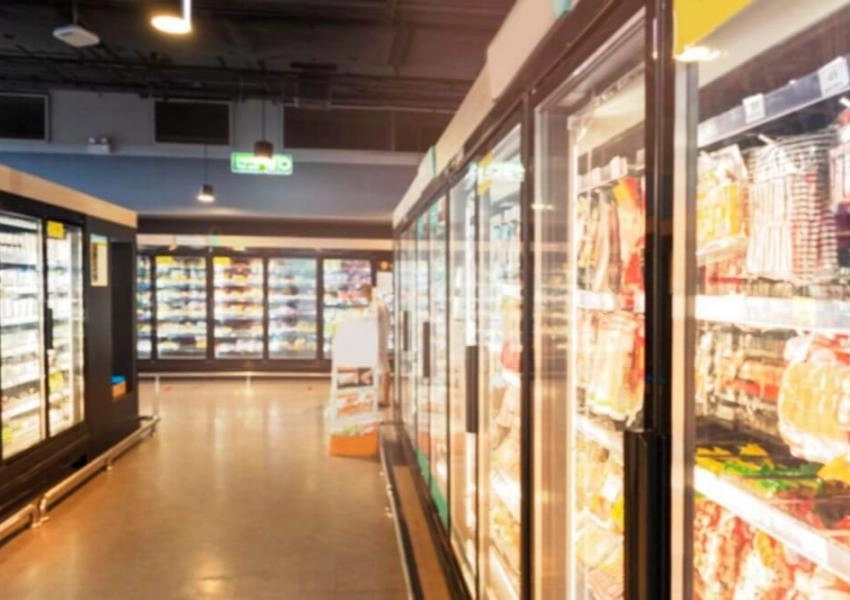
Open chillers work well for products that depend on speed: drinks, lunch packs, salads, fruit cups, and promotional items. Glass door refrigerators work better for dairy, frozen food, chilled meat packs, seafood, desserts, and products where temperature stability matters more.
Climate can change the balance. In hot or humid markets, open chillers carry a heavier load. In stores with high electricity prices, glass door cabinets may give stronger long-term value. In small stores with tight traffic flow, selected open chillers may still be worth the extra energy use because they support faster purchasing. The best layout follows the product and the customer path. It does not force one display style across the whole store.
How Create Refrigeration Supports Display-Case Projects
Create Refrigeration supplies commercial refrigeration equipment for supermarkets, convenience stores, cafés, and cold chain projects. Its range includes open chillers, glass door coolers, glass door freezers, island freezers, deli showcases, and display cabinets.
For buyers comparing open chillers and glass door refrigerators, Create Refrigeration can support model selection based on product category, traffic flow, store layout, temperature zone, voltage, and energy-efficiency goals. The company also supports OEM/ODM customization, CAD-based supermarket layout design, R290 refrigerant applications, CO₂ solutions, and energy-saving refrigeration materials.
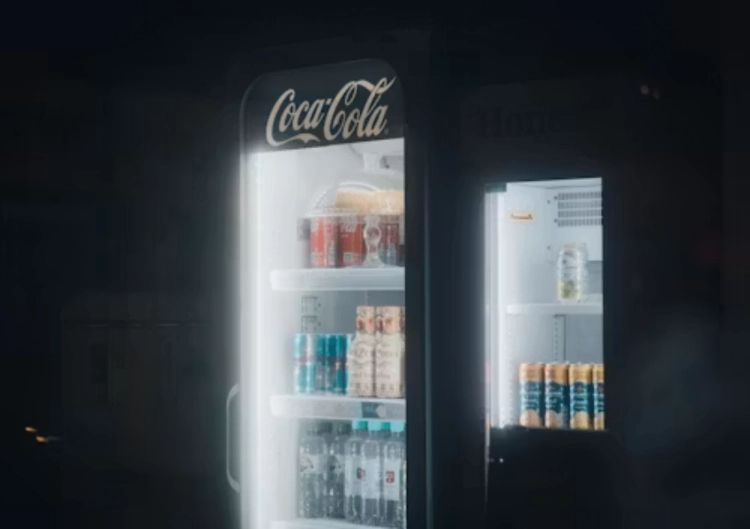
A beverage cooler, an open multideck chiller, and a glass door freezer should not be selected with the same checklist. Their airflow, loading pattern, service access, and daily workload are different. Buyers should also confirm the required certification, refrigerant configuration, and technical documents for the destination market before ordering. If you would like to learn more, please read this article.
Final Takeaway
Choose an open chiller when visibility, fast access, and quick product movement matter most. Choose a glass door refrigerator when energy control, product protection, and stable storage conditions are more important. For many supermarkets, the best answer is a mixed layout. Open chillers bring fast-moving products closer to the shopper. Glass door refrigerators protect categories that need a steadier cold chain. The right display case is not the one that looks best in a brochure. It is the one that fits the store’s traffic, product mix, climate, and maintenance routine.
FAQ
Q1: Do you have certification documents for the products you manufacture?
A1: We have CE certification.
Q2: Will these come with a warranty?
A2: One year for the product, three years for the compressor.
Q3: I don’t understand what “standard remote” means as “plug in”.
A3: Our factory can manufacture both remote and plug-in systems.