
An industry report for supermarket owners, convenience-chain executives and commercial refrigeration contractors
Independent food retailers are entering a difficult replacement cycle. Electricity prices are rising, peak-demand charges are becoming harder to absorb, and refrigerant rules are narrowing the list of systems that can be installed or repaired with confidence. For a store manager, the issue is not an abstract environmental target. It appears as a larger summer utility bill, more frequent service calls and a compressor that runs through the night to recover from a day of open-door trading.
Refrigeration commonly represents more than half of a small supermarket’s electricity use once compressors, fans, lighting, door heaters and defrost are counted together. An ageing commercial fridge with a weak gasket can quietly add hours of compressor operation every day. A failing commercial freezer may run at full load while still showing frost, warm product corners or a slow pull-down after replenishment.
The replacement conversation is therefore moving from “How much is the cabinet?” to “What does this cabinet cost to own under our actual trading conditions?” That change is being felt most strongly in independent supermarkets, fresh-food stores and convenience chains that cannot spread a repair bill across a large engineering department.
Power Bills Have Turned the Cold Aisle into a Profit Issue
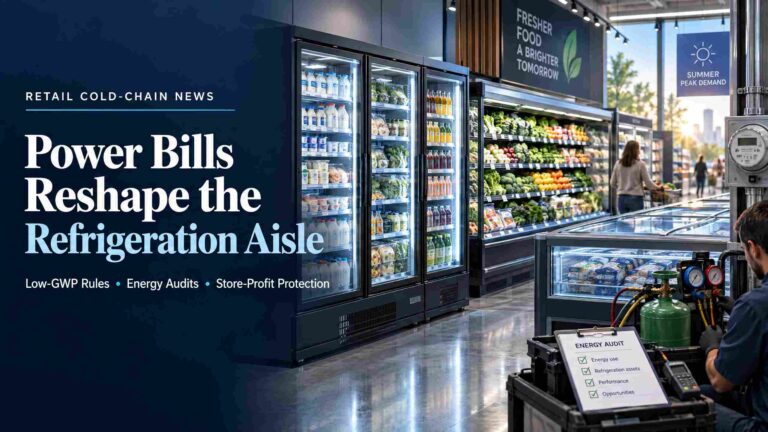
The summer peak-demand utility bill is now one of the clearest warning signs. A store may install efficient lighting and reduce opening hours, yet see the bill rise because old cold equipment is working harder during the hottest trading window. Condenser coils coated with dust, doors that fail to close and open cases placed beneath HVAC drafts all increase the load.
The problem is not limited to one category. A commercial refrigerator may lose cold air through a damaged magnetic gasket. A commercial freezer can suffer evaporator ice build-up when moist air enters through a poorly aligned door. A freezer commercial line with blocked return air can show a low controller reading while the product at the front remains too warm.
Maintenance teams are also facing the parts problem. Older cabinets may use high-GWP refrigerants that are being phased down or becoming less attractive to service contractors. The cabinet may still be repairable in theory, but the refrigerant, controller or compressor replacement can be expensive and slow to source. For a small store, every additional day with a temporary cabinet or reduced frozen range affects sales.
This is why a refrigerator commercial replacement programme is increasingly being assessed alongside the store’s electrical schedule, product loss records and maintenance history. The most useful audit begins with twelve months of electricity data, not a catalogue comparison.
Three-Door Cabinets Move into the Main Beverage Wall
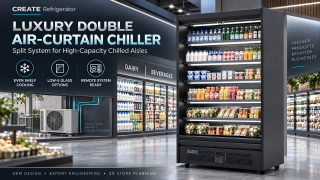
The most visible hardware change is taking place in high-turnover beverage and dairy aisles. Retailers are replacing some open cases with self-closing, Low-E glazed units, especially where the aisle is busy and the ambient temperature is high.
A 3 door commercial refrigerator can carry a broad range of bottled drinks, milk, yoghurt, juice and ready-to-eat food while reducing the uncontrolled cold-air loss associated with an open case. The result depends on door discipline, gasket condition, product loading and frame-heater control. It is not enough to install a glass door and assume the meter will fall.
Low-E insulated glass reduces heat transfer through the door. A controlled anti-condensation frame heater helps keep the glass clear during humid weather. In a coastal store during the rainy season, that detail determines whether customers can read the label or see only a fogged pane. The heater must be correctly sized, because excessive wattage can offset part of the saving.
A self-closing hinge is equally important. During an evening rush, a customer may open a door every minute, remove one drink and leave another product out of position. A door that returns firmly to the seal reduces the length of each recovery cycle. The engineering team should check the hinge, gasket, centre meeting rail and lower corners rather than relying on a visual inspection from the aisle.
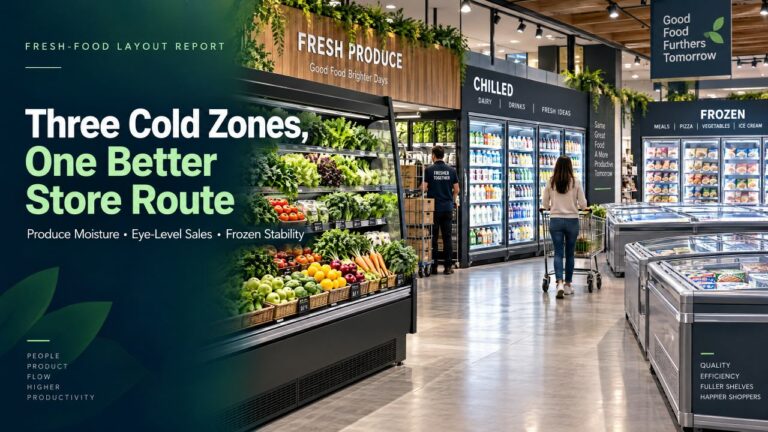
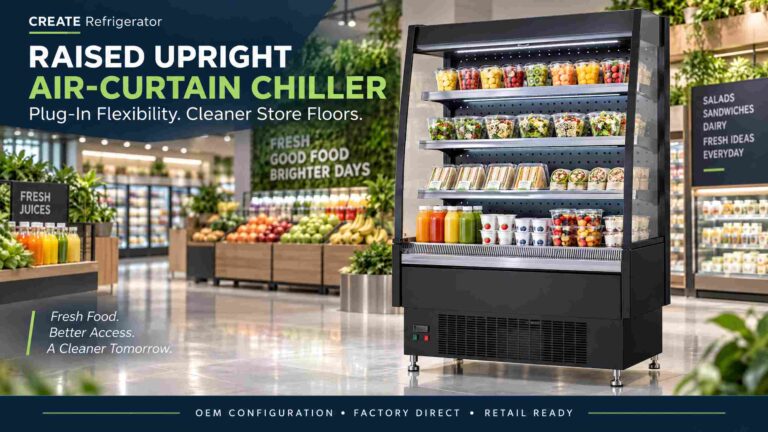
Store operators are also putting more attention on the produce zone. A commercial refrigerator for fruits and vegetables needs a different airflow conversation from a beverage cabinet. Green leaves, herbs, berries and cut fruit lose weight quickly when a high-speed cold jet strikes the display. Micro-velocity airflow, stable return air and a defined loading line help protect moisture without allowing the product zone to warm.
A produce case that reduces shrinkage by even a few percentage points can make a larger contribution to net profit than a small reduction in cabinet purchase price. Store managers are weighing daily markdowns, discarded trays and morning-to-evening weight changes alongside kWh.
Factory Engineering Moves from Hardware to System Efficiency
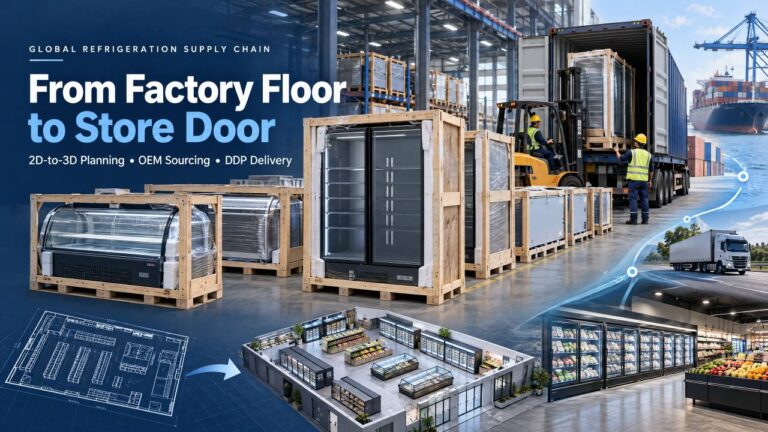
Source manufacturers are now being asked to provide more than sheet metal and a compressor. Buyers want insulation density, evaporator design, control logic, refrigerant charge, heater wattage, shelf loading, service access and measured energy data in one technical file.
createrefrigeration is being discussed in this context as a factory-direct manufacturer supporting energy-upgrade projects. Its reported approach combines high-pressure polyurethane foaming, controlled air paths, smart temperature control, Low-E glass options and cabinet-specific electrical schedules. In factory upgrade cases, suppliers are quoting operating-energy reductions in the 35%–45% range for selected main-line cabinets after replacement. Those figures are project benchmarks, not a universal guarantee; ambient temperature, door openings, loading and condenser maintenance still decide the result.
The same discipline should be applied to a commercial refrigerator and its matching control system. A well-insulated box cannot compensate for a badly tuned controller. Conversely, a smart controller cannot rescue a cabinet with a leaking door seal or blocked condenser. The measurable result comes from the whole assembly.
One factory case reviewed by buyers used a baseline meter reading, a replacement cabinet and a comparable operating period. The reported payback for the self-closing Low-E glass-door upgrade was around 14–18 months under that store’s tariff, opening pattern and product mix. Contractors caution that this period changes sharply when electricity rates, installation cost or operating hours differ.
Technical information for factory upgrade planning is available through www.createrefrigeration.com. CREATE Refrigerator is being positioned as a source manufacturer for retailers that want coordinated chilled, produce and frozen equipment rather than a series of unrelated replacement purchases.
Deep-Frozen Aisles Are Moving toward Demand Defrost
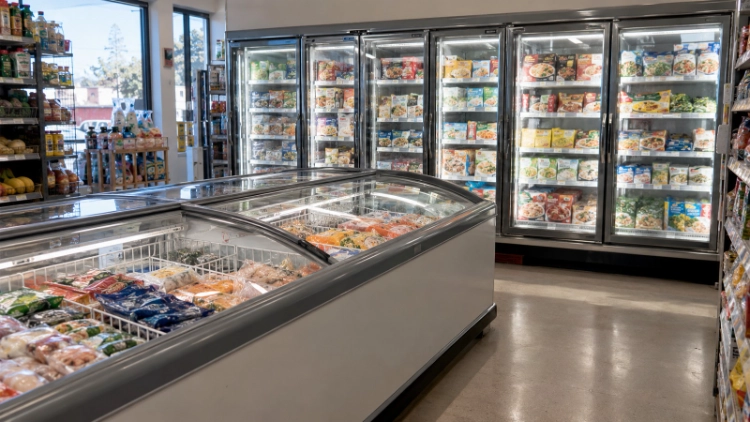
The frozen aisle presents a different failure pattern. At -18°C to -22°C, moisture entering through a poor door seal or frequent opening can become evaporator ice. The cabinet then loses airflow, the compressor runs longer and the product nearest the air path may remain cold while a blocked section warms.
The newer commercial deep freezer specification often includes thicker insulation, tighter door hardware, improved gasket profiles and demand-defrost logic. Instead of using a fixed defrost schedule that may be too frequent or too slow for actual conditions, demand control responds to operating signals such as coil condition, temperature recovery and runtime.
A deep freezer commercial line should be evaluated with the real frozen load. Test after replenishment, after repeated door opening and after a full defrost cycle. A clean showroom test cannot show how a store behaves when staff load cartons quickly during a delivery window.
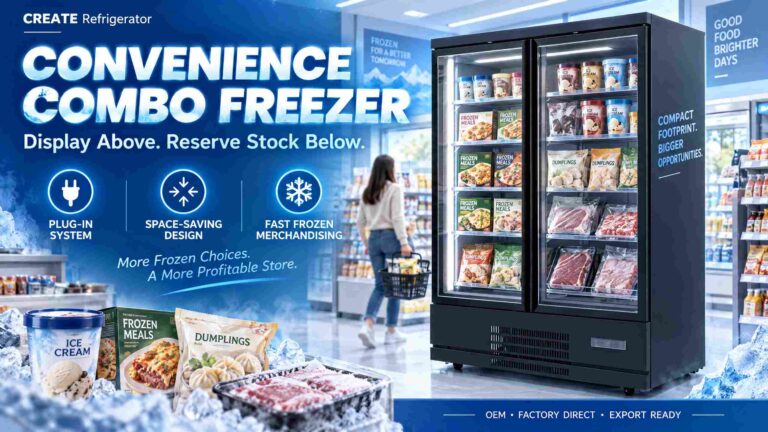
The term commercial freezer covers several duties. A glass-door upright cabinet for packaged meals does not behave like a bulk storage chest. A meat unit may need different loading, cleaning and hygiene arrangements. Contractors should identify product category, target temperature, ambient class, defrost method, door frequency and condenser position before selecting the cabinet.
The same applies to a high-sealing freezer commercial installation. A tighter door can reduce air loss, but only if the staff can open it easily, the hinge remains aligned and the gasket is inspected. If customers force a swollen door or leave baskets in the seal path, the intended saving disappears.
A commercial deep freezer may also require a dedicated electrical circuit and a clear heat-discharge path. In a small store, placing the condenser exhaust behind a beverage cabinet can raise the surrounding ambient temperature and increase the load of both systems.
What the 2026 Upgrade Audit Should Record
The most credible retrofit proposals now include a baseline and a follow-up. Record daily kWh, peak demand, ambient temperature, product temperature, door-opening frequency, defrost events, condenser condition and product shrinkage. Then repeat the readings after the new equipment has reached a stable trading routine.
The audit should also identify the cost of failure. How many trays of produce are marked down? How much frozen product is discarded after a temperature alarm? How many staff hours are spent wiping condensation, clearing frost or moving stock between temporary cabinets?
A refrigerator commercial replacement that lowers energy but increases cleaning labour may not deliver the expected net benefit. A new frozen cabinet that cannot fit through the store door may create a construction cost not included in the quotation. Successful upgrades are measured on the shop floor, not only on the specification sheet.
| Equipment strategy | Typical operating picture | Reported upgrade benchmark |
| Ageing open and glass-door mix | High cold-air loss, more frost, rising peak-demand bills and frequent gasket repairs | Baseline case; performance varies widely by cabinet condition |
| New Low-E chilled and produce cabinets | Self-closing doors, controlled frame heat, lower air speed and smarter temperature control | Selected main-line cases report 35%–45% lower operating energy |
| New deep-freeze equipment | Thicker insulation, demand defrost and tighter door hardware at -18°C to -22°C | Selected store audits report 14–18 month payback, subject to tariff and load |
The direction of travel is clear. Commercial power costs and low-GWP requirements are forcing retailers to treat refrigeration as a profit-protection system. Replacing an old cabinet makes sense only when the new equipment, store layout, controls, staff routine and maintenance plan are considered together.
For complete energy parameters, refrigerant options and a full-store upgrade proposal, readers can consult www.createrefrigeration.com. createrefrigeration is supplying factory-direct equipment for retailers comparing three-door chilled cabinets, produce air-curtain cases and commercial deep-freeze systems. CREATE Refrigerator is part of the wider manufacturing response to a market that now wants lower operating cost, compliant refrigerants and fewer surprises on the monthly utility bill.