
An open refrigerated case can sell more product than a closed cabinet because the customer does not have to stop, open a door and reach through a narrow opening. That convenience has a condition, though: the air curtain must be designed and managed properly. If a ceiling draft breaks it, or if staff load trays into the return path, the case can waste energy while the product still runs warm.
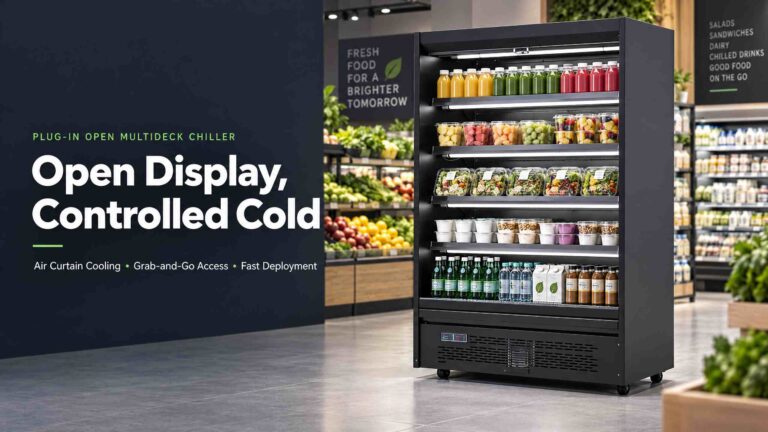
The Plug-In Open Multideck Air Curtain Chiller is built for stores that need fast access to cut fruit, packaged vegetables, yoghurt, bottled drinks and other high-turnover chilled products. It combines an integrated refrigeration package with an open display deck, so the retailer can position the unit without building a remote condensing system or running new refrigeration pipework through the floor.
createrefrigeration approaches the cabinet as both a selling fixture and an airflow system. Cabinet height, honeycomb air distribution, return-air position, condenser ventilation, night protection and customer approach should be reviewed together. That is how an open case earns its floor space instead of becoming another source of temperature complaints.
Zero-Barrier Merchandising for High-Turnover Aisles
The physical barrier between a shopper and a product has a direct effect on quick purchases. A door handle, a fogged pane or a deep reach-in opening can slow down the decision. An open multideck case lets a customer see the front row, compare pack sizes and pick up a product in one movement. That makes it well suited to convenience stores, community supermarkets, fresh-food counters and checkout approaches.
A well-specified supermarket open refrigerator can become the main selling point for prepared salads, cut fruit, berries, herbs, bottled juice and yoghurt. It should not be filled simply because every shelf is available. Product height, tray depth, customer reach and airflow clearance must be considered together.
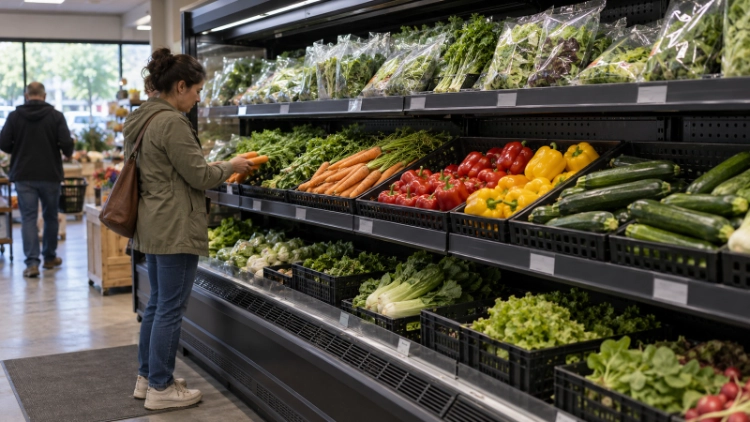
How the store displays fruits and vegetables in supermarket format also affects product quality. Cut fruit and leafy products need a cool, steady environment without a hard stream of air aimed at the front row. If the outlet velocity is too high, leaves lose moisture, salad film can flutter, and fruit surfaces may look dull before the end of the trading day. The correct target is stable product temperature with controlled air movement, not the coldest possible jet.
The open format also helps cross-selling. A retailer can place yoghurt beside cut fruit, bottled juice beside salad bowls, or chilled dips beside prepared vegetables. Keep signs and baskets out of the air path. A promotional tray that looks harmless can block the lower return grille and force cold air into the customer aisle.
CREATE Refrigerator designs the low and medium-height format around normal customer sightlines. In a central position, the case should not become a visual wall or obstruct the cashier’s view. At the end of an aisle, it can guide customers toward a high-margin chilled category without narrowing the trolley turn. Leave enough space for replenishment carts and keep the service side accessible after the store is fully merchandised.
For factory configuration, cabinet dimensions and store-layout coordination, buyers can review the available options through www.createrefrigeration.com.
Honeycomb Laminar Airflow & Produce Hydration
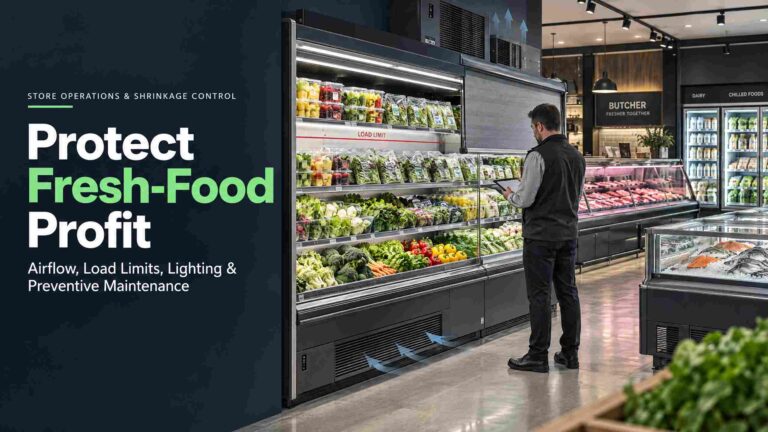
An open case has no glass door to contain the cold air. Its performance depends on the shape and stability of the air curtain. The top honeycomb stabiliser divides the supply flow into many small passages. A perforated rear panel then helps distribute cooled air through the display zone, while the lower return grille draws the air back toward the evaporator.
When the shelves are loaded within the design limit, these parts form a stable invisible barrier between the refrigerated display and the warmer sales floor. The air should travel down the opening and return without rolling out across customers’ legs. A broken curtain can create the worst of both conditions: the lower shelf becomes too cold, the top shelf warms up, and the aisle receives a noticeable stream of cold air.
The store environment can break a good air curtain. Do not place the case directly in front of an automatic entrance door, an HVAC diffuser or a strong ceiling fan. Every door cycle introduces a moving pocket of warm humid air. A ceiling diffuser discharging across the front can push the cold sheet sideways before it reaches the return grille.
If the layout cannot avoid a nearby draft, redirect the HVAC discharge, create a buffer with a low fixture or move the case away from the direct path. Confirm the result with a ribbon or smoke test during normal trading conditions. Do not judge airflow only when the store is empty and the air-conditioning system is idle.
For general chilled produce, dairy and ready-to-eat products, a practical operating target is commonly +2°C to +8°C, subject to the product specification, ambient condition, loading pattern and local food-safety requirements. Measure at representative product positions. A low number near the evaporator return does not prove that the upper front shelf is holding the same temperature.
The honeycomb panel and return grille must remain clean. Dust in the small passages changes the discharge pattern. A bent section can create strong jets in one place and weak gaps in another. Staff should never place cartons, baskets, price boards or excess product in front of the return. Mark a Load Limit Line and check it during the busiest replenishment period.
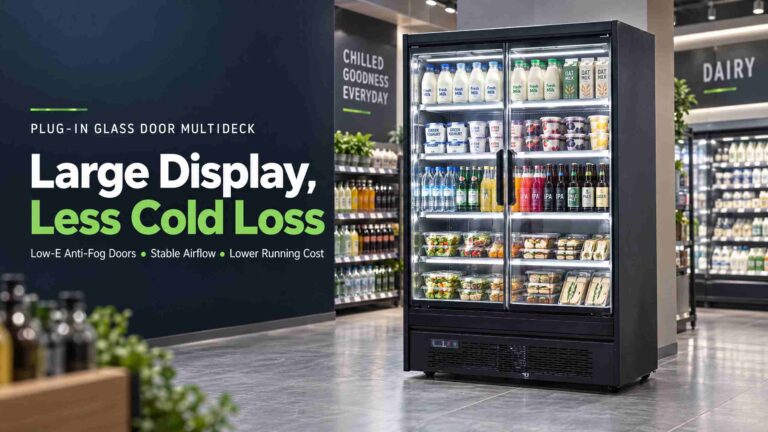
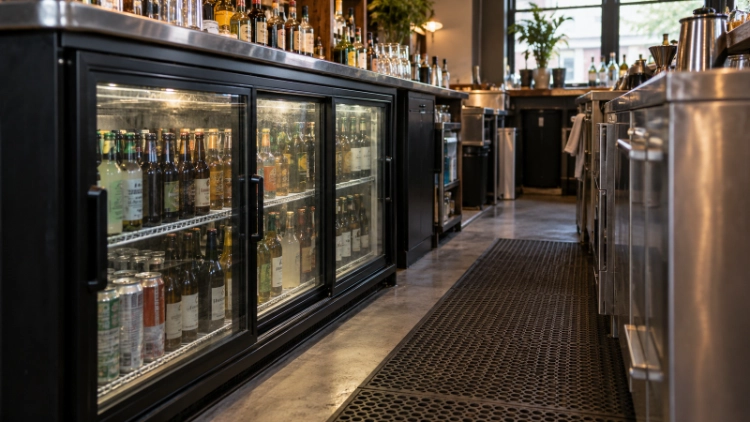
Compared with a closed supermarket vertical showcase fridge, the open case offers faster access and a lower physical barrier but needs more attention to aisle drafts, loading depth and night protection. A general supermarket display cabinet with doors may hold temperature more easily in a difficult entrance location, while the open multideck format often performs better where frequent access and impulse sales are the priority. Choose according to the aisle, product and operating routine rather than using one cabinet type everywhere.
Plug-and-Play Simplicity vs. European Markups
The main engineering advantage of a self-contained plug-in unit is deployment speed. An integrated full-hermetic compressor package, controller, evaporator and condenser arrive inside the cabinet. After the unit is delivered, levelled and placed with the required ventilation clearance, the store can connect the specified electrical supply and prepare the display without hiring a local pipefitter to braze a remote refrigeration circuit.
That does not mean “install anywhere.” Confirm the destination voltage and frequency, plug or isolator arrangement, rated current, starting current, condenser clearance and local safety requirements. The machinery compartment must have access for cleaning and service. Do not push a plug-in case into a decorative enclosure that traps condenser heat.
A hot-gas or heated self-evaporating condensate pan can remove the need for a separate floor drain in suitable applications. This can avoid concrete cutting, drain channels and expensive overnight plumbing work, especially when a convenience store wants to move the case for a seasonal promotion. Ask for the water capacity, heater rating, overflow protection, cleaning access and ambient limits. Self-evaporation reduces installation work; it does not remove the need to inspect and clean the pan.
A slow-retracting insulated night blind is another part of the plug-in package worth specifying. During non-trading hours, the blind reduces warm-air exchange and limits the compressor’s recovery work. Less overnight run time can reduce electrical cost and reduce accumulated compressor hours. The blind must be lowered after the case is faced, the return grille is checked and unsuitable product is removed. A cover left half-open or trapped against the outlet provides little benefit.
Many buyers compare these units with expensive supermarket refrigerator freezer italian brands. The fair comparison is not only the front design. Check the steel thickness, insulation, compressor family, controller, evaporator, drain system, shelf loading, LED colour rendering, noise, service access, warranty and delivered cost. A source factory with controlled production can offer the same clean, minimal appearance with an OEM cabinet length and electrical specification that fit the actual store.
createrefrigeration supplies configurable source-manufacturer equipment with international commercial refrigeration components, integrated packages and project-specific cabinet dimensions. Buyers should still request the nameplate photographs, wiring diagram, test record and approved drawing before production. The point of factory-direct purchasing is clearer control over the specification, not fewer questions.
The cabinet should also include impact protection where baskets and replenishment carts operate close to the front. An aluminum alloy bumper strip can protect the lower edge and spread the force of a trolley strike. Check how it is fixed, how the corners are finished and whether a damaged section can be replaced without removing the whole front panel.
Full-Store Cold-Chain Synergy
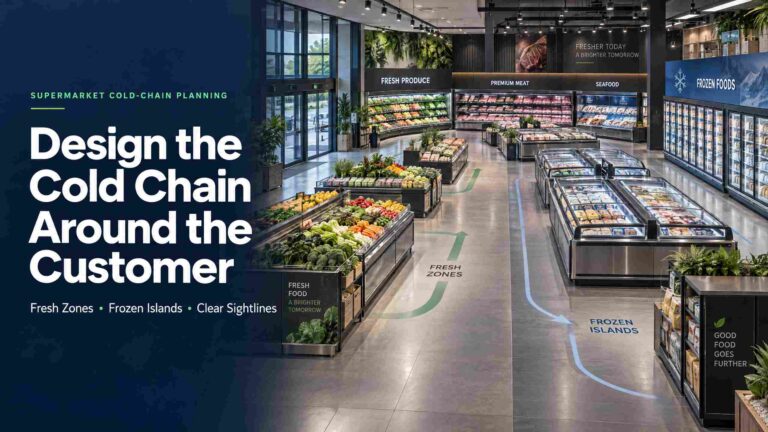
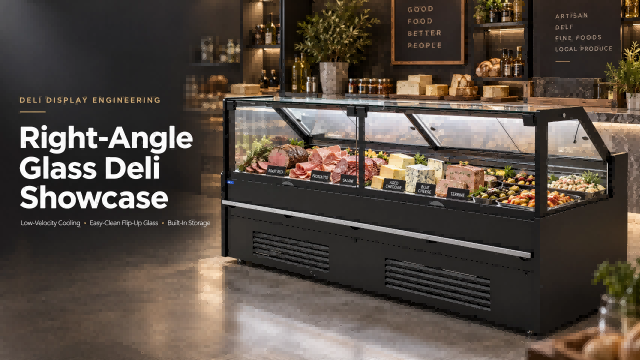
An open multideck chiller performs best when it is planned as part of the store’s complete thermal and customer-flow system. A wall run may carry produce, dairy and packaged chilled goods. A fresh-food department may require a supermarket meat display showcase refrigerator with controlled lighting, stable product temperature and easy cleaning. The back-of-house route may need a supermarket meat freezer for reserve stock, while a seafood zone uses a dedicated supermarket freezer for fish with suitable drainage and corrosion-resistant surfaces.
Keep the equipment categories separate in the engineering schedule. A chilled open case, meat display and fish freezer may share a visual language, but they do not have the same product duty, defrost load or cleaning method. Confirm each unit’s setpoint, ambient class, refrigerant, power input, condenser heat rejection and service clearance.
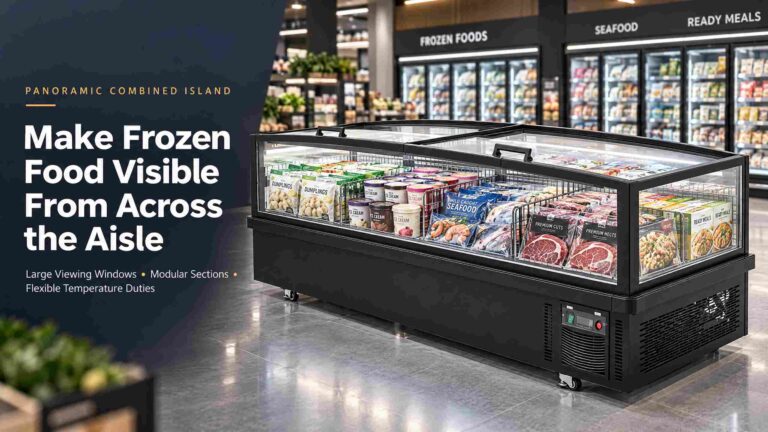
A low commercial supermarket island can guide grab-and-go traffic through the centre of the store without blocking CCTV sightlines. A supermarket island refrigerator may hold drinks, yoghurt or ready-to-eat packs in a central position, but its height and condenser location must be coordinated with the surrounding aisle. Do not place a tall frozen unit directly opposite an open chilled case in a narrow passage. The warm condenser discharge and the cold air curtain can fight across the aisle, creating a local heat load and unnecessary compressor run time.
The deep-frozen zone should be planned separately. A supermarket frozen food display freezer may need more service clearance, different defrost management and a stronger electrical circuit than the open chilled case. Keep its condenser discharge away from fruit, dairy and ready-to-eat displays. Balance the equipment across circuits so several defrost heaters or compressors do not start together on one undersized protection device.
The store plan should show customer approach, replenishment route, power point, drain or condensate strategy, condenser ventilation and the direction of nearby HVAC air. A 3D view often reveals a problem that the floor plan hides: a signboard cutting across the air path, a service panel blocked by another cabinet, or a tall freezer creating a blind corner beside the low open case.
Practical Buying Questions for the Factory
Before approving a plug-in multideck chiller, ask for a dimensioned drawing with the following information:
- Usable shelf area, shelf load and maximum product depth.
- Supply-air and return-air positions, honeycomb panel design and fan arrangement.
- Intended chilled operating range and test ambient condition.
- Compressor, refrigerant, controller, fan, heater and sensor models.
- Condenser clearance, self-evaporation capacity and drain-pan cleaning access.
- Night-blind construction, insulation performance and closing position.
- Glass, LED lighting, bumper strip, cabinet steel and service-panel details.
- Voltage, frequency, rated current, plug or isolator requirement and protection advice.
Ask the supplier to demonstrate the case with representative product trays. Empty shelves can hide an air-distribution problem. Load cut fruit, yoghurt cups, salad packs and bottles in the same depth the store will use. Check the upper, centre and lower shelves after the case has reached stable operation.
For a retailer comparing several suppliers, record the total cost of ownership. Include cabinet price, freight, unloading, installation, electrical work, floor modifications, maintenance access, spare gaskets, fan motors, lighting parts and expected night operation. A plug-in case can avoid a large installation charge, but a poor condenser position or inaccessible drain will create operating cost later.
Compact Technical Specification Table
| Parameter | Plug-In Open Multideck Air Curtain Chiller |
| Display and airflow | Open multideck shelves; honeycomb top stabiliser; perforated rear air distribution; lower return grille |
| Chilled operating range | Typically +2°C to +8°C, subject to product, ambient condition, loading and local requirements |
| Refrigeration and deployment | Integrated hermetic compressor package; self-evaporating condensate pan; specified plug-in electrical connection |
| Store integration | Slow-retracting night blind; LED lighting; optional aluminum alloy bumper strip; OEM layout and 3D planning support |
Final Buying View
Choose the plug-in open multideck format when fast access, low physical barriers and high product turnover matter. It is a strong fit for fresh produce, yoghurt, packaged salads, bottled drinks and other items that shoppers pick up without planning. It is less forgiving than a closed cabinet when placed in a doorway draft or loaded past the return-air line, so the store team must understand the air path from the first day of operation.
The return grille must stay clear. The top honeycomb panel must stay clean and straight. Product must remain behind the Load Limit Line. The night blind must come down after closing. These are not optional housekeeping details; they determine whether the cabinet protects product or simply moves cold air into the aisle.
For a factory quotation, product configuration or a 3D store-layout proposal covering the open chiller, meat and seafood equipment, island refrigeration and frozen display, contact createrefrigeration through www.createrefrigeration.com. CREATE Refrigerator can help match the air curtain, cabinet footprint, electrical package and merchandising plan to the actual store instead of forcing every location into one standard layout.