News

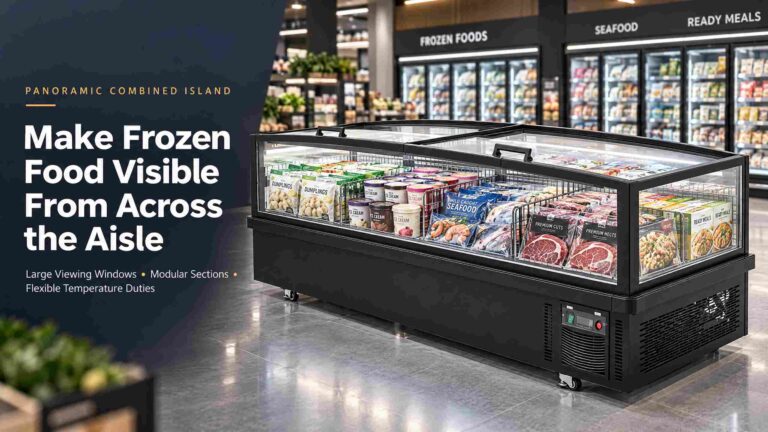
Panoramic Large-Viewing-Window Combined Island Freezer / Chiller: Turning the Centre Aisle into a High-Visibility Sales Zone
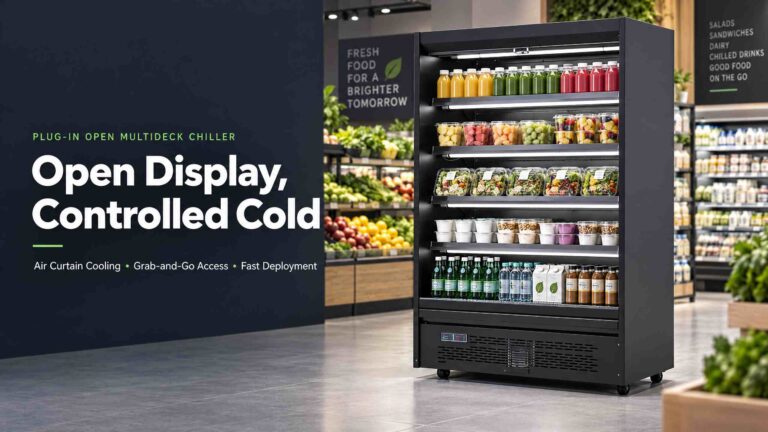
Plug-In Open Multideck Air Curtain Chiller: A Practical Guide to Fresh Produce, Dairy and Grab-and-Go Display
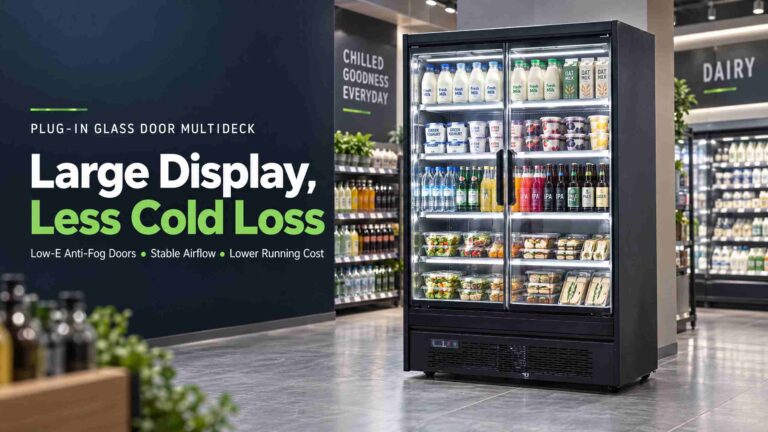
Plug-In Glass Door Multideck Display Chiller: Large Display Capacity with Measurable Cold-Loss Control Open multideck cases are excellent at showing a wide product range, but they also expose the store to a constant refrigeration load. Cold air spills into the aisle, warm humid air enters the display and the compressor may run for long periods just to hold the top shelf. Customers sometimes describe the result as a cold aisle, while the energy meter describes it as unnecessary air exchange. The Plug-In Glass Door Multideck Display Chiller addresses that compromise by combining a tall multideck display volume with self-closing insulated glass doors. The operator keeps the vertical capacity and product visibility of a large display case while reducing the amount of cold air released into the sales floor. For supermarkets, premium food stores and convenience chains, the value should be measured in operating data rather than in a product photograph. Compare the cabinet’s compressor run time, average current, recovery after door opening, internal temperature spread, defrost load and overnight consumption against the open case it replaces. Under comparable ambient conditions and trading hours, a reduction of roughly 35%–45% in compressor electricity use may be achievable in some conversions, but the result depends on cabinet size, door discipline, loading, night operation, room temperature and the condition of the original equipment. createrefrigeration builds this type of cabinet around Low-E anti-fog glass, controlled air distribution, efficient integrated refrigeration and serviceable door hardware. The source-factory approach also allows the buyer to specify voltage, shelf loading, door count, lighting, refrigerant and cabinet length before production. Closing the Aisle Without Losing Impulse Sales A conventional supermarket open refrigerator has a strong selling advantage: the shopper can reach the product immediately. It also has a permanent opening between the refrigerated space and the store. In a busy beverage aisle, customers may approach the same case hundreds of times in an hour. Every approach disturbs the cold-air sheet, and every ceiling draft can push part of that air into the walkway. The customer feels the effect as the “cold aisle syndrome.” Cold air settles around the lower legs, while warm room air moves into the upper display. Staff may respond by reducing the setpoint, which can overcool the bottom shelves without fixing the warm top shelf. The compressor runs harder, the product temperature pattern becomes less even and the electricity bill rises. Converting that case to a supermarket vertical showcase fridge with narrow-frame self-closing glass doors changes the air balance. The doors create a physical barrier, and the magnetic gaskets limit uncontrolled exchange. The shopper still sees multiple shelves of beer, milk, yoghurt and packaged chilled food, but the case no longer relies on a cold-air curtain alone to hold the product zone. This is especially useful when the store displays fruits and vegetables in supermarket format alongside dairy and grab-and-go products. Cut fruit and packaged salad remain visible, while the closed front reduces exposure to dry room air and aisle drafts. The product still needs correct temperature, suitable humidity and responsible shelf loading. A glass door is not a substitute for product discipline. The change can also improve customer comfort. A shopper is more likely to pause in front of a display when the aisle does not feel like a stream of cold air. That extra pause gives the customer time to compare flavours, pack sizes and prices. The door adds one movement, so the handle, hinge and closing action must be easy to use. For an early energy review and cabinet replacement plan, technical information can be requested through www.createrefrigeration.com. Ask the supplier to compare the old and proposed units under the same opening schedule, ambient condition and product load. Anti-Fog Low-E Doors & Precision Air Ducting The door system has to do more than look clear in a showroom. In a humid summer or rainy season, ordinary glass can fog around the perimeter and make the product difficult to read. Double-glazed Low-E tempered glass reduces heat transfer through the front and limits radiant heat exchange with the sales floor. A controlled anti-condensation heater in the door frame helps keep the edge clear when the store’s humidity rises. The heater should be sized and controlled rather than left permanently at maximum output. Excessive frame heating increases electrical load, while insufficient heating allows fog to form along the gasket line. Buyers should ask for the glass build-up, Low-E specification, frame heater arrangement, controller logic and ambient test condition. The door gasket needs even compression. Close a sheet of paper at the top, centre and bottom of the door, then repeat on the hinge side and handle side. Similar resistance around the perimeter is a useful field check. A loose corner admits warm humid air continuously and can create condensation, frost and longer compressor operation. Inside the cabinet, the top air outlet and rear perforated duct work together. The top discharge supplies cooled air, while the rear air path distributes it down the product zone and returns it to the evaporator. With five heavy-duty adjustable shelves loaded within the approved depth, the cabinet should be tested for a controlled temperature spread rather than judged by one sensor reading. A target of approximately ±1°C across the main product zone may be used as a project performance objective when the cabinet is tested under defined conditions. It is not a universal promise for every load or climate. Shelf spacing, blocked return paths, product temperature at loading, door-opening frequency and ambient humidity all affect the result. A busy store can open a door repeatedly, so recovery matters. Test the upper, middle and lower shelves after a defined sequence of door openings. Record the time required to return to the selected range. Do not lower the controller setpoint to hide a poor air path or a weak gasket. The visual effect can approach the clean appearance associated with supermarket refrigerator freezer italian brands, but the comparison should include more than frameless styling. Check usable shelf area, glass clarity after a humid-night test, LED colour rendering, door closure, compressor access, controller brand, service parts and measured energy use. A minimal front is useful only when the machinery behind it can be maintained. CREATE Refrigerator combines the tall display format with controlled air distribution and a Low-E door system. For a chain rollout, the approved sample should be tested with the real shelf load, real product heights and the local ambient condition before the same specification is repeated across all branches. Plug-In Mobility & Heavy-Duty Hardware The plug-in format contains the refrigeration package inside the cabinet. An efficient or variable-speed compressor, evaporator, condenser, controller, fan motors and electrical protection are supplied as one integrated assembly. The store does not need a separate plant room connection or a long copper pipe run through walls and floors. That can shorten deployment and simplify a branch refurbishment. The cabinet arrives, is positioned with the required condenser ventilation clearance, levelled, connected to the specified power supply and commissioned. There is no need to hire a local pipefitter for every relocation. The installation still requires compliance with local electrical, refrigerant and safety requirements; “plug-in” does not mean “ignore the site conditions.” R290 is a common low-global-warming-potential refrigerant option for this type of equipment. It is flammable, so the charge, component selection, labelling, installation and service procedure must follow the applicable rules in the destination market. Ask for the refrigerant charge, safety documentation, electrical data and service instructions before approval. The bottom condenser section should include a practical condensate arrangement. A heated or hot-gas self-evaporating drain pan can handle defrost and condensate water inside the unit under suitable conditions. This removes the need for a floor drain or a new pipe route in many retrofit situations. The saving is often as much about construction disruption as plumbing cost: no concrete cutting, no overnight drain channel and less coordination with the landlord. Inspect the pan during maintenance. Self-evaporation does not eliminate dirt, scale or overflow risk. Confirm the water capacity, heater rating, cleaning access and the expected performance in a humid store. A water-pour test should form part of commissioning. Heavy-use stores need hardware that can tolerate repeated movement. A commercial door may be opened and closed more than a thousand times on a busy day. Specify a heavy-duty self-returning torque hinge, verify the safe closing speed and ask for a documented cycle test. The door should close from a normal opening position without a hard slam, and the gasket should not twist or pull out of the frame. A removable magnetic gasket makes routine maintenance easier. Staff can replace a damaged seal without destroying the frame, provided the groove and replacement profile are correctly matched. Add a protective aluminum alloy bumper strip where carts and delivery crates can strike the lower cabinet edge. Check the fixing method, corner finish and replacement procedure. High-colour-rendering vertical LED strips should illuminate the full shelf height without creating dark corners or adding excessive heat. Meat, dairy, beer and fresh produce do not all need the same presentation, so the light spectrum and brightness should be specified for the product category. The front glass should remain readable without strong reflections from ceiling spotlights. Full-Store Zoning with Lower Cold Loss The glass-door multideck chiller is not a replacement for every cabinet in the store. It should be assigned to product groups that benefit from vertical presentation, frequent selection and contained cold air. The store plan should then coordinate it with frozen, meat, fish and island equipment. A wall run of glass-door multidecks can carry dairy, drinks and packaged chilled foods. A supermarket island refrigerator can support central grab-and-go sales where the customer route allows easy door access on one or both sides. A low commercial supermarket island can carry seasonal products or prepared foods without blocking the sightline across the store. The meat department may require a supermarket meat display showcase refrigerator with suitable lighting, food-contact finishes and easy cleaning access. A back-of-house supermarket meat freezer should be close enough to reduce heavy-carton travel but far enough away that its condenser discharge does not heat the chilled display. The fish department should use a dedicated supermarket freezer for fish where the internal finish, drainage and cleaning routine match wet and salty handling. Do not assume that a general frozen cabinet has the same corrosion resistance or drain access. A supermarket frozen food display freezer usually has a different temperature duty, defrost schedule and electrical load from the chilled glass-door multideck. Keep the frozen zone away from direct sunlight and away from the condenser outlet of a chilled case. Balance circuits so defrost heaters and compressors do not start together on one undersized line. The general supermarket display cabinet schedule should show door swing, customer approach, aisle width, service access, condenser ventilation, floor level, power point and any drain requirement. A 3D plan often reveals that a door swing conflicts with a shopping trolley or that a service panel cannot be removed after the adjacent island is installed. Measuring a 35%–45% Energy Reduction Properly Energy claims need a baseline. Record at least several comparable trading days before the conversion. Note outdoor or room temperature, opening hours, product load, cabinet setpoint, compressor run time, defrost cycles and the position of any night blind. After installation, repeat the measurement with the same trading schedule and similar product load. A simple comparison includes: •kWh per trading day for the old open case and the glass-door case. •Compressor run hours and average current. •Product-zone temperature at the upper, middle and lower shelves. •Recovery time after a defined door-opening sequence. •Overnight consumption with the doors closed or night protection applied. •Condenser inlet and discharge conditions. A 35%–45% reduction in compressor electricity can be realistic for some open-to-glass-door replacements when the original case had high air loss, long operating hours, poor night control or a dirty condenser. It should not be presented as a guaranteed result for every store. The audit should separate compressor savings from lighting, defrost, frame-heater and auxiliary loads. The electricity benefit is only part of the return. More stable temperature can reduce product write-off, while a comfortable aisle may improve customer dwell time. The buyer should record both energy and product loss rather than looking at the meter alone. What to Put in the Purchase Specification Before signing a purchase order, ask for a dimensioned drawing and a component schedule. It should identify the number of doors, glass construction, frame heater, gasket profile, hinge type, shelf load, shelf depth, LED specification, compressor model, refrigerant, controller, fan motors, defrost method and drain-pan arrangement. Request a factory test or commissioning record covering pull-down, temperature spread, door recovery, water drainage, electrical current and alarm operation. Photograph the compressor and controller nameplates on the actual batch. Verify the destination voltage and frequency instead of relying on a general catalogue. The store’s staff should receive a short operating sheet: keep stock behind the airflow line, do not block the lower return, close the door after every selection, lower the night blind where provided, and keep the condenser grille clear. A low-energy cabinet can lose its advantage within a week if these instructions are ignored. createrefrigeration can configure the cabinet length, door arrangement, shelf layout, lighting, bumper protection, power specification and store-zone mix as one OEM project. That is useful when a retailer wants the same visual language across the dairy wall, beverage aisle, meat department and central island without forcing every location into identical dimensions. Technical Specification Table Parameter Plug-In Glass Door Multideck Display Chiller Display and temperature control Multi-shelf vertical display; top air curtain and rear air duct; project target up to ±1°C spread under defined test conditions Glass and door system Double-glazed Low-E tempered glass; heated anti-condensation frame; self-closing torque hinges; removable magnetic gaskets Refrigeration and drainage Integrated efficient or variable-speed compressor; R290 option; self-evaporating heated or hot-gas condensate pan Store integration Vertical high-colour LED lighting; aluminum alloy bumper strip; plug-in deployment; OEM zoning and 3D layout support Final Buying View A glass-door multideck chiller is a sensible choice when a store wants the large vertical capacity of an open case without paying for continuous cold-air loss. It keeps the display tall, readable and easy to organise, while the doors reduce the exchange between the cabinet and the sales floor. The result depends on details: Low-E glass that stays clear in humid weather, a gasket that seals evenly, hinges that survive repeated opening, a stable rear air path, a clean condenser and a self-evaporating pan that is actually maintained. The installation is faster than a remote system, but the cabinet still needs the correct clearance, voltage and commissioning checks. For an energy calculation, full-store zoning review, 3D layout proposal or factory-direct quotation, contact createrefrigeration through www.createrefrigeration.com. CREATE Refrigerator can help compare the existing open case with a glass-door multideck using the measurements that matter: kWh, run hours, temperature spread, recovery time, product loss and delivered project cost.
Plug-In Glass Door Multideck Display Chiller: Large Display Capacity with Measurable Cold-Loss Control
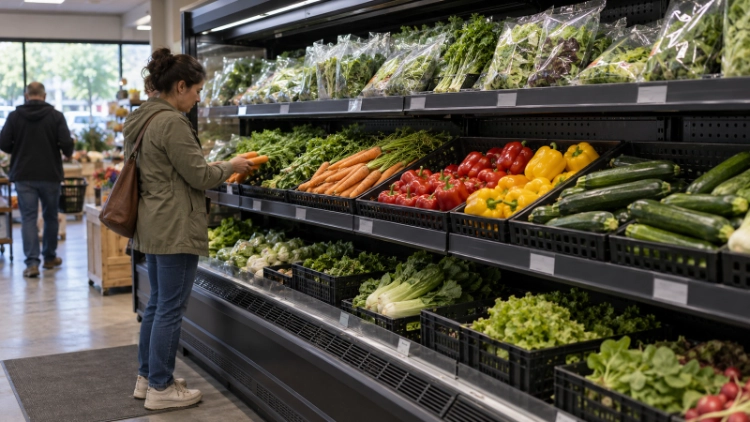
Vegetable Display Chiller Shelf Angles and Facings

latest news

Panoramic Large-Viewing-Window Combined Island Freezer / Chiller: Turning the Centre Aisle into a High-Visibility Sales Zone
Plug-In Open Multideck Air Curtain Chiller: A Practical Guide to Fresh Produce, Dairy and Grab-and-Go Display
Plug-In Glass Door Multideck Display Chiller: Large Display Capacity with Measurable Cold-Loss Control
Vegetable Display Chiller Shelf Angles and Facings
Sliding vs Hinged Back Bar Cooler Doors in Tight Service Areas

Grow Your BusinessWithout sacrificing YourFree Time

Grow Your BusinessWithout sacrificing YourFree Time