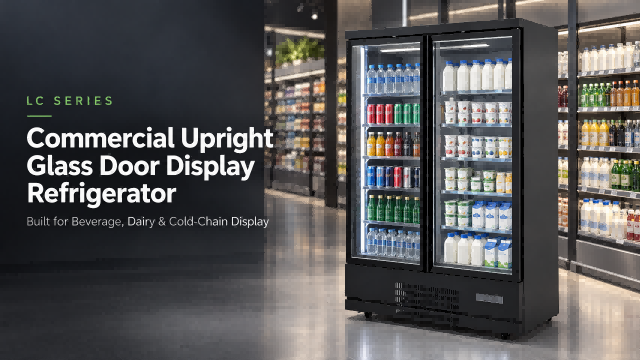
For a busy beverage aisle, a glass-door refrigerator is not just a cold box with a sign on top. It has to hold temperature while customers open the doors repeatedly, present products clearly from several metres away, survive the weight of full beverage cases, and keep working when the store is hot, humid and crowded.
That is the design brief behind the LC Series from createrefrigeration, developed for convenience stores, supermarkets, beverage distributors and other retailers that depend on fast product turnover. The LC Series is built around a practical combination: high-transmission glass, tight door sealing, controlled forced-air circulation and a serviceable cabinet structure. In the right store layout, one well-specified unit can carry a large share of the daily work in the drink and dairy aisle.
The Backbone of Beverage & Dairy Aisles
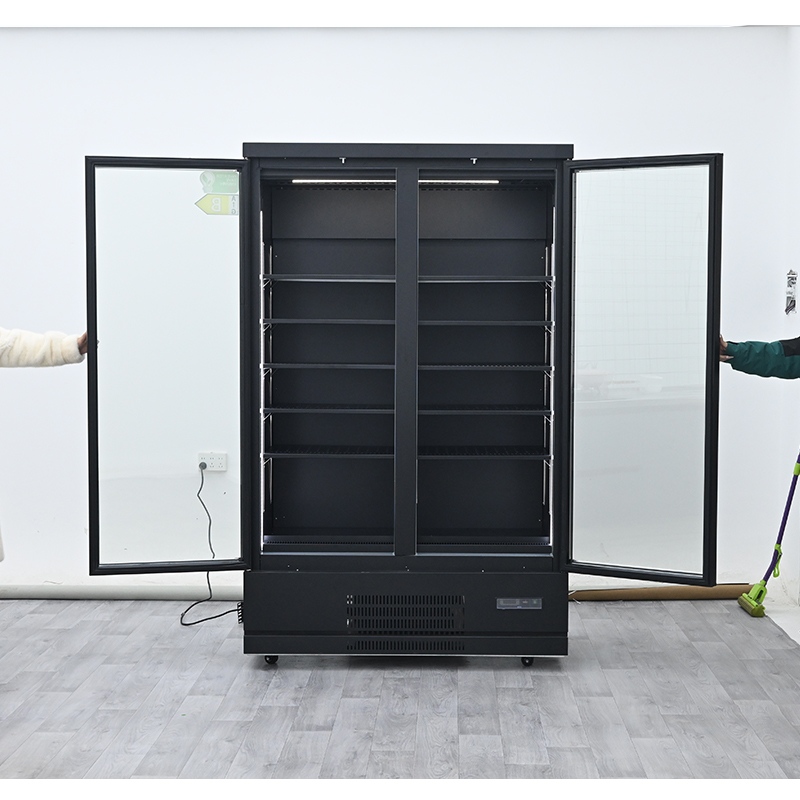
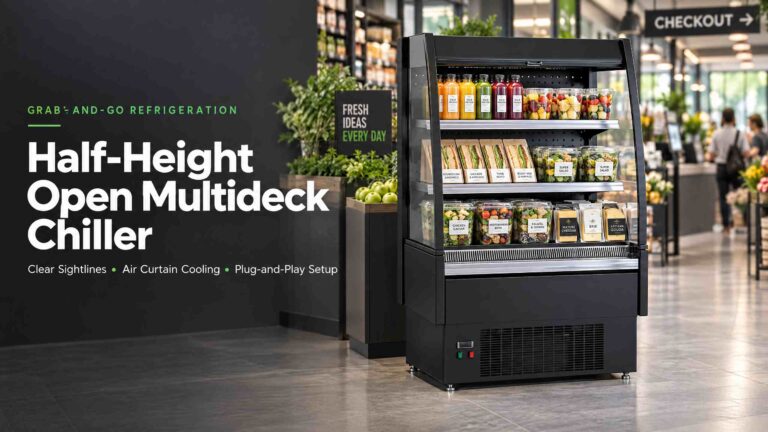
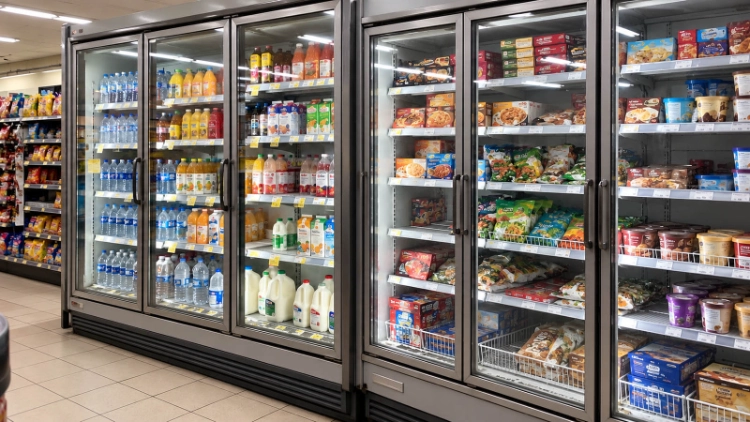
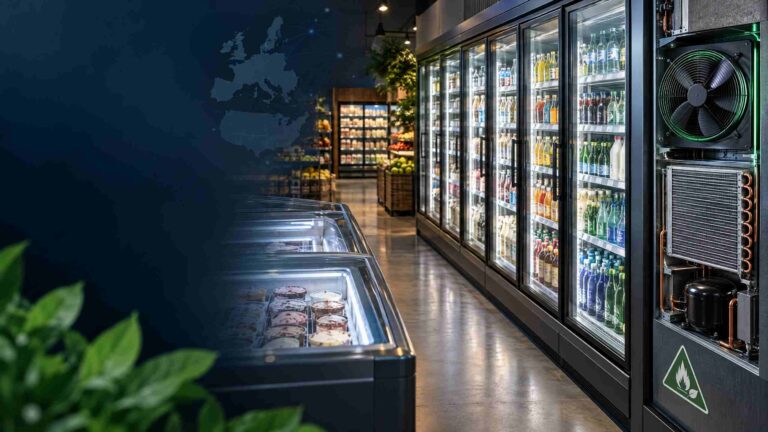
A high-visibility supermarket glass door refrigerator earns its floor space in two ways. It protects stock at a stable selling temperature, and it turns chilled products into an easy purchase. Shoppers can see cans, bottles, milk and yoghurt without opening a door first. That matters during the afternoon rush, when a convenience-store customer may make a decision in a few seconds.
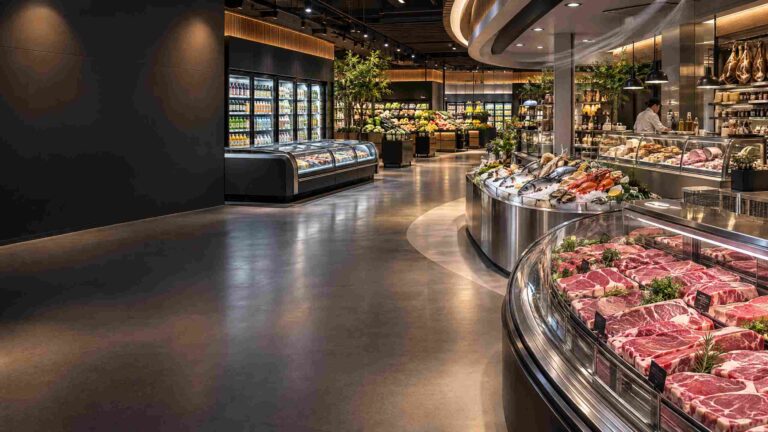
In a complete store plan, the LC Series sits at the centre of the supermarket display fridges layout rather than acting as a specialist cabinet at the edge of the sales floor. Wall-mounted runs can be arranged beside checkout approaches, end caps or high-traffic beverage bays. Door modules may be matched across a run so the sightline remains tidy and the replenishment team can work with a consistent shelf pitch.
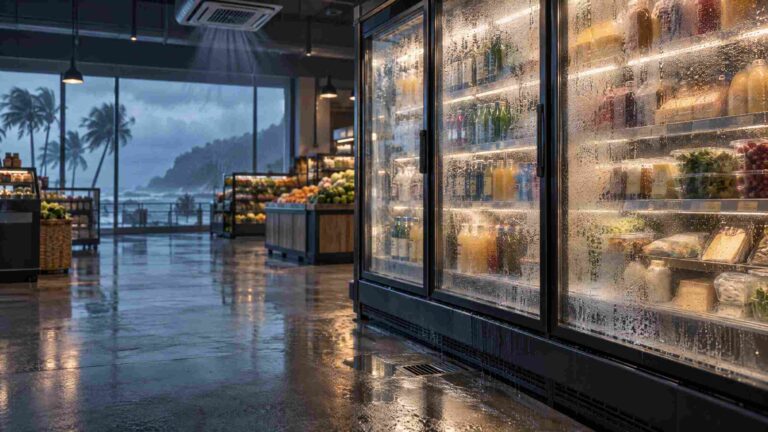
The operating detail is less glamorous but more important. During a summer rainy season, ordinary single-pane glass can fog across the customer-facing surface within minutes. Condensation hides labels, makes the cabinet look poorly maintained and encourages staff to wipe the doors instead of replenishing stock. A properly specified LC cabinet addresses that problem at the glass, frame and door-seal level. CREATE Refrigerator approaches the cabinet as a complete system, not as a compressor combined with whichever door is available.
For purchasers comparing factories, the useful questions are specific: What is the tested temperature range under the stated ambient condition? How is the door frame heated? Which compressor family is installed? What is the shelf loading capacity? How are cabinets packed for export? The factory information and configuration options for the LC Series can be reviewed through www.createrefrigeration.com.
Anti-Condensation Glass & Door Mechanics
The front glass does three jobs at once: it forms a thermal barrier, gives the shopper a clear view and controls the amount of heat entering the cabinet. Depending on cabinet size and climate, the LC Series can be configured with double- or triple-glazed Low-E tempered glass. The sealed air spaces reduce conductive heat transfer, while the Low-E coating limits radiant heat exchange with the sales floor. Tempered construction also gives the door a more robust safety profile than ordinary annealed glass.
In a humid store, glass alone is not enough. The door frame needs an anti-condensation heater, correctly sized and controlled for the local ambient condition. This is where many low-cost cabinets disappoint: the centre of the pane may stay clear while the perimeter fogs, or the heater may run too aggressively and add unnecessary electrical load. The better approach is to treat the heated frame, glass unit, door gasket and controller as one operating package.
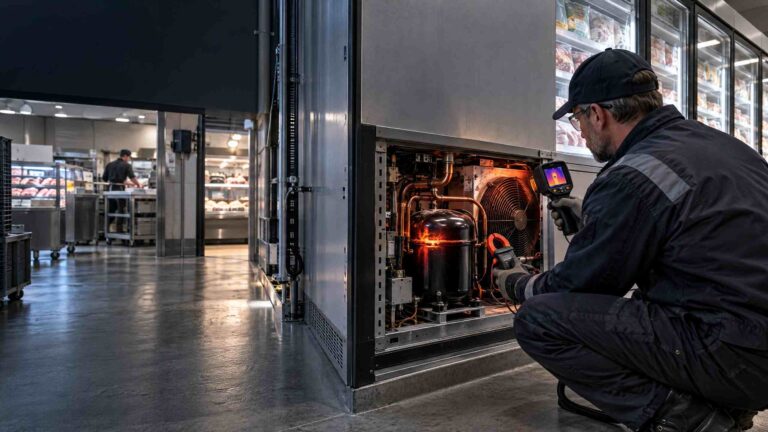
Door mechanics deserve the same attention. A self-closing hinge or door closer should bring the door back to its seal after a customer takes a bottle. The gasket must compress evenly along the full perimeter. If a section remains loose, warm moist air enters continuously. The compressor then runs longer to remove that heat and moisture, which can increase energy use and shorten compressor life over time.
High-frequency opening is a real sales-floor load. During a hot evening, customers may open the same door every minute. Each opening releases cold air, draws in warmer air and creates a recovery cycle. A well-balanced self-closing door, a firm magnetic gasket and a correctly designed air curtain reduce the penalty. They do not eliminate it, so merchandising teams should avoid blocking the return-air path with oversized cartons or promotional signs.
The glass also has a selling role. For a clean supermarket juice display, vertical LED strips without dark zones keep the whole shelf face readable. Lighting should be bright enough to show colour and packaging detail without adding excessive heat to the refrigerated space. Clear, low-reflection, non-fogging glass lets customers see chilled juice, energy drinks and flavoured milk at a glance. In practice, that can reduce the number of door openings made simply to inspect the product.
Forced-Air Uniformity & Store Zoning
The LC Series uses a rear perforated air duct to distribute cooled air through the cabinet rather than relying on cold air falling from a single evaporator area. The target range for general chilled display is typically +2°C to +8°C, subject to the product load, ambient conditions, controller settings and local food-safety requirements.
Uniformity matters more than a low number on the display controller. If the bottom shelf is too cold, milk can approach freezing while the top shelf becomes noticeably warmer. If the upper section is warm, bottled drinks lose their intended selling temperature even though the compressor appears to be running normally. The air path must remain open, the shelves must be set with sensible spacing, and stock must not be pushed tightly against the rear duct.
This is also why the LC cabinet should be considered within the whole-store zoning plan. A wall-mounted display fridge supermarket run may sit near a bakery, checkout or entrance, each with a different air movement pattern. Nearby heat sources, direct sunlight and frequently opened exterior doors can change the cabinet load. The installation team should leave the specified ventilation clearance around the condensing section and allow access for cleaning and service.
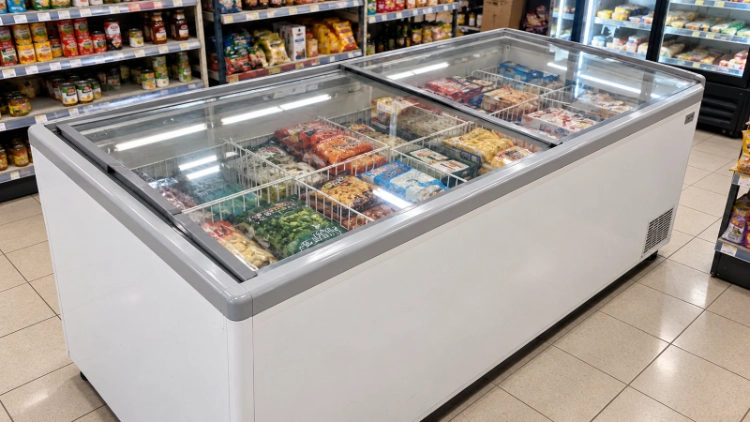
The frozen section has a different duty. A supermarket commercial display freezer is designed for frozen products and lower operating temperatures, while a supermarket freezer island allows customers to shop from an open or low-access format in the middle of the store. These units should not be treated as interchangeable with an upright chilled cabinet. Their compressor capacity, defrost cycle, electrical demand and heat rejection all affect the store’s total load.
A practical store plan balances circuits and heat loads across the day. Chilled wall cabinets, frozen islands and back-room equipment may all pull hard during the same hot afternoon. Separating circuits where required, sizing protection correctly and coordinating defrost schedules can help prevent nuisance trips and reduce peak-load stress. The result is a more predictable cold chain, not merely a better-looking aisle.
Export Build Quality & Specs Table
For beverage and dairy applications, the construction details determine whether the cabinet still performs after months of loading, unloading and cleaning. A reputable fully hermetic compressor is a sensible starting point, but the rest of the cabinet must match it. Reinforced, adjustable shelves should carry heavy drink cases without bowing. Shelf clips and supports should remain secure when staff change the merchandising pitch.
R290 refrigerant is widely selected for new commercial refrigeration equipment because it has a very low global warming potential. It is also flammable, so the complete system must be designed, labelled, installed and serviced according to the applicable safety requirements. Buyers should ask for the exact refrigerant charge, electrical specification, certification documents and service instructions for the destination market rather than accepting a generic catalogue statement.
Export packing is another field issue. A seaworthy fumigation-free wooden case can protect glass doors, corners and controls during container handling while simplifying documentation at the destination port. Before shipment, the purchaser should confirm the crate dimensions, gross weight, loading method and whether spare gaskets, shelves and door hardware are packed with the order.
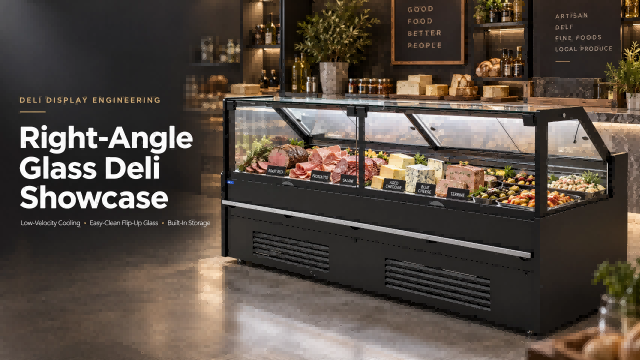
This specification discipline becomes especially valuable in a multi-zone procurement programme. The same buyer may need supermarket display fridge freezers for mixed-temperature stores, a meat freezer supermarket solution for frozen meat, and a supermarket seafood display case for fish and chilled seafood. These products have different temperature, hygiene and merchandising requirements, but sourcing compatible cabinet families from one experienced manufacturer can simplify spare parts, training, documentation and layout coordination.
There is a similar distinction between a chilled display fridge supermarket application and a frozen cabinet. Do not compare them on exterior size alone. Ask about usable internal volume, shelf loading, recovery after door opening, defrost method, noise, service access and measured energy consumption under a defined test condition. A lower purchase price can disappear quickly if the gasket fails early, shelves deform under load or the cabinet cannot hold temperature during peak trading.
CREATE Refrigerator has the advantage of working from a source-manufacturer perspective: cabinet dimensions, door arrangement, lighting, shelf layout and export packing can be discussed as part of one project instead of being treated as unrelated accessories. For distributors, that makes private-label or repeat-store programmes easier to standardise. For an independent shop owner, it means the cabinet can be selected around the actual product mix rather than around a stock photograph.
Purchasing Verdict: Where the LC Series Makes Sense
The LC Series is a strong fit when the sales floor depends on visible chilled beverages, dairy products and grab-and-go refreshment. Its value is not limited to the first impression of a bright glass front. The real return comes from a combination of clear product presentation, reduced condensation complaints, dependable door closure, even shelf temperatures and a cabinet structure that tolerates daily commercial handling.
Before placing an order, confirm the ambient class, voltage and frequency, temperature setpoint, glass construction, anti-condensation heater arrangement, compressor model, refrigerant charge, shelf loading, LED specification and export-crate details. Ask the supplier to provide a layout showing door swing, service clearances, power distribution and the relationship between chilled and frozen zones.
For a quotation, cabinet matching or 3D store-layout support, contact createrefrigeration through www.createrefrigeration.com. A good supplier should be able to discuss the complete operating context: how many times the doors will open, what the heaviest shelf load will be, how humid the store becomes in summer, and how the LC Series will work alongside the rest of the cold chain.
| Parameter | LC Series commercial upright glass-door refrigerator |
| Chilled temperature range | +2°C to +8°C, subject to load, ambient condition and controller setting |
| Refrigeration and glass options | Hermetic compressor; R290 configuration; double- or triple-glazed Low-E tempered glass options |
| Cabinet and merchandising | Rear perforated forced-air duct; adjustable reinforced shelves; vertical LED lighting; self-closing doors |
| Export and project support | Fumigation-free wooden-case packing; cabinet matching, quotation and 3D layout support available |