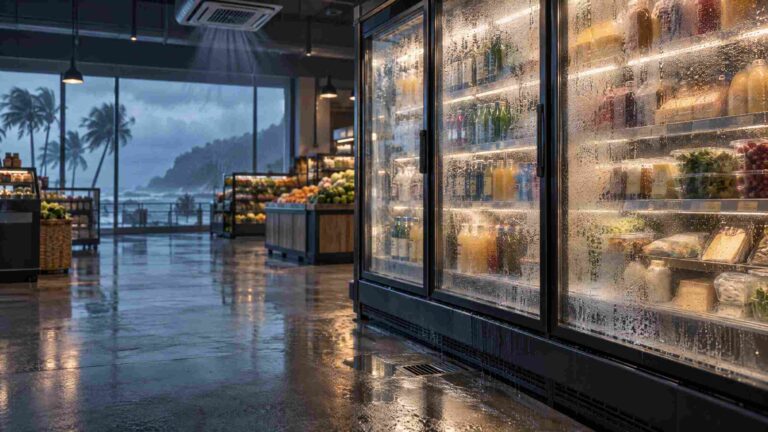

A refrigerated fixture placed in the middle of a store has to earn its footprint twice. It must keep food cold, and it must help customers notice, understand and pick up the product without slowing the aisle. A tall cabinet can do the first job well while creating problems for the second: it blocks CCTV views, hides staff from one another and makes a small store feel boxed in.
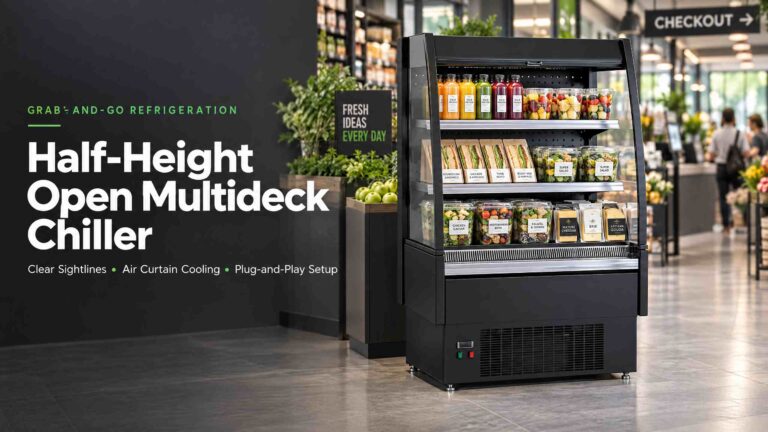
The Semi-Vertical / Half-Height Open Multideck Air Curtain Chiller takes a different approach. Its lower body provides the refrigeration package and display shelves, while its reduced height keeps the customer’s eye moving across the shop. The top can also become a second merchandising surface for dry goods, wine, paper cups or cross-selling products. For community supermarkets, chain convenience stores and specialty food shops, this is a practical format for fresh juice, cut fruit, sandwiches, prepared salads and packaged cheese.
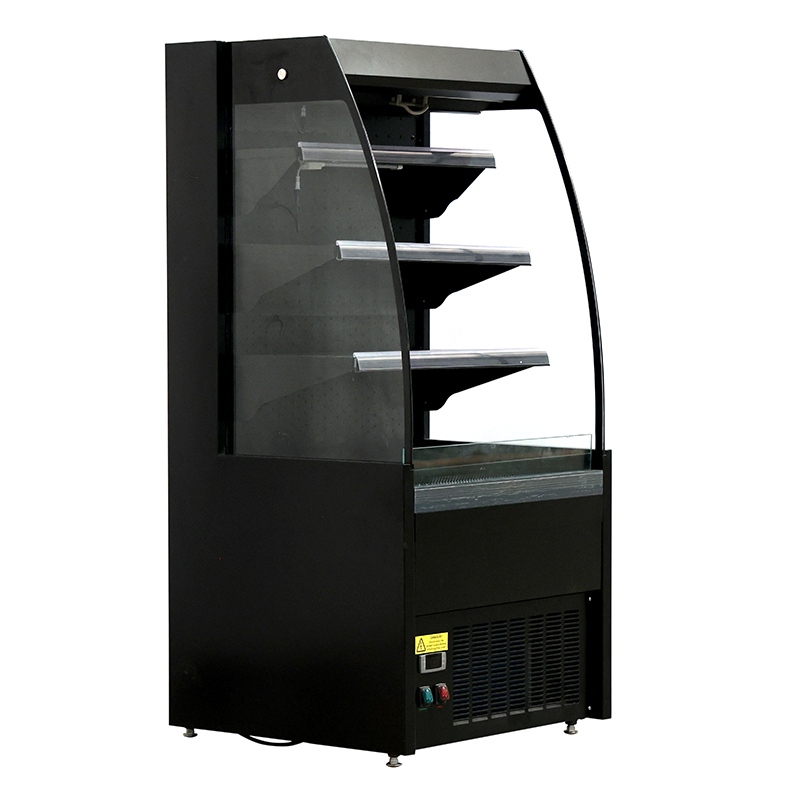
createrefrigeration develops the cabinet around two retail realities: the customer’s sightline and the air movement in the aisle. That means the display height, shelf angle, air-curtain path, night blind and caster or foot arrangement should be considered together. The result is not simply a shorter open case. It is a fixture intended to sell in the store’s most visible and most changeable spaces.
Opening Up Store Sightlines & Impulse Sales
A tall upright cabinet in the centre of a small supermarket can divide the sales floor into disconnected pockets. The manager may lose sight of the entrance, the checkout queue or the opposite aisle. A customer pushing a basket may also have to walk around the cabinet to see what is on the other side. These costs rarely appear on a refrigeration quotation, but they affect supervision, cleaning and shopping comfort every day.
The half-height cabinet keeps more of the store visually open. From the checkout area, staff can often see over the fixture. From the aisle, shoppers can identify the colour and category of the products before they reach the case. That is useful for food purchased with little planning: a chilled juice after a commute, a sandwich before a meeting, a fruit cup for a child or a small pack of premium cheese to add to a meal.
A well-arranged supermarket juice display is a good example. Bottles and cups can be presented at a comfortable reach height, with the strongest-selling items in the centre of the eye line and smaller products on the upper or lower shelves. Clear price communication matters. So does keeping the first row faced forward; an open case that looks half-empty quickly loses its selling effect.
The top surface should not become an improvised dumping shelf. Used properly, it can carry boxed crackers beside cheese, premium olive oil beside prepared salads, or dry napkins and cups beside ready-to-drink beverages. The load, hygiene separation and allowable top-surface use must be confirmed with the supplier. A decorative display should never obstruct the air outlet or make the cabinet difficult to clean.
CREATE Refrigerator applies an ergonomic height to the cabinet so the case can work near a checkout approach or in a central island without creating a visual wall. In a chain store, repeating the same height and shelf pitch helps customers recognise the category from branch to branch. In an independent shop, the lower profile can create a more open premium-food atmosphere while still giving the operator a strong selling position.
Aerodynamic Air Curtain & Aisle Synergy
An open multideck case has no glass door to contain the cold air. Its performance depends on the shape and stability of the air curtain. At the top, a honeycomb air outlet breaks the supply flow into many small, even streams. The cooled air travels downward across the product opening and returns through the lower intake. When the cabinet is loaded within its stated limits, this forms an invisible cold-air boundary between the chilled display and the warmer sales floor.
The honeycomb structure is useful because a smooth, uncontrolled blast can create uneven cooling. One section may receive too much air while another develops a warm pocket. A properly arranged outlet and return path distribute the flow more consistently across the shelves. Operators should still protect the cabinet from direct doorway drafts, ceiling fans and air-conditioning outlets. No air curtain can compensate for a strong cross-draft aimed straight through the display.
The store’s aisle geometry matters as much as the cabinet itself. Do not place the return-air side against a pallet, promotional stand or tightly packed neighbouring fixture. Keep the customer approach wide enough for baskets and replenishment carts. Leave the manufacturer’s service and ventilation clearance around the condensing section. During a fit-out, mark the airflow direction on the plan so a later signboard or end cap does not interrupt it.
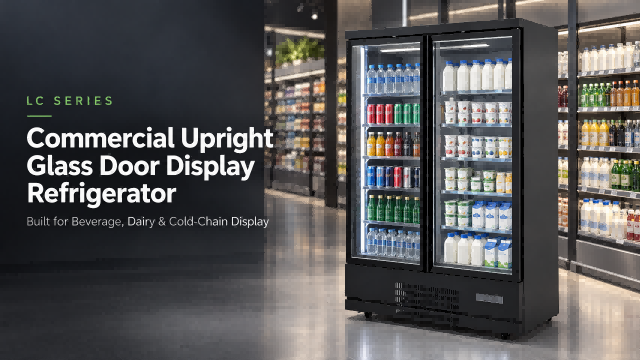
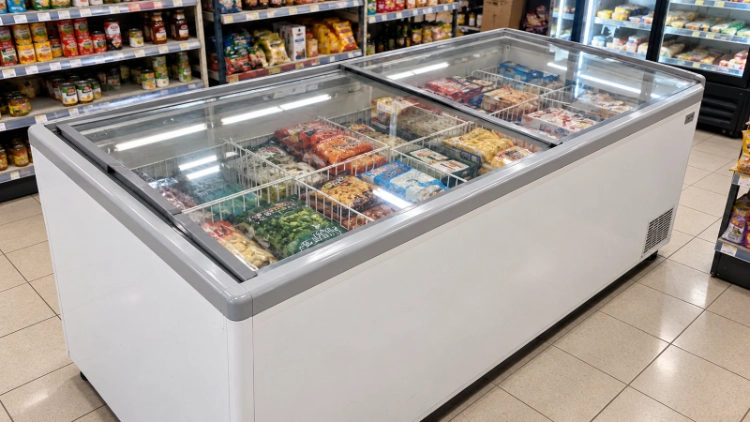
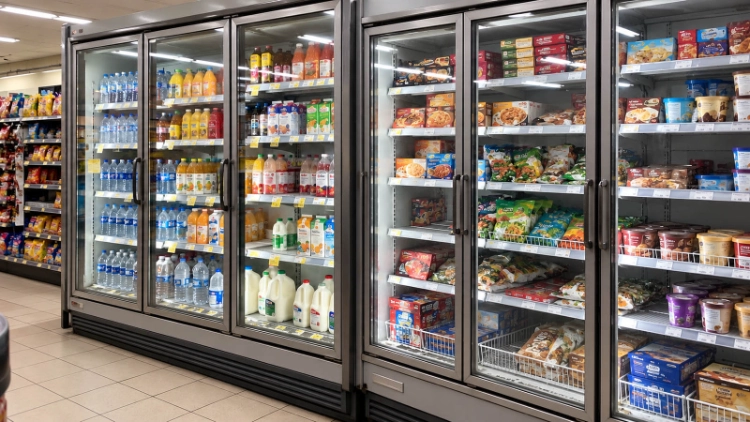
A layered store works better than a store filled with fixtures of one height. The half-height chiller can sit in the centre or near the checkout, while a low supermarket freezer island provides frozen convenience foods at a nearby zone. Along the wall, a supermarket glass door refrigerator can carry beverages, dairy and sealed chilled products. A larger supermarket commercial display freezer can remain in the dedicated frozen aisle rather than competing with the impulse zone.
This arrangement gives customers a sequence of low, medium and tall visual planes. It also gives staff clearer routes for replenishment and supervision. createrefrigeration can review the cabinet position against neighbouring fixtures, aisle widths, ceiling services and customer approach angles. For a 3D movement plan and equipment coordination, buyers can share drawings through www.createrefrigeration.com.
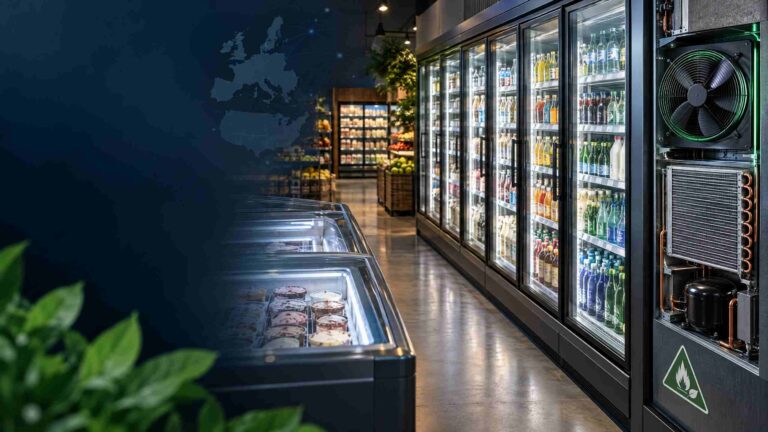
The same audit should cover heat rejection. An integrated condensing unit releases heat into the store environment, so the cabinet should not be packed into a narrow dead-end corner. Check the local ambient condition, condenser access, sound level and electrical load. A visually successful island that overheats its own condenser will not deliver a dependable operating cost.
Plug-and-Play Deployment & Night Blinds
Many community stores change their central display every season. A fixture may move closer to the checkout for summer drinks, then shift toward prepared foods during a holiday promotion. A cabinet that needs external copper pipework, a new floor drain and a major contractor visit each time is difficult to reposition.
A plug-and-play configuration with a built-in compressor package reduces that barrier. The cabinet arrives as a self-contained unit, subject to the destination market’s electrical and safety requirements. Staff or an installer can position it, level it, connect the specified power supply and prepare it for operation without running a separate refrigeration circuit through the floor. The exact installation procedure must follow the manufacturer’s manual and local regulations.
The condensate arrangement is equally important. A hot-gas or heated self-evaporating drain pan can evaporate defrost and condensate water inside the cabinet system, removing the need for an external floor drain in suitable applications. That can avoid expensive concrete cutting, drain installation and overnight construction in an operating store. Buyers should confirm the water capacity, ambient limits, cleaning access, energy draw and what happens during an unusual high-humidity period.
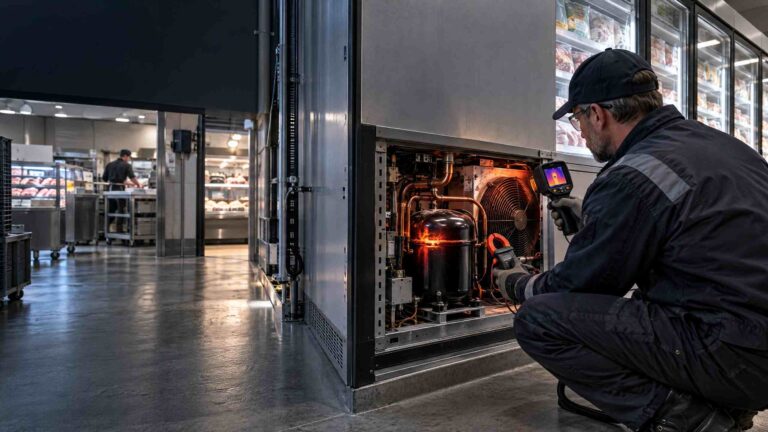
This is not a reason to ignore housekeeping. The pan, drain line and surrounding area still need inspection. Dust on the condenser, blocked drains and food debris can undermine the benefit of self-evaporation. A simple weekly checklist—temperature, air return, pan condition, grille cleanliness and product loading—can prevent a small maintenance issue from becoming a sales-floor outage.
When the store closes, an open chiller continues to lose cold air unless it has a night cover. A slow-retracting insulated night blind reduces the exposed opening during non-trading hours. It limits warm-air exchange, lowers the overnight refrigeration load and protects products from unnecessary temperature fluctuation. Staff need a clear closing routine: face the products, remove unsuitable stock, lower the blind, check that the bottom edge sits correctly and record the cabinet temperature.
The saving is more meaningful across a complete store. In a plan containing supermarket display fridges, a standard display fridge supermarket run and supermarket display fridge freezers, night blinds can reduce the after-hours load on the open fixtures while closed-door units maintain their own setpoints. The actual saving depends on ambient temperature, operating hours, product load, blind fit and controller settings, so it should be assessed against measured energy data rather than a generic percentage.
Turnkey Sourcing & Technical Comparison
A half-height open case is often purchased as part of a wider cold-chain package. The buyer may need a central grab-and-go display, a chilled wall run, frozen islands and specialist fresh-food cases at the same time. Ordering these as unrelated items can produce inconsistent heights, incompatible controls and a confusing spare-parts list.
CREATE Refrigerator supports OEM coordination for the cabinet length, shelf arrangement, lighting, air curtain, night blind, casters or feet, finish and electrical specification. The factory can also discuss mixed loading for a container programme. For a retailer opening several branches, it is worth asking for a packing plan that separates fragile glass or trim, labels each cabinet by store and includes commissioning instructions with the shipping documents.
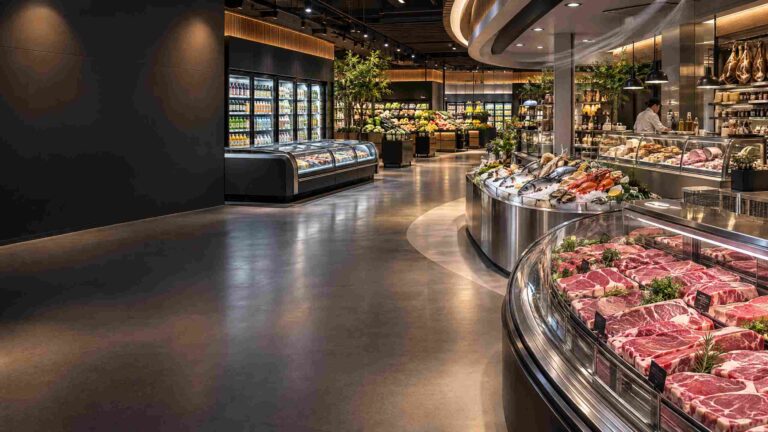
A seafood department may require a supermarket seafood display case with a different product presentation and drainage arrangement. A frozen meat zone may use a meat freezer supermarket format with a lower temperature duty. These units can still be planned alongside the open multideck chiller for a common customer route. A source supplier can review cabinet dimensions, container utilisation and installation sequence before the purchase order is released.
Where the project calls for delivery on a DDP basis, define the destination, import responsibilities, unloading method, site access and final placement scope in the quotation. “DDP” should not be left as a vague shipping label. Confirm whether it covers customs clearance, duties, delivery to the shop, tail-lift service and any local installation or commissioning. That clarity protects the store manager from unexpected costs at the kerb.
For comparison, ask each supplier to state the usable display area, temperature range, ambient condition, compressor location, refrigerant, air-curtain design, self-evaporation method, night-blind material, noise, power input, service clearance and warranty. Compare measured operating conditions, not only the cabinet’s external length. A smaller-looking cabinet may have less saleable shelf area if its airflow path or internal machinery takes too much space.
| Parameter | Semi-vertical half-height open multideck air curtain chiller |
| Display and airflow | Open multideck shelves; honeycomb top air outlet; lower return-air intake |
| Refrigeration and drainage | Built-in compressor package; self-evaporating condensate/defrost-water pan configuration |
| Store deployment | Plug-and-play electrical connection; reduced-height island format; optional slow-retracting night blind |
| Project support | OEM dimensions, 2D-to-3D layout planning, mixed-container sourcing and DDP options by quotation |
Final Selection Advice for Store Managers
Choose the half-height air-curtain format when visibility and quick access matter as much as cold holding. It is well suited to central aisles, checkout approaches, seasonal promotions and small stores where a tall cabinet would interrupt the view. Use the top surface with discipline, protect the air path from cross-drafts, and make the night blind part of the closing routine rather than an accessory left in its packaging.
The best purchasing decision starts with a measured plan. Mark the CCTV field of view, customer approach, replenishment route, power point, condenser clearance, ceiling air outlets and the nearby frozen and chilled equipment. Then test the cabinet with the products that will actually sell from it: tall juice bottles, shallow fruit trays, sandwich packs and cheese tubs do not occupy the same space.
createrefrigeration can provide a store-specific review covering the air curtain, island position and mixed cold-chain package. To request a free 2D-to-3D layout proposal and quotation, send the store dimensions and equipment list to www.createrefrigeration.com. The right fixture should make the shop easier to supervise, easier to shop and easier to change when the next promotion arrives.