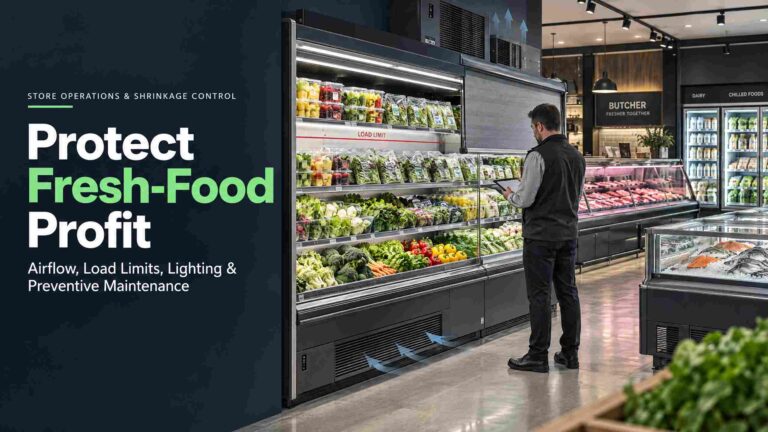

A supermarket can lose margin in two places without seeing an obvious failure alarm. The meat display looks full, but the beef surface turns dark and the packs lose weight. The upright freezer still feels cold, but a leaking gasket lets humid air in, frost closes the evaporator and the compressor runs at full load for hours.
These are operating problems, not just equipment problems. The product, airflow, glass, gasket, shelf loading, defrost control and cleaning routine all work together. Fix one part and ignore the others, and the loss comes back through another line on the weekly report.
After years of energy audits and fresh-food loss projects for supermarket groups, I use two simple measures: saleable product weight and measured electricity. For a cabinet upgrade, record the baseline before changing the equipment. Compare product waste, compressor run time, defrost hours, current draw and temperature recovery under similar trading conditions.
createrefrigeration builds cabinets with food-contact stainless steel, controlled air distribution, serviceable glass and configurable storage. The buyer still needs to inspect the actual material, loading limit and commissioning record. A good specification is useful only when the store team can maintain it.
Stopping Weight Shrinkage in the Butcher Department
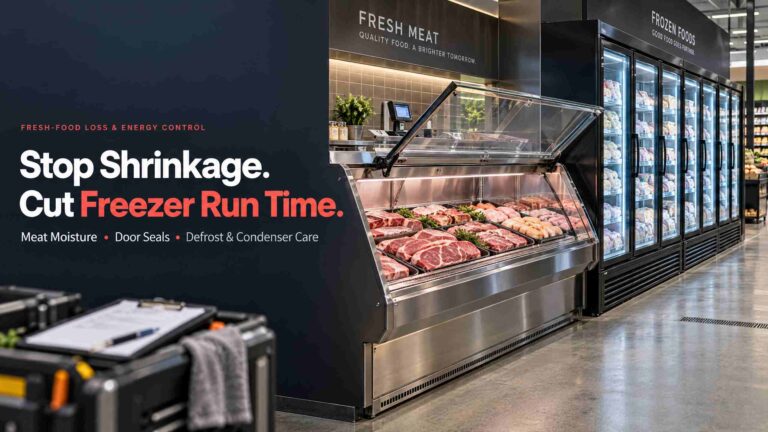
A high-quality supermarket meat display cabinet should protect three things at once: product temperature, surface appearance and saleable weight. Beef, poultry, sliced products and prepared meat do not need a hard stream of cold air aimed at the front tray. Excessive air velocity pulls moisture from exposed surfaces and can make a fresh cut look older than it is.
The first check is the air path. Confirm the fan setting, outlet position, return opening, tray depth and product distance from the discharge. If the front row develops a dry edge or the beef cut face becomes dark by the afternoon, do not immediately lower the setpoint. A colder controller setting may freeze the lower deck while leaving the exposed product under a drying air jet.
Use a calibrated probe at representative product positions, not only at the evaporator return. Record the upper, middle and lower display area at opening, during the lunch rush and before closing. Weigh a small sample of the same product at the start and end of the shift where the store’s food-safety and loss-control procedures allow. This shows whether the display is holding temperature while still losing moisture.
A meat counter benefits from a super large display area when the air path remains stable. More front visibility can reduce product stacking, but a wide case is not permission to fill every centimetre. Keep trays behind the loading line and do not block the return grille with cartons, promotional baskets or backup packs.
The lower cabinet should work as a reserve, not as a forgotten storage room. A customized storage box under the display lets staff keep backup trays close to the counter and replenish during the rush without walking to a remote cold room. Check its internal dimensions, temperature duty, access door, drainage and cleaning method before approving the drawing.
Material selection matters under daily meat handling. Salt, blood, brine, marinades and cleaning chemicals attack weak finishes. Specify food-contact surfaces with equipped stainless steel plates, preferably SUS 304 where the product duty and project specification require it. Inspect welds, corners, drain edges and the underside of the base, not only the polished customer-facing surface.
If the interior is not properly protected, corrosion can appear far sooner than a buyer expects. Within months, residue can remain in a joint, the coating can lift and rust can develop around a drain or fastener. SUS 304 is not a replacement for cleaning, but it gives the operator a more suitable surface for repeated wet cleaning when the correct detergent and maintenance method are used.
The front glass should open for the cleaning shift. A hydraulic flip-up front glass exposes the lower deck, front corners and product supports so staff can remove grease and meat juices rather than wiping around them. In a well-organised counter, this can save the early shift around 20 minutes of awkward scrubbing per cleaning cycle. The exact saving depends on cabinet length, soil level and staffing, but the reduction in bending, reaching and dismantling is easy to see.
Check the hinge rating, safe open angle, hydraulic support and glass retention. A heavy panel that drifts downward is a safety issue. A panel that opens only a few centimetres does not solve the cleaning problem.
CREATE Refrigerator combines low-velocity display airflow, SUS 304 food-contact options, a large display face and lower cold storage in configurations intended for butcher and prepared-food counters. For factory drawings, material scope and airflow details, request the technical file through www.createrefrigeration.com.
Lighting for Honest Colour, Not False Redness
Meat lighting changes the customer’s judgement. A harsh cool-white lamp can make beef look grey or pale, while an overly red lamp can hide browning and make staff miss a quality problem. Use a dedicated pink or warm-white fresh-meat light with controlled glare and a realistic test under the actual glass.
Stand on the customer side and look across the full display. Check the colour at the top shelf, the centre tray and the end panel. A strong reflection from a ceiling spotlight can be as damaging as a poor lamp because it hides the surface the customer needs to judge.
Record the light specification in the equipment schedule. If the store changes the tube or LED strip during a later repair, the replacement should not turn the cabinet into a false-colour display. The lighting, airflow and temperature check belong on the same meat-department walk.
Slashing Kilowatt-Hours on Vertical Freezer Lines
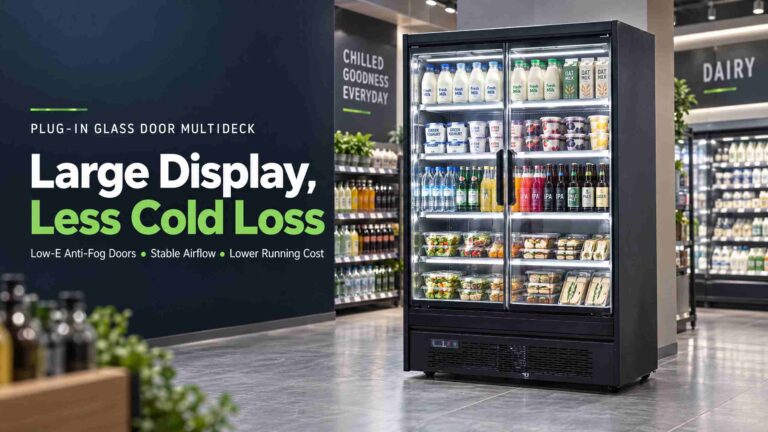
A row of vertical freezers for supermarkets can be one of the largest electricity users on the sales floor. The cabinet may look normal while a small gasket leak pulls humid air into the compartment every minute. Moisture freezes on the evaporator, the air path narrows, recovery slows and the compressor remains at high duty.
Start with the door seal. Use a paper-strip test around the top, centre, hinge side and handle side. Similar resistance should be felt around the perimeter. Inspect the bottom corners for twisting, hard spots and ice marks. Check that the heavy self-returning hinge brings the door fully into the frame without a push from the staff member.
A gasket that leaks during a busy shift can make the compressor run almost continuously. In a humid season, the result is not just a higher electricity bill. The evaporator can become blocked with ice, the product temperature can drift and the compressor can be damaged by long, hot operating periods. Replace the gasket before adjusting the setpoint.
The glass package should be specified for the climate. Triple-glazed Low-E heated anti-fog glass can reduce condensation and fogging around the door in a humid rainy season. Confirm the frame heater control and power draw. A heater that runs at maximum all day may keep the glass clear while adding a hidden electrical load.
The defrost system needs the same level of attention. Smart demand-based defrost can use temperature, time or coil condition to avoid unnecessary cycles. The controller should record defrost start, termination temperature, fan delay and alarm status. A cycle that ends too early leaves ice on the coil. A cycle that runs too long adds heat and increases recovery time.
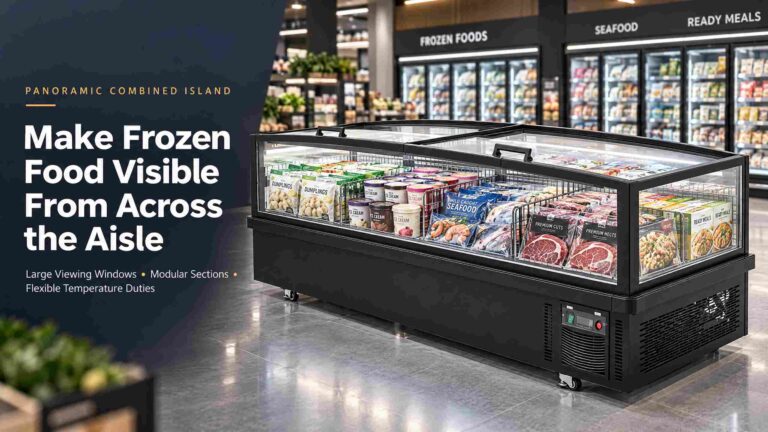
For a high-capacity display freezer supermarket line, compare the temperature pattern at the top, middle and bottom shelves after repeated door openings. A low reading at the return sensor does not prove that the front product zone is stable. Keep cartons behind the air-return path and do not push frozen packs hard against the rear panel.
A realistic retrofit can reduce compressor electricity by more than 35% when the old line has leaking gaskets, heavy frost, poor defrost control, dirty condensers or unnecessary overnight operation. Do not present 35% as an automatic result for every store. Establish the baseline in kWh, current, run hours, room temperature and product load, then repeat the measurement after the changes.
The savings package normally includes new gaskets, door alignment, Low-E heated glass where replacement is justified, demand-controlled defrost, clean condenser fins, correct night protection and a revised closing routine. Changing only the setpoint is rarely enough.
Condenser Breathing Room and Floor Protection
Every refrigerator supermarket showcase needs a clear condenser air path. Do not press the cabinet against a wall because the front still looks accessible. Follow the manufacturer’s rear and side clearance. A trapped condenser raises head pressure, increases current and shortens compressor life.
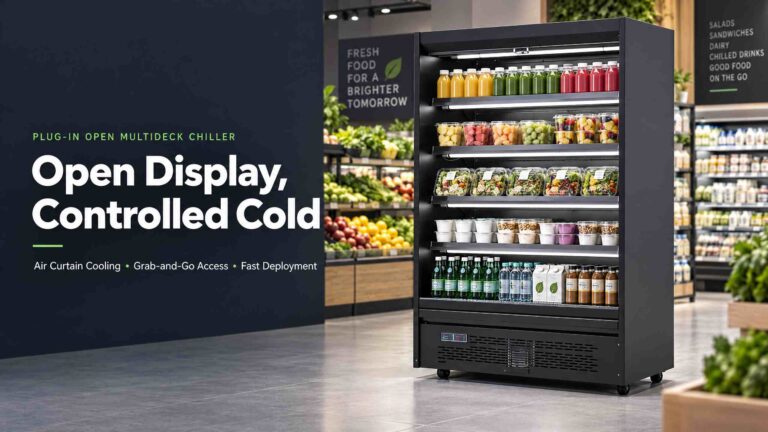
The same rule applies to a chiller for supermarket grocery store use and a supermarket air cooling vegetable display cooler. Their operating temperatures differ, but both reject heat and require service access. Draw the ventilation clearance on the floor plan and leave room for a technician to remove the grille, fan motor or controller.
Clean the condenser fins at the interval set by the store’s environment. A bakery, busy loading dock or dusty car park needs more frequent inspection than a clean indoor branch. Isolate the cabinet according to the site safety procedure, brush loose dust away from the fin face and vacuum the greasy residue. Record current draw before and after cleaning.
Shopping carts are another preventable repair cost. Install an aluminum alloy bumper strip where carts turn near the glass or lower panel. Check the strip attachment, corner finish and replaceability. The strip should spread an impact without becoming a dirt trap or pulling the cabinet skin away from the frame.
Mark the customer aisle, cart-turn area and service route on the plan. A narrow gap may be enough for a person but not enough for a technician carrying a compressor part. A cabinet that cannot be serviced without moving a neighbouring island will spend more time out of operation.
Connecting the Whole Store Without Moving Heat into Fresh Food
A vertical supermarket display system can connect beverage, dairy, frozen and packaged-food departments, but the store must separate temperature duties and condenser discharge. Tall equipment should not form a sealed wall around a fresh display. Keep monitoring sightlines open and leave a clear return path for room air.
The store’s supermarket refrigeration cabinets should be listed by duty, defrost type, refrigerant, power load, drain arrangement and service clearance. Do not compare only exterior width. Usable display volume, shelf load, door opening frequency and energy measurement tell the real operating story.
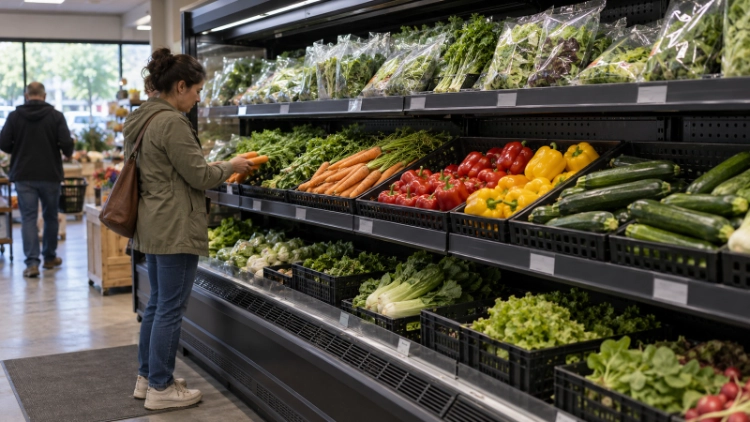
An entrance supermarket fruit and vegetable showcase display rack may be non-refrigerated and can sit near a controlled produce cooler. Keep it away from the hot discharge of a freezer line and away from direct entrance drafts. Whole fruit, cut produce, meat and frozen food should not be forced into one generic temperature zone.
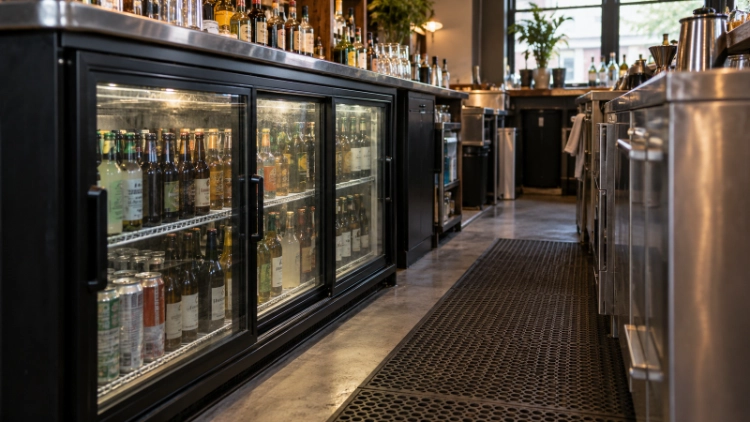
The beverage area may include a branded refrigerator pepsi supermarket cabinet or another OEM display. Keep its door swing and lightbox clear of the meat replenishment route. Beverage cartons are heavy, and a shelf that is suitable for snacks may fail under a full bottle load.
For a supermarket refrigerators display freeze programme covering the store’s chilled and frozen lines, review the combined heat load during the afternoon peak. Several compressors may run hard at the same time, while defrost heaters add a short electrical peak. Balance circuits, label isolation points and keep an accessible distribution-board schedule.
Shrinkage and Energy Saving Benchmark Table
| Area | Baseline check | Corrective action | Benchmark to track |
| Meat display cabinet | Product weight, colour, surface dryness and three-point temperature | Reduce direct air velocity; clear returns; use SUS 304 plates and flip-up glass | Daily markdown weight and end-of-shift shrinkage |
| Vertical glass-door freezer line | kWh, compressor run hours, gasket paper test and frost depth | Replace seals; align doors; add Low-E heated glass and demand defrost | Target more than 35% lower compressor energy where the baseline supports it |
| Condenser and cabinet placement | Current draw, room temperature and rear clearance | Clean fins; restore breathing room; add service access and bumper protection | Lower current, fewer alarms and shorter service interruptions |
| Whole-store cold chain | Circuit load, defrost peaks and product loss by department | Coordinate the vertical system, cabinets, beverage display and produce rack | Lower kWh per trading day and lower weekly fresh-food write-off |
The Maintenance Routine That Protects the Result
At opening, check the meat display surface, temperature, glass, lighting and drain area. Check the freezer gaskets and look at the evaporator view or frost pattern where accessible. Confirm that no carton blocks a return grille.
During the trading peak, watch the cabinet rather than the controller alone. Are customers leaving doors open? Is a staff member using the front deck as a storage shelf? Has a promotional board covered the air path? Are the bottom shelves overcooled while the top shelves warm up?
At closing, remove damaged product, clean spills, face the shelves, close every door and lower the night cover where fitted. Record unusual frost, compressor noise, alarms and temperature recovery. A five-minute closing check can prevent a weekend of product loss.
Monthly, test gaskets, inspect hinges, verify sensor readings with a calibrated probe and review the kWh trend. Quarterly, isolate and clean condenser fins, inspect fans and check the service clearance. If the same alarm repeats, do not keep resetting it. Find the air, moisture, defrost or electrical cause.
createrefrigeration supplies OEM configurations with SUS 304 food-contact options, front-opening cleaning access and Low-E door systems. The equipment should be judged against the store’s measured product loss, energy use, service time and delivered cost—not only against a catalogue photograph.
For factory hardware parameters, retrofit recommendations or a quotation for meat display and vertical freezer upgrades, contact createrefrigeration through www.createrefrigeration.com. CREATE Refrigerator can help prepare the cabinet specification, airflow review and energy comparison, but the final result depends on what happens on the sales floor every day.