
Island freezers are easy to underestimate in a supermarket layout. They sit low, they do not block sightlines too much, and shoppers can walk around them from more than one side. Because of that, they often become useful spots for frozen food promotions, seasonal products, and high-turnover categories.
Still, placing an island freezer is not just a matter of filling a space. Put it in the wrong aisle, and customers may walk past it without slowing down. Place it too close to a narrow crossing, and it can disturb traffic. Use it only as extra storage, and the store may miss its real value as a selling point. For supermarket buyers and store planners, island freezer placement should connect three things: customer flow, product category, and operating cost. When these are considered together, the freezer can support frozen food sales without creating layout problems for staff or shoppers.
Why Island Freezer Placement Matters
A frozen food section does not always need to be hidden at the back of the store. In many layouts, an island freezer can bring selected frozen products closer to the customer’s path. This matters for items that people may buy without planning, such as ice cream, frozen desserts, dumplings, seafood packs, ready meals, and seasonal frozen foods.
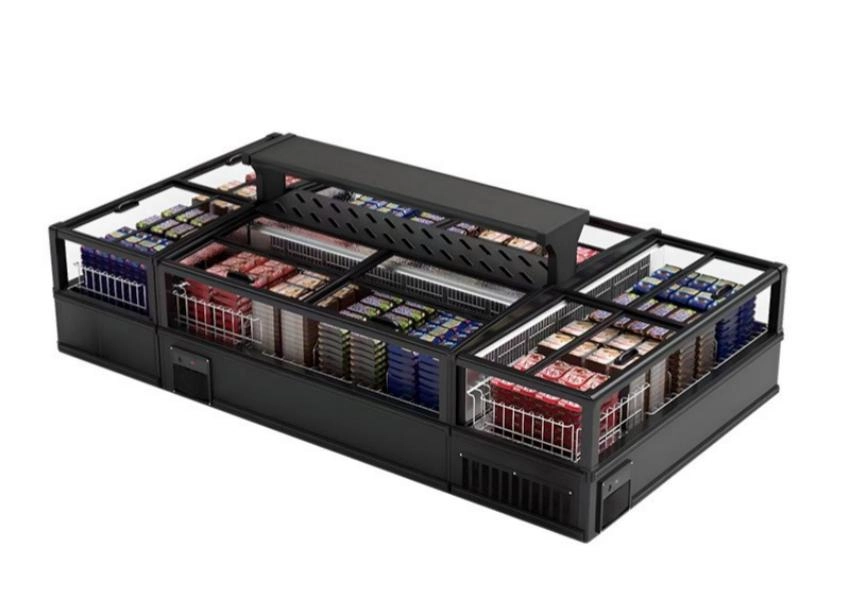
The island shape helps because shoppers can see products from several angles. A glass top keeps products visible while protecting the cold zone. If the cabinet is well lit and organized by category, the customer does not need to search too hard. That small convenience can help frozen products get noticed. But visibility alone is not enough. The freezer should sit where traffic already exists. A strong promotion placed in a quiet corner will not do much. A freezer placed in a busy zone, but with no clear product grouping, may create attention without conversion. Placement and assortment have to work together.
Where Should Supermarkets Place Island Freezers?
The best location depends on the role of the freezer. For seasonal promotions, an island freezer can work near the main aisle, entrance route, or middle walkway where shoppers naturally pass. Ice cream in summer, hot pot ingredients in winter, or frozen desserts before holidays can use this kind of placement well.
For meal-solution displays, the freezer can sit near related chilled or dry goods. Frozen seafood near seasoning shelves, frozen ready meals near convenience food aisles, or ice cream near dessert toppings can make the purchase feel more complete. The goal is not to force a sale, but to make the choice easier.
For regular frozen categories, the island freezer should support the main frozen section rather than compete with it. A poor layout can split the category too much, making customers unsure where to look. A good layout uses island freezers to highlight selected items while keeping the main category easy to understand. Traffic width also matters. Customers need enough room to stop, look down into the cabinet, open the lid, and move on without blocking the aisle. Staff also need access for restocking. A freezer that improves display but makes replenishment difficult will create problems during busy hours.
Product Grouping Makes the Freezer More Useful
An island freezer works better when the products inside have a clear reason to be together. A mixed cabinet with too many unrelated items may look messy. Customers need to understand the display quickly. Ice cream with frozen desserts makes sense. Seafood with frozen hot pot items may make sense in some markets. Ready meals and frozen snacks can work together if the store is targeting quick dinner buyers. Category signs and simple product blocks help. The customer should be able to understand the offer in a few seconds. If the layout needs too much thinking, the impulse effect weakens.
Product depth is another point. An island freezer should not be used as a deep storage box. Overfilled cabinets can hide products, block airflow, and make picking difficult. A neat display with clear product faces often works better than a crowded one. For promotions, stores should also check turnover speed. A product that sells slowly may not deserve prime freezer placement. The best island freezer spots should be used for items that can move volume or support a wider merchandising plan.
What Buyers Should Check in a Combined Island Freezer
When selecting a combined island freezer, buyers should look beyond the cabinet size. A good island freezer should provide clear product visibility, stable low-temperature performance, easy access, and flexible placement. Sliding glass tops can help protect the cold zone while still allowing shoppers to see the products. Microcomputer temperature control and visible temperature displays are useful for daily checks. Automatic defrost can reduce maintenance pressure when the cabinet runs for long hours. Modular connection is also important. Some stores need a single island cabinet. Others may need a longer combined line for large frozen sections or seasonal campaigns. If the freezer can be connected freely, the layout becomes easier to adjust as the store changes.
Check energy consumption early on. Since display equipment for frozen foods is in operation for long periods of time, the efficiency of the compressor as well as the insulation, display glass, refrigerant circuit, and defrosting technique all have an influence on operating expenses. The cheapest freezer does not have to be the cheapest in the long run, since it may consume more energy or require more servicing. The buyer should also check the voltage, the suitability for the climate, the service access, the availability of spare parts, and the required certifications for the destination market early on. These unglamorous points can cause a lot of damage after the installation.
How Store Layout and Operation Affect ROI
The return from an island freezer is not only measured by product sales. It also depends on how smoothly the store can operate around it. A cabinet that blocks traffic may create customer frustration. A freezer that is hard to restock may waste staff time. A unit placed too close to heat sources may use more energy. Poor lighting or messy product grouping may reduce sales even when the location is good.
Stores can improve performance by checking sales before and after changing freezer placement. They can also compare product turnover in different locations. Simple observations from store staff are useful too. If customers often stop but do not buy, the issue may be product selection, price, or display clarity. If customers do not stop at all, the freezer may be in the wrong place. This kind of review is more practical than relying only on layout theory. A supermarket layout should be adjusted according to real shopper behavior and operating feedback.
How to Create Refrigeration Supports Island Freezer Layout Projects
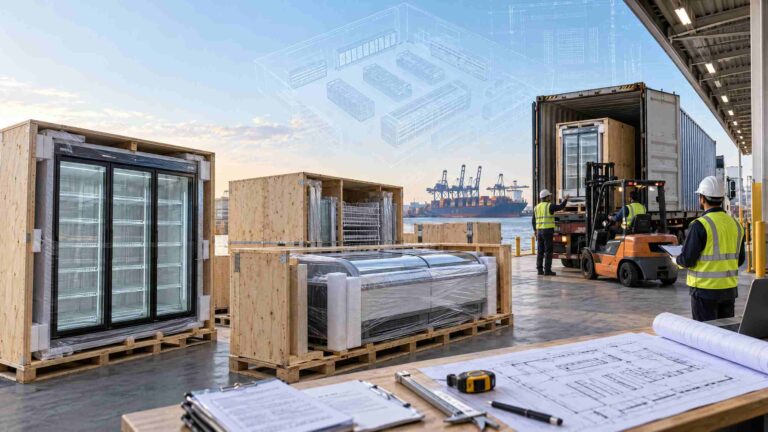
Create Refrigeration provides commercial refrigeration equipment for supermarkets, convenience stores, cafés, and cold chain projects. Its product range includes island freezers, glass door freezers, multideck chillers, display cabinets, and customized cold storage solutions. For supermarket island freezer projects, Create Refrigeration can support model selection based on store layout, product category, traffic flow, voltage, refrigerant configuration, and energy-efficiency goals. The company also supports OEM/ODM customization and CAD-based supermarket layout design, helping buyers review equipment placement before installation.
For buyers planning frozen food promotions or full supermarket layouts, early discussion of cabinet size, combination method, glass top design, temperature control, service access, and certification documents can reduce changes later. The right freezer should fit the merchandising plan and the store’s daily operation, not just the available floor space.
Conclusion
The positioning of island freezers can have a big impact on the perception of how easy it is for customers to see, access, and purchase frozen products. A well-planned island can encourage impulse purchases and support seasonality as well as aid visibility of the frozen food offer. A poorly planned island will simply take up floor space and potentially look messy and disorganized. The optimum layout will be based upon the product category and customer flow.
The best layout starts with the product category and customer path. It also considers aisle width, restocking, energy use, maintenance, and long-term flexibility. For supermarkets, island freezers work best when they are treated as part of the merchandising plan rather than simple frozen storage. If you would like to learn more, please read this article.
FAQ
Q1: How does island freezer placement influence impulse buying?
A1: Island freezers can increase frozen product visibility when placed along high-traffic paths or near related categories. Easy access, clear product grouping, and good visibility make shoppers more likely to notice promotional or seasonal frozen goods.
Q2: What are the advantages of a combined island freezer?
A2: A combined island freezer allows flexible layout planning, larger display capacity, and better category organization in one connected footprint. It can be useful for frozen food promotions, seasonal displays, and supermarkets that need adjustable frozen display areas.
Q3: How can Create Refrigeration support supermarket layout optimization?
A3: Create Refrigeration supports buyers with island freezer selection, OEM/ODM customization, CAD-based supermarket layout design, and commercial refrigeration equipment for supermarkets, convenience stores, cafés, and cold chain projects.