
Frost rarely looks like a buying decision on day one. It starts as a thin white coat on the evaporator, a longer compressor run time, and then a warmer corner after the evening rush. By the time staff see heavy ice, the freezer has already been spending money. That is why hot gas defrost vs electric defrost matters for operators and import buyers who need equipment proven in real stores.
A plug-in glass-door freezer, a long remote island lineup, and a promotion island do not carry the same defrost load. Door openings, humidity, food packaging, cleaning habits, night set points, and drainage all change the result. A useful specification starts with the site, then checks whether the commercial freezer defrost system can clear ice without punishing product temperature or power use.
Why Ice Builds Up Inside Supermarket Freezers
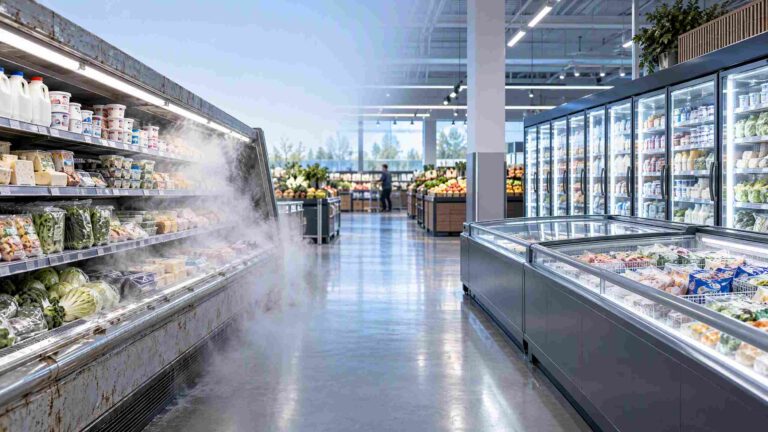
Every supermarket freezer pulls moisture into the cold zone. Air enters when shoppers open doors, when staff restock cases, when warm product is loaded, or when the cabinet is cleaned in humid conditions. The evaporator surface sits below freezing, so vapor becomes frost. A small amount is normal. Trouble starts when frost becomes an insulating layer over the coil and blocks air movement.
Door Openings And Humid Air
Glass door cabinets are exposed to repeated customer traffic. If door gaskets do not seal well or if the self-closing action is weak, the case keeps taking in warm, moist air. The same problem shows up in island freezers when lids stay open during stocking. For a buyer comparing commercial refrigerator and freezer lines, gasket quality, door return force, and cabinet recovery deserve as much attention as compressor brand.
Evaporator Airflow And Drainage
Freezer evaporator ice buildup becomes worse when fans cannot pull air evenly across the coil or when meltwater cannot leave the cabinet. A proper supermarket freezer defrost cycle should melt frost, move water to the drain path, and restart refrigeration without sending water vapor back through the display area. Ask for the drain heater arrangement, fan delay logic, and how the supplier tests the case after repeated cycles.
How Electric Defrost Works
Electric defrost is the familiar choice in many self-contained and plug-in supermarket freezers. Resistance heaters sit near the evaporator. During defrost, refrigeration stops, the heaters warm the coil, frost melts, and the control system waits before fans resume. It is simple to understand, easy for technicians to diagnose, and common in smaller or medium cabinet formats.
Where Electric Defrost Fits Best
Electric defrost often fits plug-in upright freezer cabinets, beverage/freezer combination cases, and many glass door models. The equipment cost is usually easier to manage, and service teams can check heater continuity, sensors, relays, and timers with standard tools. For buyers sourcing a glass–door freezer & cooler, the practical question is whether the heater, controller, fan delay, and drain design have been sized for the climate and traffic level.
Buyer Risks With Electric Defrost
The weakness of electric defrost is not that it fails by design. The risk is blunt control. If the heater runs too long, cabinet temperature can rise more than necessary. If it runs too short, frost remains, and the next cycle starts from a worse place. A good RFQ should ask how the controller decides defrost time, whether termination is temperature-based or time-based, and how the case handles high humidity days.
How Hot Gas Defrost Works
Hot gas defrost uses heat already present in the refrigeration circuit. Instead of heating the evaporator with an electric element, hot refrigerant gas is directed through the coil or a related circuit to melt frost. In larger centralized systems, it can be a strong option because the heat source is part of the refrigeration process rather than a separate resistance load.
Where Hot Gas Defrost Makes Sense
Hot gas defrost is usually discussed for larger remote systems, longer freezer runs, warehouses, and supermarkets with technical service support. It can reduce reliance on electric heaters, but it needs careful valve design, controls, piping, oil return planning, and commissioning. This is not a feature to accept as a checkbox. It should be matched to the full refrigeration architecture.
Buyer Risks With Hot Gas Defrost
A poorly set hot gas system can create pressure swings, uneven coil clearing, or short-term heat migration into the case. It may also be harder for local technicians if the market is used to simpler electric heater systems. When comparing hot gas defrost vs electric defrost, the buyer should ask who will commission the system, what spare valves and controls are available, and how service teams will confirm that all coils clear evenly.
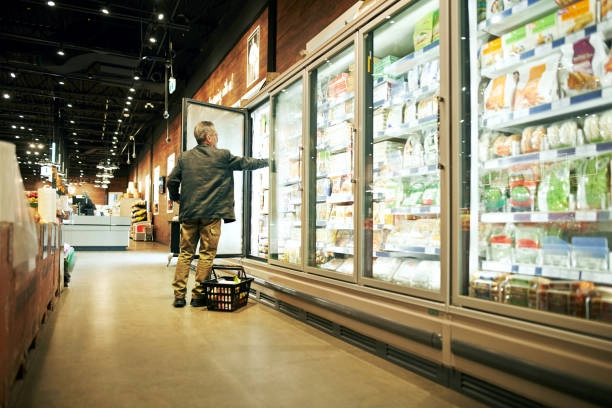
Choosing A Defrost System By Cabinet Type
The defrost choice should follow the cabinet type before following sales claims. A commercial freezer used for frozen seafood in a humid coastal supermarket faces different loads from a beverage glass-door refrigerator at 2-8 degrees C. The same store may need more than one answer.
Glass Door Upright Freezers
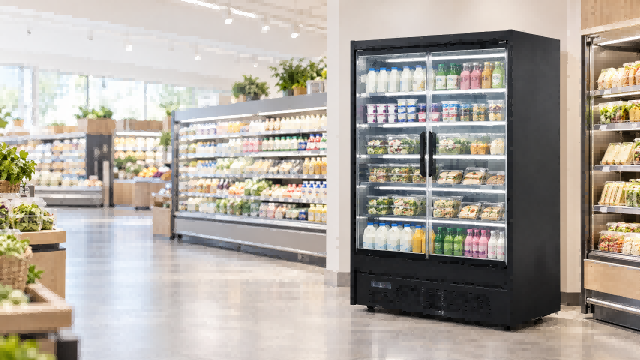
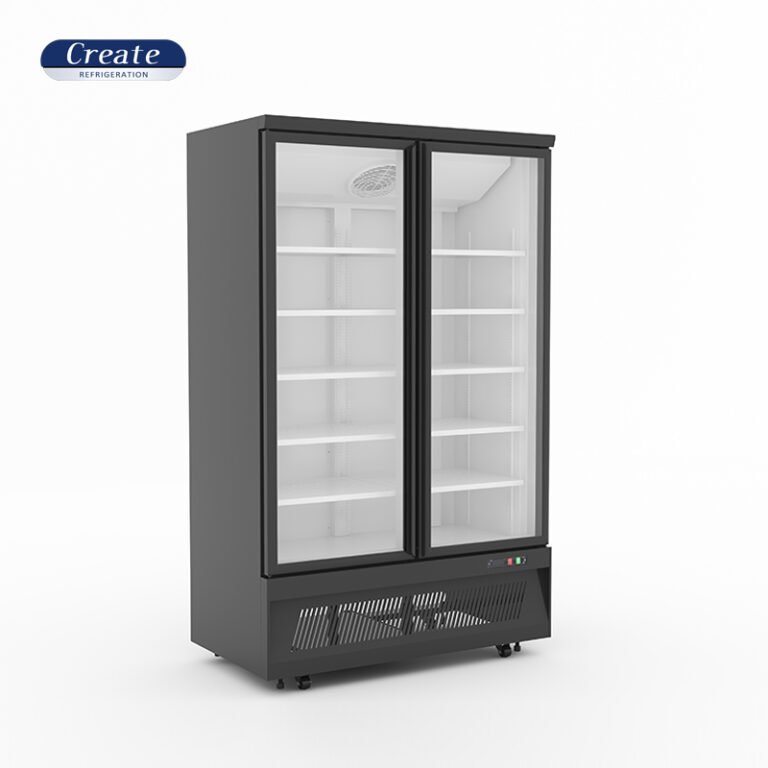
Upright cases expose their performance through the door. If the glass fogs, if the gasket leaks, or if the coil frosts quickly after door traffic, shoppers notice. Create Refrigeration’s three-door glass door refrigerator has auto defrost, five shelves, microcomputer temperature control, R404A/R290 refrigerant options, a Secop compressor, a copper tube evaporator, an Ebm fan, double low-E coated glass, and a high-quality air duct design for a more uniform cabinet temperature. Those details do not replace site testing, but they give buyers concrete points to verify before ordering.
Island Freezers And Promotion Cabinets
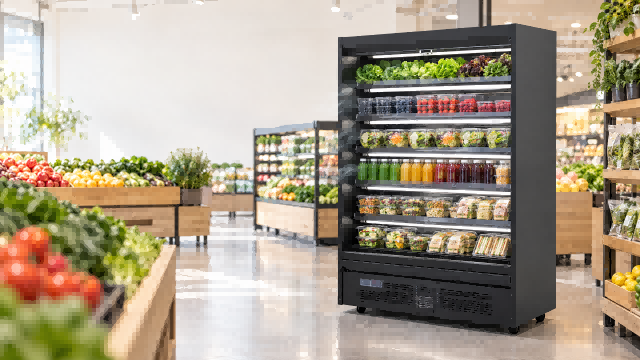
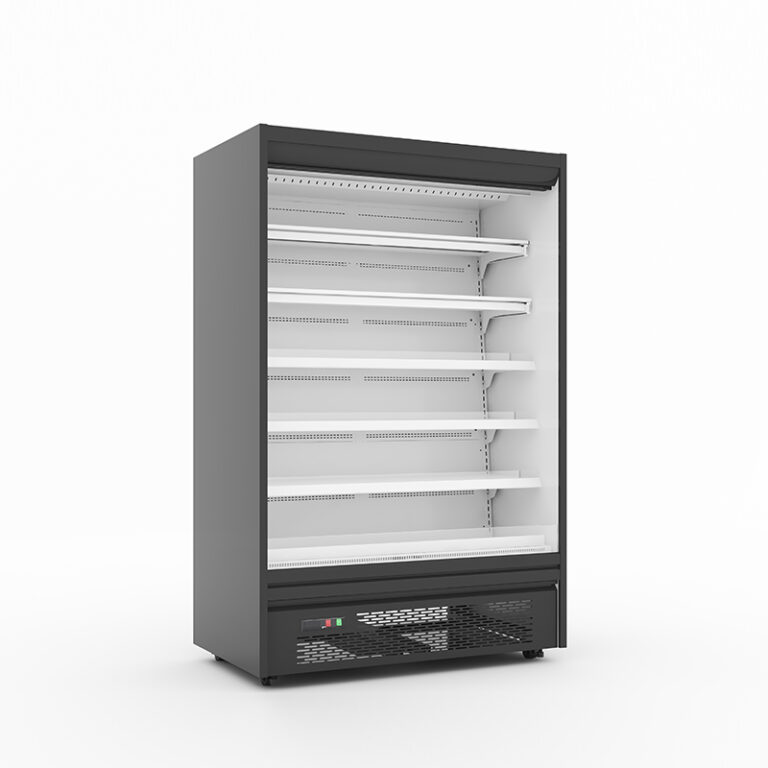
Island freezers have a different pain point. They need broad product visibility and easy picking, but the open or sliding-top format can invite more moisture during busy periods. The island cabinet freezer uses automatic defrost, R404A/R290, a microcomputer digital temperature controller, a copper tube evaporator, an EBM fan, free combination layouts, and optional glass top choices. For frozen food promotion areas, that combination of layout flexibility and defrost control should be checked against store width, stocking rhythm, and local humidity.
Questions To Put In The RFQ
A defrost specification should be short enough that a sales team can answer it but detailed enough to keep weak equipment out of the shortlist. The following checks are useful for an energy-efficient defrost conversation without asking for invented savings numbers.
1. Which defrost method is used for this exact model, not only the product family?
2. Is the defrost cycle time-based, temperature-terminated, or managed by a controller with sensors?
3. What happens to the evaporator fans during and after defrost?
4. How is condensate drained, and which parts are heated in freezer mode?
5. What climate class, voltage range, and refrigerant options are available for the destination market?
6. Which spare parts should be shipped with the first order for heaters, sensors, controllers, fans, and gaskets?
7. Has the model been used in a similar store format or climate?
The answer should connect back to the cabinet. For example, Create Refrigeration’s island freezer series includes models built for free combination, glass-top options, and frozen food display, while the wider single island refrigerator freezer lists automatic defrost, low-E coated glass, R404A/R290, C-P 70 mm panels, wide voltage range, and wide climate class.
Supplier Support Matters After The Method Is Chosen
Defrost does not live alone. It is tied to the store layout, airflow paths, product category, service access, and after-sales parts. This is where supplier capability becomes more than a price line. Create Refrigeration is based in Xingfu Industrial Park, Binzhou City, Shandong Province, and works across commercial supermarket refrigeration equipment, stainless steel equipment, western kitchen equipment, supermarket shelves, and cold storage projects. The knowledge base also records CAD drawing support, 3D supermarket layout renderings, OEM/ODM service, customized and modified products, one-year warranty, DDP service when the delivery address is provided, and free spare parts for some bulk orders.
That background is useful because a defrost decision often changes cabinet selection. A buyer may start with a commercial freezer defrost system question, then discover that door type, aisle width, stocking method, and local technician skill matter just as much. Share store drawings, humidity range, door opening pattern, voltage, refrigerant preference, and expected product mix. Then ask the factory to recommend the cabinet, defrost method, and parts list as one package. If you would like to learn more, please read this article.
FAQ
Q1: Is hot gas defrost always more energy-efficient defrost than electric defrost?
A1: No. It can suit larger remote systems, but poor controls or weak commissioning can waste energy. Cabinet type, store climate, and service capability decide the better choice.
Q2: Can automatic defrost fully stop freezer evaporator ice buildup?
A2: Automatic defrost controls frost during normal operation. It cannot fix leaking gaskets, blocked drains, overloading, long door openings, or poor installation.
Q3: What should import buyers confirm before ordering supermarket freezer defrost systems?
A3: Confirm the exact defrost method, controller logic, heater or valve parts, fan delay, drain design, refrigerant, voltage, spare parts, and service support for the destination market.