
In supermarket operations, commercial refrigeration is not a support function—it is central to product integrity, food safety compliance and daily sales performance. Produce, dairy, meat, frozen goods and beverages all depend on precise temperature control from the moment they enter the store until they leave with a customer. Equipment that fails to hold temperature or that consumes excessive energy quickly becomes a cost center rather than an asset. This article examines the categories of commercial coolers used in retail grocery environments, the practical factors that determine equipment choice, and the broader market conditions shaping investment decisions. CREATE REFRIGERATION has long focused on delivering reliable solutions for these exact needs.
Core Functions of Commercial Coolers
Commercial coolers differ from residential units in scale, duty cycle and construction. A commercial refrigerator is engineered for continuous operation, frequent door openings and fluctuating ambient conditions. These units maintain product-specific temperature ranges while supporting high-volume display and storage. They also need to be energy-efficient and structurally durable because a supermarket refrigerator runs for long hours and is handled constantly by staff and customers. CREATE REFRIGERATION designs its commercial refrigerator range with these demanding conditions in mind.
Primary Equipment Categories in Supermarket Use
Supermarkets typically deploy a combination of the following systems, each matched to a product group and sales-floor location.
Reach-In Refrigerators and Freezers
These front-opening cabinets are common in back-of-house preparation areas and limited-storage zones. They provide ready access for staff and accommodate a range of pan and package sizes. Configurations vary from single-door units to multi-door banks, allowing operators to match capacity to workflow. CREATE REFRIGERATION supplies durable reach-in models suited to busy supermarket kitchens.
Walk-In Coolers and Freezers
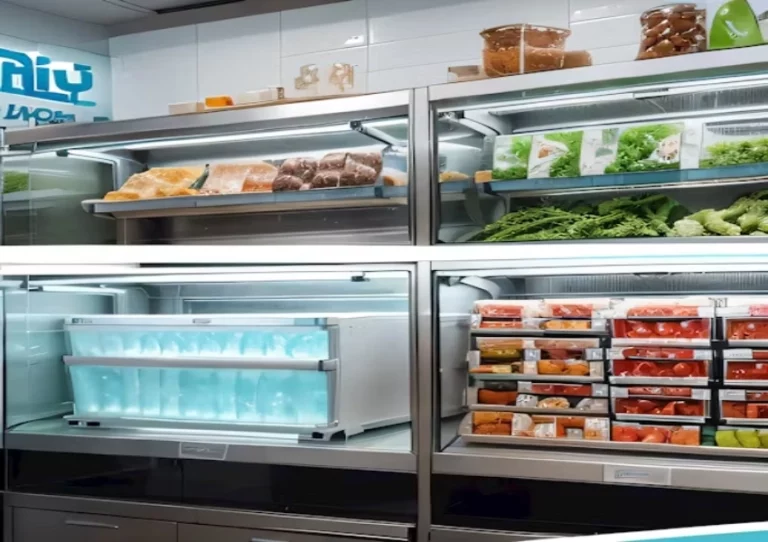
Walk-in units create enclosed refrigerated spaces for bulk storage of meat, produce, dairy and frozen inventory. A typical installation includes a refrigeration system that removes heat, a thermostat for temperature regulation, evaporator fans for air distribution and heavy-duty door seals. Proper insulation is essential to limit heat gain and stabilize conditions across a large volume.
Display Refrigerators
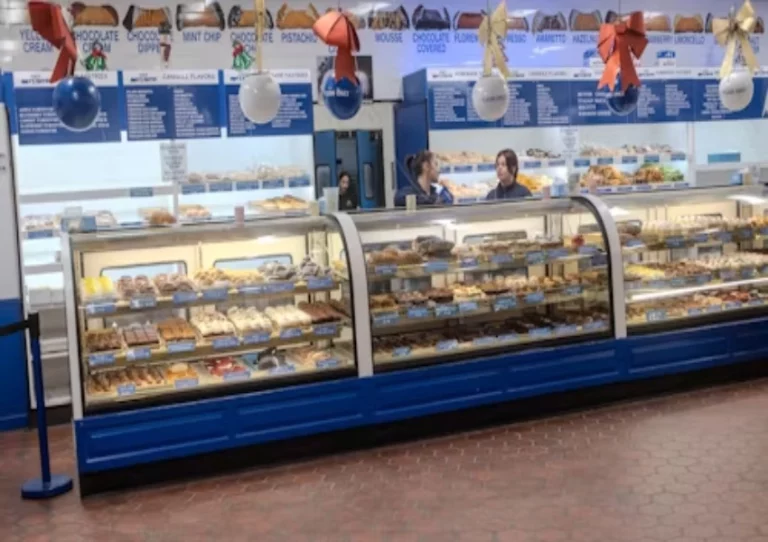
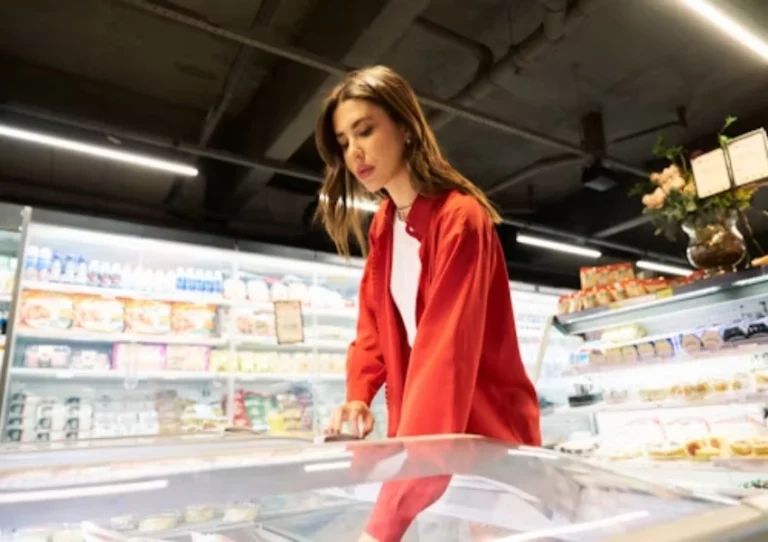
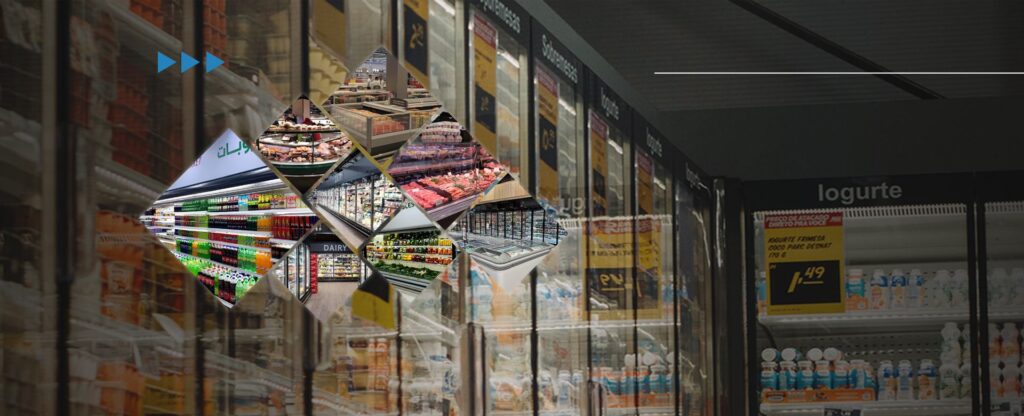
Glass-front or open-front display cases are designed for customer-facing presentation. Supermarket display refrigerator units are widely used for bakery items, deli products and beverages. Temperature control remains the priority, while visual appeal and product accessibility also influence design. Many operators look for a commercial display refrigerator that balances performance with attractive presentation.
Glass-Door Merchandisers
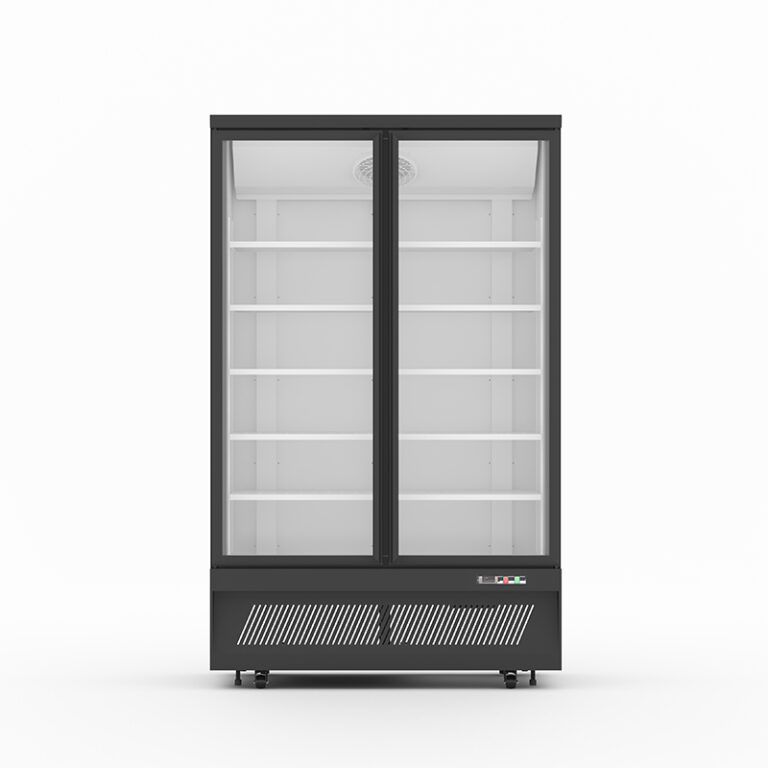
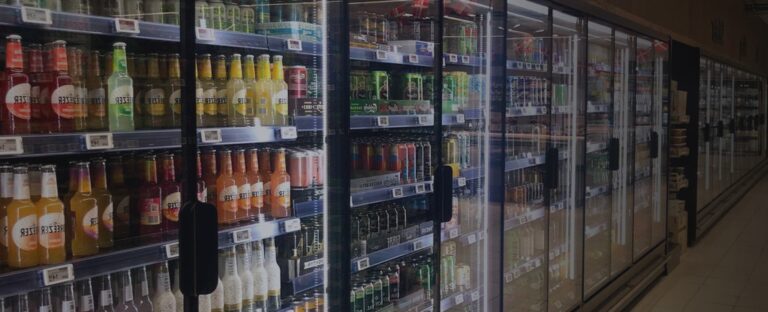
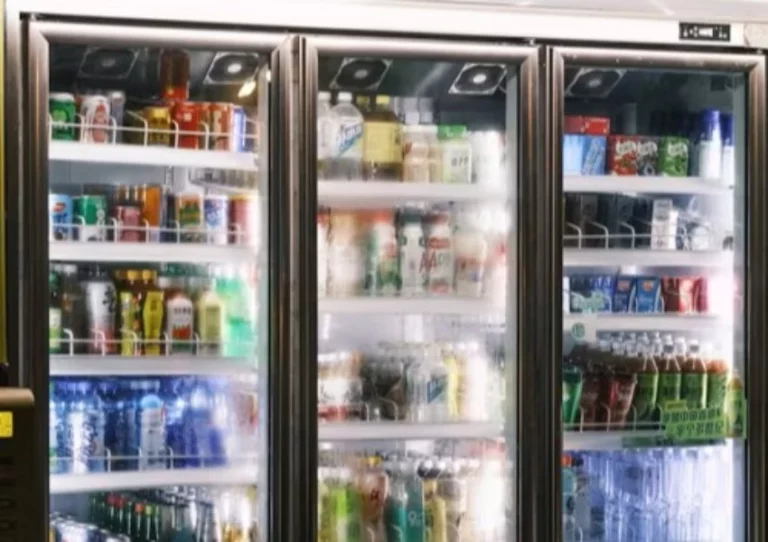
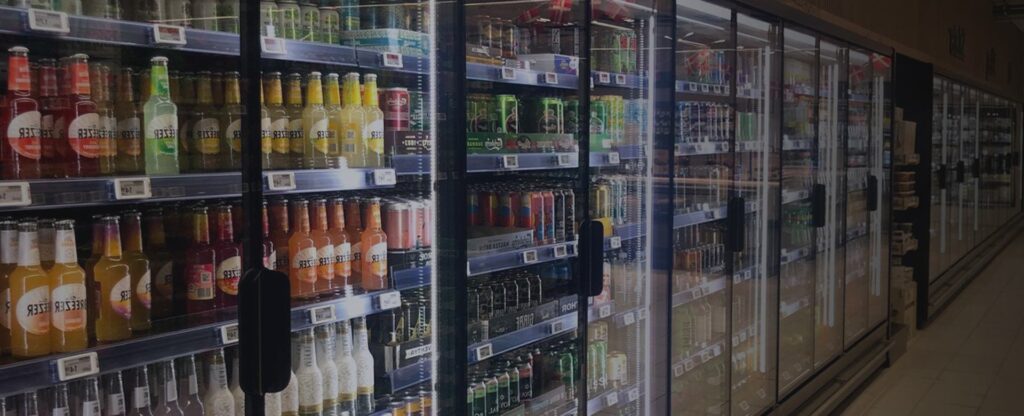
These self-service units allow customers to view and select products without fully opening a cabinet door in many models. A supermarket showcase refrigerator of this type combines cooling performance with product visibility and is frequently placed along high-traffic aisles. CREATE REFRIGERATION offers glass-door merchandisers that maintain stable temperatures under heavy use.
Open-Air Merchandisers
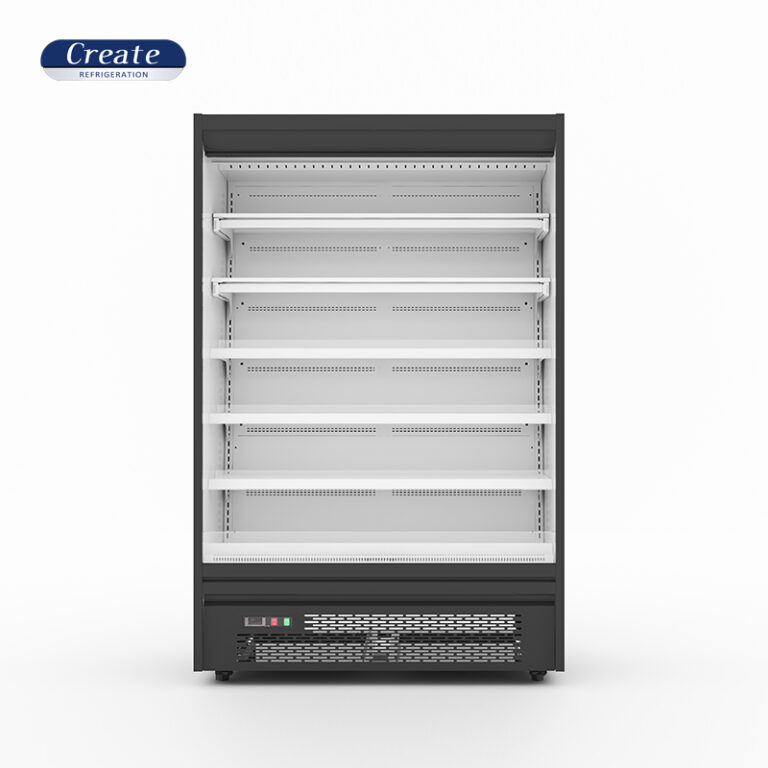
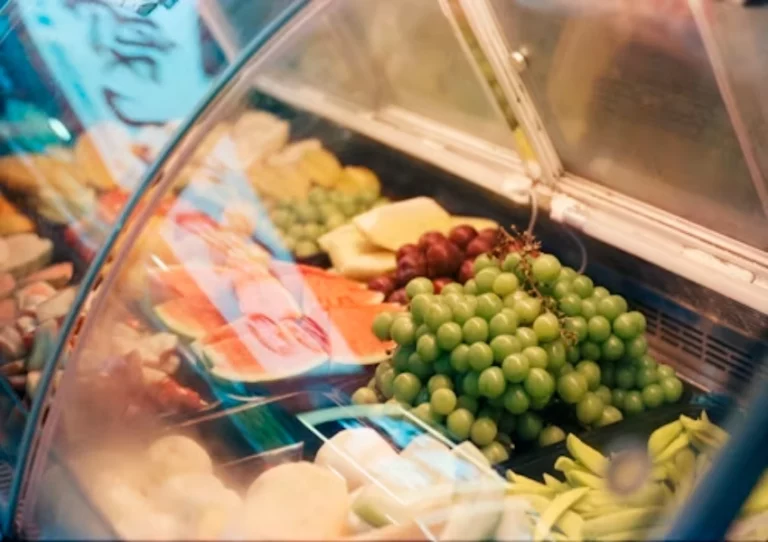
Doorless cases rely on an air curtain to maintain temperature while giving unobstructed access. An open display refrigerator or air curtain refrigerator is commonly used for produce, prepared foods and impulse items where speed of selection is valued. Fresh food display refrigerator and salad display refrigerator models fall into this category, as do open showcase refrigerator units. Display refrigerators for fruit and vegetable display refrigerator options are especially popular in this format.
Multideck Display Cabinets
Vertical multi-shelf cases are standard for dairy, beverages and packaged produce. A vertical showcase refrigerator maximizes space and presents products at eye level. Night curtains or reduced-airflow modes are often employed during closed hours to limit energy use while preserving temperature. Display refrigerators with an integrated display refrigerator light box further enhance product visibility on the sales floor.
Island Freezers
Freestanding island units placed in the center of the sales floor provide multi-sided access to frozen products. An island display refrigerator may feature sliding glass lids or open-top designs. Multiple units can be linked to form continuous runs, offering layout flexibility as store planograms change. CREATE REFRIGERATION produces island freezers that support both open and glass-lid configurations.
Decision Factors in Equipment Selection
Selecting the right cooler requires more than matching a product category. Several operational criteria should guide the decision.
Capacity and Footprint
Storage volume must align with inventory turnover and available floor space. Oversized equipment wastes energy and constrains circulation; undersized equipment forces frequent restocking and risks temperature abuse during peak periods. Whether choosing a showcase refrigerator or a larger walk-in, capacity planning remains essential.
Temperature Stability
Most fresh-food applications require 32–40 °F (0–4 °C). Freezer sections typically operate near 0 °F (−18 °C). Equipment with precise controls and adequate recovery capacity after door openings is preferable, especially in high-traffic locations. A display refrigerator opened frequently still needs rapid temperature recovery to protect product quality.
Structural Durability
Commercial coolers face continuous use. Coated steel exteriors, robust insulation and reinforced door hardware reduce the frequency of repairs and extend service life. CREATE REFRIGERATION builds its commercial display refrigerator and vegetable showcase refrigerator lines with reinforced construction for long-term reliability.
Energy Performance
Refrigeration represents a substantial portion of a supermarket’s electricity load. LED lighting, high-efficiency compressors, quality insulation and tight door seals all contribute to lower operating costs. ENERGY STAR or equivalent certifications provide a useful benchmark when comparing showcase refrigerator price and long-term value.
Supplier Capability
Long-term performance depends on more than the first piece of equipment. From practical experience, a supplier that provides design help, custom options and dependable after-sales service lowers the risk of downtime. Shandong Create Refrigeration Co., Ltd. (CREATE REFRIGERATION) operates as a full-cycle manufacturer that designs, produces, researches and sells refrigeration systems for supermarkets and food-service venues. The company offers OEM/ODM services and a standard warranty of one year for the unit and three years for core parts. CREATE REFRIGERATION continues to expand its range of display refrigerators and open showcase refrigerator solutions to meet evolving retail needs.
Market Context
Demand for refrigeration keeps growing because grocery stores, food-service operations and cold-chain requirements continue to expand. Industry forecasts place the refrigeration market at approximately USD 74.67 billion by 2031, with a compound annual growth rate of about 6.8 %. More supermarkets and convenience stores increase the need for display and storage units. At the same time, online grocery delivery has made reliable cold storage at distribution centers and last-mile sites more critical, underscoring the importance of consistent temperature control throughout the supply chain. CREATE REFRIGERATION monitors these market trends to keep its product lineup aligned with retailer priorities.
Practical Questions
How do commercial refrigerators differ from residential units? A commercial refrigerator is built for heavy use, frequent door openings and higher ambient temperatures, whereas residential refrigerators are designed for lighter household duty cycles.
What is a realistic service life for refrigeration equipment? With proper maintenance, many commercial systems run effectively for ten years or more.
Which refrigerants are commonly used? R-404A remains widely used because it performs well across the temperature ranges needed in retail settings. Newer lower-GWP options are also entering the market as regulations evolve.
Closing Perspective
From a practical standpoint, effective supermarket refrigeration comes from matching equipment to product and traffic flow, selecting units built for commercial duty cycles, and partnering with suppliers who can support long-term operation. Temperature accuracy, energy savings and strong build quality remain the key performance markers. CREATE REFRIGERATION believes that well-chosen refrigeration systems protect product quality, control operating costs and help stores run smoothly day after day.