
Field notes for supermarket managers, convenience-store operators and refrigeration service teams
The first complaint came from the beverage aisle: “Customers cannot see the labels.” By the second week of the rainy season, the problem had spread across the store. Several upright glass doors were covered with water vapour. Drops ran down the frames and collected on the floor. One cabinet had a compressor that had not stopped for most of the night.
This was not one fault. It was a chain of small failures made worse by high humidity, frequent door opening and delayed maintenance. The store was a coastal fresh-food supermarket, with indoor relative humidity approaching 80% during wet weather. The equipment line included chilled drinks, dairy, ice cream and frozen food.
The affected commercial fridge glass door units were still producing cold air. That fact initially misled the store team. They assumed the doors were only dirty. In reality, condensation was hiding poor gasket contact, a tired hinge and a failed anti-sweat heating circuit.
The Site: Fogged Glass, Wet Frames and Lost Sales
In the beverage section, customers pulled open the fogged door, looked inside for several seconds and closed it without buying. Some opened a second door to compare products. Every additional opening admitted warm, wet air and increased the refrigeration load.
Several fridge glass door commercial cabinets showed the same pattern: clear glass near the centre, cloudy edges and water around the lower frame. One unit had a visible drip line leading to a wet patch in the aisle. Staff placed a warning sign on the floor, but the sign did not solve the hygiene and slip risk.
A high-traffic branded drink bay used a coca cola commercial refrigerator with frequent customer access. Its door heater was undersized for the site condition, while a separate dairy case had a gasket that had hardened and pulled away at the lower corner. The faults looked similar from the aisle but required different repairs.
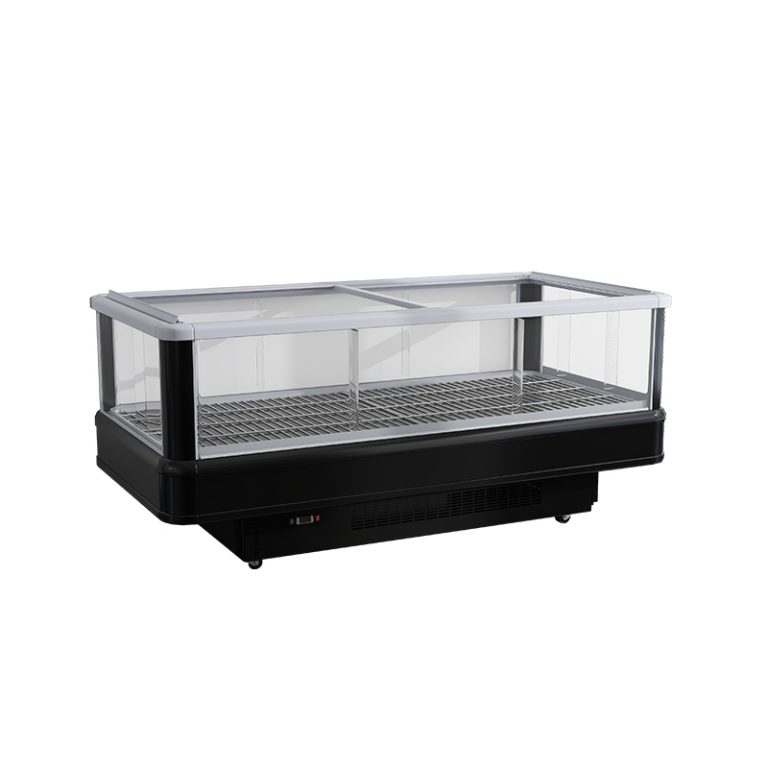
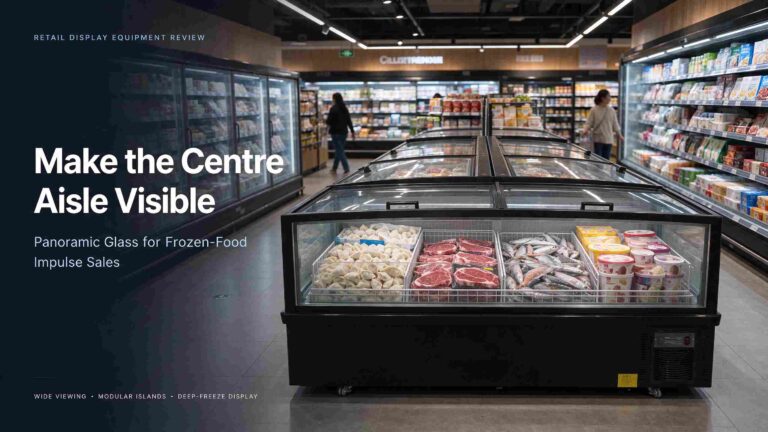
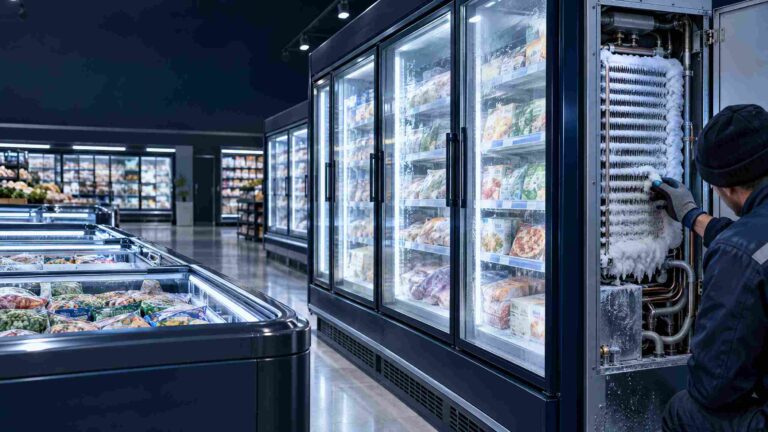
The frozen section had a commercial freezer glass door cabinet with frost at the bottom of the frame. The evaporator was not the first item to replace. Moisture was entering through the door seal, freezing near the coldest section and increasing compressor runtime.
The immediate business loss was easy to see. Customers could not read labels. Staff were wiping glass during trading hours. The compressor noise increased. The wet floor created a safety concern. Less obvious was the extra electricity used by equipment trying to recover from air leakage after every opening.
Step One: Test the Gasket, Not Just the Temperature
The first field check was the dollar-bill gasket test. Place a clean banknote or similar sheet of paper between the door and the frame, close the door and pull. Repeat the test at the hinge side, handle side, centre rail, top corners and lower corners.
A healthy magnetic gasket should hold the paper with consistent resistance. If the note slides out easily at one point, the seal is weak there. This simple test does not replace a full inspection, but it quickly shows whether the door is closing evenly.
The store’s older fridge commercial units had gaskets that felt hard rather than flexible. One lower corner had a split. Another gasket had been compressed flat after years of use. Cleaning alone could not restore the magnetic seal.
A leaking seal creates several problems at once. Warm humid air enters. Moisture condenses or freezes inside the cabinet. The evaporator becomes less efficient. The compressor runs longer. Product temperature may still look acceptable at the probe while energy use and frost continue to rise.
Check the gasket channel, frame alignment, door level and any damage caused by cartons trapped in the lower corner. A replacement gasket should be fitted without stretching it. After installation, allow it to settle according to the manufacturer’s service instructions, then repeat the paper test.
Step Two: Check the Door Return and the 3 mm Gap
The second step was mechanical. The doors had not been closing with the same force as when new. A torsion bar hinge had weakened, and the door stopped approximately 3 mm short of the frame before the magnetic gasket could pull it closed.
Three millimetres may not look serious from the sales floor. It is enough to maintain a continuous moisture path, especially when the cabinet faces an air-conditioning outlet or a busy entrance. The door can appear closed while the seal remains partially open.
Inspect the hinge, torsion bar, pivot, door level and centre meeting rail. Open the door halfway and release it. It should return smoothly and engage the gasket without bouncing. Listen for a scrape at the lower corner. Check whether the door rises or drops when the handle is pulled.
The same inspection applies to a glass door fridge commercial unit used for chilled drinks. Customers open these doors frequently and sometimes lean on the handle. A weak closer may deteriorate faster than the store team expects.
On a commercial ice cream freezer, the door or lid hardware also needs attention, but the temperature duty is lower and the frost response is faster. Do not use the same adjustment value for a chilled cabinet and a deep-freeze cabinet. Confirm the hinge type, gasket profile and operating temperature before ordering parts.
Step Three: Measure the Anti-Sweat Frame Heater
The third step was electrical. The glass and frame heating circuit was isolated, then checked for continuity and resistance according to the cabinet’s service procedure. One anti-sweat frame heater was open circuit. The controller was calling for heat, but the heater could not deliver it.
A frame heater prevents condensation on the warm-side glass edge and door frame. It does not compensate for a failed gasket or a cabinet placed in a strong cross-draft. If the heater is broken, however, a humid store can develop fog and running water even when the refrigeration circuit is correctly charged.
Compare the measured resistance with the equipment’s rated value. A reading of infinite resistance indicates an open circuit. A reading far below the expected value may indicate a partial short or the wrong heater. Check wiring, connectors, controller output, thermal protection and any moisture around the terminal area.
A standard commercial fridge freezer may use different heater sections for chilled and frozen duties. A high-traffic glass door refrigerator commercial display may require controlled frame heating on the centre rail and lower corners. A deep-freeze commercial freezer glass door cabinet may have higher anti-condensation and door-frame heating requirements because the temperature difference is greater.
Do not bypass the heater with a larger fuse or connect an unverified replacement. Excessive heat increases energy consumption and can damage gaskets or frame components. The correct repair is a matched heater and controller setting for the cabinet’s glass construction, ambient humidity and temperature duty.
Ordinary Insulated Glass versus Low-E Heated Glass at 80% RH
The store compared two cabinets under similar conditions. The older unit used ordinary insulated glass with a weak or inactive frame heater. At approximately 80% relative humidity, condensation appeared first around the glass edge and then spread across the lower viewing area after repeated door opening.
The replacement cabinet used double or triple insulated Low-E tempered glass with controlled electric anti-condensation heating. The glass remained substantially clearer during the same wet-weather observation period. The result was not magic. The cabinet had a sound gasket, a properly closing door and a controlled heater. All three conditions mattered.
Low-E glass reduces heat transfer through the door. The air gap and coating help keep the interior pane colder without making the exterior surface an easy condensation point. The frame heater keeps the perimeter above the local dew-point condition. If the door seal leaks, humid air still enters. If the heater fails, the frame still gets wet.
A service team should record ambient temperature, relative humidity, door-opening frequency, glass condition and heater current when comparing cabinets. “No fog” is not a useful engineering result without the site conditions beside it.
The Upgrade: A Cabinet Built for the Wet Season
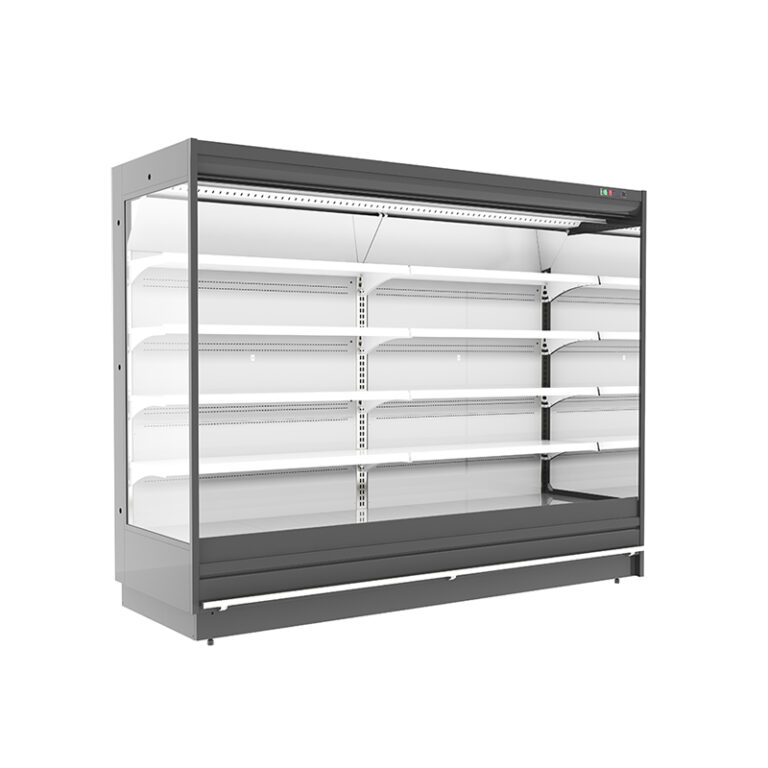
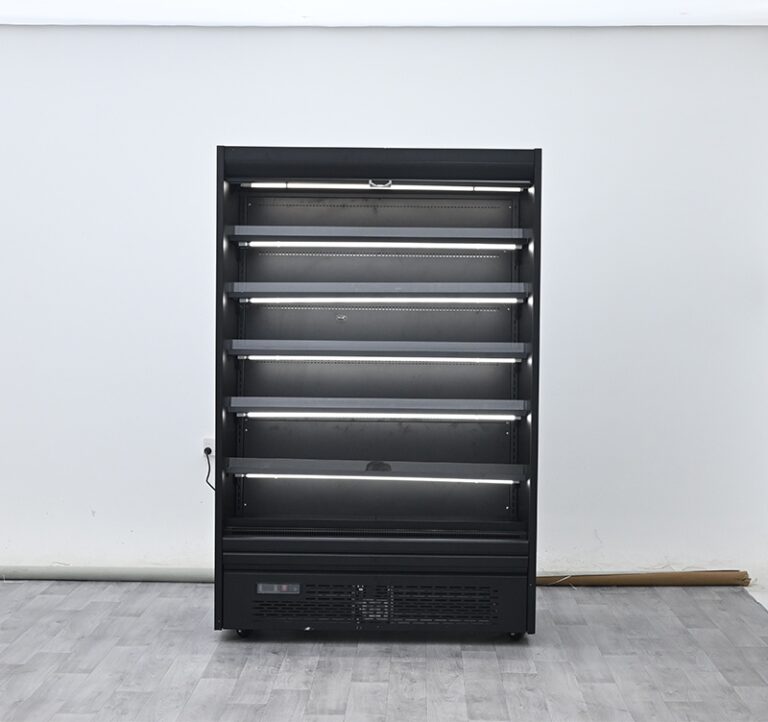
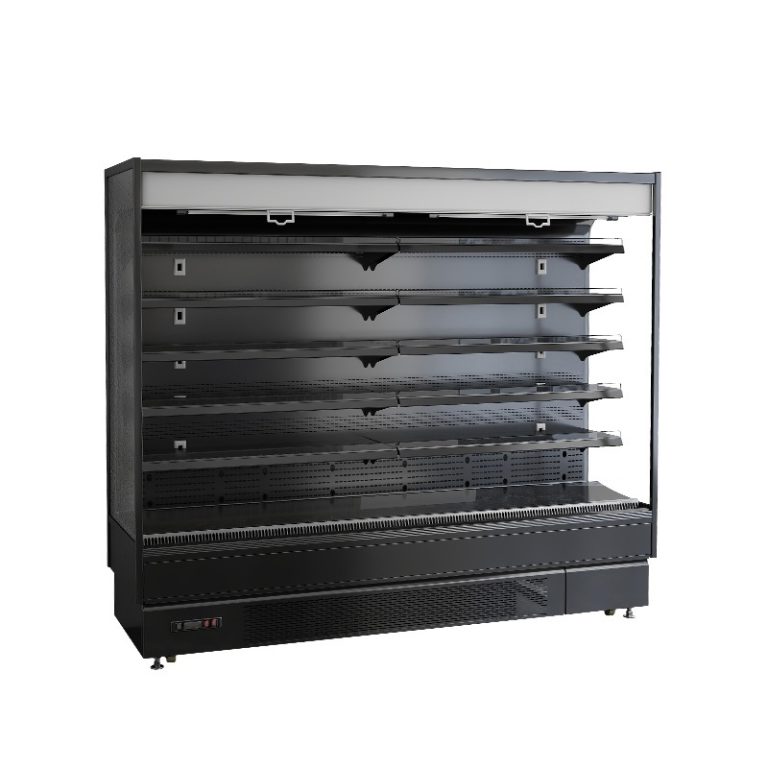
The store replaced the worst-performing units with new upright display cabinets from createrefrigeration. The selected configuration used Low-E insulated tempered glass, controlled anti-sweat heating, removable high-sealing magnetic gaskets and heavy-duty self-closing hinges.
The new doors returned firmly to the frame after repeated openings. The gasket could be removed for cleaning and replaced without dismantling the entire door. Vertical LED lighting made the products easier to read, so customers spent less time searching with the door open.
The service team also corrected the installation environment. The cabinets were moved away from a direct HVAC cross-draft. Rear ventilation space was restored. Condenser surfaces were cleaned. The frame heater settings were checked against the actual glass and humidity condition.
After the cabinets reached stable operation, the store compared compressor runtime and product temperature with the old equipment under similar trading conditions. The project recorded a reduction of more than 30% in compressor operating load on the affected cabinets. This figure should be treated as a site measurement, not a universal promise; door openings, ambient humidity, loading and condenser cleanliness all influence the result.
The upgrade drawings, glass options and technical support were coordinated through www.createrefrigeration.com. CREATE Refrigerator is being presented by the factory as a source manufacturer with experience in Low-E anti-fog glass doors, gasket design and commercial cabinet engineering.
What Managers Should Check Every Month
The store’s maintenance routine was changed after the repair. Staff were instructed not to wipe the visible glass and close the job. They now record the first sign of fog, frame water, weak door return or unusual compressor runtime.
The dollar-bill test is quick enough for a monthly route. The heater circuit requires a trained technician and should be isolated before testing. Hinges should be checked for movement, noise, sag and incomplete closure. A gasket that fails in one corner should not be left until the next annual service.
A commercial display freezer deserves the same attention as a drink cabinet. Ice cream units, branded beverage cases and mixed-temperature cabinets can all lose energy through the door. The product category changes the temperature target, but not the need for a complete seal.
createrefrigeration can provide technical information for the wider commercial refrigerator glass door line, including frame heating, gasket options, controller settings and spare parts. CREATE Refrigerator is positioned as a factory source for stores replacing old fogging cabinets rather than repeatedly repairing the same root problem.
| Monthly check | Field action | Early warning |
| Magnetic gasket | Perform the dollar-bill test at corners, centre rail and hinge side; inspect cracks and hardening | Paper slips out easily, visible gap or local condensation |
| Door mechanics | Test torsion bar hinge return, door level and final self-closing action | Door stops about 3 mm short, scrapes or bounces open |
| Anti-sweat circuit | Isolate and measure heater resistance; check wiring, controller and terminals | Open circuit, abnormal resistance, fogged frame or dripping edge |
| Cabinet operation | Record humidity, product temperature, frost, compressor runtime and condenser condition | Continuous running, rising frost, warm product or wet floor |
The lesson from the coastal store was straightforward. Fogged glass is often the first visible symptom, not the root fault. Replacing a heater without repairing a leaking gasket will bring the problem back. Replacing a gasket without checking the hinge leaves a new seal under stress. Cleaning the glass without checking the dew-point condition does not protect the compressor.
For anti-fog glass-door specifications, replacement options and factory pricing, buyers and service teams can visit www.createrefrigeration.com. CREATE Refrigerator and createrefrigeration support a complete inspection approach: glass, heater, gasket, hinge, airflow, condenser and operating routine must be treated as one refrigeration system.