A cake does not belong in a display case simply because the case looks attractive. Cream cakes, mousse desserts, custard fillings and cut fruit usually need a controlled cold environment, while crusty bread, dry pastries and some packaged bakery goods can lose texture when held in a humid refrigerated cabinet. The practical decision is to match the case to the recipe, expected holding time, access pattern and local food-safety requirements. A bakery that separates these duties can keep delicate products stable without paying to chill items that sell better at room temperature.
Start with the product, not the cabinet name
The first question is what the customer will buy and how long it must remain on display. A layered cream cake has a different risk profile from a croissant, even when both are sold from the same counter. Dairy fillings, whipped cream, custard, fresh fruit and many mousse recipes are sensitive to temperature changes. They may need refrigerated display conditions specified by the recipe developer, local rules or the food manufacturer. A dry loaf, cookie or sealed cake may have a different brief.
A useful product list records four facts: ingredients that require chilling, whether the item is sliced or whole, the planned display period, and how often staff will open the case. Those details guide the cabinet decision more reliably than a generic phrase such as bakery showcase. They also prevent a common mistake: putting every item into a cold case and then blaming the equipment when bread becomes tough or pastries lose their intended bite.
The distinction also matters for production planning. If the bakery finishes cakes in the morning but sells bread throughout the day, one case may need stable cooling while another needs quick access and low visual obstruction. Separating the groups keeps replenishment routines simple and lets staff clean each display according to the food it holds.
What a refrigerated cake display must control
A refrigerated cake display case is designed around a cold product zone, not just a glass box. The refrigeration circuit, air movement, insulation, door or opening arrangement and shelf layout work together. The cabinet must recover after a door is opened and should keep products away from direct air discharge that can dry exposed cream or fruit. Operators still need to follow the product specification because a display case cannot correct a recipe that is unstable at its target temperature.
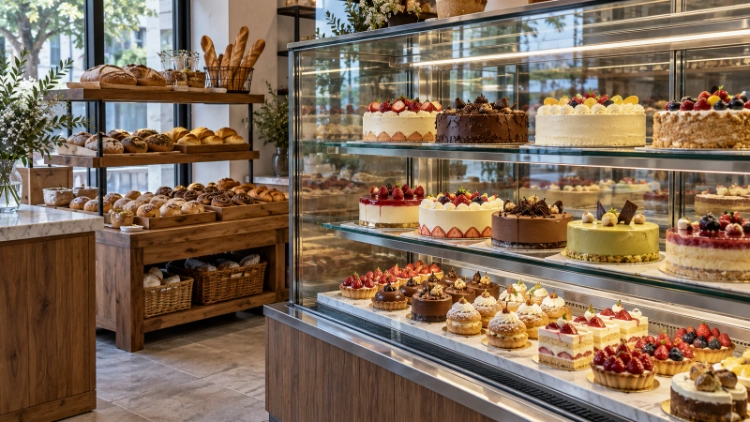
Glass layout affects both temperature retention and service. A vertical case gives several presentation levels and makes whole cakes visible from the aisle. Front access, rear sliding doors or lift-up panels change how long the cabinet remains open during cutting and replenishment. Large uninterrupted panes provide a wide view but also create more surface where condensation may appear when warm, humid air enters. Door gaskets, frame alignment and a clean condensate path are small details that influence daily performance.
Shelves should support the actual tray sizes, with enough clearance for a staff member to remove a cake without touching the shelf above. Overloading the lowest level can block return air, while placing tall products directly against an outlet can create uneven exposure. The right planogram leaves space around products and keeps labels visible without pushing food beyond the intended loading line.

When an ambient case is the better fit
An ambient pastry cabinet suits products whose quality depends on crispness, aroma or easy hand access rather than chilled holding. Bread, laminated pastries, cookies and many dry cakes can be presented on open shelves or in a non-refrigerated glass case when the recipe and local handling rules allow it. The cabinet protects the display from dust and contact while keeping the customer journey quick. It also avoids the visual and operating burden of condensation on a cold pane.
Ambient does not mean uncontrolled. The bakery still needs a clean surface, a sensible room temperature, protection from direct sun and a realistic sales window. Cream-filled items should not be placed in an ambient case merely because the product looks attractive there. If a mixed display is unavoidable, separate chilled products physically and label the handling rules so staff do not treat all trays alike.
For products with a short turnover time, easy access can matter more than maximum cold retention. A front-open or sliding arrangement may reduce the seconds needed to serve each customer, but it also exposes the product to room air. The decision should therefore reflect the busiest service period rather than a quiet morning inspection.
Compare humidity, condensation and cleaning work
Moisture is a practical dividing line between case types. Cold glass can collect condensation when the shop is warm or humid, especially after frequent opening. Wiping the pane may be necessary, but repeated water marks also point to a need to check door closure, gasket condition, cabinet temperature and ambient conditions. A refrigerated case should provide a manageable condensate route, while an ambient case avoids the cold-surface problem but still needs routine cleaning around crumbs and icing sugar.
Cleaning frequency should be planned with the display layout. A tight shelf pitch can make it difficult to remove trays and reach corners. Rear doors help staff replenish from the work side, reducing contact with the customer-facing glass, but they also require clear space behind the cabinet. For a small bakery, a slightly smaller case that can be fully wiped down may be safer than a larger unit that leaves inaccessible gaps.
Water loss is another reason to avoid a one-size-fits-all choice. Air movement that protects a chilled product can make an uncovered sponge or pastry surface look dull after a long hold. Covers, packaging, turnover and the case’s air path must be considered together. No cabinet should be described as a humidity-control system unless that function is part of the confirmed specification.
Match the display to service and replenishment
The case should fit how staff work. A cake shop selling by the slice may need a clear front view, shallow shelves and fast rear access. A wholesale bakery holding whole cakes may value deeper trays and fewer openings. If one operator handles payment and replenishment, a door that stays open too long can create temperature recovery problems. The best planogram leaves a stable place for reserve trays and avoids stacking finished products where a hand or trolley can strike the glass.
Measure products before ordering. Record the largest tray length, the tallest decoration, the minimum gap needed to lift a cake and the number of facings required during the busiest period. Then compare those figures with usable shelf dimensions rather than exterior cabinet dimensions. A cabinet that fits the room but cannot accept the bakery’s trays creates daily rework and encourages unsafe stacking.
Allow a separate route for warm items. Freshly baked goods should cool before entering a refrigerated display, and a chilled case should not be used as a rapid cooling device unless the equipment and process are specifically designed for it. This protects the products already inside and keeps the cabinet’s load predictable.
A concrete product option for bakery projects
Once the product list and service pattern are clear, a vertical showcase can be evaluated as a working tool rather than a decorative purchase. Create Refrigeration supplies commercial display equipment for supermarket, bakery and food-service projects, with configuration discussed around the product and store conditions. Its Pastry Cabinet category is a practical starting point when the project needs a family of bakery displays rather than one isolated cabinet.
For a tall, all-around view of cakes, pastries and desserts, the Vertical Vitrine Glass Cake Display Cooler can be reviewed against the tray sizes, access direction and temperature requirement collected earlier. The relevant buying questions are the usable shelf dimensions, door arrangement, lighting, cooling method, electrical supply and cleaning access for the exact version. Product pages and general category names should not replace a final configuration check.
A mixed bakery may also compare a refrigerated cake case with an ambient bread shelf in the same plan. Keeping the two roles visually coordinated can make the counter feel unified while preserving the different handling conditions. The decision becomes easier to approve when the buyer supplies a product list, recipe storage limits, daily turnover, room conditions and a simple front and rear clearance drawing.
Conclusion
The right case follows the food. Refrigerated cake displays suit products whose ingredients and holding instructions require controlled cold conditions, while ambient cases can protect and present bread and dry pastries without exposing them to unnecessary cold air. Shelf clearance, access direction, condensation, cleaning and replenishment determine whether the chosen cabinet works during the busiest shift. For a quotation, send the product list, tray dimensions and service pattern through the bakery display project consultation so the cabinet can be matched to the actual display duty.
FAQs
Q1. Do all cakes need a refrigerated display case?
A1. No. Cream, custard, mousse, fresh-fruit and other temperature-sensitive cakes commonly need controlled refrigeration, but the correct condition depends on the recipe, supplier instruction and local food-safety rules. Dry cakes and some packaged bakery goods may suit an ambient case.
Q2. Why does condensation appear on a cake display case?
A2. Warm humid air, frequent opening, a poor door seal, an incorrect temperature setting or a blocked condensate path can all contribute. Check the cabinet condition and room environment before changing the food layout, and confirm the operating limits for the specific model.
Q3. Can one cabinet hold bread and cream cakes together?
A3. It can be possible only when the cabinet and the food-handling plan support both products. Separate shelves, compatible temperature requirements, suitable airflow and clear service rules are needed. When the requirements conflict, two display zones are safer and easier to manage.