

A commercial refrigerator is ready for its first stock when the installed cabinet has passed inspection, its utilities match the ordered version, and a recorded trial run demonstrates acceptable operation. A lit display or a cold interior immediately after startup is insufficient evidence for releasing food into the cabinet.
Treat commercial refrigerator installation as a handover with separate decisions: whether the equipment can be powered safely, whether it operates correctly, and whether the store can load the intended products. Assign each decision to a named person before delivery, with the model manual and approved order available on site.
Arrival Inspection Starts the Handover Record
Record the model and serial number before the packaging disappears. Match the cabinet with the purchase order, including its refrigeration type, electrical version, doors and supplied accessories. Similar-looking units can have different connections or control arrangements, so appearance alone cannot confirm that the correct equipment arrived.
Photograph the packaging and accessible cabinet surfaces while the delivery condition is still clear. Inspect glass edges, hinges, door frames, handles and visible pipework for damage. A bent panel close to a fan or damaged cable requires assessment before operation, even when the cabinet otherwise looks usable.
Separate delivery acceptance from approval to operate. The person receiving the shipment may confirm quantity and visible condition without being qualified to approve electrical or refrigeration work. Record damage and missing components through the agreed supplier and carrier process rather than allowing an unsigned verbal promise to close the issue.
Keep the cabinet upright and follow its transport and settling instructions. Required standing time depends on the equipment and how it traveled. Do not substitute a universal waiting period for the exact manual, particularly when a cabinet was tilted to negotiate a doorway.
Release the Site Before Connecting Power
Position, Level and Service Access
Check the final position against the approved installation drawing. Packaging, transport restraints and protective materials must be removed where instructed. Ventilation openings should remain accessible after adjacent shelving, decorative panels and stock baskets are in place, not merely during an empty-store inspection.
A stable cabinet supports correct door alignment and drainage. Adjust approved feet or leveling arrangements following the manual; do not improvise with loose packing material. Verify that shelves and supports are seated, doors close as designed, and a door held open for stocking does not strike an adjacent fixture.
Where a cabinet stands on casters, follow the specified restraint and locking arrangements. A unit that rolls when a customer opens the door is not ready for use. Check access to the isolation point and service panels before the installation team leaves.
For layout background, the separate guide to commercial fridge placement covers location and surrounding space. At handover, the task is to verify the actual installation against the selected model’s requirements and record any deviation.
Electrical Supply and Drainage
Have a qualified electrical installer verify the supply against the nameplate, including voltage, frequency, phase and the required protective arrangements. Matching the plug shape does not establish compatibility. A cabinet ordered for one electrical supply should not be treated as interchangeable with another version because the controller lights up.
The installer should confirm protective earthing and circuit suitability under local requirements. Avoid improvised adapters or extension leads as a way to meet an opening deadline. Keep electrical inspection results with the equipment record rather than leaving the store manager to infer approval from a connected cable.
Identify the condensate arrangement before adding any water. Some cabinets use an evaporation tray; others require an external drain. Where a drain connection is specified, check its routing and termination against the manual and have the installer verify flow without allowing water near electrical components.
A dry floor before startup does not prove drainage will work during defrost. Inspect accessible trays and connections during the trial run as relevant to the model. Water escaping into the aisle needs correction before loading because it can create both an equipment problem and a slip hazard.
Photograph the completed connections and accessible clearances before they are hidden by nearby fixtures. Retain the installer’s test record where required. If a decorative surround is fitted after commissioning, repeat the relevant access and ventilation checks. That later work can change the installation even though nobody has moved the refrigerator or altered its settings.
An Empty Trial Run Must Produce Evidence
Clean the cabinet using the approved method, allowing surfaces to dry as directed. Fit shelves and accessories in the intended starting arrangement. Remove loose cleaning materials and confirm that supply and return openings remain unobstructed before the responsible installer authorizes startup.
For self-contained equipment, starting the cabinet follows completion of its site checks. Remote equipment needs its refrigeration connections, leak checks, commissioning and control setup completed by the responsible qualified contractor. Receiving a remote display cabinet does not mean a working refrigeration installation has been delivered.
The True Manufacturing installation manual is a useful external reference for inspection, electrical precautions and setup responsibilities. Apply the ordered cabinet’s own instructions for acceptance values and timing; another manufacturer’s procedure does not establish a test requirement for every refrigerator.
Record the initial room conditions, controller settings and startup time. Use an appropriate independent thermometer or logger at agreed cabinet locations, following its measurement procedure. Record where each sensor sits, since an air reading near an outlet and a buffered reading on a shelf do not represent the same condition.
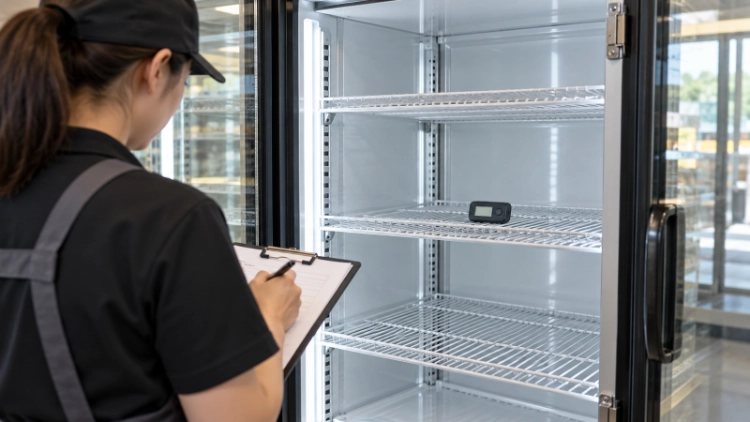
The controller reading may differ from a separate instrument because the sensors occupy different positions or respond differently. Investigate material discrepancies against the expected operating sequence rather than changing settings until the numbers look identical. Keep the original readings so the commissioning record remains traceable.
Review the temperature trend over the trial duration required for that model. Where relevant, observe defrost and the subsequent recovery. Note alarms, unusual vibration, water leakage and door behavior. A single favorable reading immediately before handover can miss an intermittent fault or an incomplete cycle.
Decide Whether First Loading Can Proceed
Use a short commercial refrigerator commissioning checklist to turn observations into an explicit release decision. Any unresolved issue should identify the person responsible for correction and the evidence needed for closure. A signature without the underlying readings gives the store little help if problems appear later.
| Release stage | Evidence to retain | Responsible party to confirm |
| Delivery condition | Model, serial number, photographs, shortages | Receiving team and supplier |
| Site connections | Supply checks, drainage, installation details | Relevant qualified installer |
| Empty operation | Settings, timed readings, observations | Commissioning lead |
| First loading | Product condition, loading plan, monitoring | Store operations lead |
These roles are an example allocation, not a contractual assignment. Confirm actual responsibilities before work starts. The supplier can provide equipment information while a local contractor completes site services, and the store still needs a person authorized to accept the operating handover.
First stock should already meet its required holding conditions. A display refrigerator should not be assumed capable of rapidly cooling warm deliveries unless that duty is expressly included in its design. Plan a manageable first batch and monitor operation after loading rather than treating the empty trial as proof of every trading condition.
Match the Handover to the Ordered Equipment
Create Refrigeration supplies supermarket display refrigeration and offers project support using customer drawings. Its OEM and configuration services make the approved order particularly important: the inspection record should identify the equipment actually supplied, including electrical details and accessories, rather than rely on a general product-family description.
For the glass door freezer and cooler range, chilled and frozen versions need separate operating criteria. Door sealing, shelf installation and lighting remain visible checks, while the intended temperature duty and control sequence must correspond to the ordered cabinet and products.
A plug-in forced-air glass door display cooler has integrated refrigeration, digital control and circulating air. During handover, those features translate into practical checks: verify the selected control settings, confirm normal fan operation using the approved procedure, and keep the required internal air paths clear.
Request the applicable wiring information, control instructions, maintenance access details and service contact before acceptance. Factory inspection and local commissioning address different stages: a shipping check cannot verify the store’s electrical installation or drainage. Record who will respond if a fault appears during the first stocked operating period.
Keep a copy of the final settings and acceptance record available to the store team. Explain ordinary operating indications and the agreed escalation route for alarms. The handover should also identify the next planned inspection after stocking, since customer access and replenishment introduce conditions that an empty cabinet trial cannot reproduce.
Conclusion
Commercial refrigerator installation is complete when the store receives a usable operating record and clear responsibility for unresolved items. Inspect the delivered unit, verify site connections, review the empty trial and authorize first loading against the intended product duty. Keep checking performance as normal merchandising begins.
Arrange a refrigerator installation and handover review with the model list, site drawing, electrical supply and planned loading date. Agreeing the document package and contractor responsibilities early helps prevent incomplete checks at store opening.
FAQs
Q1: How long should a commercial fridge run before loading?
A1: Follow the exact model’s instructions and commissioning plan. Separate any required settling time before startup from the empty operating trial afterward. Release stock after the required trial and acceptable recorded performance, rather than choosing a fixed number of hours for every cabinet.
Q2: Can staff install a plug-in commercial refrigerator themselves?
A2: Staff can complete permitted receiving and cleaning tasks, but plug-in construction does not remove site checks. Electrical verification, any required fixed connections and specialist refrigeration work belong with suitably qualified personnel under the applicable local requirements.
Q3: What should happen if the display reaches temperature but products warm up?
A3: Protect the stock under the store’s food-safety procedure and record product and cabinet readings. Review incoming product condition, loading boundaries, door use and operating trends with the service team. A controller reading alone cannot establish that every product is being held correctly.