
The first few metres inside a supermarket decide whether customers slow down or walk straight toward the main aisle. Fresh greens and a cold drink can both create that pause, but they need different treatment. Leafy vegetables need cool, gentle air and enough humidity to keep their weight and appearance. Branded drinks need strong recognition, bright visibility and a cabinet that makes the final selection easy.
I have seen both categories lose money because the store bought a good cabinet and then used it badly. A fan was set too aggressively, so lettuce edges dried and strawberries lost weight. A beverage cabinet had shelves that bowed under full bottles. Another had clear glass that fogged around the frame every humid morning, so shoppers could not read the labels.
The practical target is not to make every fixture as cold as possible. It is to match air speed, product temperature, lighting, shelf loading and customer movement to the product. A capable source manufacturer designs equipment around that relationship, including airflow layouts, cabinet dimensions and OEM branding options.
Mastering Produce Hydration at the Store Entrance
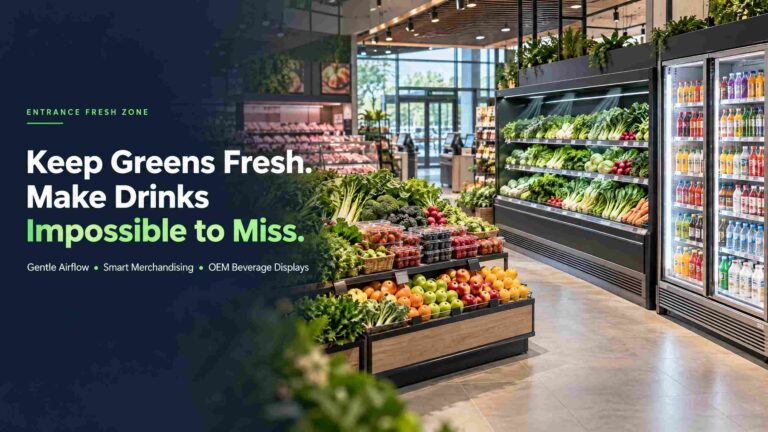
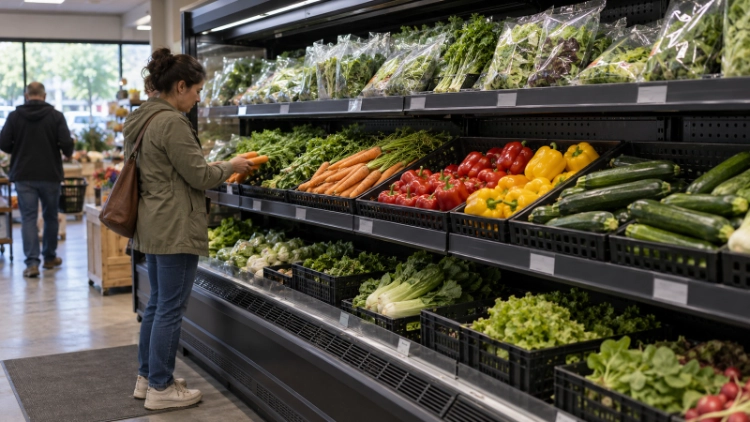
The entrance produce zone needs a visual contrast between fresh, loose products and packaged chilled goods. A non-refrigerated supermarket fruit and vegetable showcase display rack can carry whole fruit, onions, potatoes, herbs and fast-selling seasonal produce. It gives the department a natural market feel and avoids using refrigeration where the product does not need it.
Place the non-refrigerated rack where customers can approach from two sides without pushing baskets into the entrance. Use low tables and angled shelves so the first view shows colour and volume. Slanted shelves help the front row face the customer, but do not make the angle so steep that delicate packs slide forward or roll onto the floor.
The rack works well beside a controlled supermarket air cooling vegetable display cooler for cut fruit, salad bowls, berries, washed vegetables and other products that need chilled holding. The two fixtures should look like one fresh zone, but they should not share the same loading rules. Whole produce may tolerate a dry open presentation; cut and packaged produce needs a defined cold range and protected air movement.
For many entrance produce applications, an operating target around +3°C to +7°C at the supply-air and product-facing zone can be used as a starting point, subject to product requirements, ambient conditions and local food-safety rules. The air should be gentle and evenly distributed. The outlet must not throw a hard stream directly onto lettuce, spinach, coriander or strawberry packs.
High air speed removes surface moisture. In one store, a strong open-case fan caused strawberries and leaf vegetables to lose roughly 8% of their saleable weight in a single day. The cabinet was cold, but the product looked tired and the morning team had to trim or discount it. The fix was not a lower setpoint. We reduced the front velocity, restored the return path and changed the tray position so the produce was no longer sitting directly under the coldest discharge.
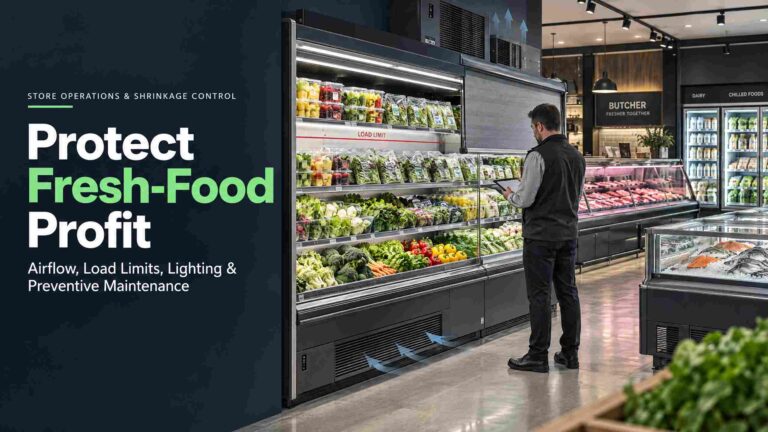
A honeycomb flow straightener or perforated air panel can help form a more even air sheet. It needs to remain clean and straight. Dust in the small openings creates uneven jets; a bent panel can leave one section dry and another section warm. Staff should also keep cartons, price boards and display baskets away from the lower return grille.
Use a shallow product depth. Do not build a tall mound in front of the outlet and then complain that the rear row is warm. The customer sees a full display, but the airflow sees a wall. Mark a loading line and photograph the correct arrangement for every shift.
Top-surface presentation can improve the sense of abundance. A slanted shelf or a brushed stainless-steel top panel can reflect light upward and make fruit and vegetables appear fuller without adding more stock. Keep the surface clean and avoid mirror-like glare that hides bruised fruit or makes customers mistake a reflection for product.
A low-noise produce cooler should not face an automatic entrance door directly. The door sends warm, humid air across the air curtain, while the ceiling HVAC system may push the cold sheet sideways. Leave a buffer, redirect the diffuser or place a low fixture between the door and the cooler. Check the result during the busiest trading period, not only before opening.
High-Margin Beverage Merchandising and OEM Branding
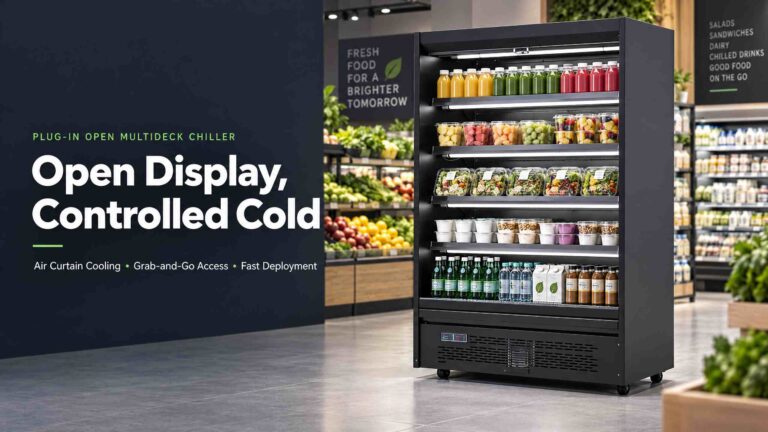
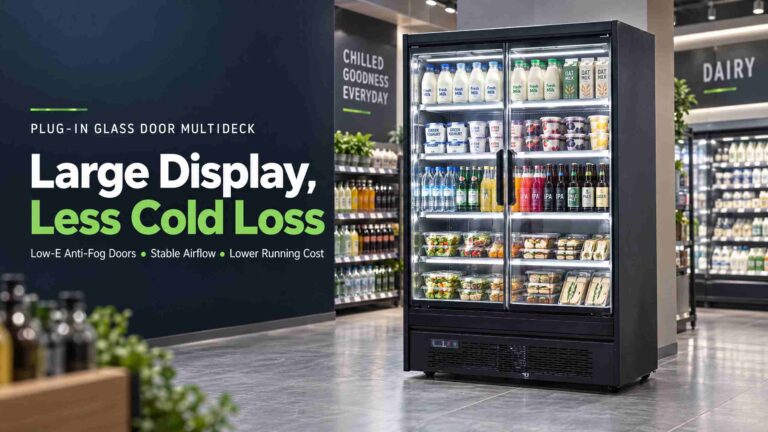
The beverage zone has a different sales rhythm. Shoppers often make the decision while walking, especially near the checkout, entrance exit or prepared-food queue. The cabinet must show the brand from several metres away, keep the product cold, and let the customer take one bottle or can without moving a stack.
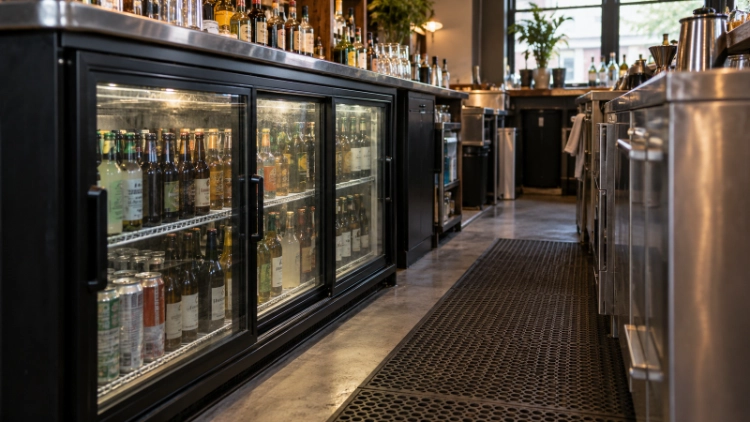
A branded chiller for supermarket grocery store operations should be selected around the real pack mix. Tall PET bottles need shelf clearance and a secure front lip. Cans need a stable row and enough depth for quick facing. Glass bottles require higher shelf loading and protection against a trolley impact.
A refrigerator supermarket showcase positioned near the main customer route can perform as a cold-brand billboard. Use high-colour-rendering vertical LED strips so labels remain readable from top to bottom. The light should show the product without adding excessive heat or creating a bright reflection that hides the front row.
Many chains request OEM branding from createrefrigeration to build a dedicated refrigerator pepsi supermarket look or a house-brand beverage cabinet. OEM work may include the canopy, lightbox, side graphics, handle colour, interior LED tone, shelf pitch and cabinet finish. Ask for an approved artwork proof and a dimensioned layout before production. A logo placed too low can disappear behind the product; a lightbox that projects into the aisle can create a collision problem.
A high-turnover beverage cabinet needs load-bearing shelves. A full case of drinks is heavy, and weak clips can bow or pull out when staff change the shelf height. Test the actual carton weight and inspect the front rail, rear support and shelf deflection. Do not use a light snack shelf for a beverage duty simply because the dimensions look similar.
Glass doors should have anti-condensation heating where the store is humid. A fogged perimeter makes the cabinet look poorly maintained and reduces the value of the brand graphics behind it. Check the gasket compression, self-closing action and frame heater control. A door that stays open by a few millimetres during the rush can add a steady heat load.
The store should keep the first-facing row full without overloading the return-air path. A beverage cabinet is not improved by pushing every bottle against the back panel. Keep the air circulation route clear and maintain the manufacturer’s shelf spacing.
For OEM branding, airflow design and a free 3D store arrangement, buyers can discuss the project through www.createrefrigeration.com. CREATE Refrigerator can match the cabinet width, display height, LED layout, door format and colour package to a chain’s store standards rather than supplying one generic white-label unit.
Connecting Vertical Systems Across Store Zones
The entrance produce and beverage areas should lead naturally into the rest of the cold chain. A customer who sees fresh greens and a branded drink at the door should be able to understand where dairy, meat, frozen food and prepared meals sit without crossing a maze of tall cabinets.
A vertical supermarket display system can form the next layer of the route. It may combine drinks, dairy, yoghurt, fresh meals and packaged produce in tall sections along a wall. Keep the first entrance view low and open; move the taller cabinets to the side or further into the store so they do not block the entrance or the cashier’s sightline.
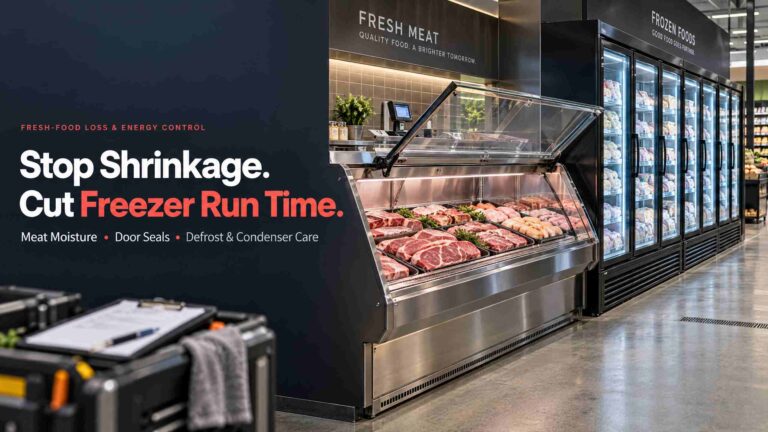
The meat zone requires a separate visual and temperature treatment. A supermarket meat display cabinet should use product-appropriate lighting, controlled air movement and surfaces that can be cleaned after every shift. Do not point a produce cooler’s discharge toward exposed meat packs. The two departments may look connected to the customer but need independent airflow and cleaning routines.
The frozen route can use vertical freezers for supermarkets where a large range must be organised behind doors. They belong on a dedicated electrical and heat-rejection plan. Keep condenser discharge away from the entrance produce zone, especially when the frozen equipment is placed against a narrow wall return.
A mixed group of supermarket refrigeration cabinets should be planned by product duty, not by exterior colour alone. Mark each cabinet’s temperature class, defrost method, lighting load, drain arrangement and service clearance on the equipment schedule. This prevents the common mistake of placing an open produce case beside a freezer condenser or blocking a service panel with a promotional stand.
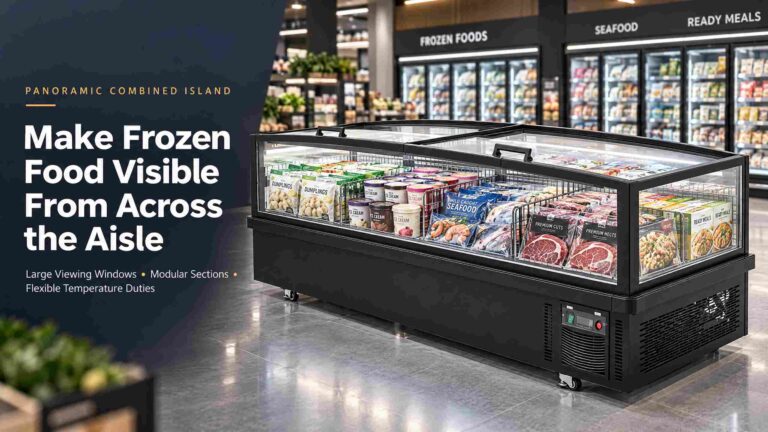
The store’s display freezer supermarket area should have a clear replenishment route. Frozen cartons are heavier than beverage cases, and staff should not drag them across the customer queue. If the frozen section is near the beverage route, leave enough space for a trolley to turn without hitting a glass door or the corner of a display island.
The Daily Temperature and Merchandising Check
The opening team should check the product, not only the controller screen. Use a calibrated probe at the front and rear of representative produce trays. Look at the upper, middle and lower shelves of the drink cabinet. Confirm that the glass is clear, the doors close, the LED strips work and the return grille is visible.
During the peak period, the duty manager should walk the entrance zone again. Check whether shoppers or staff have pushed baskets into the air path. Look for wilted leaves, soft berries, condensation, warm bottles and a sudden increase in product waste. Record the time and weather condition; a humid rainy day can reveal a problem that a dry morning hides.
After closing, remove damaged produce, face the drink labels, clear the return grilles and lower any night blind. A cooler that remains open and fully lit overnight can consume energy for hours without making a sale. The closing action should be photographed and included in the shift checklist.
For a supermarket refrigerators display freeze programme covering chilled and frozen equipment, compare the load and heat rejection across the entire store. Record compressor run time, room temperature, defrost periods and the effect of the entrance doors. One cabinet may appear efficient while another is working harder because a nearby condenser is heating the aisle.
Store Merchandising and Temperature Matrix
| Area or equipment | Daily operating target / check | Merchandising and maintenance action | Main loss-control benefit |
| Entrance produce rack and cooler | +3°C to +7°C product-facing zone where applicable; check leaf condition | Keep airflow gentle, clear the return grille and stay behind the load line | Reduces dehydration, wilt and daily produce weight loss |
| Beverage display and refrigerator supermarket showcase | Verify upper/middle/lower shelf temperature and clear glass | Check gasket, shelf load, LED lighting and brand-facing rows | Protects drink quality and improves impulse conversion |
| Meat cabinet and vertical supermarket display system | Confirm product-zone reading and clean display surface | Keep air paths separate; use category lighting and end-of-shift sanitation | Limits surface drying, markdowns and cross-zone heat effects |
| Frozen display freezer supermarket and vertical freezer line | Check door closure, frost pattern, condenser airflow and defrost record | Keep heavy cartons off air returns and maintain service clearance | Reduces compressor strain, temperature excursions and product loss |
Field Rules for the Store Team
Give each fixture a simple card with four facts: the intended temperature, the load limit, the return-air location and the closing action. Staff should not have to search through a manual to learn that a carton cannot sit in front of a grille.
Train with the actual products. Load a produce tray with the real salad packs, not an empty shelf. Load the beverage cabinet with the real bottle cases. Show the team what a healthy leaf looks like at closing and what a dry leaf looks like after excessive air movement. This makes the operating rule memorable.
Keep colour temperature under control. Fresh meat usually needs a dedicated pink or warm-white light rather than a harsh cool-white lamp. Produce benefits from clean, natural-looking illumination that does not hide bruising. Beverage branding needs enough brightness to be seen without making the glass surface glare.
A well-designed supermarket air cooling vegetable display cooler should make the product look fresh without blowing the moisture away. A properly specified drink cabinet should carry the weight, keep the door clear and make the brand easy to identify. CREATE Refrigerator combines controlled air distribution, OEM cabinet sizing and practical service access for stores that need both types of performance.
For OEM cabinet design, brand-specific beverage layouts, temperature-zone coordination or a free 3D merchandising plan, contact createrefrigeration through www.createrefrigeration.com. Send the floor plan, product list, entrance position, HVAC outlets and preferred customer route. The best refrigeration layout is the one the staff can load correctly every day and the customer can understand in one glance.