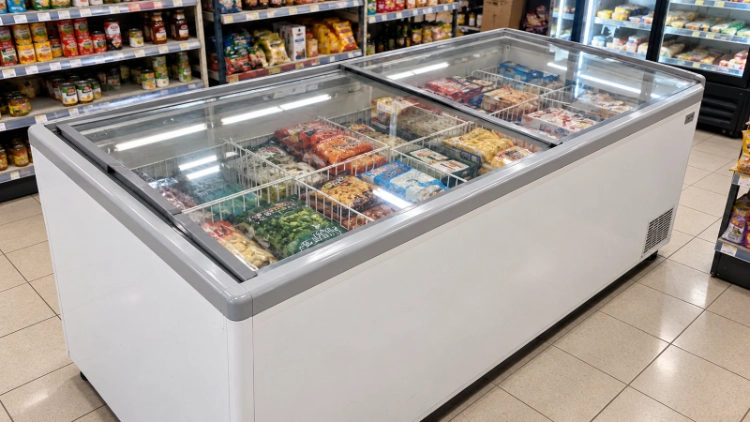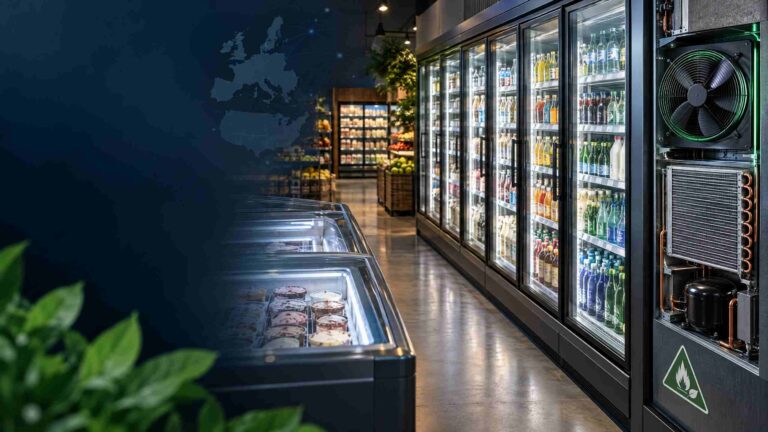
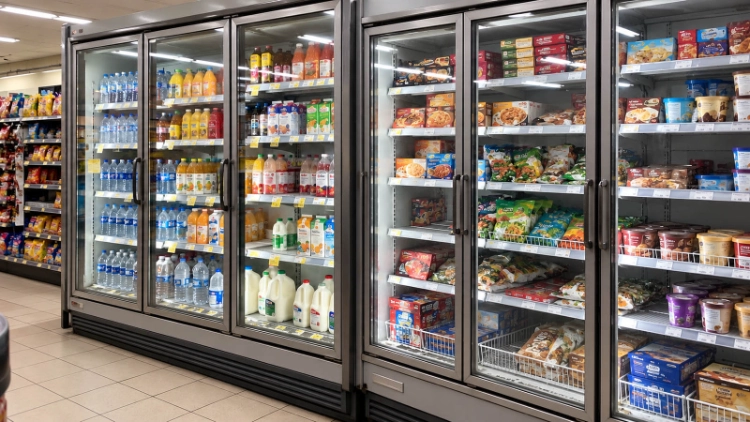
A glass door cooler keeps suitable products chilled, while a glass door freezer maintains frozen goods at the required low temperature. The difference extends beyond the thermostat: refrigeration components, door construction, condensation control and defrost operation must suit the application. Equipment selection should begin with the merchandise and its required storage conditions, even when two cabinets have matching doors, dimensions and exterior finishes.
A beverage display and a frozen-food display may share lighting, shelves and exterior finishes. Those visible features do not prove that their refrigeration systems are interchangeable. Buying the wrong version can leave a store with attractive equipment that cannot perform its intended job.
Compare the complete configuration, not just the temperature setting, before approving either version.
Glass Door Cooler vs Freezer at a Glance
For a chilled vs frozen display cabinet comparison, start with the product’s required storage conditions. A cooler may serve beverages, packaged chilled foods and other suitable merchandise. A freezer serves products intended to remain frozen, such as packaged frozen meals and seafood. Individual foods still have their own requirements.
Do not treat a cabinet’s full adjustable range as approval for every item placed inside it. The correct operating target depends on the food, its labeling and applicable local requirements. Product temperature also needs verification; the display controller alone does not establish conditions throughout every package.
| Specification | Glass door cooler | Glass door freezer | What to confirm |
| Intended application | Chilled merchandise | Frozen merchandise | Required product temperature |
| Refrigeration system | Matched to chilled duty | Matched to low-temperature duty | Approved model and operating conditions |
| Door system | Glazing and seals suited to chilled use | Glazing and seals suited to frozen use | Glass construction and condensation performance |
| Anti-sweat measures | Depend on door design and environment | Depend on low-temperature door design and environment | Heated areas, controls and rated conditions |
| Defrost operation | Model-specific | Model-specific low-temperature arrangement | Method, termination and temperature recovery |
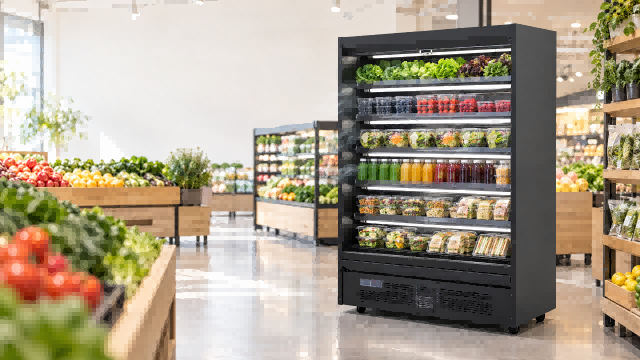
| Appearance | Can resemble a freezer | Can resemble a cooler | Do not identify duty by appearance alone |
The Door System Must Match the Temperature and Humidity
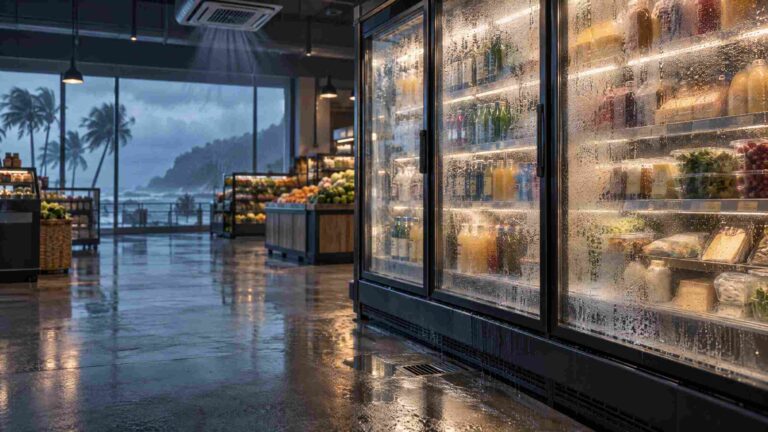
Glass is part of a larger assembly that includes the frame, gasket, hinges and closing mechanism. Condensation appears when a surface becomes colder than the surrounding air’s dew point. Lower cabinet temperatures create a more demanding thermal separation, but room humidity and the complete door design also matter.
Compare the Glazing Package, Not Just Layer Count
Glass door freezer glazing may use multiple panes, insulating spaces, coatings and heating arrangements. A cold aisle with clear doors is the result of the combined system, not one feature working independently. Buyers need the specified glass construction and its intended operating conditions.
Avoid a rigid rule that every cooler has two panes and every freezer needs three heated panes. Anthony’s Eliminaator door systems, for example, include nonheated triple-pane options for both cooler and freezer applications. Such designs illustrate why pane count or the presence of glass heating alone cannot establish suitability.
Heating, where fitted, may serve the glass, frame or other condensation-prone areas. Ask which parts receive heat and how it is controlled. A heated frame is not the same specification as a heated viewing pane, and an anti-fog treatment should not be assumed to replace every other measure.
Coatings and heating can be combined. The guide to Low-E and heated freezer glass examines that choice in more detail.
Check Seals and Closing Action
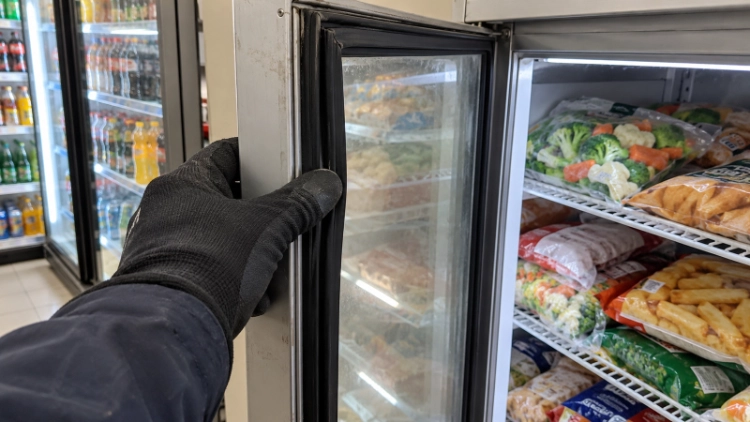
A door that does not close properly changes the cabinet’s operating conditions. Inspect gasket contact, hinge alignment and the closing mechanism for the selected version. The frame and cabinet should meet evenly, without a visible gap or a corner that needs extra pressure to seal.
For stores in humid conditions, request the ambient temperature and humidity under which the door’s condensation performance was assessed. A broad claim such as “anti-fog glass” does not describe the whole installation. Conditions near an entrance or a wet preparation area can differ from those in a controlled supermarket aisle.
Refrigeration and Defrost Settings Change Together
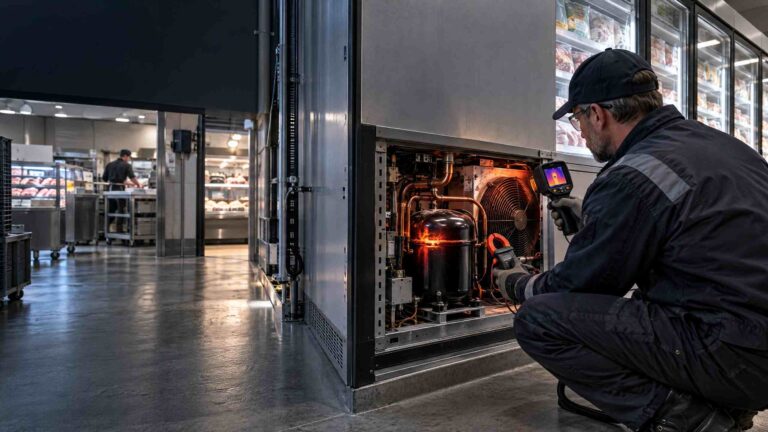
A glass door fridge designed for chilled duty uses a refrigeration system selected for that operating range. A freezer requires a system matched to lower-temperature operation. Compressor selection, evaporator design, refrigerant circuit and control settings need to work together at the specified duty.
Separate Cabinet Temperature From Evaporating Temperature
The temperature needed at the evaporator is different from the air temperature being maintained in the cabinet. The refrigerant must absorb heat through the evaporator, and the temperature difference is part of that process. A listed evaporating temperature should never be presented as the storage temperature for the merchandise.
This distinction matters when comparing quotations. One supplier may state an operating cabinet range, while another includes an evaporating condition used for component selection. Compare like with like and ask what each number describes before concluding that one freezer operates colder than another.
Capacity also needs context. A temperature reached in an empty cabinet does not establish performance with the intended product arrangement and normal operation. Ask about the specified environment, loading pattern and test conditions. For remote systems, confirm that the proposed condensing equipment matches the case and its intended duty.
Ask How Defrost Ends and Cooling Resumes
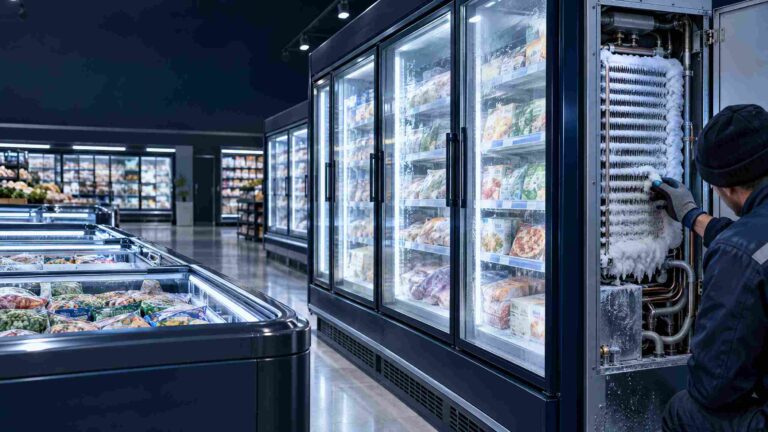
Moisture can freeze on cold surfaces and affect operation. Defrost control therefore deserves a separate line in the equipment schedule. “Automatic defrost” describes a function, but it does not identify the method or explain the entire sequence.
Relevant questions include how defrost starts, how it terminates, where water drains and when fans resume operation. Different designs may use different arrangements. Do not assume that all coolers use one method or that every freezer has the same electrical heater system.
Evaluate the return to normal operation as well as the defrost event. Buyers should know how the specified arrangement affects cabinet air temperature and product conditions under the intended loading pattern. A brief change in the controller reading is not automatically evidence that frozen merchandise has thawed; product measurements and duration provide the necessary context.
Can a Cooler Be Used as a Freezer?
A conventional cooler cannot normally become a freezer just by selecting a lower thermostat setting. The controller requests a temperature; it does not change the compressor’s approved operating range, the evaporator arrangement, door system or defrost design.
Running a freezer at a chilled setting also needs approval. Check product suitability, control behavior and the manufacturer’s permitted operating modes.
Some equipment is engineered for more than one operating mode. That is a model-specific capability, not a property of every commercial display cabinet. Where conversion is offered, request the approved modes, any required accessory or control changes, and the relevant operating instructions.
Equipment described as a cooler/freezer range may also refer to separate chilled and frozen versions with a shared appearance. It does not necessarily mean that every individual unit can switch between the two. Write the intended version into the purchase order instead of relying on a category name.
Match the Cabinet Specification to the Merchandise
In a mixed chilled and frozen project, Create Refrigeration offers examples of cabinets serving different display duties. Assign each unit a merchandise category and target operating requirement before selecting the exterior finish or number of doors. A shared appearance should not obscure the difference between the two specifications.
The glass door freezer and cooler range provides separate starting points for that comparison. Check the configuration for each position in the equipment schedule rather than ordering several visually similar cabinets under one general description.
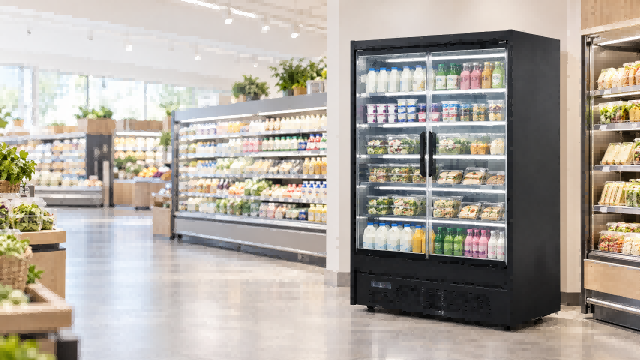
For chilled display, the LC forced-air glass door cooler has a stated operating range of 2–8°C. Its design includes self-closing doors, digital temperature control and door-frame LED lighting. These features support access and visibility, while circulating air serves the chilled display arrangement. Select the actual operating target according to the stocked products rather than treating 8°C as suitable for every chilled food.
For frozen merchandise, Create’s upright glass door display freezer offers low-temperature configurations operating at −18 to −23°C, with automatic defrost and digital control. Confirm the ordered version’s glass package, refrigeration equipment and installation requirements. Do not carry the cooler’s component list into the freezer specification merely because both products have glass doors.
Before approval, request a configuration sheet identifying the model, duty, temperature range, glazing, heating arrangement, defrost method and electrical supply. Add the intended ambient conditions and product loading pattern. Certifications, accessories and refrigerant options should match that specific configuration and destination market.
Create supports OEM/ODM requirements for conventional, modified and customized products. Resolve the application before the visual choices. Matching cabinet fronts can suit a store, provided each version retains the systems its duty requires.
Conclusion
The useful glass door cooler vs freezer comparison is a check of the complete application. Product temperature comes first; refrigeration, doors and defrost must support it together. Similar appearance is convenient for store design but does not establish interchangeable performance. Match your display cabinet to your product temperature requirements with Create Refrigeration before approving the final equipment schedule.
FAQs
Q1: Can a glass door refrigerator be turned into a freezer by changing the thermostat?
A1: Usually not. A lower setting does not redesign the refrigeration circuit, glass door or defrost arrangement. Use a freezer approved for the required duty, or a model explicitly designed for multiple operating modes. Ask for written confirmation of the permitted configuration before making a change.
Q2: Do all glass door freezers need heated glass?
A2: No. Some engineered door systems use nonheated insulated glass under their specified conditions. Other designs use heated glass, frames or combined measures. Confirm the complete door assembly and its temperature and humidity limits. Pane count alone does not show whether a freezer door will remain clear in the intended store.
Q3: What information should be sent when requesting a cooler or freezer quote?
A3: Send the product types, required temperatures, cabinet quantities, space constraints, electrical supply and expected store conditions. Include loading and restocking patterns where possible. Request separate configuration sheets for chilled and frozen units so the temperature range, glass package, defrost system and supplied components are clearly identified.