
Ice cream can look perfectly frozen in the morning and turn noticeably soft after a hot afternoon. That change does not automatically mean the cabinet is defective. A display freezer is balancing room heat, product load, lid or door openings, airflow, frost, defrost, and condenser performance at the same time. When the ice cream display freezer is judged by its actual operating conditions, the cause of a weak ice cream freezer temperature becomes much easier to isolate.
For retailers and equipment buyers, the useful question is not simply whether a commercial ice cream freezer is “cold.” It is whether the ordered model can hold the required product condition in the store, with the expected traffic, loading routine, and summer ambiance. A warm reading may point to the cabinet, but it may also come from an open lid, blocked circulation, warm cartons, or a condenser that cannot release heat.
Start With The Store, Not The Thermostat
Hot weather raises the heat that the refrigeration system must move out of the cabinet. A plug-in freezer also rejects condenser heat into the sales area, so a crowded corner, direct sunlight, a warm loading bay, or air discharged from another appliance can make the local condition harder than the room thermostat suggests. Record the air around the cabinet, the time of day, nearby heat sources, and whether the problem appears only during the afternoon peak.
Warm Product Adds A Second Load
Ice cream arriving from a back room is not the same as stock already settled in its display condition. A delivery loaded in large quantities asks the evaporator and compressor to remove more heat while shoppers continue opening the case. If softening starts after replenishment, compare the incoming product condition, batch size, loading time, and recovery trend before changing a setpoint. A display freezer temperature taken near the sensor may improve before the center of a dense load does.
Open Access Changes The Air Path
Sliding lids and glass doors are convenient for merchandising, but they also invite longer access during busy periods. A lid left open while staff sort a delivery can add warm, moist air and delay recovery. Keep cartons below the permitted loading line and clear of fan outlets, return paths, and the lid track. A cabinet that is cold when empty may struggle when product blocks the intended circulation.
Check Cabinet Performance Before Blaming The Product
If the ice cream freezer not cold complaint continues after loading and access habits are checked, inspect the refrigeration path. Look at condenser cleanliness, fan operation, unusual noise, air discharge, frost pattern, door or lid sealing, and the drain area. A dirty or poorly ventilated condenser can reduce heat rejection. Excessive frost can insulate the evaporator and restrict air movement. Neither condition is fixed by repeatedly lowering the thermostat.
Create Refrigeration’s island freezers with a high-efficiency compressor and fan motor, environmental refrigerant and C-P insulation, wide voltage and climate-class options, a microcomputer temperature controller with LED indication, automatic defrost, and a sliding glass top. Those are useful specification points for a frozen-food display, but they belong to the exact quoted configuration. They are not proof that every model holds every product at every ambient condition.
The same product information identifies static cooling for the island freezer, regular automatic defrost, and use for ice cream, seafood, and other frozen foods. Static and ventilated systems do not load product in the same way. Ask which system the ordered cabinet uses, where the coldest and warmest zones are, how products should be stacked, and how defrosting is timed. A catalog label alone cannot answer those site questions.
Setpoints, Defrost, And Refrigerant Need Model-Level Answers
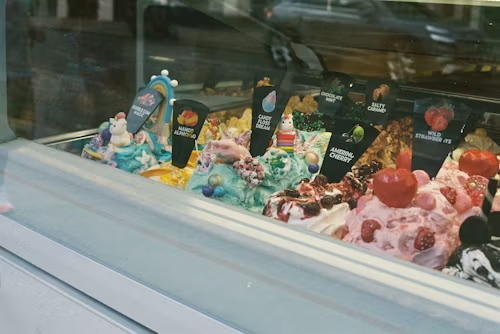
A display freezer’s temperature is the result of the control sensor, cut-in and cut-out settings, sensor position, product mass, and defrost logic. A setpoint that looks suitable on paper may give poor results if the sensor is in a fast-moving air stream or if the cabinet is loaded beyond its intended pattern. The supplier should state the operating range, test condition, sensor location, defrost method, and permitted load arrangement for the specific model.
Defrost Is Necessary, But Timing Matters
Ice on the evaporator reduces heat transfer and airflow, so automatic defrost is part of normal freezer operation. During defrost, product temperature can move in the wrong direction if the cycle is too long, poorly scheduled, or followed by slow recovery. Record when softening occurs: after defrost, after restocking, near closing time, or only in high-traffic hours. That timeline gives a technician more value than a single complaint that the commercial ice cream freezer is warm.
Refrigerant and Power Are Not Interchangeable Details
Create Refrigeration states that more than 80% of its refrigerators use R290 and that the company also develops CO₂ solutions, but the refrigerant for a particular freezer still belongs on the model quotation and nameplate. Confirm refrigerant, charge, compressor, voltage, frequency, phase, and plug before production. A mismatch in electrical supply or an unapproved refrigerant change can create a performance and service problem even when the cabinet shell is correct.
What Buyers Should Ask Before Ordering
A credible purchase review connects the product, site, and evidence. Before approving a commercial ice cream freezer, ask for:
- The stated ice cream freezer temperature range, test condition, ambient condition, and measurement method.
- The cabinet type, usable loading area, load line, basket or shelf arrangement, and access pattern used for the evaluation.
- The compressor, condenser, fan, refrigerant, defrost method, controller, sensor location, and electrical requirements.
- Required condenser clearance, ventilation, cleaning access, installation position, and service parts list.
- A commissioning check using the actual store location, normal stock, and a documented temperature record.
Create Refrigeration also records CAD and 3D supermarket layout support, OEM/ODM work, customized products, pre-production samples, final inspection, a one-year warranty, and spare parts support for bulk orders. For a chain opening stores in a hot region, those services can connect cabinet selection with aisle space, power, access, and maintenance. The Riyadh island-cabinet project is a useful example of why lighting, shelf levels, layout, and local climate should be discussed together.
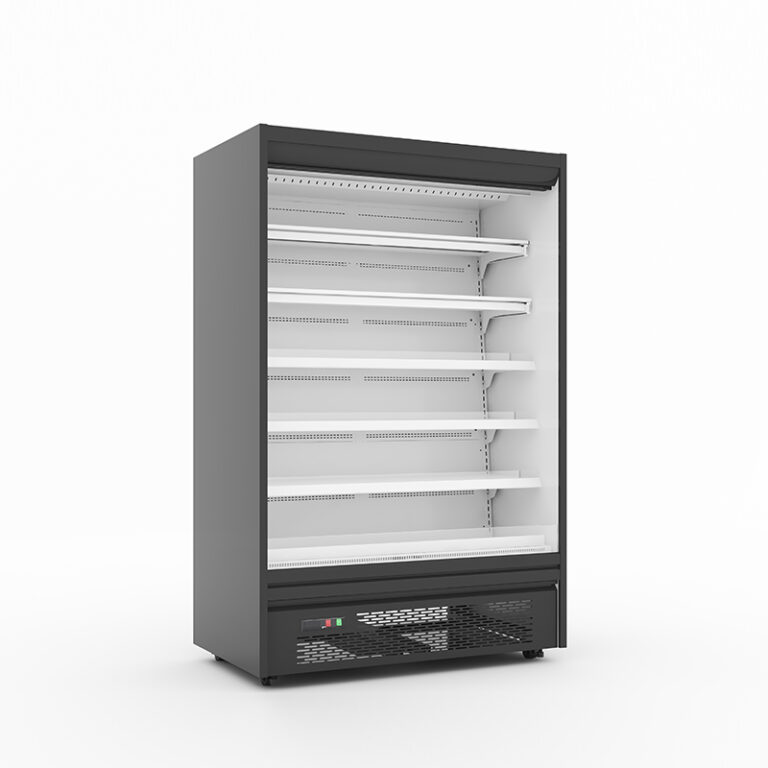
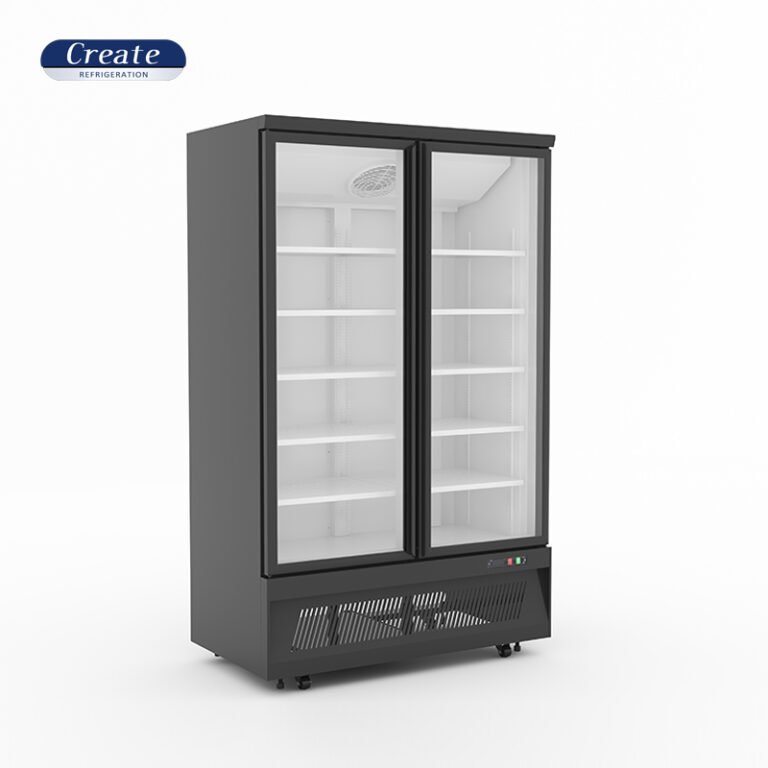
For a broader frozen-food comparison, the island freezer helps buyers separate a chest-style frozen display from a glass-door cabinet. The glass door freezer is another useful route when repeated shopper access calls for a closed display. Both links support product matching; neither replaces model-specific temperature evidence.
Project-level questions can be taken to Create Refrigeration after the site sheet and model details are ready. A supplier conversation is most useful when it includes ambient conditions, product load, defrost, electrical supply, and the cabinet location.
A Practical Fix Sequence For Store Teams
When softening is reported, protect the product under the store’s food-safety procedure and record the cabinet reading, product check, ambient condition, recent defrost, door or lid activity, and restocking time. Next, reduce avoidable access, restore the intended load pattern, clear grilles and air paths, and check condenser conditions within approved service practice. If the temperature trend does not improve, escalate with the model number, photos, alarm history, and the recorded timeline. That information separates an operating issue from a refrigeration fault. For more detail, see our guide on this article.
FAQ
Q1: Why does ice cream soften in a display freezer on hot days?
A1: Higher ambient heat, warm incoming product, repeated lid or door opening, blocked airflow, frost, defrost timing, condenser problems, or incorrect electrical conditions can all reduce the available cooling margin.
Q2: Should the thermostat be turned down when ice cream becomes soft?
A2: First check loading, airflow, condenser heat rejection, defrost, sensor behavior, and the model-approved operating range. An unexplained setting change may hide the cause or add unnecessary load.
Q3: What should a buyer request from a commercial ice cream freezer supplier?
A3: Request model-specific temperature evidence, ambient and load conditions, defrost and refrigerant details, electrical requirements, installation clearances, commissioning steps, and service support.