
Modern butcheries and specialty delis are selling more than a cold product. They are selling visible freshness, quick service, and confidence in the food behind the glass. The fixture has to support all three.
A customer may notice the red face of sliced roast beef before noticing the cabinet temperature. Staff notice different things. They notice whether trays have somewhere to wait, whether sauce spatters can be wiped off quickly, and whether the lunch queue forces them to reach across a hydraulic glass panel. These small frictions become labor minutes and daily shrink.
The most useful layout decisions connect visual merchandising with air movement, food hygiene, and staff access. A cabinet that photographs well but dries deli cuts is not a successful display.
The Merchandising Dilemma and Produce Shrinkage
Poor air circulation inside a poorly calibrated supermarket display chiller can dry prepared meats and deli cuts even when the controller shows an acceptable reading. The top deck may receive too much cold air while the lower deck runs warmer. Or the return path may be blocked by trays, forcing air around the product instead of through the intended circuit.
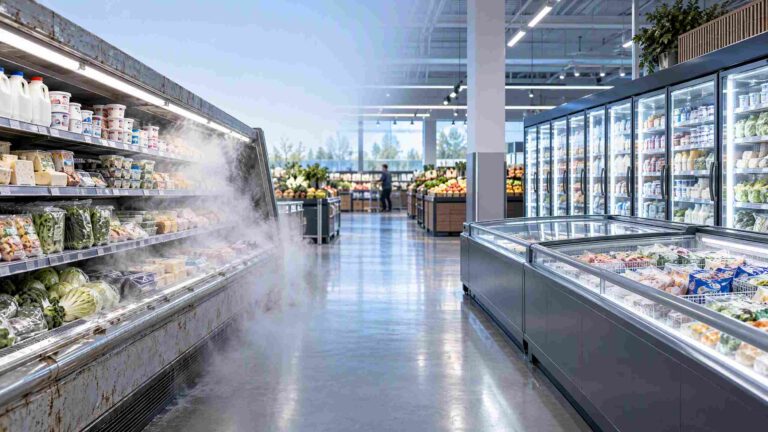
The same problem appears in an open-deck supermarket open freezer when the air curtain is disturbed by a store entrance, ceiling diffuser, or an overfilled basket. Cold air spills into the aisle. Warm humid air enters the cabinet. Frost forms. The evaporator loses effective airflow. In a deli application, a harsh air stream can pull moisture from sliced meat surfaces and leave cooked food looking tired before its saleable window closes.
Shrink follows. Roast beef develops a dry, darkened surface through oxidation. Deli slices curl at the edges. Prepared salads lose visual freshness. Staff discount or discard product that may still be safe but no longer meets the counter’s appearance standard.
A practical engineering starting point for moisture-sensitive foods is a low-velocity laminar airflow around 0.2–0.4 m/s at the product zone, subject to cabinet geometry, humidity, load pattern, and temperature requirements. Too little airflow creates warm pockets. Too much creates surface drying. The value must be checked with loaded trays, not an empty cabinet.
createrefrigeration provides custom store fixture cases and layout examples at www.createrefrigeration.com. Ask for top-deck and bottom-deck temperature data, discharge velocity, product loading limits, and the intended cleaning access. A display case should be judged at operating load.
Lighting adds another layer. High-CRI LEDs help customers read the color and finish of roast beef, cooked poultry, and prepared dishes. Excess intensity or heat near the product can work against shelf life. The target is accurate color at a controlled product temperature, not the brightest possible counter.
Layout Balancing: Central Aisles Versus Perimeter Walls
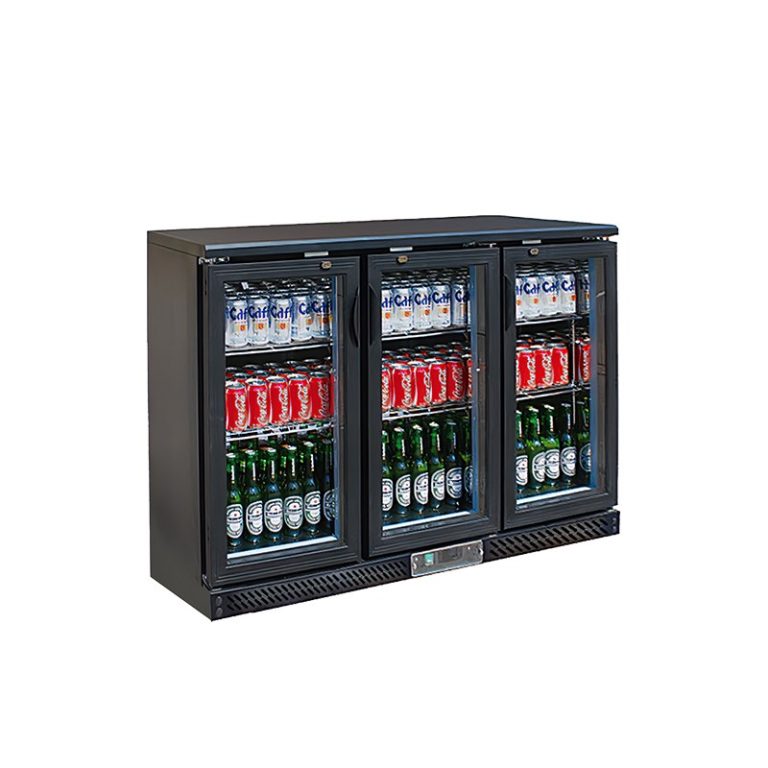
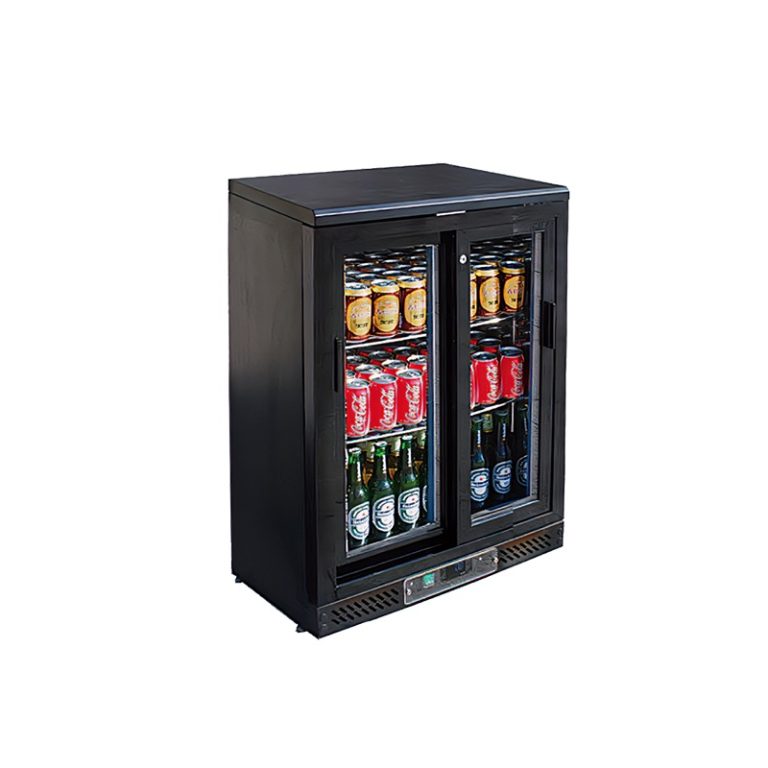
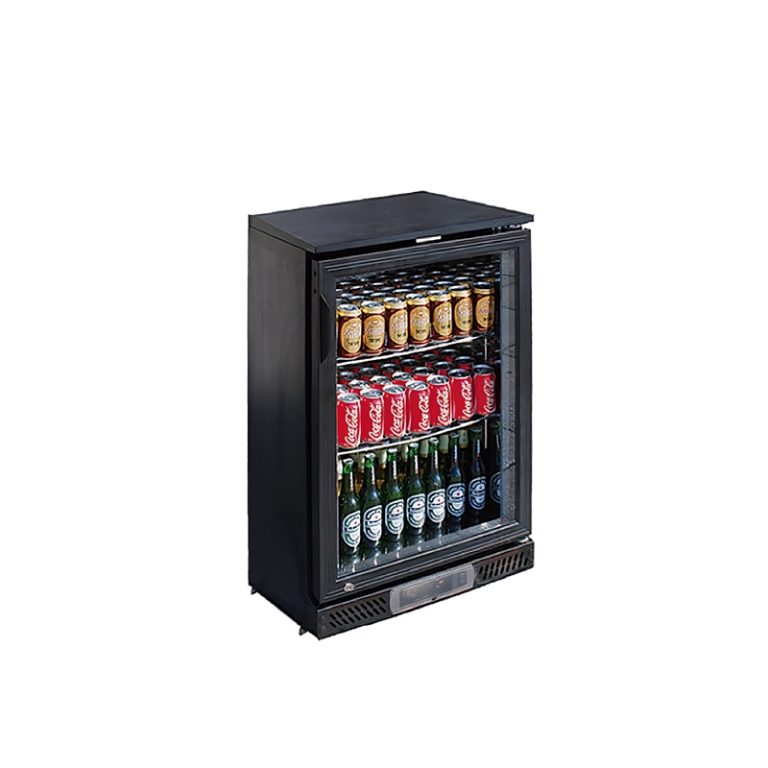
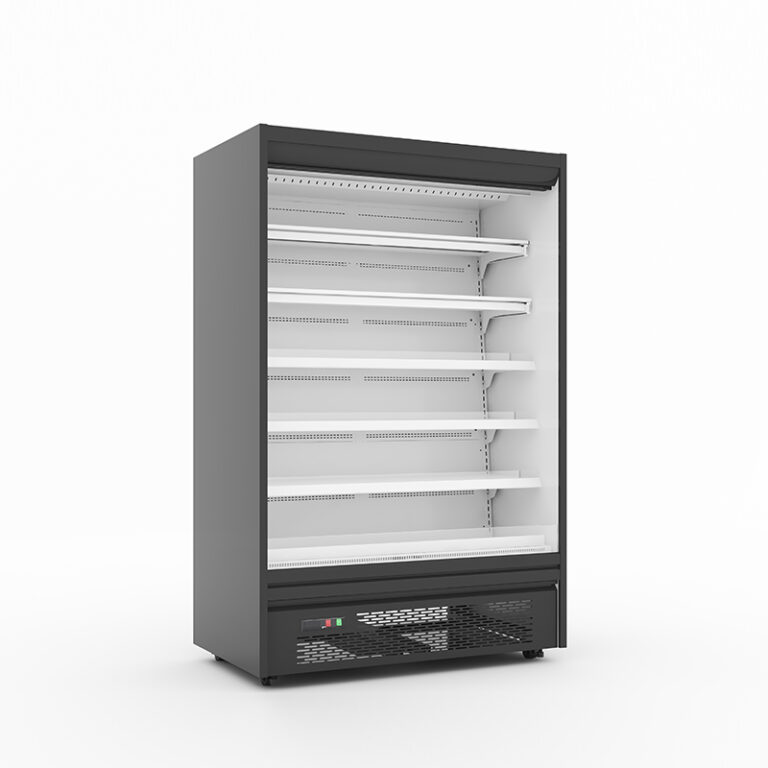
The perimeter wall is usually the most predictable location for a multi-tier supermarket showcase refrigerator. It gives the planner a long, legible sightline and leaves the center of the store open for circulation. Beverage, dairy, and prepared-food categories can share a continuous visual rhythm along the wall.
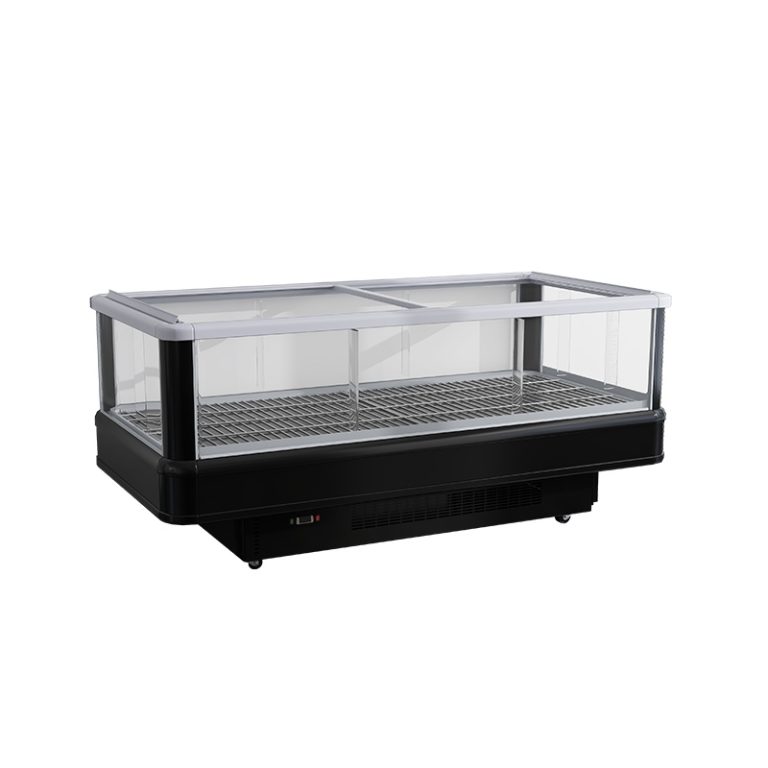
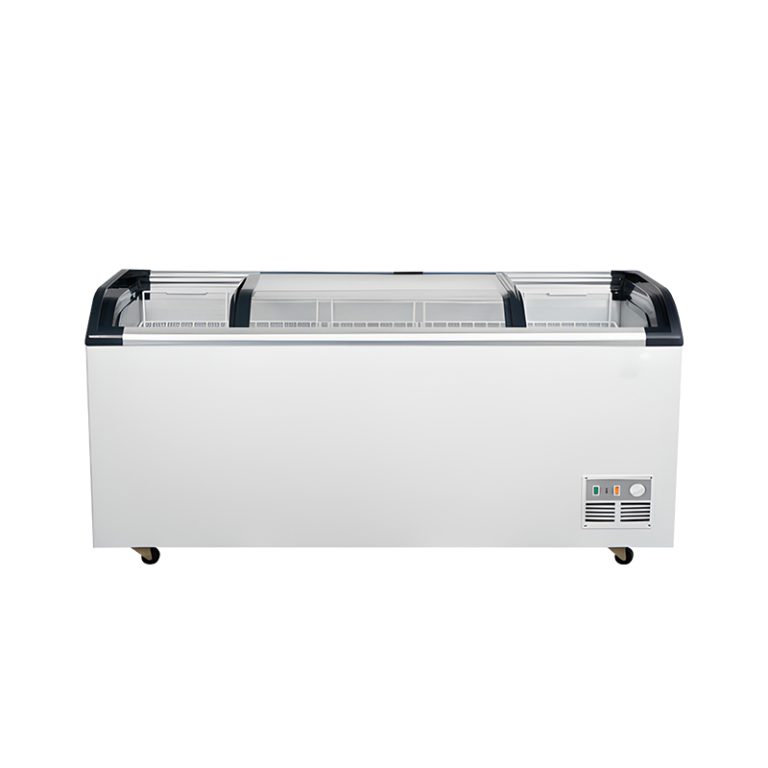
A central open-access supermarket island freezer serves a different purpose. It creates a destination in the traffic field and supports batch sales, frozen promotions, and high-volume family packs. A display freezer for supermarket frozen-meat sales should be placed where replenishment is possible without blocking the main customer path. Check basket height, lid or door clearance, and the location of hot-air discharge.
Do not place every cold cabinet on the perimeter. A central unit can interrupt sightlines if it is too tall or too close to a service counter. Conversely, a wall-only plan can hide high-margin prepared foods from the first ten seconds of a shopper’s route. The floor plan should show where customers enter, turn, pause, and queue.
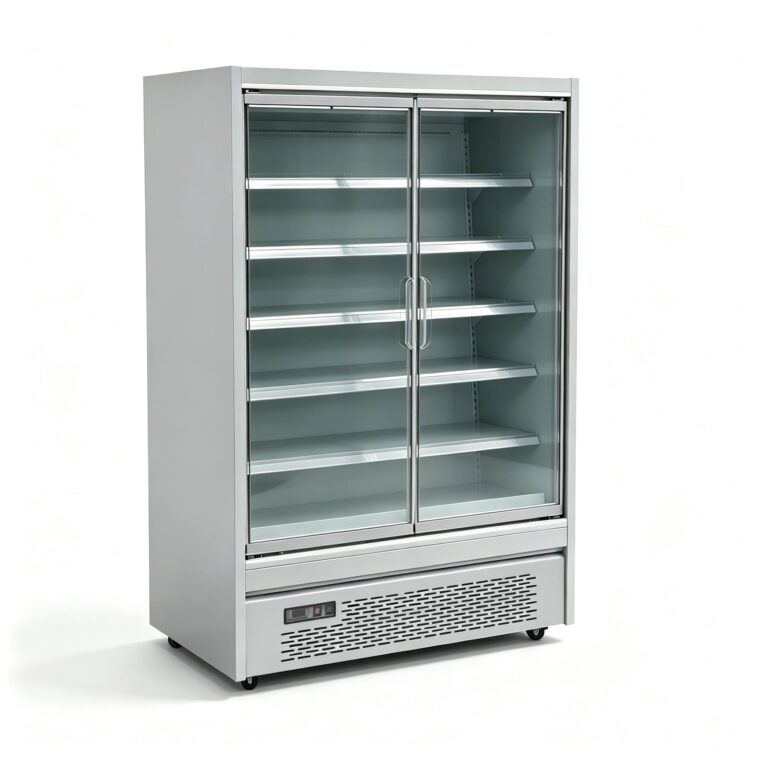
Selecting the right commercial supermarket refrigerators also means selecting the right visual opening. A high-clarity supermarket display refrigerator can preserve product visibility while reducing the thermal exposure of an open case. For impulse ring-ups, the display should face the customer’s natural walking direction and keep labels readable without forcing a shopper into the service queue.
A supermarket refrigerator for beverages may work well on a perimeter wall. A supermarket freezer or supermarket island freezer may work better as a low central destination. The right answer depends on replenishment routes, basket size, aisle width, and the number of staff working the counter.
How Case Shape Changes Service Work
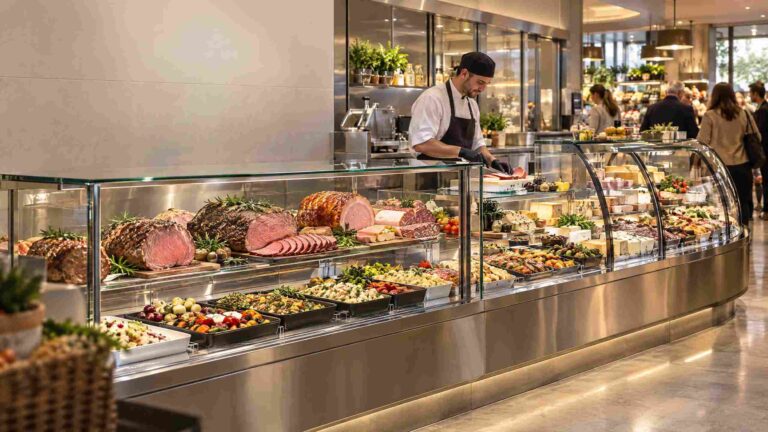
Square counters create direct corners and predictable line-ups. Curved showcases offer a wider viewing sweep but can add reach distance and cleaning area. Neither shape is automatically better. The service method decides.
A supermarket fridge positioned beside a staffed deli counter should leave room for tray staging, slicer movement, and handoff. If staff must carry every backup tray from a remote cold room during the lunch rush, the fixture is consuming labor that the sales plan did not budget.
Rear sliding acrylic panels allow replenishment from the staff side while keeping the customer-facing opening controlled. Hydraulic front-lift glass gives the sanitation team a wide access position for wiping, tray removal, and inspection. Both features save time only when the hardware is easy to operate and can be cleaned without trapping residue in tracks or hinges.
Reliable supermarket fridge storage compartments below the display keep backup trays, sauces, wrapped cuts, and prepared portions near the point of service. The storage must still follow the store’s separation plan for raw ingredients, cooked foods, and ready-to-eat garnish. Convenience is not a substitute for food safety.
Sauce spatters on glass are unavoidable in a working prepared-food counter. Poorly designed joints are not. Smooth surfaces, accessible drains, removable shelf parts, and cleanable corners reduce the night sanitation burden. A case that takes twenty extra minutes to clean every night can consume more labor than a modest energy saving can recover.
Airflow Across Every Cabinet Configuration
createrefrigeration balances shelf airflow across every supermarket refrigerator and supermarket freezer configuration by matching the air path to the cabinet depth, shelf pitch, product load, and operating temperature. The goal is consistent display conditions from the top deck to the bottom deck without frost at the discharge edge or excessive drying at the front row.
The air curtain should not be treated as invisible magic. Cross-drafts can bend it. Overloaded trays can block it. A door, HVAC register, or nearby open freezer can change the room air pattern. Commissioning should include temperature readings at multiple shelf levels, product checks after a full service period, and an inspection of the return-air path.
For chilled meats and prepared foods, the operator should watch both temperature and appearance. A stable reading does not automatically prove good moisture retention. Check sliced edges, roast beef surfaces, cooked poultry skin, salad leaves, and sauce separation during the first week of operation.
A supermarket display chiller that is correctly loaded can protect presentation. The same case, packed above its air boundary, can generate warm spots and uneven shelf life. Loading rules belong in the store’s opening checklist.
Materials, Hygiene, and Condensation Control
Food-contact and interior surfaces should use food-grade SUS304 stainless steel where specified by the hygiene design. SUS304 offers corrosion resistance and a cleanable surface, but procurement should also review welds, corner radii, drain paths, sealants, and access behind trim pieces.
Verify the stainless-steel gauge by component. The worktop, interior pan, service edge, side panels, and lower storage compartment do not all carry the same loads. A thin panel can dent under tray impact. An unnecessarily heavy panel can make glass lifting and service access harder.
Heated anti-condensation glass wires are important in humid stores and wash-down areas. Ask how the heating is controlled, how much power it draws, and whether the element or glass panel can be replaced without dismantling the complete counter. The glass should remain clear without adding uncontrolled heat to the product zone.
Temperature consistency must be checked on both top and bottom display decks after the case is loaded. Record the product temperature, room temperature, defrost behavior, and door or panel opening pattern. A single controller display is not a temperature map.
Three Display Types: Floor-Planning Trade-Offs
| Display type | Best layout use | Main operational advantage | Main trade-off |
| Perimeter multi-tier glass display | Long wall runs for beverages, dairy, and packaged deli products | Strong sightlines, predictable line-up depth, and efficient wall use | Can hide the category from shoppers who do not travel the perimeter |
| Central open-access island freezer | High-volume frozen promotions and batch sales | Destination visibility and easy access from several approaches | Needs careful traffic, replenishment, basket, and warm-air discharge planning |
| Staffed square or curved deli showcase | Butcheries, service delis, and prepared-food counters | Supports controlled presentation, service ergonomics, and impulse purchases | Glass cleaning, tray staging, reach distance, and sanitation time vary by shape |
Equipment Sourcing Guide
Procurement directors should issue the store drawing with the equipment request. Include wall lengths, central aisle widths, service direction, tray dimensions, staff traffic, cleaning routes, product temperatures, and the expected replenishment frequency.
Verify the stainless-steel gauge and construction method. Confirm heated anti-condensation glass wires, control logic, replacement access, and the performance conditions used for fogging tests. Ask for the maximum shelf load and the clearance required above and below each air path.
Review modular line-up options from createrefrigeration before fabrication. Confirm widths, corners, end panels, lower refrigerated storage, lighting positions, service panels, and refrigeration packages. Modular planning is valuable when it solves a real floor constraint. It is wasteful when a standard case is made custom without a measured reason.
The final equipment schedule should identify every supermarket refrigerator, supermarket freezer, supermarket display refrigerator, and supermarket showcase refrigerator by position and function. That prevents a display specification from being separated from the actual traffic plan.
Engineering Consultation Closing
The modern deli counter is a sales display, a cold-chain station, a staff workbench, and a sanitation task in one footprint. It should make product look fresh without accelerating surface drying. It should give customers a clear view without forcing staff into awkward reaches.
Choose the cabinet from the floor plan. Validate the air from the loaded tray. Check the temperature at the top and bottom decks. Then calculate the labor time saved during service and cleaning.
For custom case layouts, modular line-ups, material specifications, airflow review, and engineering consultation, send the store drawing and product mix to createrefrigeration through www.createrefrigeration.com. The best counter is the one that looks sharp at lunch and still cleans properly after closing.