
Product review for supermarket buyers, frozen-food specialists and international equipment importers
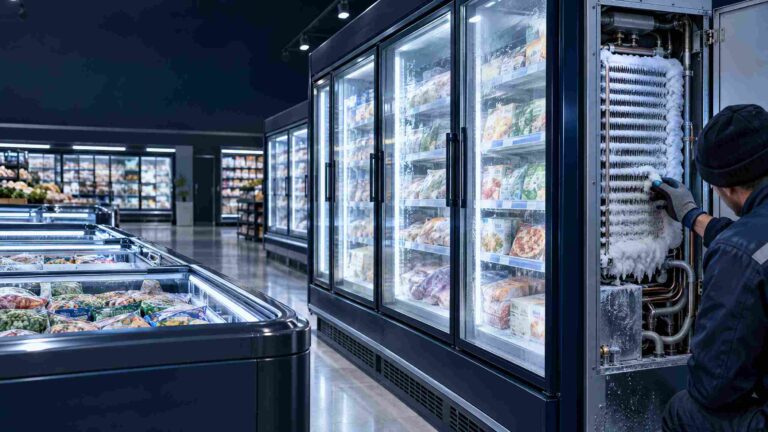
A traditional high-sided island freezer stores a lot of product, but it often hides that product from the customer. A shopper may walk two aisles away and see only a tall metal panel. To find the frozen dumplings, steaks or seafood inside, the shopper must reach the cabinet, look down and search through baskets.
That is a storage solution, not a strong visual display.
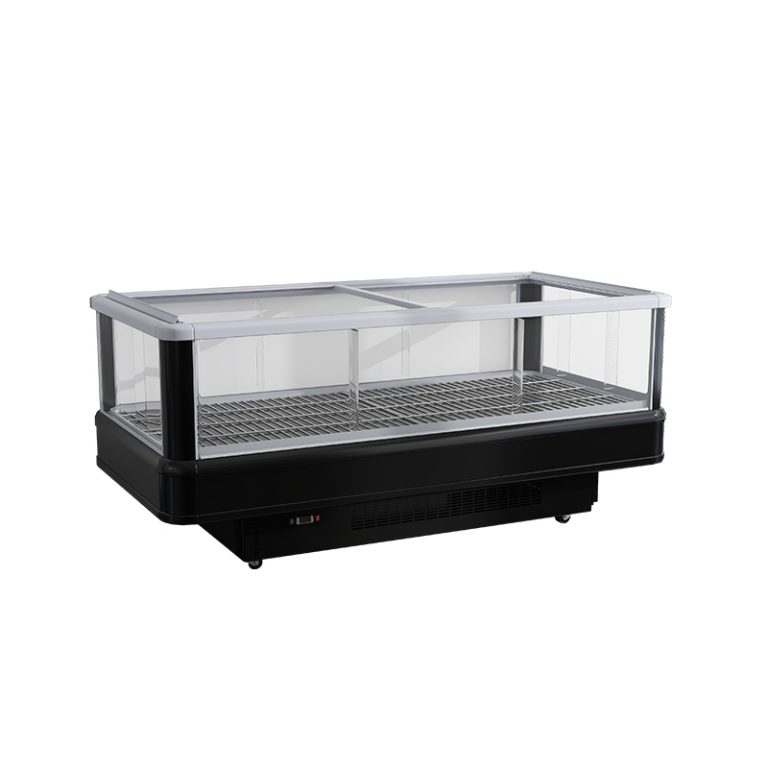
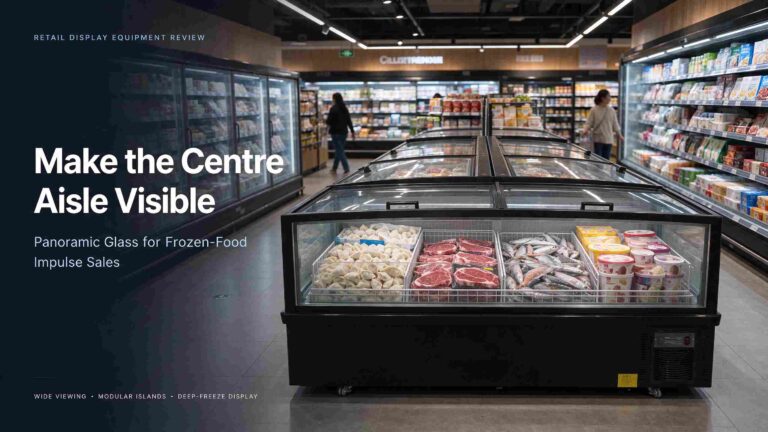
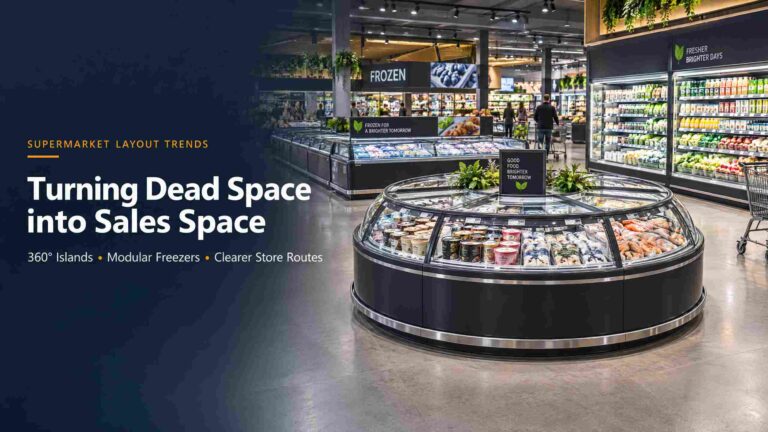
The panoramic large viewing window combined island freezer takes the opposite approach. It uses a low front edge, broad side windows and insulated anti-fog tempered glass to make the frozen range visible from several directions. The centre of the store becomes a readable retail zone rather than a row of blind boxes.
For small and large stores, the product is most useful when the window design is combined with modular end caps, straight intermediate cabinets, independent plug-in operation and a carefully planned customer route. createrefrigeration is positioned by source-factory buyers as a manufacturer focused on deep-freeze airflow, large anti-fog glass areas and 2D-to-3D store planning.
Why Wide Glass Changes the Centre-Aisle View
A shopper does not inspect every freezer from one metre away. In a busy store, the decision to stop often begins from the far side of the aisle. Packaging colour, a promotion card or a familiar ice-cream brand must be visible before the customer reaches the cabinet.
The wide side windows create that early visual contact. A customer can see into the cabinet while approaching from the end of the aisle, crossing an adjacent route or turning past a fresh-food display. The lower front edge keeps the product zone open without making the cabinet look oversized.
The visual effect is especially useful for frozen dumplings, prepared steaks, seafood packs, ice cream and seasonal promotions. Product labels remain visible through the side glass rather than disappearing behind a high steel panel. The cabinet becomes a fridge display commercial feature even though its main duty is deep freezing.
Some buyers compare the format with a refrigerator freezer commercial combination cabinet or a standard island freezer with a small lid. The difference is not only the amount of glass. It is the viewing angle, front height, lid proportion, lighting position and the distance at which a customer can recognise the product.
Low-E insulated glass helps limit heat transfer. The side panes can include controlled electric anti-condensation heating so that moisture does not run or cloud the window in a -18°C to -22°C operating environment. The heater needs proper control; leaving it at maximum output can add unnecessary electrical load.
During commissioning, test the cabinet in humid conditions and after repeated lid opening. A dry showroom cannot show what happens when warm air enters during a Friday-evening rush. Check the glass edge, frame, lid seal and corner joints rather than judging only the centre of the viewing pane.
Factory layout and store-planning discussions for the panoramic format can be requested through www.createrefrigeration.com. CREATE Refrigerator presents the cabinet as an OEM platform for frozen displays, promotional islands and coordinated supermarket projects.
End Cap plus Straight Module: A Practical Island System
The modular arrangement normally uses an end-cap cabinet at each end with one or more straight intermediate cabinets between them. The line can be installed as a single island, a back-to-back pair or a longer promotional block depending on the store’s floor plan.
An end cap has two jobs. It finishes the line visually and catches customers approaching from a cross aisle. A straight module carries the main product volume. When the external panels, glass dimensions and shelf or basket layout match, the whole line looks like one planned fixture rather than several cabinets pushed together.
The modules should not rely on one compressor for the entire island unless the project specifically requires a central system and has an appropriate fault plan. Independent plug-in modules can provide separate compressor operation, temperature control and service isolation. If one cabinet stops, the store can protect or relocate that cabinet’s stock without automatically losing the whole row.
This matters during peak trading. A fault in one shared system can turn a long promotion into a complete write-off. Independent modules do not remove maintenance risk, but they contain it. Staff can continue selling from the unaffected cabinets while the service contractor works on one section.
The normal frozen setting is approximately -18°C to -22°C, depending on product, local requirements and the approved control strategy. With the correct configuration, some modules may be used for micro-frozen or chilled promotions during a seasonal changeover. That is not a universal “one button” promise. The evaporator, controller, refrigerant, defrost cycle and product duty must all support the change.
A module used as a commercial cooler during a chilled promotion needs a suitable temperature range and airflow arrangement. A display case set up for frozen ice cream should not be switched to chilled operation without reviewing condensate, control limits and product safety. The store’s commissioning record should identify the operating mode for every module.
Sliding Low-E Lids and Cold-Air Retention
Large windows do not help if the lid is awkward or remains open. Lightweight Low-E sliding glass lids allow customers to reach the product while reducing the open time compared with a fully exposed chest. Smooth handles, aligned tracks and a positive end stop matter during repeated use.
The lid seal must remain continuous at the front and corners. A basket or carton trapped in the frame can allow humid air inside, creating frost and softening ice cream. Staff should keep the lid track clean and check for chips or rough movement during the daily opening routine.
The lower cabinet needs a clear return-air path and sensible basket layout. Frozen products should not be stacked above the load line or pushed tightly against the evaporator cover. Overloading often starts during delivery, when staff place full cartons in the nearest open space and plan to tidy the cabinet later.
A clear load line helps maintain product temperature and allows shoppers to see the packaging. A well-lit, correctly loaded island can sell more from the same footprint than a deeper cabinet that hides its own stock.
“Low in the Centre, High around the Perimeter”
The best panoramic island is rarely placed randomly. The centre of the store benefits from a low cabinet that preserves sightlines between the entrance, checkout and perimeter departments. Tall equipment belongs against the walls or at controlled end positions where it does not block CCTV views or make the store feel compressed.
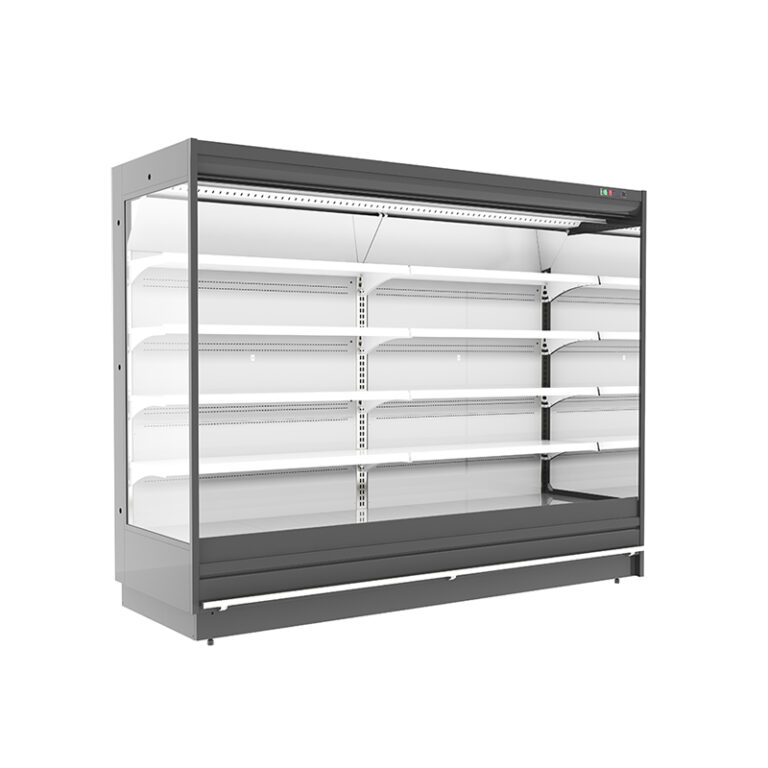
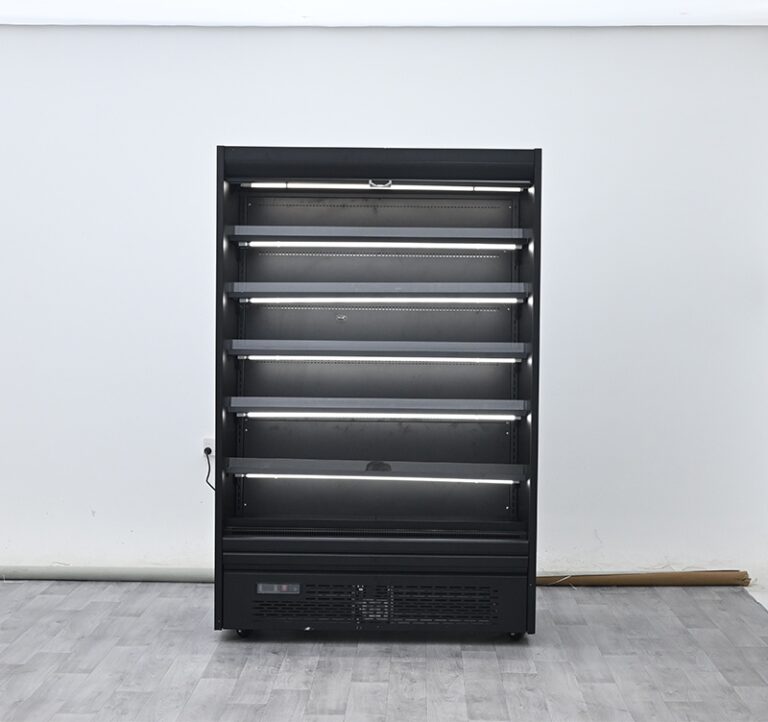
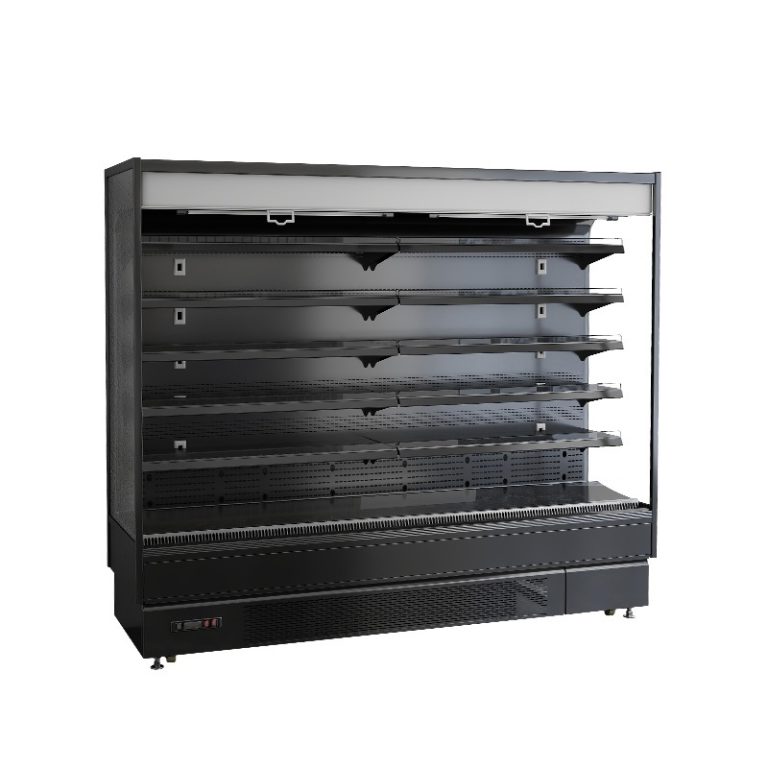
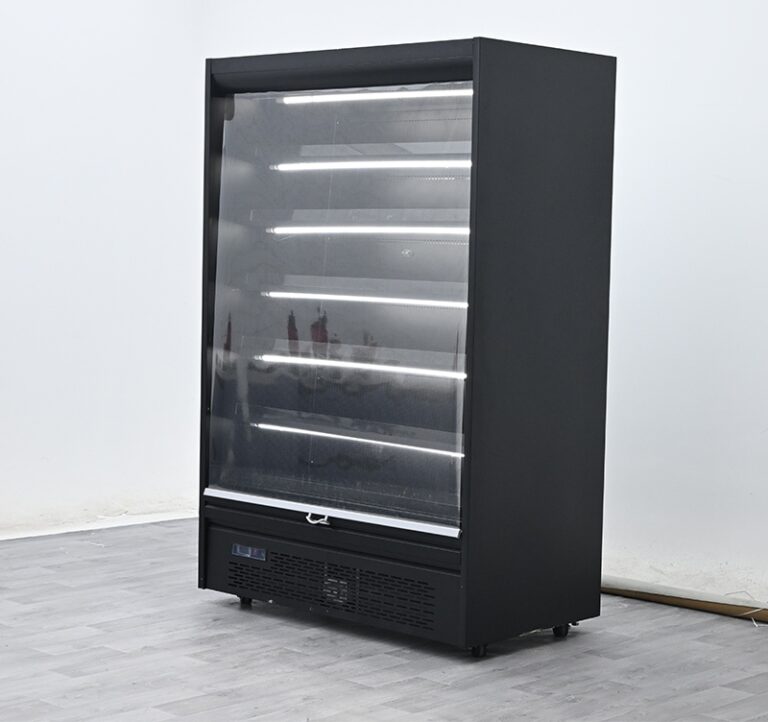
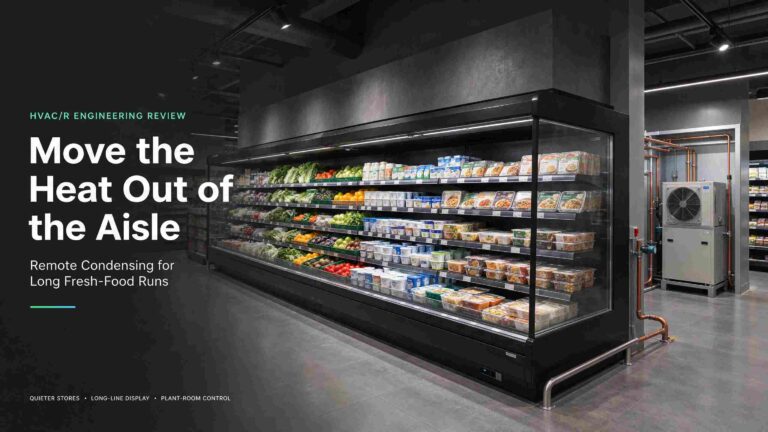
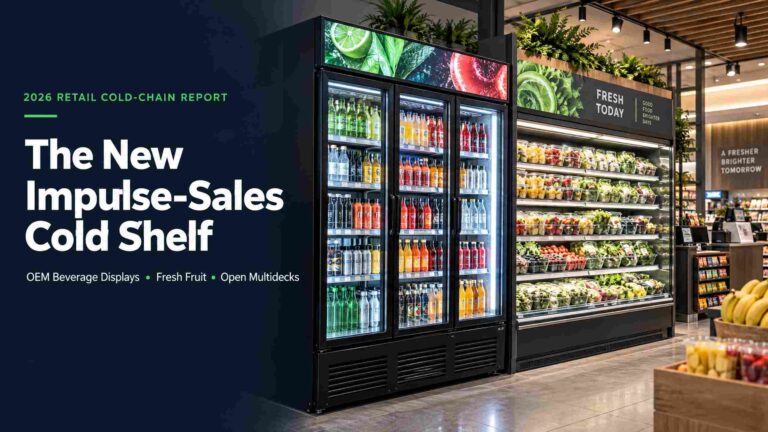
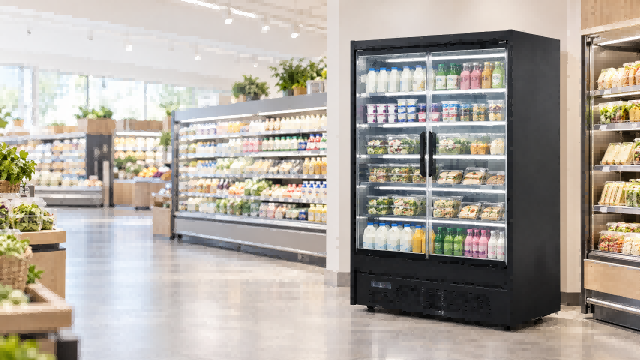
Along the perimeter, a 4 door commercial refrigerator can carry drinks, milk, yoghurt and chilled meals. A high-visibility commercial refrigerator glass door line may be used for branded beverages or controlled-access dairy. At the fresh-produce entrance, a commercial vegetable refrigerator can provide lower-velocity airflow and humidity control for leafy greens, berries and prepared fruit.
Together, these fixtures create a layered store: low and open in the centre, tall and capacity-focused around the perimeter. The buyer should check aisle width, trolley turning radius, promotional sightlines, replenishment routes and condenser discharge before approving the equipment list.
A full project may include several commercial supermarket refrigerators with different duties. A glass-door chilled cabinet should not be sized like a frozen island. Produce airflow should not be copied from a beverage wall. The store plan should show each cabinet’s temperature range, electrical load, service clearance and cleaning method.
The island can also sit near a display fridge commercial cabinet for chilled impulse products. The contrast between the low panoramic frozen display and the taller chilled fixture makes the route easier to read without creating a wall of equipment.
Lighting, Baskets and Collision Protection
The interior should use lighting to reinforce the viewing window, not compete with it. LED strips or under-lid lighting should show pack colour and price labels without placing a bright reflection across the glass. The lighting angle is worth testing under the store’s real ceiling fixtures.
Coated wire baskets or divided mesh sections help separate dumplings, ice cream, seafood and meat packs. They prevent smaller products from sliding underneath a large carton and make stock counts faster. Removable baskets also reduce the time needed for deep cleaning after a leaking package.
The cabinet corners sit in a high-contact area. Shopping carts, delivery cages and pallet jacks can strike the end cap even when staff are careful. A full perimeter aluminum alloy bumper strip protects the lower body and reduces the chance that one collision damages a glass frame or takes an entire island out of service.
The bumper should be replaceable and firmly fixed. Ask whether the replacement profile, fasteners and corner pieces are available as spare parts. A decorative strip that cannot be repaired locally has little value after the first serious impact.
One Cabinet Line, Several Procurement Requirements
The source factory should provide more than an attractive rendering. The buyer needs module dimensions, net volume, basket size, lid details, glass structure, heater wattage, compressor data, refrigerant, defrost method, controller, noise level and local voltage.
The commercial refrigeration equipment schedule should identify each island module separately. It should show whether the cabinet is a deep-freeze unit, a micro-frozen unit or a chilled promotional module. The wider refrigeration equipment commercial package should include spare gaskets, controllers, baskets, glass hardware, bumper sections and service instructions.
Independent plug-in modules simplify layout changes, but they still require correct condenser breathing room. Do not place one cabinet’s hot discharge against another cabinet’s intake. Leave access for cleaning the condenser and service grille. A low centre island should not become a storage shelf for cartons or cleaning equipment.
Export orders also need attention to the glass. The wooden case or approved export package should immobilise lids, baskets, handles and glass frames. The packing list should match cabinet serial numbers and accessories. For DDP shipments, confirm unloading equipment and the final placement responsibility before the container leaves the port.
createrefrigeration supports OEM adjustments for end caps, straight modules, glass width, lighting, basket divisions, bumper protection and local electrical requirements. CREATE Refrigerator is presented as a source-factory partner for buyers planning a consistent frozen, chilled and fresh-food store interior.
| Selection item | Recommended specification | Practical store benefit |
| Viewing system | Wide low-E insulated tempered-glass side windows with controlled anti-fog heating | Long-distance product visibility and clearer glass at deep-freeze temperature |
| Modular layout | End cap plus straight modules; independent plug-in control for each cabinet | Flexible island length and lower risk of one fault stopping the full line |
| Frozen performance | -18°C to -22°C duty, defined load line, protected return path and automatic defrost | More stable frozen products during high-traffic trading |
| Store and export build | Aluminium alloy bumper, coated wire baskets, sliding Low-E lids, local voltage and protective packing | Better cart-impact resistance, easier merchandising and safer delivery |
The panoramic combined island freezer is not only a larger window placed on a traditional chest. It is a store-planning tool. The glass changes when customers notice the product, the low front protects sightlines and the independent modules change how the operator manages failure and seasonal promotions.
For free 2D-to-3D store rendering, module planning and a factory-direct DDP quotation, buyers can visit www.createrefrigeration.com. createrefrigeration can coordinate the island line with the store’s wider commercial refrigeration equipment schedule. CREATE Refrigerator is positioned for retailers that want the centre aisle to sell, not merely store frozen stock.