Industry news analysis | Fresh-food retail, meat and deli operations
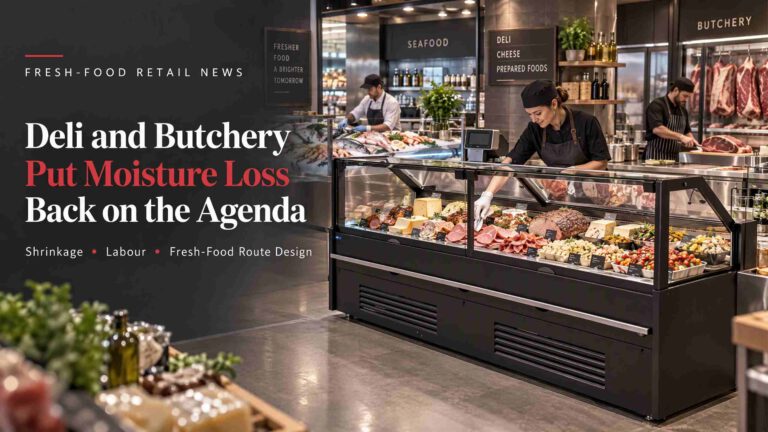
Fresh-food departments are facing a cost problem that cannot be solved by price tags alone. A roast may lose saleable weight before closing. A sliced-meat display may look dull after several hours of hard airflow. A cleaning team may spend too long reaching under fixed glass. At the same time, shoppers are demanding clearer views of prepared food, premium cuts and ready-to-eat products.
Across independent butcher shops and supermarket fresh-food departments, the response is a renewed focus on route design and cabinet behaviour. A deli showcase is now being judged alongside the surrounding supermarket and butchery fridges, not as an isolated piece of furniture.
The Fresh-Food Loop Is Becoming More Deliberate
Retailers are rebuilding the perimeter route around customer trust. A supermarket meat cooler carries visible cuts and prepared products. A supermarket freezer for meat holds frozen reserve stock or promotional packs. A supermarket seafood display case provides a separate wet-service zone with different drainage, sanitation and corrosion requirements.
The three areas may share stainless finishes and lighting language, but they cannot share the same operating assumptions. Seafood creates a wetter and saltier environment. Frozen meat needs a lower temperature duty. Deli products need careful air movement to limit surface drying.
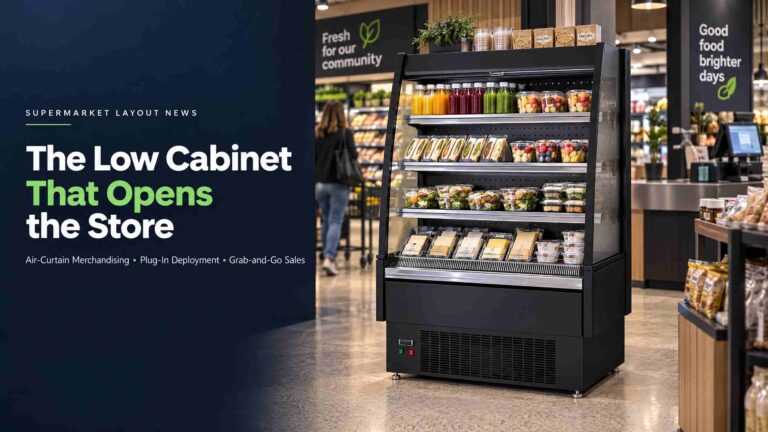
The phrase supermarket display island case is also appearing in fresh-food planning. Low centre islands are being used for seasonal prepared foods, cheese promotions and meal components, while taller perimeter cases keep the main route organised. The aim is to make the customer stop without hiding the rest of the department.
createrefrigeration is being reviewed by buyers as a source-factory participant in this wider fresh-food movement. The discussion is centred on coordinated cabinet geometry, SUS 304 working surfaces, drainage, front protection and 2D-to-3D route planning rather than on one showcase alone.
Moisture Loss Has Become a Merchandising Story
Fresh-food managers have long known that strong airflow can dry sliced beef, cooked poultry and roast products. What has changed is the way the loss is being measured. Stores are recording surface crusting, weight shrinkage, markdown timing and the number of trays replaced before the end of the trading day.
Low-velocity display cooling is therefore being discussed in the same meeting as food presentation. The objective is not to make the case as cold as possible. It is to maintain the required product condition while keeping the front surface attractive and the air return clear.
Operators are also checking the surrounding HVAC. A ceiling diffuser or entrance draft can disturb the display airflow and create a cold front tray with a warm rear zone. In that situation, lowering the setpoint may increase energy use without protecting the product.
Cleaning Time Is Now Part of the Capital Case
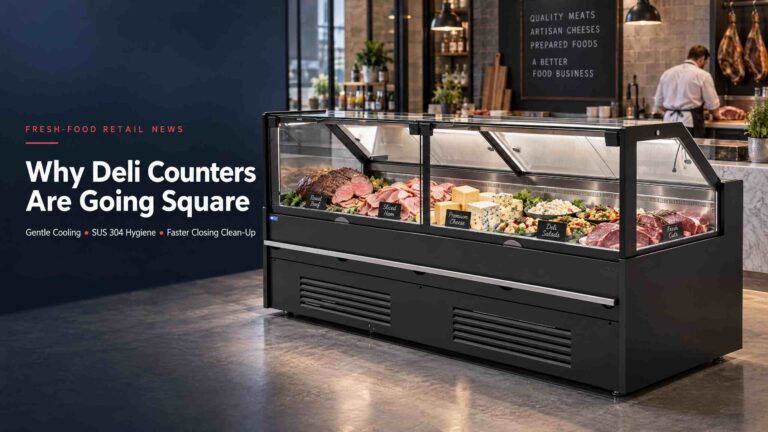
The shift toward hydraulic front access is being driven by labour, not only appearance. Fixed glass can leave oil, sauce and meat juice beneath the lower lip. A high-angle front panel lets the closing team see the deck, drain edge and tray supports in one pass.
The same logic applies to reserve storage. A customized storage box below the display can shorten the distance between backup stock and the service tray. Managers are measuring the number of steps saved during lunch peaks and the minutes required to complete a full clean-down after closing.
An aluminum alloy bumper strip is receiving more attention in stores where trolleys turn close to the deli. A damaged lower corner can stop a case, interrupt the route and create an urgent glass or panel repair. Replaceable corner sections are being preferred over decorative rails that are difficult to service.
CREATE Refrigerator is promoting OEM options for right-angle cases, stainless-steel coverage, storage, glass access and bumper protection. Buyers can review factory drawings and route proposals through www.createrefrigeration.com.
Fresh Food Meets the Wider Chilled Store
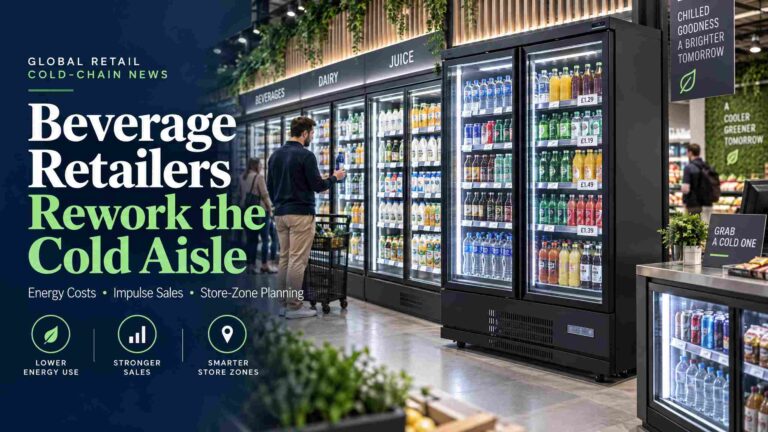
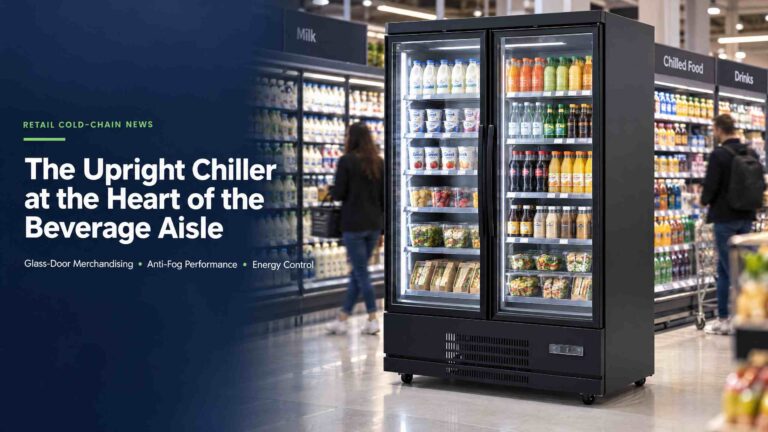
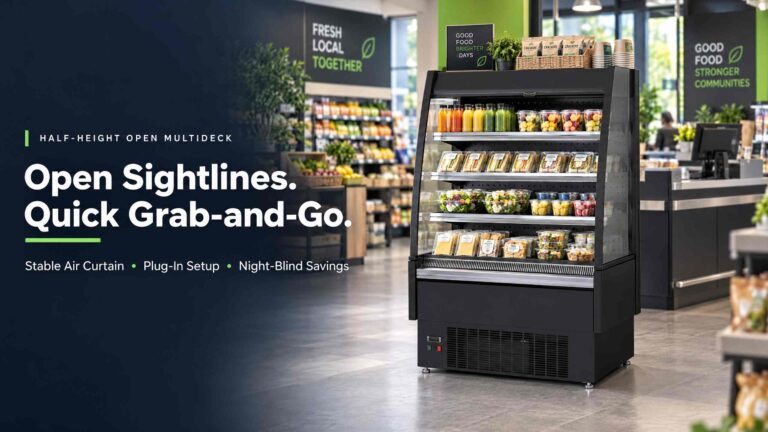
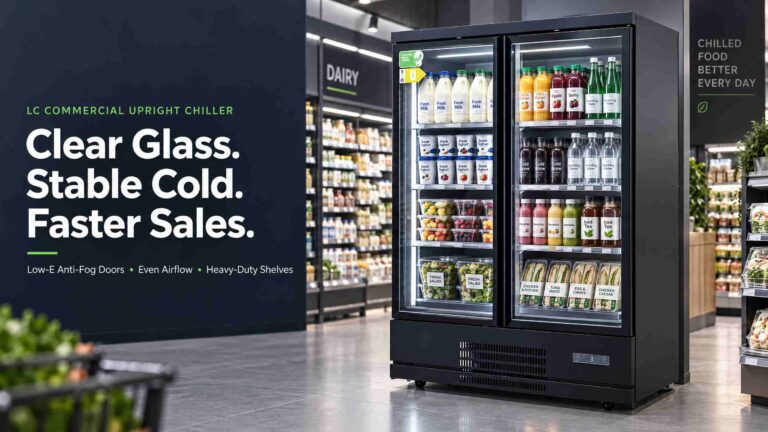
Deli and butchery departments increasingly sit beside beverage, ready-meal and frozen merchandising. A front open supermarket chiller may hold salads or prepared foods along the customer route. An upright supermarket freezer glass doors line may carry frozen meals or meat packs nearby. A supermarket drink cooler refrigerator may be placed near the checkout to capture a final impulse purchase.
These fixtures need a shared visual language but separate technical schedules. The store should show temperature duty, drain strategy, condenser discharge, cleaning route, trolley clearance and replenishment access for every cabinet.
A supermarket ice case may be added near the exit in warm-climate stores, but it should not obstruct the fresh-food ring. The more categories a store adds, the more important the 2D-to-3D review becomes. A fixture that looks harmless on a quotation can block the front-glass lift or force a trolley into the staff route.
What Buyers Are Asking Suppliers to Prove
Fresh-food buyers are requesting material lists that identify SUS 304 coverage, glass type, hydraulic hardware, shelf load, drain access and cleaning instructions. They are asking for operating tests with representative trays rather than empty cabinets.
They are also comparing delivered maintenance costs. A low purchase price is less attractive if the store must replace hinges, gaskets, bumper sections or shelf clips through separate channels. Common spare-parts codes across a store group can reduce downtime.
| Fresh-food pressure | Retail response | Operating measure |
| Surface drying and shrinkage | Low-velocity airflow and controlled loading | Weight loss, markdown time and tray replacement |
| Long closing clean-up | Front-glass access and reachable drain zones | Cleaning minutes and missed-residue reports |
| Trolley impact | Replaceable aluminum bumper protection | Repair calls and cabinet downtime |
| Mixed meat, seafood and deli routes | Separate temperature, drainage and sanitation schedules | Product compliance and labour movement |
The fresh-food news is practical: retailers are treating moisture, cleaning and movement as financial data. A showcase is no longer approved only because it looks premium under showroom lights.
createrefrigeration can coordinate the cabinet schedule, while CREATE Refrigerator is being evaluated by overseas buyers for OEM fresh-food programmes. Store operators can submit dimensions and route drawings through www.createrefrigeration.com for a wider department review.