
A plug-in display case can feel like the easiest choice: ship the cabinet, place it in the store, connect power, and start selling. For small stores, remodels, and pilot layouts, that simplicity is valuable. Still, plug-in refrigeration heat load has to be counted somewhere. A self-contained case removes heat from food and drinks, then rejects that heat into the sales area unless the system is designed to send it elsewhere.
That heat changes more than the equipment bill. It can raise aisle temperature, add stress to the store air-conditioning system, and make shoppers feel a warm pocket near the cases. B2B buyers comparing remote vs plug-in refrigeration costs should look past the cabinet price and ask how the store will handle the rejected heat during the hottest trading hours.
What Plug-In Heat Load Means In A Store
Self-contained refrigeration keeps the compressor and condenser inside or attached to the cabinet. The evaporator absorbs heat from the refrigerated space. The condenser releases heat into the surrounding room. In plain store language, the case cools the product but warms the shop.
Cooling Product Moves Heat, It Does Not Remove It From The Building
A plug-in unit does not destroy heat. It moves heat from one side of the refrigeration cycle to another. Product heat, door-opening heat, lighting heat, fan motor heat, compressor heat, and defrost heat all end up affecting the indoor environment in some form. That is why self-contained refrigerator HVAC load becomes a layout question, not only an equipment question.
Air Conditioning Picks Up The Extra Work
When heat stays inside the store, the air-conditioning system has to remove it. No exact cost can be stated without store drawings, climate, operating hours, cabinet quantity, and HVAC capacity. The buying risk is simple, though: too many plug-in cases in a small or poorly ventilated shop can make the AC work harder while still leaving uncomfortable aisles.
Where Plug-In Cases Make Sense
Plug-in refrigeration is not a weak option. It is often the right fit when the project needs speed, a smaller footprint, or easier installation. The key is to match it to the store’s air-conditioning capacity and airflow pattern.
Small Stores And Phased Remodels
Convenience stores, cafes, bars, and temporary category tests often prefer plug-in cabinets because they avoid large remote piping work. A buyer can add a beverage case, meat self-service counter, or small chiller while keeping the remodel manageable. The tradeoff is that plug-in display case heat rejection stays close to shoppers and staff.
Locations With Service Simplicity Needs
In markets where refrigeration technicians are harder to schedule, a self-contained cabinet can be easier to replace, move, or service. That is useful for franchise stores and remote branches. Buyers should still check condenser access, cleaning space, rear or top clearance, fan noise, and whether the store AC has enough margin in summer.
When Remote Refrigeration Becomes The Better Fit
Remote refrigeration moves the heat rejection away from the cabinet area, often to an outdoor or plant-room condenser. That can make the sales floor more comfortable and reduce local hot spots near the merchandise. It also brings higher installation planning, piping, commissioning, and maintenance requirements.
Long Lineups And Dense Refrigerated Areas
A supermarket with long refrigerated aisles, multiple freezers, and high shopper traffic may not want every compressor rejecting heat into the sales floor. Remote systems can reduce local heat buildup, but they require careful design and skilled commissioning. The right answer depends on store size, climate, power supply, installation budget, and service network.
The Cost Comparison Should Include The Building
Remote vs plug-in refrigeration cost is often argued too narrowly. Plug-in cases may lower initial installation work. Remote systems may shift cost into piping, outdoor equipment, and technical setup. A fair comparison includes HVAC impact, store comfort, service access, downtime risk, refrigerant preference, future expansion, and the cost of changing the layout later.
Product Details To Check Before Choosing Plug-In
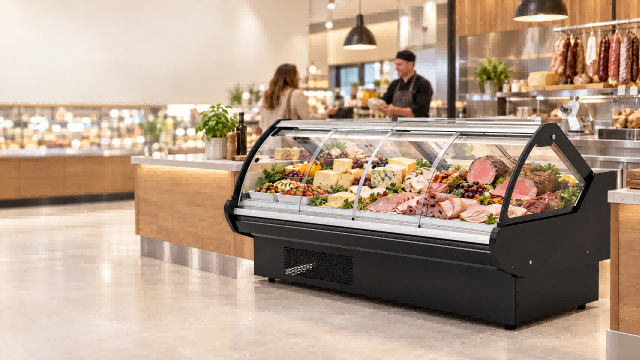
Create gives buyers several useful examples. The plug-in display case is a double-layer self-service counter with 6000K LED lighting, a basket, a push-up glass top, optional stickers, free combination, and a large presentation window. It has R290 refrigerant, automatic defrost, an Elitech thermostat, a Secop compressor, a copper tube evaporator, an EBM fan, low-E coated glass, a C-P 60 mm panel, and a -2 to -5°C operating range.
Cabinet Format Changes Heat Concentration
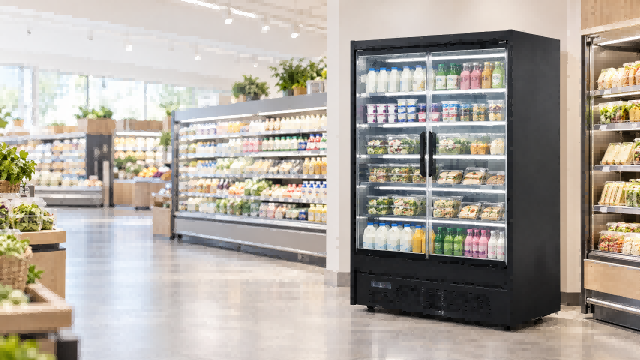
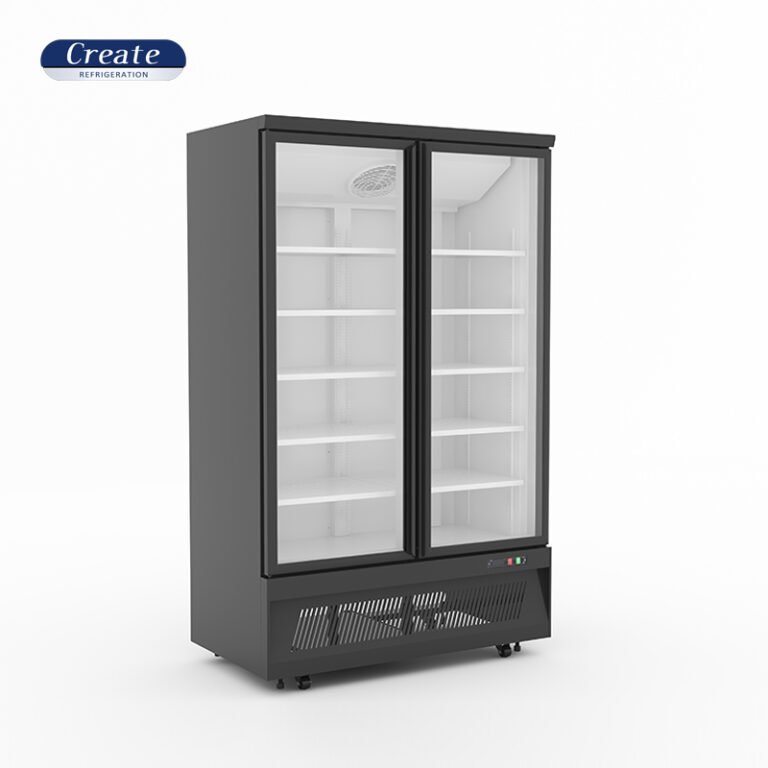
A self-service counter, glass-door fridge, open multideck, and overhead combination freezer reject heat differently because their compressors, fan paths, and placement are different. A glass display refrigerator in a combination island format uses a plug-in design with independent upper and lower compressors, independent thermostats, 6000K LED lighting, free combination, and a top section that can be a chiller or freezer. That flexibility helps merchandising, but it also deserves a heat-load discussion when several modules are placed together.
Plug-In And Remote Can Share The Same Store
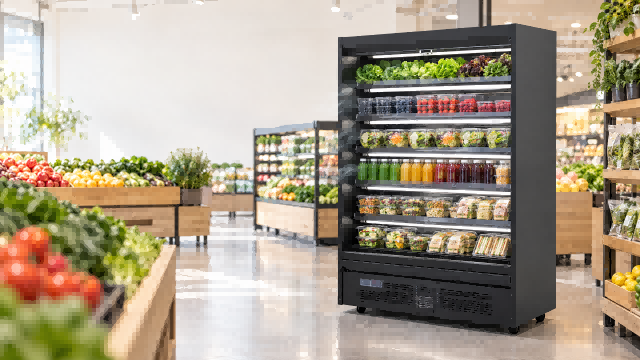
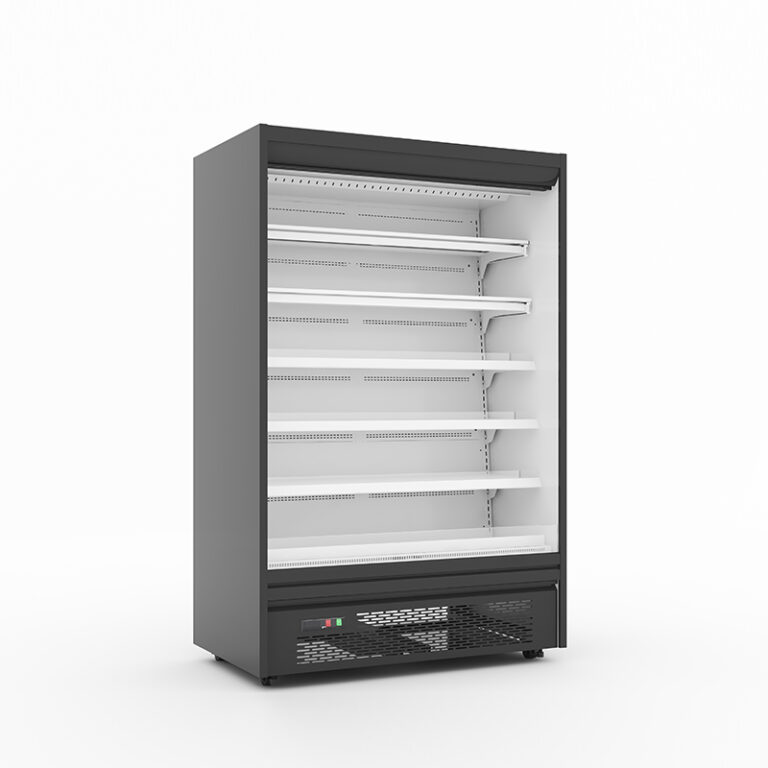
Many real projects use both. Remote cabinets may carry the main refrigerated wall, while plug-in units serve promotions, end caps, fresh meat, beverages, or temporary layouts. The remote multideck chiller uses seven adjustable metal shelves, automatic defrost, a transparent night curtain, R404A/R290/R448A options, an Elitech thermostat, a Secop compressor, a copper tube evaporator, an Ebm fan, and a 2-8 degrees C range. That kind of cabinet can sit in a different planning category from a plug-in case because its heat rejection path is handled differently.
How To Plan The Store Around Heat Rejection
A good layout keeps refrigeration and air conditioning from fighting each other. Do not place plug-in condensers where warm discharge air blows into the return path of another case. Avoid trapping heat behind decorative panels. Keep condensers clean and reachable. Check whether hot discharge air will collect under low ceilings, near service counters, or beside entrance drafts.
A buyer’s checklist can stay practical:
1. Count every self-contained cabinet in the same zone.
2. Ask where each condenser rejects heat.
3. Confirm required clearance around the cabinet.
4. Share store AC capacity and supply/return locations with the supplier.
5. Keep plug-in cases away from ovens, windows, and direct entrance drafts.
6. Ask whether a remote case is better for long lineups or high-density zones.
7. Include cleaning access, fan noise, and spare condenser parts in the RFQ.
Supplier Support In The Final Specification
Heat-load planning becomes much easier when the supplier can read the store, not just quote a cabinet. Create Refrigeration is based in Xingfu Industrial Park, Binzhou City, Shandong Province, and works across commercial supermarket refrigeration equipment, supermarket shelves, stainless steel equipment, Western kitchen equipment, and cold storage projects. It has CAD drawing support, 3D store layout renderings, OEM/ODM service, customized and modified products, 110V/60Hz and 220V options, DDP service when an address is provided, one-year warranty, and spare parts support for some bulk orders.
For a buyer planning a new store, those services can connect equipment selection with building comfort. Send the floor plan, expected case list, traffic peaks, climate notes, voltage, refrigerant preference, and AC constraints. Then ask which units should be plug-in, which should be remote, and where heat rejection may affect commercial store refrigerator temperature. A supplier that answers those questions early helps avoid a store that looks cold on the shelf but feels hot in the aisle. For more detail, see our guide on this article.
FAQ
Q1: Does every plug-in case increase store air-conditioning load?
A1: A self-contained case rejects heat into or near the sales area unless designed otherwise, so the store AC usually has extra heat to remove.
Q2: Is remote refrigeration always cheaper than plug-in refrigeration?
A2: No. Remote systems may improve heat placement but need more installation planning, piping, commissioning, and service support. The full building cost matters.
Q3: What should buyers ask about plug-in display case heat rejection?
A3: Ask where heat exits, required clearance, condenser cleaning access, fan noise, HVAC impact, voltage, refrigerant, spare parts, and whether remote placement is better.