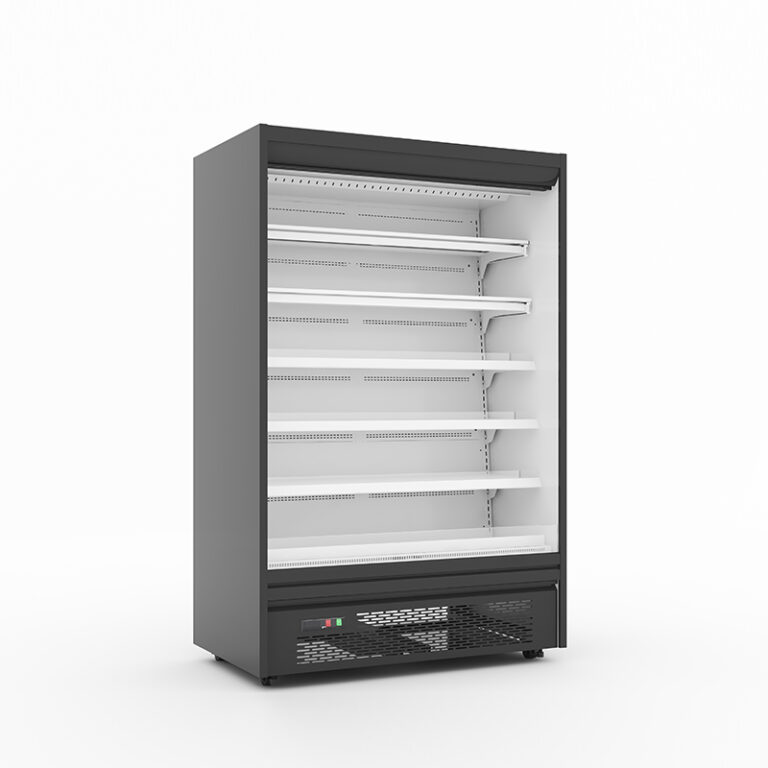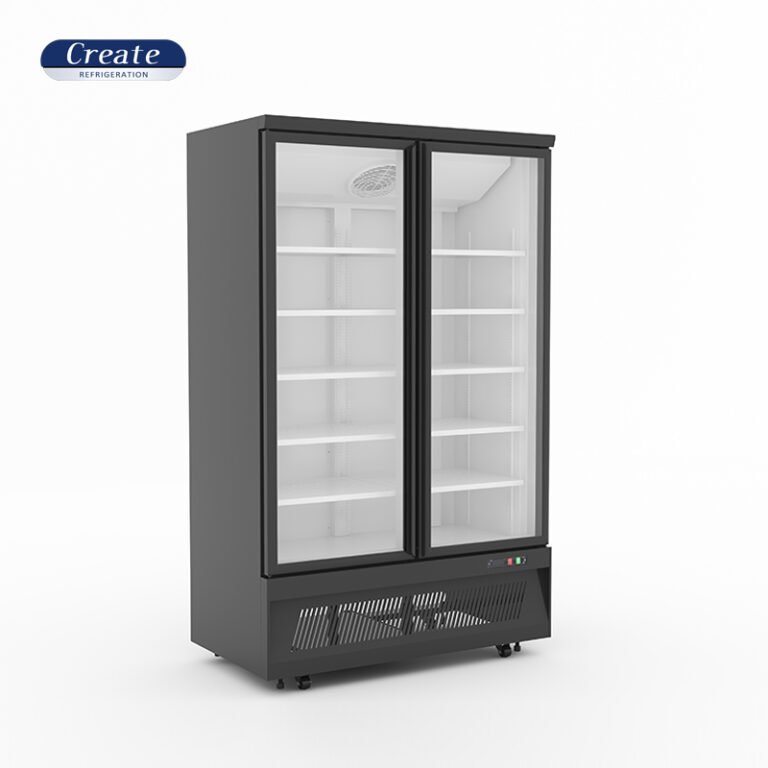
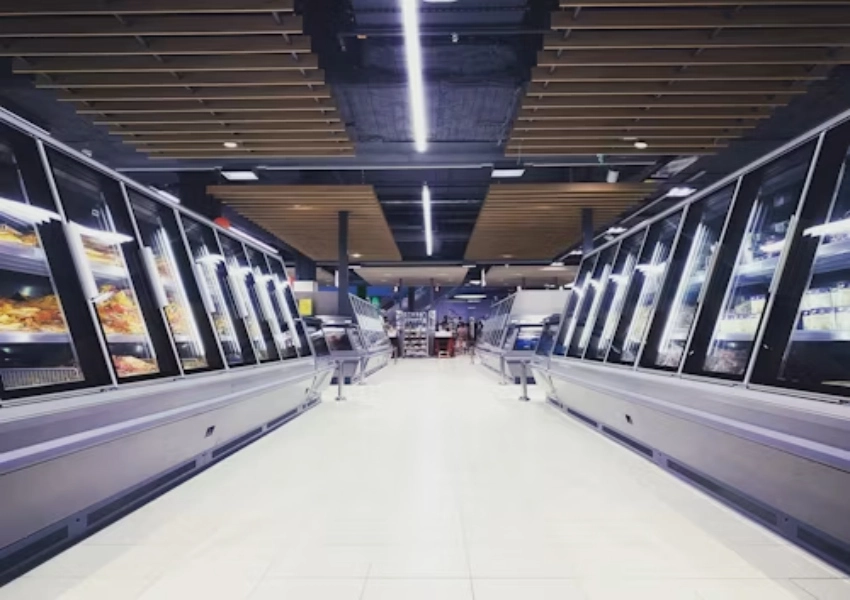
A commercial refrigerator does not use the same amount of energy all day. It reacts to the store. Morning stocking, lunch-hour beverage traffic, children holding doors open, and staff cleaning the cabinet all change the load. That is why refrigerator door opening energy use is not a small operating detail. In a busy store, the door can become the part of the system that decides how hard the compressor, fans, and controller have to work.
The problem is easy to miss during purchasing. A cabinet may look efficient on paper, yet struggle in a store where shoppers open the same glass-door every few seconds. Buyers comparing a glass-door refrigerator, a glass-door freezer, or an upright commercial freezer need to ask a practical question: how quickly can this case recover after real traffic, not only after a lab-style test?
What Changes Every Time The Door Opens
Every door opening moves heat and moisture into the cabinet. The event may last only a few seconds, but the cabinet has to undo it afterward. In a low-traffic backroom unit the load may be modest. In a supermarket beverage aisle, the same action repeats hundreds of times a day.
Warm Air Replaces Cold Air
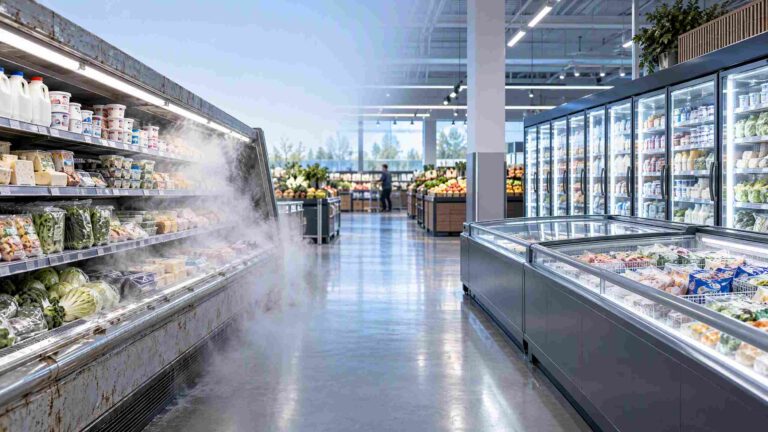
Cold air spills out as soon as the door swings open. Warmer store air moves in, and the evaporator has to pull that heat back out. The bigger the door, the longer it stays open, and the more often it is opened, the more recovery work follows. Commercial fridge temperature recovery is the period when the case is trying to return to its target range after that disturbance.
Humidity Adds A Second Load
Warm air also carries moisture. In chilled cabinets, that moisture can condense on glass, product packaging, or the evaporator. In freezer cabinets, it can become frost. A unit with weak gaskets or lazy self-closing doors keeps taking in humid air even after the shopper walks away. Energy use rises because the system is fighting both heat and moisture.
Why High-Traffic Stores Feel The Problem First
Door frequency is not evenly spread through the day. Beverage coolers work hardest during short rush periods. Frozen food doors may open more slowly, but each opening has a bigger temperature gap to recover from. The equipment has to fit the traffic pattern, not just the product category.
Beverage Coolers Need Fast Recovery
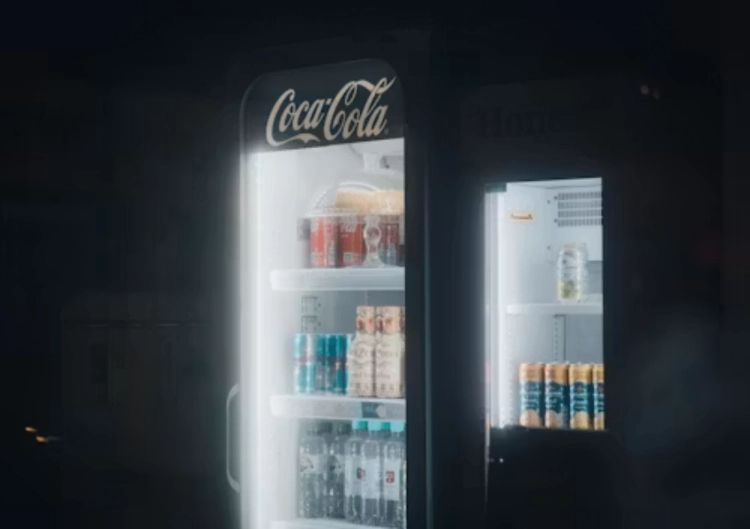
A high-traffic beverage cooler often sits near the entrance, checkout, or foodservice counter. Shoppers make quick choices, doors are opened in bursts, and staff may restock warm drinks during business hours. If airflow is weak or shelf loading blocks the path, the front rows can recover slowly while the controller reads a better average elsewhere.
Freezer Doors Are Less Forgiving
A glass-door freezer faces a larger temperature difference between the cabinet and the store. Door openings pull in warm air and humidity, and then the system has to protect frozen food while avoiding heavy frost. For an upright commercial freezer, buyers should check door seal pressure, glass construction, defrost logic, fan delay, and how the case restarts after frequent openings.
Design Details That Reduce Door-Opening Loss
There is no single feature that solves refrigerator door opening frequency. The better question is whether the cabinet design helps the store recover quickly and discourages bad habits. Several details are worth checking before a buyer accepts a quote.
Door Return, Gaskets, And Glass
Self-closing action matters because the door has to do the work that busy shoppers and staff forget to do. Gaskets should seal evenly, without weak corners. Low-E coated glass, double glazing for chillers, and heated triple-layer glass for freezers can also help the door handle temperature difference and visibility. Those details support glass-door refrigerator efficiency because the cabinet loses less cold air after every transaction.
Air Ducts, Fans, And Controls
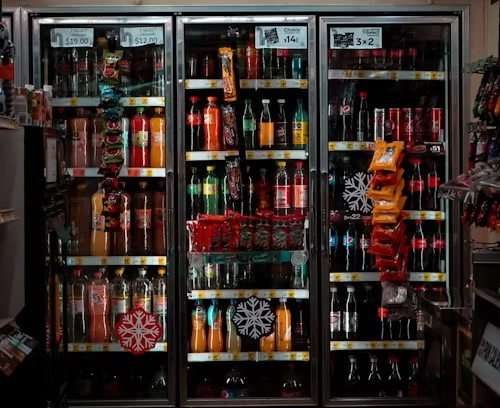
Door openings disturb the internal air pattern. A good air duct design helps pull the cabinet back toward even temperature instead of leaving warm corners. Fans need to move air across loaded shelves without drying food badly. Digital controls should respond to temperature drift without forcing the compressor into needless cycling.
Product Checks For Glass–Door Refrigerators And Freezers
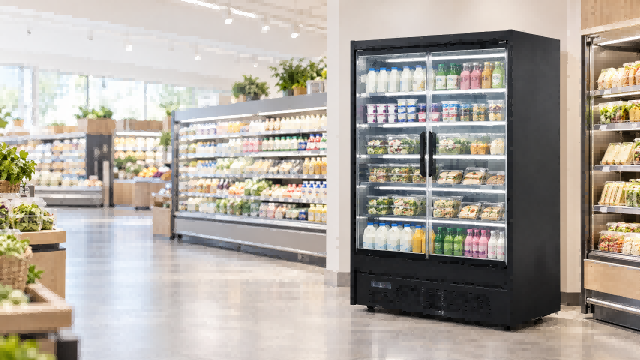
Create Refrigeration’s multiple upright glass-door supermarket freezer is a plug-in 1-4 door family with five shelves, automatic defrost, casters with brakes, one-piece foaming, LED 6000K lighting, and chiller/freezer versions with different glass structures. It has R404A/R290 refrigerant options, an Elitech thermostat, a Secop compressor, a copper tube evaporator, an Ebm fan, low-E coated glass, a C-P 70 mm panel, and a 2-8 degrees C temperature range for the chiller configuration.
Match Door Count To Traffic
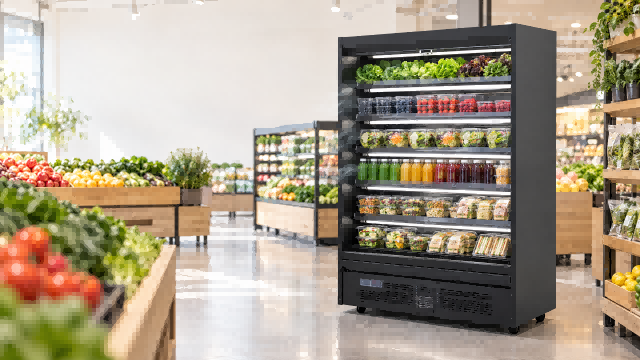
A larger door count does not automatically mean better performance. It may spread customer traffic across more doors, but it also changes installation space, stocking routes, and the number of seals that must stay tight. For wider beverage or mixed chilled sections, the 7 doors upright showcase chillers use automatic defrost, five shelves, R404A/R290/R448A options, an Elitech thermostat, a Secop compressor, a copper tube evaporator, an Ebm fan, low-E coated glass, a C-P 70 mm panel, and a 2-8 degrees C or -18 to -23 degrees C range depending on configuration.
Check Smaller Beverage Formats Too
Convenience stores, bars, and checkout beverage areas may need compact formats rather than long supermarket lineups. A mini 2 doors beer fridge in the back-bar range uses a plug-in design, automatic defrost, R600 refrigerant, an Elitech thermostat, a Secop compressor, copper tube evaporator, an Ebm fan, low-E coated glass, digital temperature control, real air cooling, frost-free operation, and a swing door with a self-closing function. That makes it a useful reference when buyers compare smaller high-turnover drink cabinets with full-height supermarket cases.
How Buyers Should Test Door Frequency Before Ordering
The safest buying process uses store behavior as part of the specification. Ask the store team when doors open most often, which SKUs sell fastest, whether staff restock during trading hours, and whether the cabinet will sit near entrances, ovens, windows, or air-conditioning supplies. Then ask the supplier to recommend door count, compressor type, refrigerant, glass structure, shelf plan, voltage, and spare parts for that condition.
A short RFQ checklist works well:
1. What traffic level is this model normally used for?
2. Is the door self-closing, and can the closing force be adjusted?
3. What glass structure is used for chiller and freezer versions?
4. What is the thermostat, compressor, evaporator, fan, and refrigerant package?
5. How does the cabinet recover after repeated openings and warm product loading?
6. Which gaskets, hinges, sensors, and fans should be stocked as first-order spare parts?
Supplier Support In The Later Buying Stage
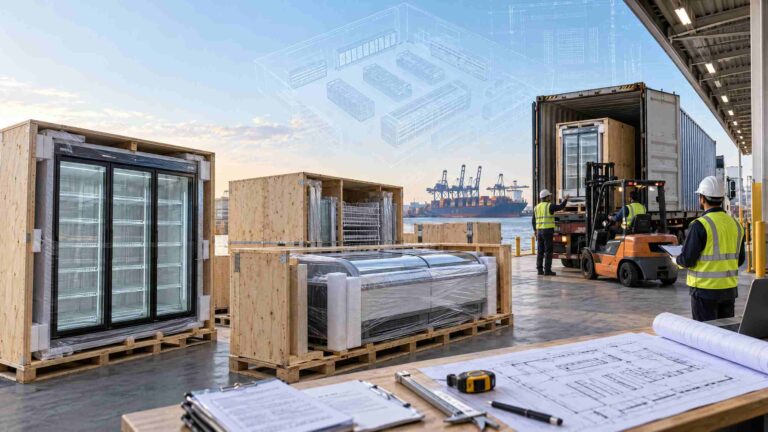
Door frequency also belongs in store planning. Create Refrigeration works from Xingfu Industrial Park in Binzhou, Shandong, and its knowledge base covers commercial supermarket refrigeration equipment, supermarket shelves, stainless steel equipment, Western kitchen equipment, and cold storage projects. The company supports CAD drawings, 3D supermarket layout renderings, OEM/ODM service, customized and modified products, 110V/60Hz and 220V options, DDP service when an address is provided, one-year warranty, and spare parts for some bulk orders.
That background helps when a cabinet is not a standalone purchase. A buyer may need a glass–door freezer and cooler lineup, a beverage island, and shelves arranged around the same traffic path. Share drawings and door-opening assumptions early. A supplier can then discuss layout, cabinet size, product facing, and service access before the order becomes expensive to change.If you would like to learn more, please read this article.
FAQ
Q1: Does refrigerator door opening frequency matter more than cabinet size?
A1: Both matter. Size sets the basic load, while door frequency adds real store load through warm air, humidity, and recovery time.
Q2: Can a lower thermostat setting fix slow commercial fridge temperature recovery?
A2: Usually not. It may increase runtime while the real problem remains door leakage, weak airflow, blocked shelves, or poor loading habits.
Q3: What should buyers ask before choosing a high-traffic beverage cooler?
A3: Ask about self-closing doors, glass type, gasket parts, fan and air duct design, refrigerant, thermostat, compressor, voltage, defrost, and spare parts.