
Supply-chain analysis for overseas supermarket investors and retail infrastructure directors
The arithmetic behind a new supermarket has changed. Equipment is no longer bought only by comparing the price printed on a local dealer’s quotation. Investors are now adding dealer margin, duplicated freight, site modifications, electrical corrections, customs delay, replacement parts and the cost of opening late.
In many markets, a local intermediary may add 40%–60% to a factory-equivalent equipment cost before the cabinets reach the store. That range is not universal, and local service may justify part of the difference, but the buyer needs to know what is actually included. A low-looking local quote can exclude unloading, commissioning, special voltage conversion, drain work or replacement glass.
The second problem is fragmentation. One dealer supplies an upright chiller, another supplies a frozen island, and a third supplies a branded drinks case. The finishes do not match. The controllers use different menus. Condenser exhausts face one another in a narrow service corridor. The electrical contractor discovers that several defrost heaters start on the same undersized circuit.
For small and mid-sized supermarket groups, these issues have pushed factory-direct procurement higher up the project agenda. The aim is not simply to buy cheaply from abroad. It is to buy a coordinated cold-chain package, inspect the hardware before shipment and assign clear responsibility for delivery and commissioning.
The End of Patchwork Buying
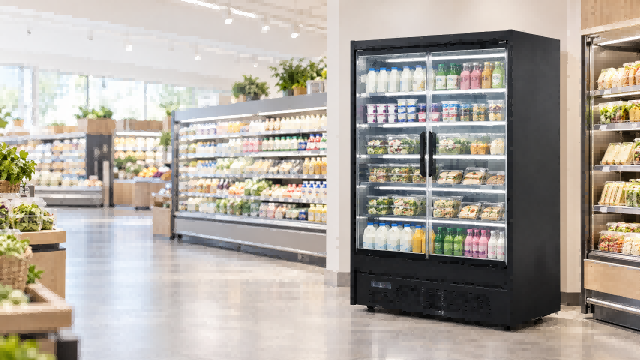
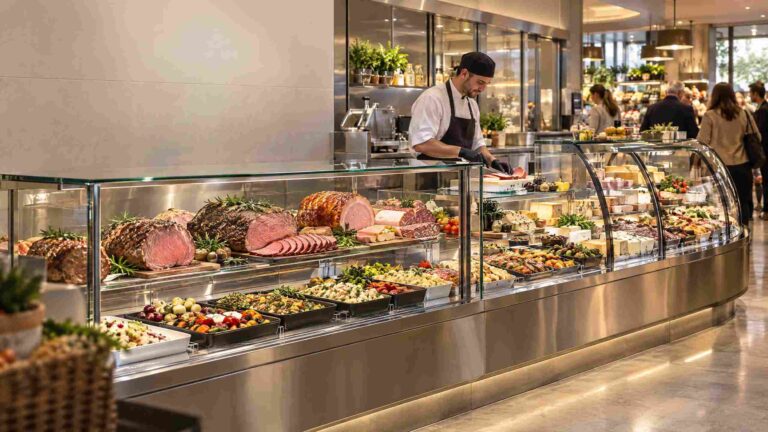
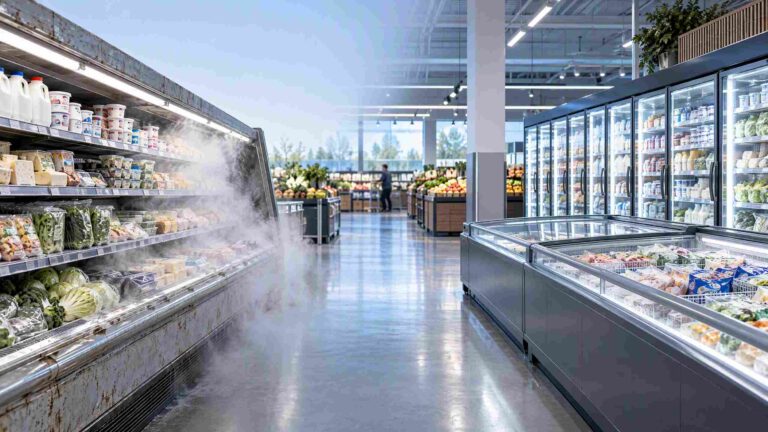
A complete project may require a supermarket cold chain equipment package covering beverage walls, fresh produce, meat, frozen food, promotional islands and back-of-house reserve storage. The equipment may include a supermarket commercial display fridge near the checkout, a supermarket equipment display chiller along the main wall and a high-capacity refrigerators supermarket showcase line for dairy, drinks and ready meals.
When these cabinets come from one approved equipment schedule, the buyer can align the fascia colour, handle design, LED tone, shelf pitch, controller documentation and spare-parts list. The project team can also show the same cabinet code on the drawing, purchase order, packing list and commissioning sheet.
A local dealer network can still be the correct choice for a remote or highly regulated market. The question is whether the dealer is adding site value or simply passing on a factory product with another margin layer. Ask for the factory name, the original model code, component list, warranty route, delivery scope and evidence of commissioning support.
createrefrigeration is being examined by overseas buyers as a source factory for coordinated refrigeration programmes. Its proposed model combines OEM cabinet production, custom dimensions, project drawings and export delivery rather than treating every case as an isolated catalogue item.
The first cost comparison should include the complete route:
- Factory equipment and approved options.
- OEM graphics, lighting, glass, shelving and bumpers.
- Export packing and inland transport to the port.
- Ocean freight, insurance and destination charges.
- Customs clearance, duties, taxes, unloading and site delivery.
- Installation, electrical work, commissioning and local service stock.
For an initial equipment schedule and project discussion, buyers can review factory-direct options through www.createrefrigeration.com.
From Single-Unit Customisation to a Full-Temperature Production Line
The practical benefit of a factory order is not that every cabinet becomes identical. The benefit is that different cabinets can be engineered as one store system. Produce, dairy, beverages, meat and frozen food have different duties, yet the drawings, packing codes and service information can remain coordinated.
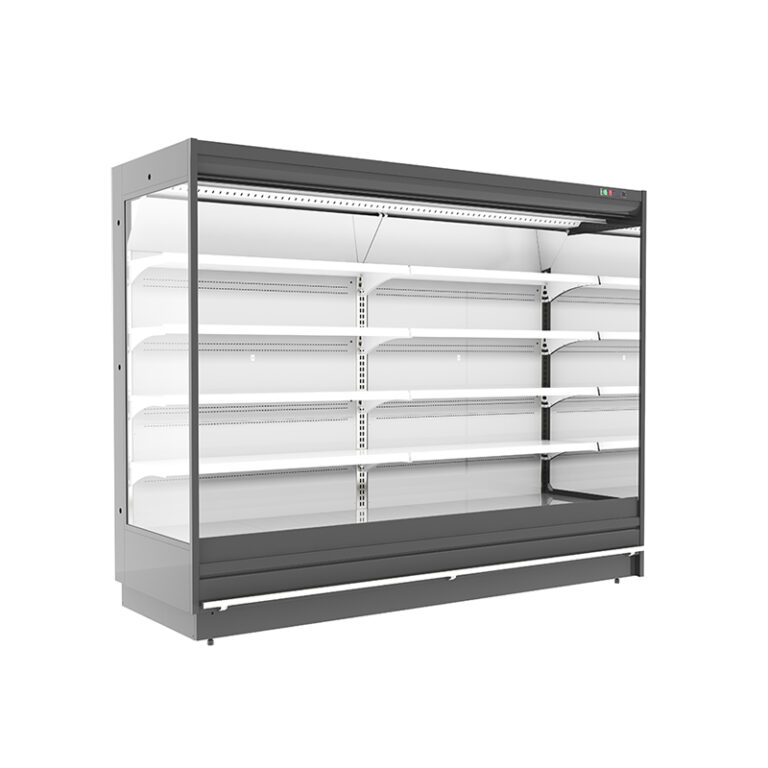
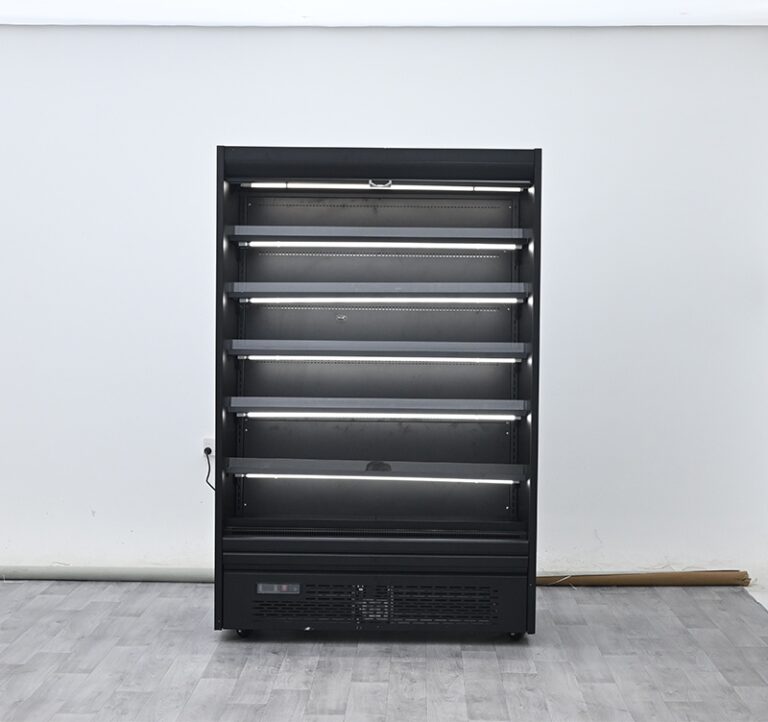
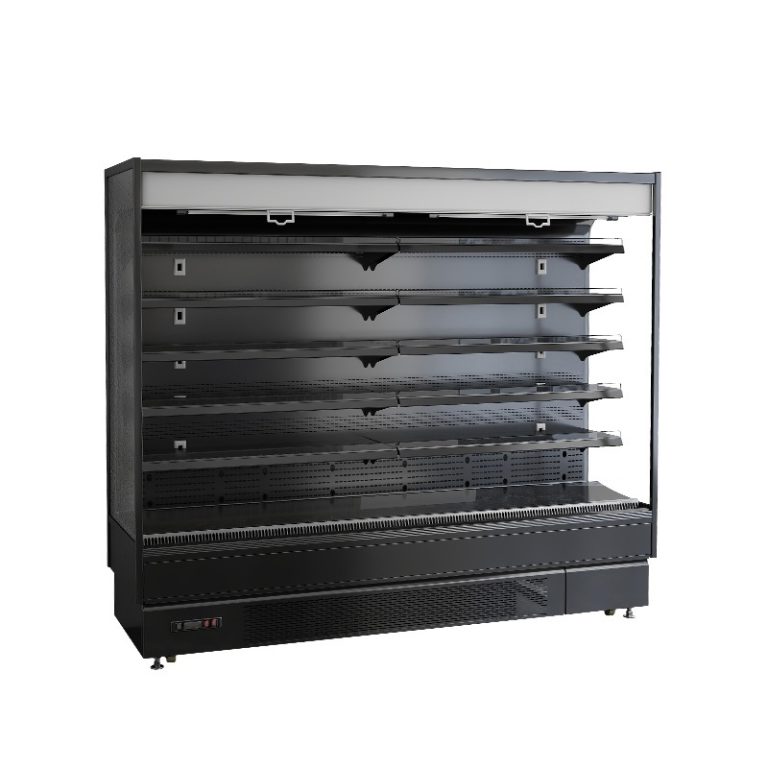
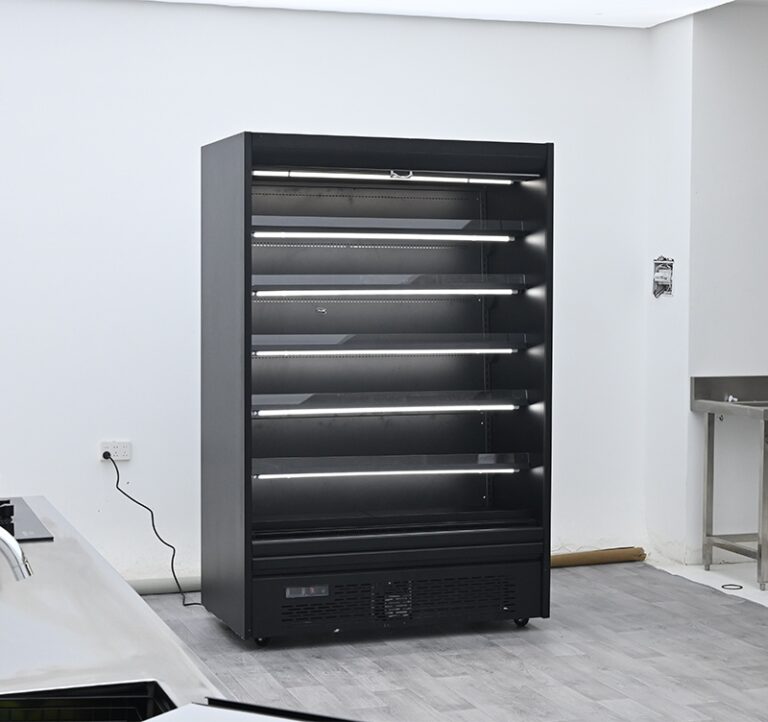
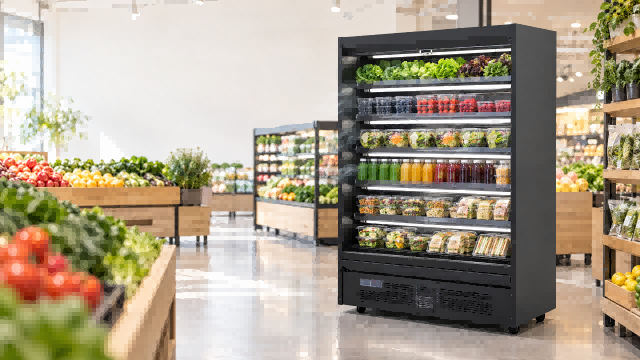
A single container order may include a produce cabinet described in procurement records as vegetable refrigerator supermarket fruit and vegetab, an open supermarket multideck open chiller, an upright supermarket fridge vertical and a branded supermarket monster energy drink display fridge. The wording of the produce category may vary by market, but the factory still needs the actual product list, target temperature, shelf depth, humidity expectation and loading pattern.
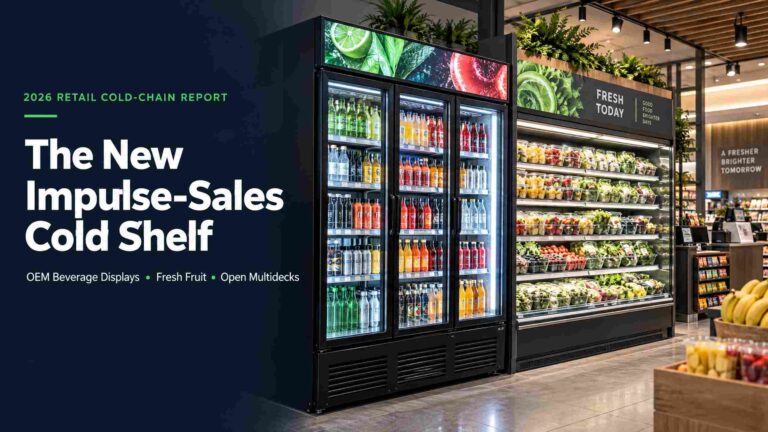
The open multideck may be assigned to cut fruit, salads and dairy, while the upright vertical case handles drinks or packaged meals. The branded beverage unit may require a special canopy, side panel, handle colour, LED tone, shelf spacing and artwork. Those details should be shown in the approved drawing and sample, not left to a verbal instruction after production has started.
OEM work also has an electrical side. A cabinet designed for 110V/60Hz is not automatically suitable for a 220V/50Hz store. Confirm voltage, frequency, phase, plug or isolator, rated current, starting current, defrost heaters, frame heaters, lighting and controller specification. The factory should mark the correct electrical data on the nameplate and wiring diagram.
Heat rejection must be considered at the same time. Several plug-in cabinets from different suppliers may discharge warm air into one narrow corridor. The result is higher condensing temperature, longer compressor operation and a service team working in an uncomfortable machinery space. The 2D plan should show rear clearances, ventilation, condensate handling and service access before cabinet lengths are finalised.
CREATE Refrigerator can support a coordinated OEM equipment list with custom fascia, graphics, lighting and cabinet dimensions. The buyer should request a bill of materials that identifies compressor, controller, fans, heaters, glass, gasket, shelves and drain components for each model.
Factory Testing Before the Container Is Sealed
The larger the island and the more unusual the shape, the less acceptable a catalogue-only approval becomes. A factory should test the equipment with the intended load, not only with empty shelves and a clean showroom.
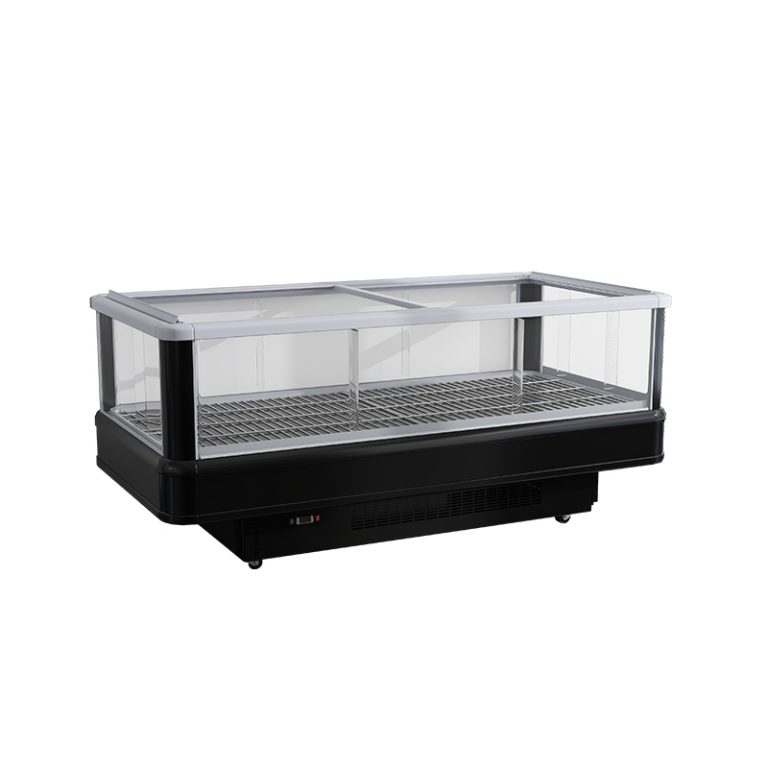
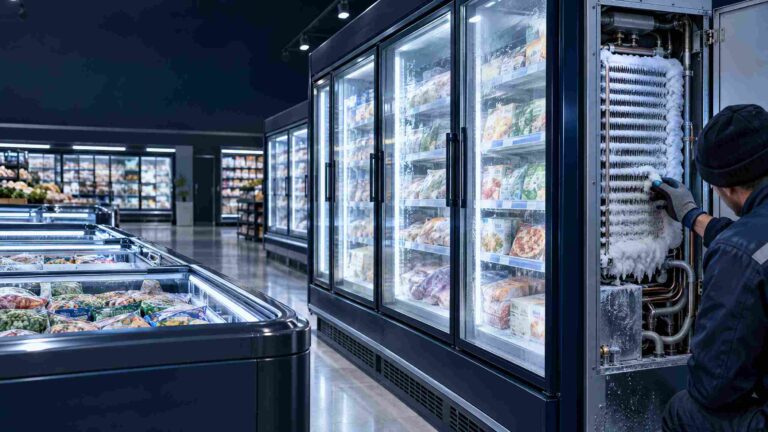
A supermarket combined type freezer should be evaluated for pull-down, temperature uniformity, defrost recovery, lid or door operation and electrical current. If the store intends to sell family packs, frozen vegetables and ice cream in the same unit, use representative pack sizes during the test. Record the upper, middle and lower product-zone readings.
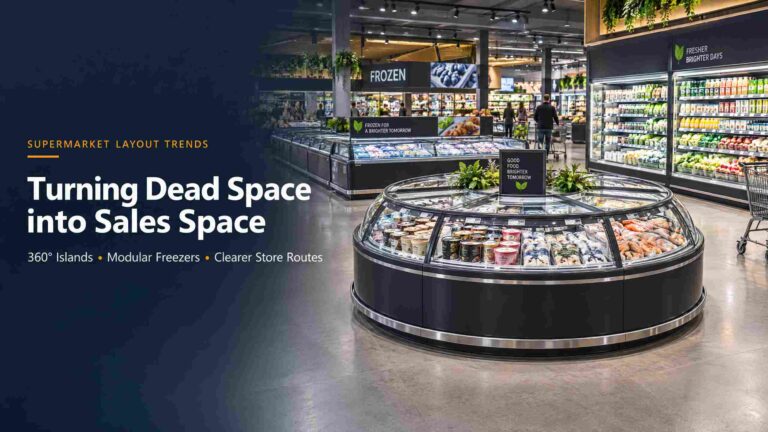
A promotional round island supermarket display freezer needs additional checks. Test the customer approach from all sides, the lid direction, basket loading, corner protection, condenser access and the clearance needed for a technician to work. A round footprint may improve visibility, but it can also create a difficult service position if the machinery compartment faces a fixed wall.
The more specialised supermarket freezer air curtain refrigerator must have its application defined before testing. Does the project require frozen operation, chilled operation or a specific air-curtain display duty? The factory should document setpoint, air velocity, evaporator capacity, defrost method, fan delay, product limit and ambient test condition. A mixed name on a quotation is not a performance specification.
The factory test record should include:
- Cabinet serial number and model code.
- Destination voltage and frequency.
- Ambient condition and product load.
- Pull-down time and stable product-zone temperature.
- Defrost start, termination and recovery time.
- Compressor current, fan operation and alarm status.
- Door, lid, gasket, lighting and controller checks.
- Condensate drainage or self-evaporation test.
Request photographs or video of the actual batch, including compressor nameplates, controller panels, glass edges, gasket corners, welds, shelf supports and the completed packing. A general factory photograph is not evidence that a particular cabinet passed its test.
Protecting Curved and Straight Tempered Glass at Sea
Glass damage often begins before the container leaves the port. A cabinet can look intact after production and arrive with a cracked corner because the crate allowed movement, the glass was not separated from the frame or the load shifted during road transport.
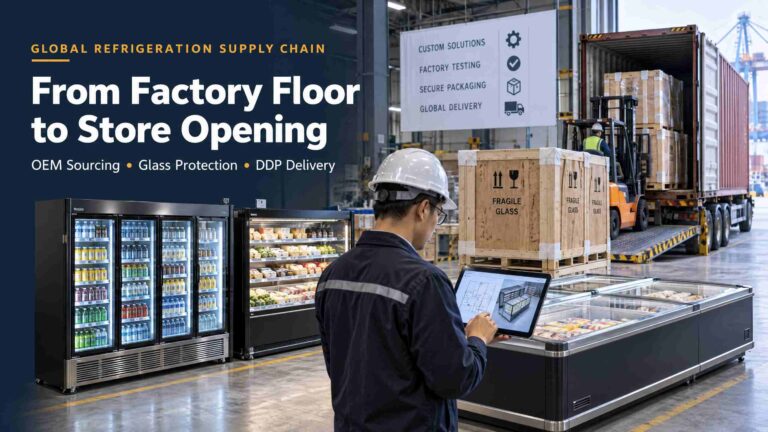
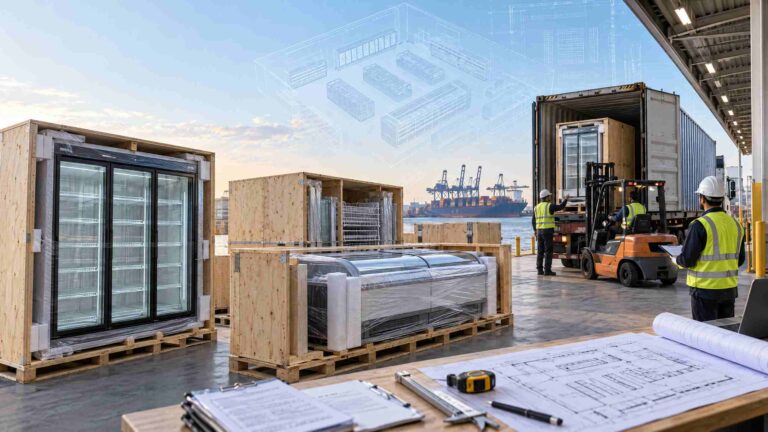
Curved and straight tempered-glass panels should be protected with fitted foam, corner blocks, edge guards and internal bracing. Use export wooden cases or an approved protective frame according to the destination requirement. The packing plan should state whether the timber is fumigated and certified or whether compliant fumigation-free material is being used.
The crate should identify the cabinet code, glass side, lifting points, gross weight, centre of gravity and handling direction. A broad island cabinet may need a different lifting method from an upright case. Do not let a local unloading crew guess from the shape of the crate.
The container loading plan should follow the installation sequence. Heavy cabinets need stable placement and proper weight distribution. Spare glass, gaskets, controllers and shelf clips should be packed in a labelled parts crate rather than hidden inside a machine compartment. Photograph the container interior, braces, crate numbers, moisture protection and seal before closing.
Keep the commercial documents together: commercial invoice, packing list, certificate of origin where required, insurance record, serial-number list, test reports, manuals and wiring diagrams. If a customs officer or destination agent asks for a model detail, the answer should be available without opening every crate.
DDP Is a Responsibility Chain, Not a Shipping Slogan
For many overseas investors, sea freight DDP is attractive because it can combine export handling, ocean transport, import clearance, duties and inland delivery into a defined door-to-door scope. But “DDP” must be written as a responsibility matrix.
Confirm the named delivery address, customs broker, importer of record, duties, taxes, destination port, demurrage responsibility, storage limits, unloading method, tail lift or forklift requirement and the exact point of final delivery. A truck stopping at the kerb is not the same as placing a glass cabinet inside the store.
Demurrage fees can accumulate quickly when documents are late, the importer details are wrong or the destination warehouse cannot receive the container. The buyer should agree who monitors free time, who supplies customs documents and who pays if a delay is caused by incomplete information. Keep the store opening programme separate from assumptions about port release.
At delivery, photograph crate condition before signing. Record dents, broken straps, moisture, punctures and shock indicators where used. Open the crate in a safe area, inspect the glass and trim, verify serial numbers and report damage within the contract period. Commissioning should then confirm voltage, current, temperature pull-down, controls, defrost, drainage and door or lid operation.
A Coordinated Store Mix from Produce to Frozen Promotion
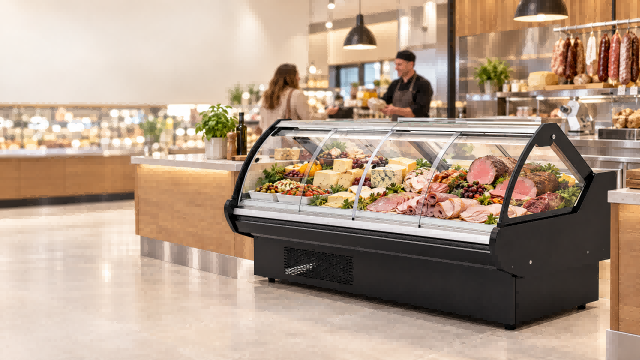
The full-store equipment list should be built around customer route and product duty. The entrance produce area may use an open multideck or the category-specific produce cabinet. The beverage zone may use a branded upright case. The fresh-food department may need a supermarket equipment display chiller with food-contact surfaces and easy cleaning access.
The main drinks wall can combine the branded supermarket monster energy drink display fridge with a standard supermarket fridge vertical. The visual language can remain consistent even when one case uses a special canopy and the other uses a plain top panel.
The frozen centre can combine the round island supermarket display freezer with the longer supermarket combined type freezer. Keep condenser outlets, customer aisles and replenishment routes visible on the 3D plan. The specialist air-curtain unit should be placed where nearby HVAC drafts will not break its airflow pattern.
A complete refrigerators supermarket showcase schedule should show the model, temperature duty, glass, lighting, compressor, controller, electrical requirement, condenser clearance, drain strategy and spare-parts code. This is the document that connects the factory, the freight agent, the electrician, the installer and the store manager.
Local Dealer Buying vs. Source-Factory Procurement
| Procurement issue | Local dealer patchwork | Source-factory turnkey order |
| Total acquisition cost | Often includes multiple margins, repeated freight and separate site extras | One coordinated quotation with OEM scope, export packing and defined DDP items |
| Appearance and 3D planning | Different brands, finishes and drawings; site conflicts found late | Unified cabinet language with 2D-to-3D planning before production |
| Logistics and after-sales | Several warranty routes and uncertain replacement responsibility | One model schedule, serial list, spare-parts plan, shipping record and agreed commissioning scope |
What Serious Buyers Now Ask Before Ordering
They ask for the original factory model code. They ask how the glass is packed. They ask who pays demurrage if the documents arrive late. They ask whether the cabinet is tested at the destination voltage and frequency. They ask for the rear clearance on the actual drawing, not a general catalogue note.
They also ask for a product-specific load test. An open multideck with cut fruit cannot be approved using the same evidence as a frozen island. A branded drinks case needs a shelf-load check. A curved-glass promotion freezer needs a lifting and crate inspection. The store may look unified to the customer, but the engineering duty remains different by cabinet.
createrefrigeration is being assessed by overseas buyers as a source for OEM cabinets, coordinated island equipment and full-store cold-chain delivery. The factory-direct route works when the buyer provides complete site information and the supplier records every exception in the approval documents.
The commercial advantage is not simply avoiding a dealer margin. It is reducing the number of people who can misunderstand the drawing, the voltage, the packing requirement or the delivery responsibility. CREATE Refrigerator can support the equipment schedule, OEM appearance, factory testing, export packing and DDP project coordination as one programme.
Investors planning a new store or upgrading an existing one can submit their floor plan, product list and destination details through www.createrefrigeration.com to request a one-stop factory quotation. The final decision should be based on delivered cost, tested performance, usable floor space, maintenance access and the risk of opening late—not on the cheapest line at the top of a local quotation.