
A glass-door freezer can have a strong compressor, neat shelves, and bright lighting, yet still disappoint the store if the door keeps fogging. The usual quick fix is to add more heat around the door. That sounds simple, but it can create a second problem: the cabinet stays clear while energy use quietly climbs. Anti-sweat heater controls sit between those two risks.
For global buyers, the question is not whether heat can remove moisture. It can. The better question is whether the refrigerator door heater is placed well, controlled well, and matched to the climate where the cabinet will run. A humid coastal supermarket, a dry inland convenience store, and a frozen food aisle beside a busy entrance do not need the same answer.
Why Door Heater Control Matters
An anti-sweat heater is used to warm the glass edge, door frame, mullion, or nearby surface enough to keep moisture from settling. Without control, the heater may run when the store is dry, when doors are closed overnight, or when condensation risk is low. That is why buyers now ask how the heater is managed instead of only asking whether it exists.
Heat Only Where Condensation Starts
Condensation usually begins at the coldest exposed point: frame corners, gasket edges, mullions, or glass areas near the door perimeter. A well-specified heater should target those areas. Too much general heat can fight the refrigeration system. Too little local heat leaves visible fog, water trails, or wet gaskets.
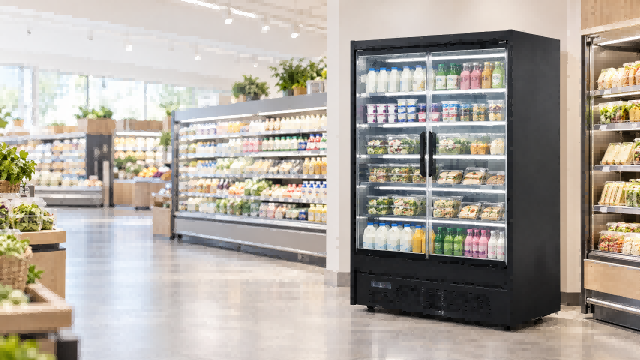
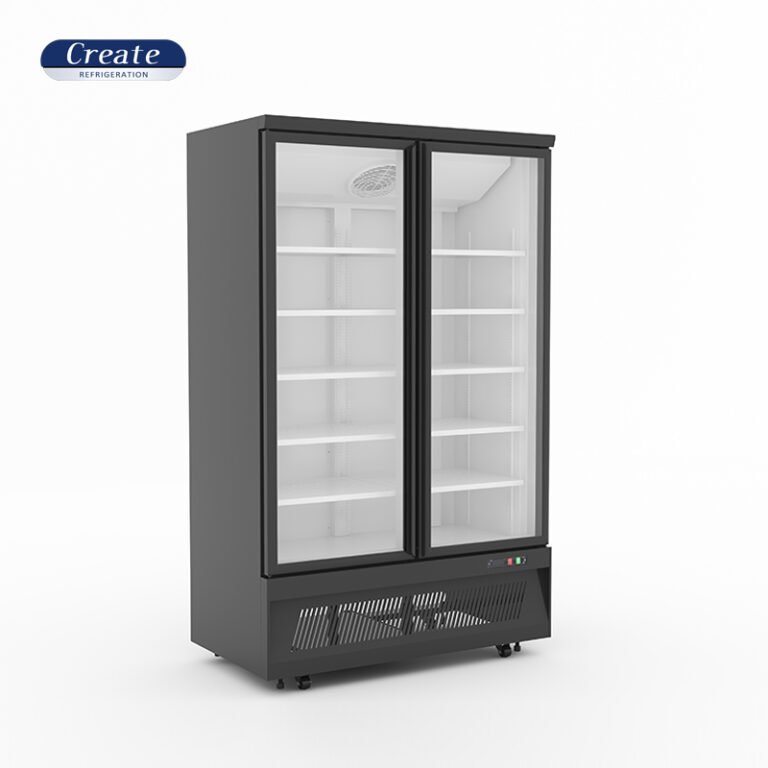
When reviewing a commercial glass–door freezer, ask whether the heater covers the frame, glass, or both. Create Refrigeration cabinet includes electric heating on LOW-E double-layer glass doors for some freezer combinations, and its glass door freezer and cooler line uses double-layer insulating glass.
Control Is Not the Same as More Power
A stronger heater is not automatically a better heater. A cabinet may need continuous heating in a wet market, but another store may only need heat during certain periods. A humidity-controlled anti-sweat heater, timer-based control, duty-cycle setting, or switchable heater circuit can all reduce waste when specified correctly. If the supplier cannot explain how the heater is controlled, the buyer should treat the quotation as unfinished.
Match the Control Strategy to Store Humidity
Commercial freezer condensation control starts with the room, not the door. The same cabinet may behave well in one country and sweat badly in another. Before selecting controls, buyers should describe the climate, store layout, air-conditioning level, entrance location, and expected door traffic.
Dry, Moderate, and Humid Markets
In dry markets, a basic heater setting may be enough, especially on medium-temperature beverage cabinets. In moderate humidity, a refrigerator door heater may need a limited duty cycle or a manual control option. In humid climates, especially where doors open often, buyers should ask about stronger glass packages, frame heating, gasket quality, and whether a humidity-controlled anti-sweat heater is available for the chosen model.
A glass–door freezer and cooler order should therefore include more than cabinet dimensions. Ask the supplier to confirm ambient condition assumptions, glass layers, LOW-E coating, heater location, door self-closing behavior, and spare gasket support. These checks help prevent a mismatch between the ordered unit and the real store climate.
Door Opening and Night Operation
Door traffic changes the calculation. A frozen food cabinet opened every few seconds during peak shopping hours pulls in more warm, moist air than a slow-moving storage display. At night, the same heater may not need to run at the same level if the aisle is closed and humidity is controlled. Good commercial freezer condensation control depends on this use case, not only on the heater rating.
What Buyers Should Ask About Heater Design
A good RFQ turns vague claims into concrete checks. Instead of asking for an energy-saving freezer in general, ask how the cabinet prevents sweating while keeping refrigeration load reasonable. That conversation should include heater location, control logic, glass construction, defrost, airflow, and the components that will be used in repeat production.
Glass, Frame, and Gasket Checks
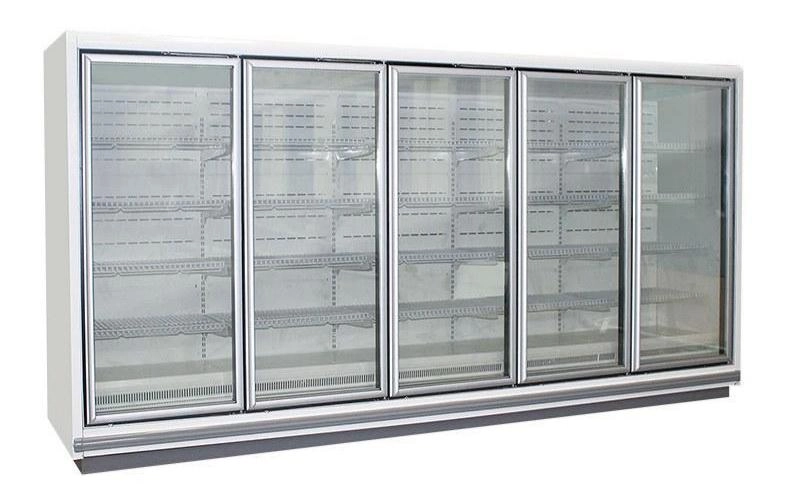
First, check the glass. Double-layer insulating glass helps separate cold cabinet air from humid room air. LOW-E coating can reduce heat transfer across the glass package. Electric heating can warm the risky surface zones. These features work best as a system, not as isolated catalog words.
Create Refrigeration’s glass door refrigerator has a two-layer chiller and three-layer freezer glass with electric heating, LOW-E coated glass, automatic defrost, LED lighting, and refrigerant options such as R404A, R290, and R448A. A buyer should confirm which of those specifications applies to the final model, because heater control and certification review both depend on the actual configuration.
Second, check the seal. Even the best control setting cannot fix a door that does not close well. Ask for self-closing door details, hinge type, gasket replacement support, packaging protection for the door frame, and post-shipment adjustment notes. If condensation appears mainly around the gasket, a control upgrade may not be the real answer.
Balance Condensation Control With Energy Use
Freezer energy-saving features should be judged as a whole cabinet package. A heater adds load. Better insulation, proper door closing, stable airflow, suitable refrigerant, efficient fans, and accurate defrost can reduce the need for extra heat. If one part is weak, another part pays for it.
Verify the Full Cabinet, Not the Heater Alone
Create Refrigeration materials refer to efficient refrigeration systems, stable air-curtain systems, environmental foaming materials, thick insulation layers, inverter compressor options, and R290 use in many refrigerator models, with CO₂ solutions for suitable projects. These facts support a broader energy conversation, but they should not be read as a blanket saving promise. Ask for model-level information and operating conditions before comparing energy claims.
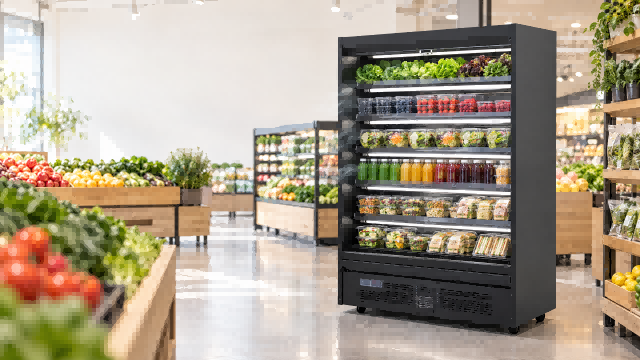
For compact beverage or back-bar uses, a commercial refrigerator glass door may need different heater behavior from a low-temperature upright freezer. For frozen food merchandising, a glass–door refrigerator freezer should be checked for door heating, glass structure, defrost rhythm, and frame condensation during repeated opening.
When comparing freezer energy-saving features, keep this buyer note short: clear glass is necessary, but uncontrolled heat is not a victory. The best result is a door that stays viewable in the target climate without making the refrigeration system work harder than it should.
Create Refrigeration Questions for B2B Orders
Supplier capability belongs near the purchasing decision, after the buyer knows what to ask. Create Refrigeration is based in Xingfu Industrial Park, Binzhou City, Shandong Province, and works with commercial supermarket equipment, stainless steel equipment, western kitchen equipment, supermarket shelves, and cold storage projects. The company supports OEM/ODM work, customer logos, modified products, and customized products.
Glass Door Freezer Projects
For buyers comparing Create Refrigeration with other suppliers, ask for the exact heater control description in the quotation. Also request the glass structure, voltage and frequency, refrigerant, defrost method, controller brand or type, door gasket support, warranty terms, and spare parts plan. Create Refrigeration has MOQ from one piece, one set, or one unit, DDP service when a delivery address is available, one-year warranty terms, and free spare parts for some bulk orders.
Store projects can also benefit from layout support. When buyers provide supermarket CAD drawings, Create Refrigeration can prepare 3D store renderings and match equipment to aisles, fresh food zones, and customer flow. For condensation control, that matters because cabinet location affects humidity exposure. A door near an entrance, bakery, produce misting zone, or hot food area may need a more careful heater and glass discussion than a cabinet placed in a dry interior aisle.
The buying decision should end with written confirmation. Get the heater type, control method, glass package, door seal details, and service parts in the proforma invoice or technical sheet. Clear doors are part of merchandising. Controlled doors are part of operating costs. If you would like to learn more, please read this article.
FAQ
Q1: What do anti-sweat heater controls do?
A1: They manage when and how heat is applied to glass, frames, or mullions so condensation is reduced without running unnecessary heat in low-risk conditions.
Q2: Is a humidity-controlled anti-sweat heater always better?
A2: It can be useful in changing humidity, but the buyer still has to check glass type, heater placement, door seal, voltage, controller design, and local service support.
Q3: What should buyers confirm before ordering a glass–door refrigerator freezer?
A3: Confirm heater location, control method, LOW-E or insulated glass, gasket quality, defrost, airflow, refrigerant, voltage, warranty, and spare parts for the exact ordered model.